
Featured Colombia Industrial Series
Advanced UV/EB curable polymer resins engineered for high line-speed graphic arts, flexographic packaging, and industrial surface sealers.
Colombia Industrial Status & Active Amine Dynamics
Macroeconomic transformations, industrial paint compounding, and the technical necessity of tertiary amine co-initiators.
The manufacturing ecosystem in the Republic of Colombia is undergoing an accelerated modernization across the industrial corridors of Bogotá D.C., Medellín (Antioquia), Cali (Valle del Cauca), and Barranquilla (Atlántico). Long characterized by solvent-borne coatings and thermal-curing adhesives, the country's chemical conversion sector is vigorously pivoting toward radiation-curable (UV/EB) formulations. This shift is directly propelled by tightening environmental mandates from the Ministry of Environment and Sustainable Development (Ministerio de Ambiente y Desarrollo Sostenible) curbing Volatile Organic Compound (VOC) releases, as well as strict requirements set by global brands sourcing packaging materials within the Pacific Rim and Andean community.
Mechanistic Value: Overcoming Atmospheric Oxygen Inhibition in Tropical Altitudes
Industrial converting facilities situated in elevated Andean basins (such as Bogotá at 2,640 meters) experience distinct atmospheric pressure differences that influence radical kinetics. Free-radical photo-polymerization of standard acrylic esters is notoriously inhibited by ground-level atmospheric oxygen, generating peroxyl radicals that leave surfaces tacky, under-cured, and chemically sensitive. Active Amines (specifically tertiary amino acrylates and aliphatic amine synergists) serve as aggressive hydrogen donors. They immediately abstract abstractable hydrogen atoms alpha to the nitrogen atom, rapidly regenerating alkyl radicals and consuming localized oxygen. This creates an unhindered, rapid-curing surface layer even under low-energy mercury arc or 395nm UV-LED pinning stations.
Historically, Colombian coating and ink converters relied on third-party import repackagers situated around Cartagena and Buenaventura ports. However, modern lean manufacturing workflows and localized quality controls require direct strategic alignment with primary synthesis manufacturers. Sourcing active amines with tightly controlled base values (amine values ranging from 50 to over 250 mg KOH/g), negligible residual free volatile amines, and minimal extractability index is indispensable for printing converters targeting compliant food labels, pharmaceutical cartons, and high-performance architectural wood boards.
Cost Rationalization
By pairing Type II photoinitiators (such as Benzophenone or ITX) with active amine synergists, formulators in Medellin and Cali reduce dependence on expensive alpha-cleavage photoinitiators by up to 35%.
Cure Speed Acceleration
In high-speed flexo and rotogravure lines printing BOPP and folding carton labels, active amines unlock continuous web line speeds exceeding 250 meters per minute without residual wet film tackiness.
Odor & Migration Control
Polymeric and acrylated active amines react directly into the polymer network matrix, eliminating amine blushing, skin sensitization, and extractable chemical leaching into consumer goods.
Global Amine Synergist Trajectory & Strategic Solutions
A worldwide paradigm shift toward low-energy LED radiation curing and zero-migration packaging chemistry.
Globally, the active amine sector is governed by two tectonic trends: the widespread decommissioning of medium-pressure mercury arc lamps in favor of narrow-band UV-LED systems (operating predominantly at 365, 385, and 395 nm), and the institutional tightening of food contact migration limits (such as the Swiss Ordinance SR 817.023.21 and the Nestlé Guidance Note on Packaging Inks). In legacy mercury systems, short-wavelength UVC radiation (200–280 nm) drove initial surface photolysis directly. With UV-LED sources lacking UVC emissions entirely, the radical generation burden rests squarely on sensitized Type II long-wave absorbing chromophores paired with high-reactivity active amine co-initiators.
To overcome traditional concerns regarding low-molecular-weight amines—such as odor, volatilization, yellowing after thermal stress, and extractable migration—the global chemical engineering community has pioneered Hyperbranched Acrylated Amines and Self-Initiating Polymeric Oligomers. These structures combine tertiary amine centers directly into an oligomeric backbone featuring high terminal acrylic functionality. As a result, 100% of the co-initiating molecule is locked within the 3D thermoset polymer network upon radiation exposure, achieving virtually zero migration values while drastically diminishing extractable odor.
Monomeric Dialkylamines
Traditional liquid tertiary amines (e.g., EDB, DMB). High acceleration, but prone to migration, strong odor, and high yellowing susceptibility under thermal drying.
Michael Addition Amino Acrylates
Synthesized via amine addition to polyol diacrylates (HDDA, TPGDA). Significantly reduced volatility and direct participation in radical crosslinking.
Polymeric Low-Migration Synergists
Tailored oligomeric backbones engineered specifically for food packaging inks (FMC), conforming to Swiss Ordinance and EuPIA guidelines.
Excimer & Dual-Cure Bio-Derived
Ultra-low viscosity, high hydrogen-density hyperbranched structures optimized for 172nm excimer matting systems and bio-renewable sustainable coatings.
Localized Industrial Applications Across Colombia
Specific manufacturing case contexts where custom-synthesized active amines resolve localized production bottlenecks.
Valle del Cauca: Flexible Packaging
Corrugated and flexible food packaging converters in Yumbo and Cali leverage low-viscosity amino acrylates for fast-setting Overprint Varnishes (OPVs) on treated polyolefin films, delivering superior scuff resistance and solvent barrier properties.
Antioquia: Architectural Flooring & Wood
Medellin's high-end furniture and composite board manufacturers deploy active amine modified epoxy acrylates within roller-applied basecoats to eliminate uncured oxygen-inhibited micro-voids prior to high-durability topcoat application.
Bogotá Savanna: Electronic & 3D Prototyping
In high-tech industrial assembly and additive prototyping hubs across Cundinamarca, hyper-functional amine synergists counteract dual-cure oxygen sensitivity during LCD/DLP vat photopolymer printing of resilient functional parts.
Technical Clarifications & Sourcing FAQ
Expert answers addressing the chemistry, logistics, and compliance of active amine integration in Latin America.
What is the fundamental difference between an Amino Acrylate and an Active Amine?
While often used interchangeably in commercial dialogue, an "Active Amine" broadly denotes any tertiary or secondary amine-containing compound functioning as a hydrogen donor for Type II photoinitiators. An "Amino Acrylate" is an active amine that has been chemically bonded to acrylate double bonds (via Michael addition). The amino acrylate co-polymerizes directly into the polymer network during curing, effectively preventing chemical extraction and evaporation.
How does an amine co-initiator counteract atmospheric oxygen inhibition?
Ground-state oxygen ($O_2$) acts as a biradical that reacts with propagating polymer radicals to form unreactive peroxy radicals ($ROO\cdot$), terminating the polymerization chain. Active amines possess active alpha-carbon hydrogen atoms that easily transfer to these peroxy radicals, yielding an alkyl radical on the amine. This amine radical reacts with remaining oxygen and immediately generates a reactive carbon-centered radical, resuming rapid chain propagation.
Can active amines trigger yellowing in clear topcoats in humid Colombian climates?
Yes, conventional low-cost aromatic or small-molecule aliphatic amines can form quinoid chromophores when exposed to prolonged thermal oxidation or intense solar UV radiation, leading to noticeable yellowing. For non-yellowing clear topcoats (such as automotive plastic finishes, white lacquers, or outdoor architectural panels), our application specialists recommend steric-hindered aliphatic amino acrylates specifically synthesized for color neutrality.
What customs and regulatory criteria apply to shipping UV raw materials to Colombia?
Shipments directed to Colombian ocean ports (Buenaventura, Cartagena, Santa Marta) or air cargo hubs in El Dorado (Bogotá) require standard GHS-compliant Safety Data Sheets (SDS) in Spanish, Certificates of Analysis (COA) specifying amine numbers, acid values, and viscosity thresholds, along with standard customs tariff classifications (typically under HS Code Chapter 3906). Our export infrastructure provides comprehensive container-level batch compliance.
Complete Acrylate & Functional Resin Portfolio for Colombia
Comprehensive high-reactivity building blocks: Polyester acrylates, epoxy oligomers, excimer solutions, and dual-cure elastomers.
-
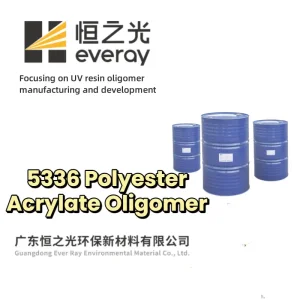
Buy Polyester Acrylate 5336: Colombia High-Performance Varnishes
-
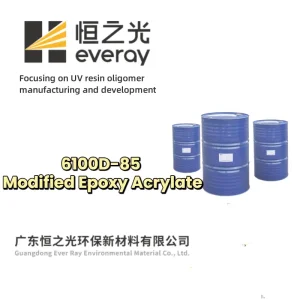
Buy High Adhesion 6100D-85 Epoxy Acrylate: Colombia Wood Coater
-
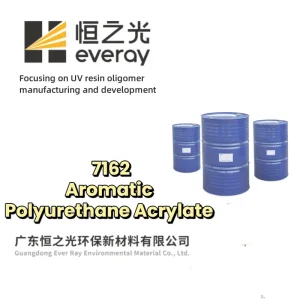
Buy Aromatic PA UV-Resin 7162: Plastic Sprays & Wood Colombia
-
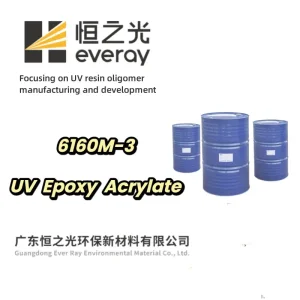
High-Quality 6160M-3: Rapid Modified Epoxy Acrylate Colombia
-
Wholesale 6200D UV-Resin for Shadowless Glue Systems Colombia
-
High-Quality 53036 Polyester Acrylate: Excimer Skin-Feel Colombia
-
High-Quality Durable 6271 UV-Resin: Low-Yellowing Adhesive Colombia
-
Wholesale 72017A-8 Dual-Curing UV Resin: 3D Footwear Colombia
