Precision Engineering Formulations
High-Performance UV Oligomers & Specialty Resins
Explore our specialized portfolio of aromatic polyurethane acrylates, ABS-grade printing photopolymers, and vacuum electroplating primers designed for high-throughput automated lines.
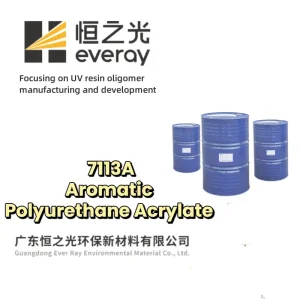
Wholesale Aromatic PA UV-resin 7113A for UV Vacuum-metallization & Plastic-coating
Product Details & Inquiry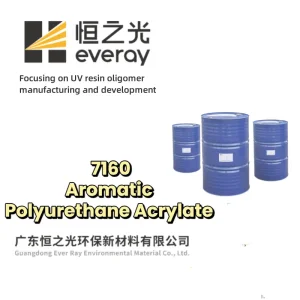
High-Quality Aromatic PA UV-resin 7160 for Plastic-coatings, Wood and UV-inks
Product Details & Inquiry
Buy Aromatic PA UV-resin 7162 for Plastic Spray-coatings, Wood-finishes & Inks
Product Details & Inquiry
High-Quality 70250 UV-resin for 3D Printing, UV-ink and UV Wood-coatings
Product Details & Inquiry
Wholesale Waterborne 70601 UV-resin for 3D Printing, UV-ink & Wood-coatings
Product Details & Inquiry
High-Quality Waterborne 70251 UV-resin for 3D Printing, UV Wood-coatings
Product Details & Inquiry
High-Quality Revolutionary PUA 7291B Empowering High-End UV Applications
Product Details & Inquiry
Chemical Engineering Deep-Dive
Aromatic Polyurethane Acrylate: The Balance of Elasticity & Rigidity
Analyzing urethane linkage hydrogen bonding, aromatic hard segments, and oligomer chemistry tailored for extreme wear cycles.
In modern radiation curing technology, Aromatic Polyurethane Acrylate (APUA) Oligomers serve as foundational polymer backbones when coatings require extraordinary tensile toughness combined with rapid cure kinetics. Unlike brittle bisphenol-A epoxy acrylates or highly flexible aliphatic polymers, APUAs feature aromatic diisocyanate cores (predominantly TDI or MDI condensations) paired with precision polyether or polyester soft segment polyols.
“The dense thermodynamic incompatibility between aromatic isocyanate hard segments and polyol soft domains triggers spontaneous microphase separation upon UV radiation exposure. This micro-domain nanostructure acts as self-reinforcing mechanical crosslinks, giving APUA coatings superior tensile elasticity, pencil hardness (up to 4H), and excellent barrier resistance against organic solvents.”
Microphase Toughness
Spontaneous hydrogen bonding inside carbamate chains (–NH–COO–) absorbs impact dissipation shockwaves without crazing or premature film embrittlement under flex testing.
Chemical & Alcohol Resistance
Optimized crosslink density minimizes free swelling volume, resisting standard industrial reagents including 99.5% ethanol rubs (500+ double rubs), MEK, and cosmetic oils.
Intercoat Metallization Anchoring
Polar aromatic resonance and free terminal polar functional sites deliver aggressive cross-hatch adhesion (DIN EN ISO 2409 Class 0) directly on ABS, PC, and PVD aluminium interlayers.
Integrated Manufacturing Strength
Guangdong Industrial Supply Chain: Reliable Global Supply
Ever Ray operates advanced synthesis reactors with automated batch tracking, offering scalable production and global logistical security.
Dedicated 40,000m² Plant
Our Yunfu (Guangdong) chemical synthesis facility runs 10+ digital distillation and functionalization synthesis lines with annual throughput capacity surpassing 25,000 metric tons.
Full Upstream Integration
Continuous contracts for critical feedstocks (TDI, IPDI, HDDA, TPGDA, TMPTA) insulate overseas procurement partners from spot-market price volatility and international shipping delays.
Rigid Batch Stability Control
In-line GPC molecular distribution testing and rotational viscometers ensure tight product standard deviations (<2.5% variation in viscosity and chromatic index between runs).
Compliance & Quality Management
Regulatory Compliance & Local Technical Support
Facilitating seamless international transactions through strict chemical regulatory compliance and responsive application support.
REACH & TSCA Compliance
Every commercial grade is supported by complete documentation: multilingual SDS (GHS 10th Rev), SVHC clearance statements, RoHS verification, and zero residual monomer testing.
Regional Technical Assistance
Formulation specialists in Southeast Asia, North America, and Europe provide substrate wetting profiling, LED-cure conversion guidance, and customized photoinitiator optimization.
Custom OEM Pilot Synthesis
From initial 1 kg evaluation samples to 20-metric-ton bulk deliveries, our pilot lines customize molecular weight distribution and viscosity windows to meet specific line speeds.
System Performance Matrix
Comparative Matrix: Radiation Curing Polymer Resins
A reference guide to help formulation chemists identify the ideal balance of speed, hardness, flexibility, and cost-performance.
| Polymer Family | Hardness | Tensile Flexibility | Weathering / UV Stability | Cure Line Speed | Target Substrate / End Use |
|---|---|---|---|---|---|
| Aromatic PUA (7113A, 7160) | 3H – 4H | Moderate to High | Indoor / Light-Shielded | High (25–60 m/min) | Vacuum metallization, ABS plastic spray, parquet sealers |
| Aliphatic PUA (7200-1, 7291B) | H – 2H | Very High (>120% Elongation) | Superior (Non-Yellowing ΔE<1.0) | Moderate (15–35 m/min) | Outdoor automotive 3C topcoats, cosmetic gels, optical films |
| BPA Epoxy Acrylate (9105A-80) | 4H – 5H | Low (Brittle) | Moderate | Fastest (>60 m/min) | Overprint varnishes (OPV), rigid timber sanding sealers |
| Waterborne PUA (70251, 70601) | HB – H | High Elastic Recovery | High (Aromatic-free variants) | Thermal Flash + UV Cure | Eco-compliant wood finishes, low-VOC leather coatings |
| Hyperbranched Acrylate (4600) | >5H | Extremely Low | High | Ultra-Rapid | Anti-scratch barrier topcoats, high-hardness varnishes |
Target Market Sectors
Industrial Use Scenarios for Aromatic Polyurethane Acrylates
Engineered to deliver high surface hardness, structural adhesion, and efficient production throughput across multiple manufacturing sectors.
PVD Vacuum Electroplating Primers & Topcoats
Applied on ABS/PC automotive trim and perfume bottle caps. Offers a smooth, mirror-like leveling base without pinholes, resisting high-vacuum thermal degassing and ensuring cross-hatch adhesion over sputtered aluminium and chromium.
Heavy-Traffic Wood & Parquet Floor Finishes
Blended into high-build roller coatings. APUA resins absorb physical impacts from dropped objects and foot traffic, exceeding 1,000 Taber abrasion cycles (CS-17 wheel, 1,000g) while maintaining high gloss clarity.
UV Screen, Flexographic & Offset Printing Inks
Delivers high shear-thinning behavior and rapid pigment wetting. Protects offset packaging prints against cracking during die-cutting, embossing, and automated folding operations.
Technological Roadmap
Emerging Trends Reshaping the Global APUA Market
How low-energy LED systems, bio-renewable feedstocks, and VOC reductions are driving formulation evolution across the UV curing industry.
385–395nm LED-UV Surface Cure Reactivity
Traditional APUAs often suffer from surface tackiness under narrow-band UVA LEDs due to oxygen inhibition. Ever Ray's latest modified backbones incorporate self-initiating polyether segments and internal amine synergists to achieve complete tack-free surface cure under 395nm LED lamps without inert nitrogen blankets.
Bio-Renewable Carbon Substitution
Global brand owners are seeking lower fossil carbon footprints. We are integrating bio-succinic acid and dimer fatty acid polyols into aromatic polyurethane acrylates, achieving 30–45% renewable carbon content (ASTM D6866) while matching the mechanical performance of conventional petrochemical resins.
Low-Odor & Low-Migration Systems
Vacuum stripping during post-reaction processing reduces residual volatile organic compounds (VOCs) and free monomers to below 50 ppm. This makes modified APUAs suitable for premium cosmetic packaging, consumer electronics, and secondary food cartons.
Formulation FAQs
Technical & Procurement Inquiries (FAQ)
Key technical details regarding resin substitution, cure kinetics, yellowing performance, and global logistics handling.
How do aromatic polyurethane acrylates compare directly with aliphatic urethanes in practical applications?
Aromatic polyurethane acrylates utilize aromatic isocyanates (like TDI or MDI), which deliver higher mechanical rigidity, faster cure speeds, better substrate grip, and a lower raw material cost compared to aliphatic isocyanates (such as IPDI or HDI). However, the aromatic ring's pi-electron conjugation is susceptible to UV photo-oxidation over time, resulting in yellowing when exposed to outdoor solar radiation. Consequently, APUA resins are preferred for interior coatings, wood flooring, dark-pigmented systems, and vacuum metallized packaging, while aliphatic urethanes are standard for exterior clear automotive coatings and cosmetic nail gels.
Why do vacuum metallization topcoats experience intercoat peeling, and how does resin 7113A address this?
Intercoat peeling on PVD-sputtered aluminium typically stems from high shrinkage stress in the crosslinked resin matrix, along with poor surface chemical interaction. Aromatic PA UV-Resin 7113A incorporates polar carbamate groups alongside flexible polyether chain segments that minimize curing volume contraction (<5.2%). This allows the cured film to bond securely to high-energy metal layers without micro-cracking, passing ASTM D3359 cross-hatch tape adhesion tests (5B) even after 72 hours of constant humidity exposure (40°C, 95% RH).
What reactive diluent monomers pair best with high-viscosity aromatic polyurethane acrylates?
To reduce APUA viscosity for automated spray lines or roll-coating heads without losing mechanical integrity, we recommend blending difunctional monomers like TPGDA (tripropylene glycol diacrylate) or DPGDA for balanced viscosity reduction, and HDDA (1,6-hexanediol diacrylate) for rapid cure response. When formulating for extreme scratch resistance, trifunctional TMPTA (trimethylolpropane triacrylate) can be incorporated at 15–25 wt%. For improved flexibility and adhesion to untreated PC/ABS substrates, monofunctional monomers like IBOA (isobornyl acrylate) or THFA (tetrahydrofurfuryl acrylate) are ideal choices.
What are the recommended shelf-life conditions and export packaging options for container shipments?
All Ever Ray polyurethane acrylate oligomers are stabilized with phenolic polymerization inhibitors (such as MEHQ) and exhibit an active storage shelf-life of 12 months when stored below 30°C in dry, ventilated areas away from direct sunlight. For international export, we supply standard 200 kg steel drums with internal epoxy coatings, as well as 1,000 kg UN-certified IBC composite totes. Every consignment includes batch-specific Certificates of Analysis (COA) confirming chromatic index (Gardner <2), Brookfield viscosity at 25°C, and acid value limits (<2.0 mg KOH/g).
Expanded Synthesis Portfolio
Explore Additional Performance Acrylate Resins & Oligomers
Explore our hyperbranched acrylates, polyester resins, low-viscosity epoxy systems, and surface antifouling additives.
Wholesale Polyurethane Acrylate 7911 – Ideal Choice for UV Coatings
Product Details & Inquiry
Buy Aromatic Polyurethane Acrylate Oligomer – High-Adhesion Resin for UV Vacuum Metallizing
Product Details & Inquiry
Buy Scratch Resistant 4600 Hyperbranched Acrylic UV Resin for Varnish & Ink
Product Details & Inquiry
High-Quality 5218 Polyester Acrylate UV Resin: Adhesion & Pigment Compatibility
Product Details & Inquiry
High-Quality 7620 UV-Curing Resin Applied in UV Vacuum Electroplating
Product Details & Inquiry
Buy Durable Furniture Coating: 7200-1 Aliphatic Polyurethane Acrylate UV Resin
Product Details & Inquiry
High-Quality 6116 Low-Viscosity Epoxy Oligomer for Matte Wood & Inks
Product Details & Inquiry