High-Efficiency Polyester Acrylate Series
Engineered to resolve fundamental formulating bottlenecks: dynamic ink-water emulsification balance, substrate micro-wetting, interfacial adhesion, and rapid photopolymerization crosslinking under commercial UV/LED parameters.
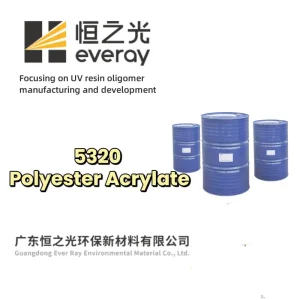
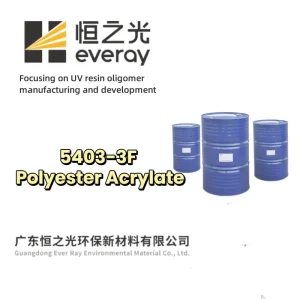
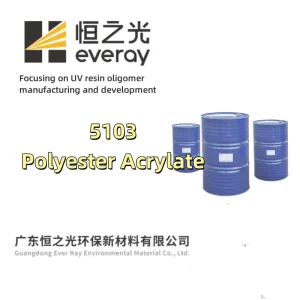
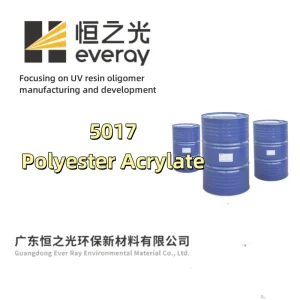
Molecular Architecture: The Mechanics of Polyester Acrylates (PEA)
A rigorous examination of polycondensation dynamics, functionality control, ester bond steric stability, and their direct contribution to UV curing kinematics.
Polyol & Polybasic Acid Polycondensation
The core structural backbone of polyester acrylates is engineered through precise esterification stoichiometry of selected polyhydric alcohols (e.g., TMP, NPG, DEG) and di- or tri-basic carboxylic acids (such as phthalic anhydride, adipic acid, or isophthalic acid). Controlling the molecular weight distribution (Mw/Mn) guarantees tailored mechanical flexibility, tensile properties, and superior hydrolytic stability across varied curing conditions.
Acrylation Kinetics & Functionality Tuning
By functionalizing hydroxyl-terminated polyesters with acrylic acid, terminal ethylenic unsaturations are created. Ranging from difunctional (for high flexibility and low volume shrinkage) to hexafunctional architectures (for superior crosslink density, surface pencil hardness, and solvent resistance), the chemistry allows tailored conversions for high-speed automated roll coating and flexographic operations.
Pigment Dispersion & Wetting Dynamics
Polyester chains inherently possess polar ester linkages and controlled acid numbers that demonstrate superior affinity toward both organic and inorganic pigments (carbon black, phthalocyanines, titanium dioxide). This structure depresses paste rheological yield points, minimizes thixotropic breakdown, and prevents post-milling pigment flocculation in UV screen and offset inks.
Localized Applications & Field Scenarios
Analyzing technical deployment across regional production clusters—from automated consumer electronics coating lines to high-throughput offset packaging facilities.
UV Offset & Packaging Lithography
Commercial high-speed multi-color offset presses require strict chemical hydrophobicity/hydrophilicity balance. Polyester acrylate resins such as 5403-3F prevent emulsification failure against acidic dampening solutions, mitigating ink misting and tinting while providing instantaneous UV/LED surface cure at press speeds exceeding 15,000 sheets per hour.
3C Electronics & Engineering Plastics
Substrates like PC, ABS, and PMMA are prone to stress cracking and deformation under solvent attack. Specially modified polyester acrylates provide direct adhesion without primers, controlled curing shrinkage, and high pencil hardness (2H-3H) against daily abrasion, cosmetic alcohol contact, and artificial perspiration exposure.
Excimer Laser 172nm Skin-Feel Coatings
Emerging surface modification utilizing 172nm vacuum excimer radiation induces micro-folding on the top oligomer layer. Grades like 53036 polymerize without standard matting fillers, achieving dead-matte specular finishes (<2 GU at 60°), anti-fingerprint properties, and soft-touch tactile performance for premium architectural panels and automotive dashboards.
Comparative Analytical Matrix: Oligomer Performance
Empirical laboratory data reflecting resin properties under standard industrial testing environments (100m/min conveyor, Hg Arc 120W/cm vs. 395nm LED arrays).
| Resin Grade | Viscosity (25°C, mPa.s) | Functionality | Glass Transition (Tg °C) | Water-Ink Balance Window | Target Substrates / Systems |
|---|---|---|---|---|---|
| 5320 | 12,000 - 25,000 | 4 | 42 | High Emulsification Resistance | UV Litho Inks, Roll-Coated OPV |
| 5403-3F | 8,000 - 18,000 | 3 | 28 | Ultra-Wide Tolerance Zone | Commercial Offset, Carton Folding |
| 5103 | 1,500 - 4,500 | 2 | 15 | Moderate | PC, ABS, PVC Adhesion Primers |
| 5017 | 3,000 - 7,000 | 3 | 35 | Broad Stability Window | Low-Odor Packaging, Flexo Inks |
| 53036 | 20,000 - 45,000 | 6 | 68 | N/A (Topcoat Formulation) | Excimer 172nm Soft-Touch Mattes |
| 5338 | 400 - 1,200 | 2 | -5 | High Dilution Efficiency | Reactive Diluent Oligomer |
China's Manufacturing Scale & Chemical Infrastructure
How upstream integration in raw chemical feedstocks, coupled with closed-loop multi-ton reactor automation, secures global downstream stability.
Upstream Chemical Integration
Direct pipeline and bulk container access to base chemical precursors (Acrylic Acid, Neopentyl Glycol, Trimethylolpropane, Phthalic Anhydride) insulates production from localized price surges. Full domestic vertical integration ensures that oligomer synthesis facilities maintain consistent cost structures regardless of global spot-market volatility.
Distributed Distributed DCS Automation
Modern production facilities utilize continuous Distributed Control Systems (DCS) to manage exothermic esterification and acrylation cycles. Tight computerized tolerances over temperature ramps, azeotropic water removal, and inhibitor addition minimize batch-to-batch acid value variations (<1.0 mg KOH/g deviation) and guard against crosslinking drift.
Deepwater Logistics & Storage
Strategically positioned near major deep-water chemical export ports (Guangdong, Ningbo, Shanghai), facilities maintain temperature-monitored bulk storage farms. Rapid turnaround of ISO tanks, 1000L IBCs, and standard 200kg steel drums allows delivery schedules to align with downstream international demand across Europe, the Americas, and APAC.
Global Regulatory Frameworks & Quality Engineering
Formulating with technical confidence under strict international environmental regulations, chemical inventory frameworks, and low-VOC mandates.
REACH, TSCA & Chemical Inventory Alignment
Exported polyester acrylates fully satisfy EU REACH registrations (including strict limits on SVHC candidates), US EPA Toxic Substances Control Act (TSCA), IECSC (China), and KKDIK (Turkey). Extensive toxicological documentation, full-chain raw material disclosure, and certified SDS/TDS profiles ensure frictionless regulatory clearance.
Zero-VOC & Ultra-Low Monomer Residuals
By employing vacuum thin-film stripping and advanced chemical quenching, free acrylic acid content is kept below 0.1%, drastically mitigating occupational odor and dermal irritation indices. The resulting polymers fulfill demanding indoor air quality metrics (AgBB, French VOC Class A+) and food packaging indirect-contact standards.
Comprehensive Quality Traceability
Every industrial synthesis batch undergoes testing via Gel Permeation Chromatography (GPC for Mw determination), Fourier Transform Infrared (FTIR) fingerprint validation, and rotational cone-plate rheology checks. Retained archive samples are tracked under ISO 9001 and ISO 14001 certified protocols for a minimum of 24 months.
Engineering Inquiries & Technical Clarifications
Addressing core technical questions from industrial formulators, chemical engineers, and procurement directors.
How do polyester acrylates fundamentally differ from epoxy and urethane acrylates?
Epoxy acrylates offer high cure speeds and hardness at low cost, but can be brittle and prone to yellowing. Polyurethane acrylates provide flexibility and abrasion resistance, but feature high viscosity and higher raw material costs. Polyester acrylates strike a balanced middle ground: lower baseline viscosity, superior pigment wetting, and adjustable elongation, making them standard binders for inks and lithographic coatings.
What specific chemical factors maintain water-ink lithographic balance in UV offset printing?
Water-ink balance is governed by the polarity of the polyester backbone and its free acid value. Grades like 5403-3F feature controlled hydrophilic segments that tolerate slight fountain solution uptake (15-25% dynamic emulsification) without allowing catastrophic emulsion breakdown or pigment bleed into non-image zones.
Can high-functionality polyester acrylates replace urethane hard-coats on plastics?
Yes. Hexafunctional polyester acrylates achieve crosslink densities and scratch resistance comparable to aliphatic urethanes when formulated with hyperbranched synergists. While aliphatic urethanes maintain longer outdoor UV weatherability, polyester acrylates deliver cost-effective performance for indoor consumer electronics and retail packaging.
What are typical storage stability guidelines for high-reactivity polyester acrylates?
Because they contain active acrylic unsaturations, polyester acrylates should be stored between 5°C and 30°C in light-shielded, tightly sealed containers. Free air headspace is required to sustain dissolved oxygen, which works with phenolic inhibitors (MEHQ) to prevent premature thermal radical polymerization over a typical 12-month shelf life.
Extended Industrial Polyester Acrylate Resins
High-performance oligomers and active reactive diluents engineered for flexographic varnishes, heavy-pigment color masters, and precision roll-coatings.