
Featured Industrial Formulations: Core Synthesized Grades
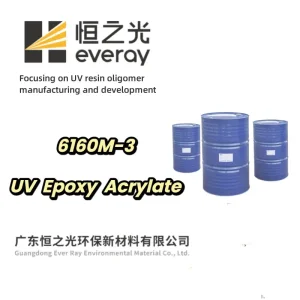
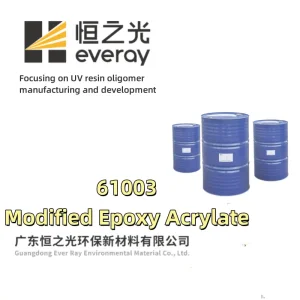
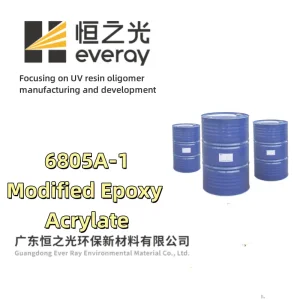
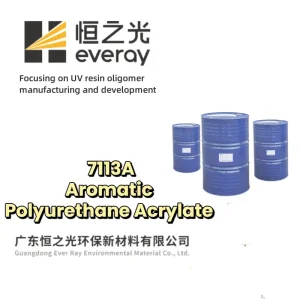
Engineered for radical-curing photopolymer architectures, our verified production run oligomers provide tailored glass transition temperatures ($T_g$), crosslink densities, dynamic viscosities, and substrate-wetting characteristics.
Industry White Paper: Global Resin Sourcing & Engineering Paradigms
A comprehensive strategic analysis examining modern photopolymer synthesis economics, risk-mitigated supply chains, chemical compliance, and international technical alignment.
1. The Evolving Complexity of Global Enterprise Procurement
In modern industrial chemistry, procurement directors face unprecedented friction when balancing material consistency, cross-border carbon footprints, and supply chain resiliency. Historically, formulators purchased standardized epoxy or urethane acrylates from domestic distributors with significant markups and opaque chemical origins. Today, global enterprise procurement demands transparent backward integration, direct reactor access, and stringent lot-to-lot repeatability.
Procuring from dedicated manufacturing factories requires understanding the fundamental kinetics of ultraviolet and electron beam (UV/EB) crosslinking. Formulators of overprint varnishes (OPV), automotive interior finishes, and solder masks do not simply purchase resin; they acquire a kinetic profile—characterized by double bond conversion efficiency, shrinkage coefficient, surface tension, and rheological stability across diverse shear gradients. Sourcing directly from verified Chinese chemical synthesis hubs allows multinational manufacturers to decouple from intermediary supply shocks, capture up to 35% margin recovery, and work directly with senior polymer chemists to engineer tailored acrylate backbones.
Core Procurement Insight: The shift from spot-market trading to direct synthesis contracts is driven by molecular quality metrics: Polydispersity Index (PDI < 2.2), low residual acrylic acid monomers (< 0.05%), and tight viscosity tolerances (±5% at 25°C), ensuring defect-free high-speed continuous application lines.
Furthermore, modern multi-site manufacturing entities demand absolute auditability under ISO 9001:2015 and IATF 16949 frameworks. Global supply managers now conduct thorough on-site and digital synthesis validations, inspecting automated Distributed Control System (DCS) control rooms, multi-ton glass-lined reactor vessel jackets, and high-performance liquid chromatography (HPLC) testing protocols to ensure that high-volume orders will perform identically across plants in Munich, Guadalajara, Rayong, and Ohio.
Kinetic Precision Engineering
Synthesizing oligomer branches via precision esterification, transesterification, and polyaddition reactions to establish exact functional acrylation levels from mono-functional diluents to hyperbranched octa-functional acrylates.
- Controlled exotherm reaction kinetics
- Zero-solvent catalytic synthesis
- Elimination of free residual monomers
Global Regulatory Compliance
Comprehensive chemical compliance protocols ensuring seamless global clearance across EU REACH (SVHC audits), US EPA TSCA, California Proposition 65, China GB38507 VOC thresholds, and Swiss Ordinance packaging ink standards.
- Standardized SDS via GHS Rev 8/9
- BPA-free & organotin-free options
- Comprehensive low-migration profiles
Resilient Supply Chain Logistics
Robust distribution infrastructure utilizing temperature-controlled container logistics, inert gas nitrogen blanketed IBC storage, and localized bonded warehouses to maintain radical stabilizer integrity during intercontinental transit.
- 200kg steel drums, 1000kg IBCs, ISO tanks
- MEHQ inhibitor level tracking
- Guaranteed 12-month shelf stability
China Factory Infrastructure: Upstream Integration & Production Scale
How localized petro-chemical clusters, proprietary reactor geometries, and continuous raw material feeding establish an unassailable global manufacturing advantage.
2. Raw Material Integration: From Petrochemical Cracking to Acrylate Esters
The strategic advantage of Guangdong Ever Ray Environmental Material Co., Ltd. and tier-one Chinese photopolymer chemical factories is rooted in deep upstream petrochemical integration. The production of UV-curable oligomers relies on key commodity feedstocks: Acrylic Acid (AA), Methacrylic Acid (MAA), Bisphenol-A (BPA), Epichlorohydrin (ECH), and various diisocyanates (Toluene Diisocyanate [TDI], Isophorone Diisocyanate [IPDI], and Hexamethylene Diisocyanate [HDI]), alongside polyols (TMP, NPG, PCL, and PTMEG). Located within the chemical industrial belts of Guangdong, our synthesis facilities operate with immediate proximity to major domestic refinery ports and petrochemical refining infrastructure.
This proximity provides profound competitive insulation against raw material price volatility. When Western formulators experience localized disruptions in glacial acrylic acid or HDI supplies, our Yunfu manufacturing base maintains steady pipeline deliveries, continuous multi-ton bulk feedstocks, and dedicated inventory buffers. Direct reactor coupling eliminates localized trucking delays and intermediary distributor surcharges, yielding a fundamentally optimized cost basis for global exporters.
3. Synthesis Reactor Geometries and Process Automation
Precision acrylate manufacturing is an exothermic challenge. Free radical polymerization must be strictly held at bay during synthesis while forcing hydroxyl-epoxy ring opening, carboxyl-hydroxyl condensation esterification, or isocyanate-hydroxyl urethane addition reactions to completion. Our chemical plant operates rows of 5-ton to 30-ton stainless steel (316L) and specialized glass-lined reactors equipped with high-efficiency helical ribbon impellers, dimpled heating/cooling jackets, and computerized inner-wall thermal sensors.
DCS automation manages the progressive addition of radical scavengers (such as hydroquinone monomethyl ether, MEHQ, and phenothiazine, PTZ) under continuous oxygen-nitrogen mixed sparging. Maintaining dissolved oxygen levels between 5% and 8% within the liquid monomer matrix is chemically necessary to regenerate active quinone inhibitor radicals without inducing oxidative yellowing. This automated control maintains residual monomer acid values below 1.0 mg KOH/g and isocyanate values (NCO%) at virtually undetectable limits (< 0.1%), ensuring prolonged shelf life and predictable viscosity profiles for global customers.
Dedicated Pilot Lab
Rapid synthesis screening in 5L-100L pilot reactors to dial in customer-specified backbone structures within 14 business days.
Multi-Reactor Capacity
Over 10 dedicated synthesis lines operating round-the-clock, delivering over 40,000 square meters of production scalability.
GPC & HPLC Verification
In-house molecular weight distribution verification guaranteeing batch polydispersity (Mw/Mn) compliance and zero unreacted monomers.
Environmental VOC Control
Advanced RTO (Regenerative Thermal Oxidizer) emission scrubbers ensuring full ESG compliance and unbroken operational uptime.
Technological Evolutions Shaping Global UV/EB Formulations
How our chemical engineering labs are answering the global transition toward energy-efficient curing wavelengths, zero-emission waterborne systems, and sustainable bio-content.
LED-UV 365/395nm High Reactivity
Traditional mercury arc lamps emit broad UVC spectrum light (200-280nm) that easily drives surface cure. The worldwide shift toward single-peak 385nm and 395nm LED diodes creates intense oxygen inhibition at the air-coating interface. We engineer specialized amino acrylates and hyperbranched oligomers that act as polymerizable hydrogen-donor synergists, terminating peroxy radicals and restoring lightning-fast tack-free surface curing without hazardous extractables.
Waterborne Polyurethane Acrylate Dispersions
Zero-monomer environmental requirements have accelerated the deployment of waterborne PUA (PUD) systems. By incorporating internal hydrophilic ionic anchors (such as dimethylolpropionic acid, DMPA) into flexible aliphatic polyester-polyurethane backbones, we produce solvent-free, self-emulsifying dispersions. After flash-off drying of the water carrier, UV crosslinking builds immediate mechanical hardness, moisture resistance, and wood-grain warmth without VOC emissions.
Dual-Cure Photopolymers for Additive SLA/DLP
Standard free-radical SLA/DLP 3D resins suffer from brittle failure, anisotropic layer weakness, and aging shrinkage stress. Ever Ray's engineering team synthesizes hybrid dual-cure matrices integrating acrylate and blocked isocyanate / hydroxyl mechanisms. The initial UV exposure freezes complex geometries with micron-level fidelity, while a subsequent thermal bake initiates polyurethane chain extension, delivering true ABS-like impact toughness and elastomeric fatigue performance.
Localized Application Scenarios: Cross-Industry Implementations
From automotive cabin capacitive displays to pharmaceutical blister foil packaging, review how our synthesized chemical series are deployed in rigorous real-world production environments.
1. 3C Electronics & High-End Optical Substrates (PC, PMMA, PET)
Consumer electronics manufacturers (smartphone housings, wearables, laptop chassis, and cockpit display lenses) require optical transparency, high hardness (up to 4H-5H pencil hardness), and flexibility to survive drop impacts without micro-cracking. Pure epoxy acrylates deliver hardness but suffer from severe embrittlement and high cure shrinkage that causes thin polycarbonate substrates to warp. By formulating with our aliphatic polyurethane acrylates (such as multi-functional non-yellowing grades) blended with pure acrylate adhesion promoters, formulators achieve exceptional cross-hatch adhesion (0% delamination on ASTM D3359 cross-cut tests) while maintaining pristine optical clarity and resilience against human sweat, sebum, and ethanol cleaning wipes.
2. Graphic Arts, Offset Inks & Food-Contact Overprint Varnishes (OPV)
In high-speed commercial offset and flexographic printing presses running at 300 to 600 meters per minute, the rheological behavior of the UV resin binder determines commercial success. Polyester acrylates provide superior pigment wetting, allowing high pigment loading without unmanageable shear-thickening dilatancy. For offset lithography, achieving a stable water-ink dynamic balance is critical; poorly formulated oligomers emulsify prematurely with fountain solutions, causing scumming and print ghosting. Our polyester acrylate grades are synthesized with controlled polarity to resist excessive water uptake, maintaining tack stability throughout multi-million sheet production runs.
3. PVD Vacuum Metallization & Cosmetic Packaging Coatings
Cosmetic bottle closures and perfume caps demand brilliant chrome, gold, and mirror-finish metallic luster achieved via Physical Vapor Deposition (PVD). The underlying UV primer must be defect-free, provide extreme surface leveling to eradicate substrate orange peel, and offer dense chemical resistance to prevent the aluminum metallization layer from peeling during humidity and fragrance oil exposure. Ever Ray's aromatic and polyester acrylates provide high gloss bases, exceptional intercoat adhesion, and thermal vacuum tolerance up to 180°C without degassing or surface bubbling.
Advanced Chemical Series: Specialized & Performance Oligomers
Continuing our comprehensive manufactured line: low-shrinkage varnishes, flexographic oligomers, waterborne resins, and rapid-curing polyester chemistries.
Technical & Procurement FAQ: Practical Engineering Solutions
Clear, chemically grounded answers to vital formulation challenges, regulatory validations, and international logistics protocols.
How do Ever Ray chemical engineers solve surface oxygen inhibition in thin-film LED-UV ink applications?
What is the fundamental performance distinction between Aliphatic vs. Aromatic Polyurethane Acrylates?
How does resin chemistry address cure shrinkage stress and maintain adhesion on difficult plastic films (OPP, PET, PC)?
What export documentation and safety testing are provided with mass chemical shipments?
Can Ever Ray adjust the viscosity and diluent packages of standard grades for customized processing lines?
Partner Directly with a Scaled Chemical Synthesis Foundry
Accelerate your product development cycle, optimize raw material economics, and secure high-purity batch consistency. Speak with our senior application chemists to receive custom formulation blueprints, technical data sheets, and evaluation samples.
