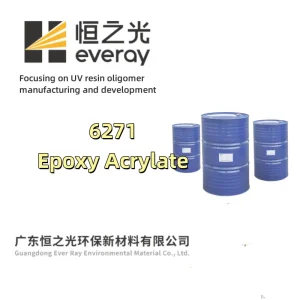
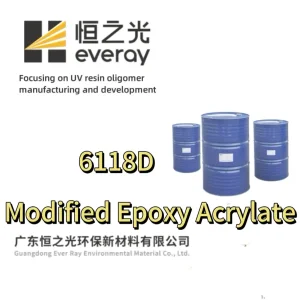
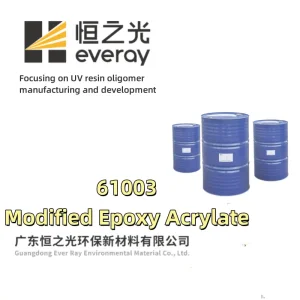
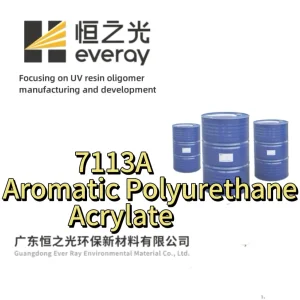
Featured High-Performance Oligomers & Diluents
Explore our top-tier industrial formulations tailored for high cure speeds, mechanical scratch resistance, and low surface-inhibition dynamics.
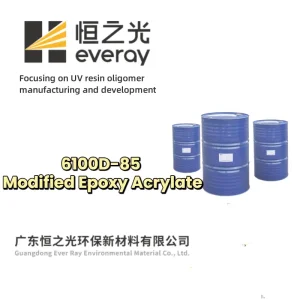
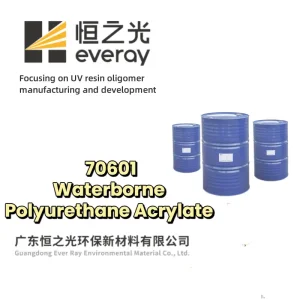
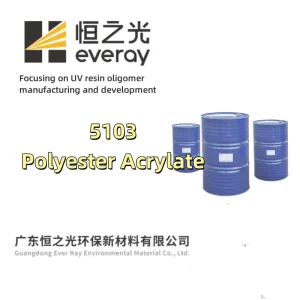
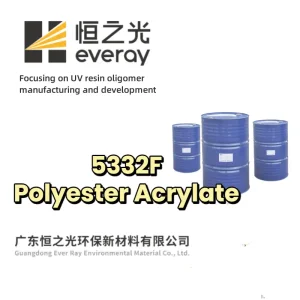
Global Commercial Landscape & Industrial Demand
The international coatings, graphics, and electronics industries face intense pressure to reduce Volatile Organic Compounds (VOCs), eliminate hazardous air pollutants, and enhance production speeds.
Dendritic Architectural Superiority
Conventional linear prepolymers face an unavoidable trade-off: increasing molecular weight to improve hardness drastically amplifies resin viscosity. Hyperbranched Acrylate Oligomers solve this with a 3D globular structure. Their non-entangling chains maintain remarkably low viscosity while offering up to 16 reactive terminal groups per molecule.
Rapid Dual-UV/LED Curing Dynamics
With terminal acrylate functionality exceeding that of standard epoxy or polyester acrylates, hyperbranched matrices yield an exceptional density of radical initiation sites. This delivers instant, tack-free surface conversion, fully overcoming oxygen inhibition even on thin-film gravure lines running at speeds over 300 meters per minute.
Sub-Nanometer Shrinkage Control
Volumetric shrinkage is a major cause of micro-cracking and delamination on non-porous substrates like PET, COP, glass, and polished alloys. The internal voids of the hyperbranched sphere absorb curing stresses internally, keeping macroscopic volumetric shrinkage under 2.5%, compared to 7-12% in standard acrylic polymers.
Guangdong Ever Ray: Factory Efficiency & Supply Chain Resilience
Situated in Jiangmen and Yunfu, Guangdong, Ever Ray combines extensive chemical synthesis capabilities with integrated supply chain logistics to deliver industrial-scale photopolymer resins worldwide.
Direct Upstream Integration
We source acrylic acid, polyols, aliphatic isocyanates, and core branching intermediates directly from world-class petrochemical partners. This shields our clients from the pricing volatility of monomer brokers and guarantees uninterrupted manufacturing capacity.
Process Synthesis Optimization
Through proprietary polycondensation catalytic pathways, Ever Ray achieves precise control over the Degree of Branching (DB) and Polydispersity Index (PDI). Our automated DCS reactors run on tightly monitored thermal gradients, ensuring every drum matches its exact molecular weight specification.
Global Export Readiness
Operating adjacent to major Pearl River Delta container ports (Guangzhou, Shenzhen), Ever Ray supplies customers across North America, Europe, East Asia, and the Middle East. Shipments include complete technical dossiers: GPC traces, FTIR fingerprints, TDS, and multi-language SDS.
Localized Application Scenarios & Formulation Matching
From electronic touchscreens to industrial roll-to-roll printing, hyperbranched acrylate architectures provide the physical properties required across diverse manufacturing lines.
3C Consumer Electronics & Hard Coats
Engineered for mobile phone housings, laptop chassis, and automotive center consoles. Incorporating 15-30% Ever Ray 4600 hyperbranched resin achieves 4H-6H pencil hardness on polycarbonate (PC) and PMMA substrates, withstanding more than 2,000 cycles of steel wool abrasion without hazing.
UV Inkjet, Flexographic & Offset Inks
High pigment loadings typically spike ink viscosity, causing nozzle clogging and jetting instability. The compact globular footprint of hyperbranched acrylates provides strong pigment wetting, reducing viscosity by up to 35% compared to linear polyesters and enabling clean droplet formation at high printing frequencies.
High-Resolution SLA, DLP & LCD 3D Printing
In additive photopolymer manufacturing, hyperbranched oligomers deliver fast cure response at 385nm and 405nm LED wavelengths. They boost layer-to-layer green strength while controlling thermal shrinkage, preventing curling, layer separation, and part distortion during post-cure baking.
| Performance Indicator | Standard Linear Acrylate | Multifunctional Monomer (TMPTA) | Ever Ray Hyperbranched Acrylate |
|---|---|---|---|
| Functional Groups / Molecule | 2.0 – 3.0 | 3.0 – 4.0 | 6.0 – 16.0 (High Density) |
| Viscosity (mPa.s at 25°C) | 15,000 – 80,000 | 60 – 120 | 800 – 3,500 (Moderate / Low) |
| Volumetric Shrinkage (%) | 6.0% – 11.0% | 10.0% – 14.5% | < 2.2% (Minimal Stress) |
| Cure Speed (Energy mJ/cm²) | 150 – 250 | 100 – 180 | 30 – 60 (Ultra-Fast) |
| Crosslink Density & Scratch | Moderate / Flexible | High / Brittle | Very High / Tough & Impact Resistant |
Industry Trends: The Shift toward Hyperbranched Topologies
Regulatory compliance and energy costs are driving photopolymer formulators away from conventional chemistries toward hyperbranched polymers.
Eliminating Monomer Hazards
Regulatory reviews of low-molecular-weight reactive diluents (such as TPGDA, HDDA, and TMPTA) are tightening across the EU and North America due to skin sensitization and aquatic toxicity. Hyperbranched acrylates achieve processable viscosities without relying heavily on small-molecule monomers, helping formulators maintain worker safety and comply with REACH regulations.
Adapting to LED-UV Curing
As mercury vapor lamps are phased out in favor of energy-efficient 365nm, 385nm, and 395nm UV-LED arrays, curing formulations face reduced deep-UV photon flux, often leading to surface tackiness. The high local acrylate concentration in hyperbranched structures speeds up free-radical cascade reactions, maintaining fast line speeds under lower-output LED sources.
Bio-Based Renewable Backbones
Industry demand for lower cradle-to-gate carbon footprints is pushing resin design toward sustainable inputs. Ever Ray actively synthesizes hyperbranched polyester cores using bio-based polyols derived from vegetable oil polycondensation, providing an alternative to petroleum feedstocks without compromising UV reactivity or cured film hardness.
Procurement Engineering & Strategic Sourcing
We support formulators and procurement teams with responsive technical service, pilot-to-bulk scale-up, and reliable batch-to-batch consistency.
Clear Product Documentation
Every batch is verified through Gel Permeation Chromatography (GPC), rotational rheometry, and titration for residual acid content. Shipments include verified TDS and GHS-compliant SDS.
Sample Trials & Scale-Up
We provide expedited 1kg-5kg laboratory samples for bench-scale formulation trials, followed by 20kg pail pilots and 200kg drum or 1000kg IBC bulk deliveries as formulations advance.
Formulation Optimization
Our R&D chemists collaborate with client technical teams to optimize photoinitiator selection, adjust active amine synergists, and balance reactive diluent ratios to solve oxygen inhibition or embrittlement issues.
Storage & Transport Stability
With optimized radical inhibitor packages (MEHQ/phenothiazine balances), our resins maintain a verified shelf life of 6-12 months under dry conditions (<30°C), protecting against premature gelation during ocean transit.
Frequently Asked Technical Questions (FAQ)
Answers to common technical and formulation inquiries regarding hyperbranched acrylate oligomers.
Traditional linear oligomers tangle in solution, increasing hydrodynamic drag and viscosity as molecular weight grows. Hyperbranched polymers adopt a compact, pseudo-spherical architecture with limited chain entanglement. This dendritic structure yields a much lower hydrodynamic radius for the same molecular weight, allowing numerous terminal acrylate groups to be accommodated without excessive viscosity buildup.
Unlike standard multifunctional monomers (such as TMPTA or DPHA), which form rigid, brittle grids, hyperbranched polymers possess flexible core branches. These internal linkages and molecular free volumes act as stress relievers during polymer crosslinking, allowing the matrix to maintain impact strength, pencil hardness, and flexibility simultaneously.
Yes. Ever Ray hyperbranched resins show wide miscibility with standard reactive diluents (TPGDA, DPGDA, IBOA, TMPTA), conventional oligomers (epoxy, polyester, polyurethane acrylates), and common Type I / Type II photoinitiators (1173, 184, TPO, 819, DETX). They can be directly blended into existing formulations to improve surface cure and hardness.
Atmospheric oxygen quenches free radicals, leading to surface tackiness in thin-film coatings and inks. The high density of surface acrylate groups on each hyperbranched molecule rapidly raises localized radical concentrations upon exposure to UV light. This accelerates initiation rates to consume dissolved oxygen faster than it can diffuse in, ensuring a dry, fully cured surface.
Specialty Portfolio & Advanced Acrylic Formulations
Explore our full line of industrial UV-curable resins, covering high-gloss coatings, flexible adhesives, and specialized functional grades.