
High-Reactivity Epoxy Acrylate Oligomer Portfolio (Phase I)
Engineered for high cure rates, exceptional surface hardness, and superior chemical resilience across UV offset, roll-coating, and vacuum metallizing systems.
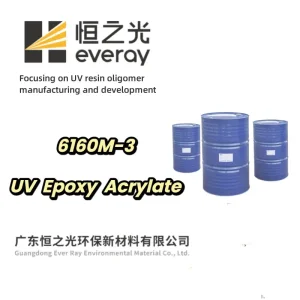
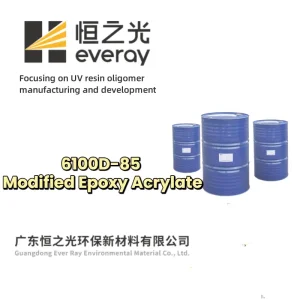
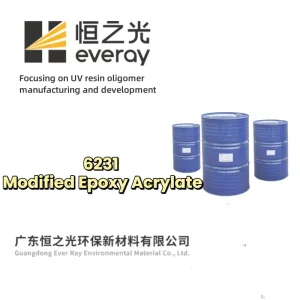
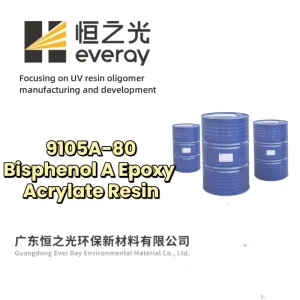
Global Commercial Landscape: Epoxy Acrylate Oligomers in Radiation Curing
Analyzing macroeconomic demand, monomer synthesis chemistry, environmental mandates, and technical shifts across the European, North American, and Asia-Pacific manufacturing belts.
Backbone Chemistry & Structural Architecture
Epoxy acrylates (EA), synthesized predominantly via the stoichiometric ring-opening addition of acrylic acid to bisphenol-A diglycidyl ether (DGEBA), represent the economic and physical backbone of the global ultraviolet (UV) and electron-beam (EB) curable coatings market. Characterized by high functionality, terminal acrylate unsaturation, and pendant secondary hydroxyl groups along the aliphatic chain, these oligomers impart exceptional reactivity under medium-pressure mercury and UV-LED excimer emissions.
- Terminal diacrylate groups ensure high crosslink density within fractional seconds.
- Hydroxyl-rich backbone delivers innate polar affinity to cellulosic, metallic, and mineral matrices.
- Rigid aromatic rings confer pencil hardness values reaching 3H–5H without thermal post-baking.
Global Decarbonization & VOC Mandates
Stringent volatile organic compound (VOC) limits set by the EU Industrial Emissions Directive (IED 2010/75/EU), US EPA Rule 1113/1151, and China GB/T 38597-2020 have expedited the displacement of traditional thermal solvent-borne varnishes. Industrial formulators are mandating 100% solids oligomeric solutions that cure via free-radical chain polymerization rather than solvent flash-off.
- Immediate reduction of Scope 1 factory emissions down to near-zero VOC outputs.
- Over 75% thermal footprint reduction compared to convective gas-fired curing tunnels.
- Zero generation of hazardous air pollutants (HAPs) in enclosed factory lines.
Macro Supply Dynamics: Resilient Sourcing
Fluctuating feedstocks—such as epichlorohydrin, bisphenol A, and acrylic acid—have exposed vulnerabilities in non-integrated specialty chemical blenders. Global procurement officers are steering direct partnerships toward backward-integrated Chinese industrial producers who maintain uninterrupted upstream monomer access, high bulk distillation capacities, and strict REACH/RoHS compliance.
- Standardized batch-to-batch polymer dispersion indexes (PDI < 1.25).
- Direct multi-metric certificates of analysis (COA) containing exact acid value and water content.
- Mitigated maritime tariff exposure through streamlined export logistics centers.
Guangdong Factory Efficiency & Supply Chain Dominance
How state-of-the-art continuous catalytic esterification, DCS-controlled automation, and scale economies empower Ever Ray to outperform standard toll chemical blenders.
DCS Automated Synthesis & Exotherm Control
The addition reaction of acrylic acid to the oxirane ring of epoxy resin is fiercely exothermic. Without precise calorimetric controls, thermal localized runaways cause oligomer dimerization, premature acrylic gelation, and color shifts. Ever Ray’s Yunfu and Jiangmen installations employ automated Distributed Control Systems (DCS) with multi-zone heating/cooling loops, ensuring isothermal batch control within ±0.8°C across 30-ton stainless steel reactors.
Benefit: Zero residual oxirane drift and minimal batch-to-batch viscosity variance.
Proprietary High-Selectivity Catalysis
Traditional quaternary ammonium or tertiary amine catalysts often leave high ionic residues that accelerate yellowing and degrade the dielectric constant of the cured matrix. Ever Ray utilizes modified chromium and organotin-free complex catalysts that drive oxirane conversion past 99.5% at lower thermal thresholds (95–105°C), virtually eliminating thermal autoxidation and residual free acid impurities (<0.5 mg KOH/g).
Benefit: Exceptional initial Gardner color (<1.0) and pristine shelf-life stability exceeding 12 months.
Pearl River Delta Chemical Logistics Nexus
Situated in the heart of South China's chemical manufacturing corridor, our production footprint offers unparalleled proximity to primary monomer refineries (Shenzhen, Huizhou, Guangzhou) and direct intermodal ports (Nansha, Yantian, Hong Kong). This spatial efficiency slashes lead times, guarantees stable drum/IBC/ISO-tank packaging, and secures freight rates resilient to global transport bottlenecks.
Benefit: Rapid delivery windows down to 7–14 days for standard export shipping lanes.
Localized & Global High-Performance Application Scenarios
Bridging polymer chemistry with substrate micro-mechanics: How custom-modified epoxy acrylates conquer wood, electronic packaging, graphic arts, and metal finishing.
1. Automated UV Wood & Parquet Flooring
In high-speed roller coating lines processing oak, walnut, and engineered bamboo flooring (processing speeds >45 m/min), epoxy acrylates form the indispensable sealer and sanding primer layers. Grade 6100D-85 and 6102 excel in penetrating wood micro-pores, locking loose fibers, and preventing resin sink-in. Their high crosslink density provides rapid sandability (König hardness >110 s after 120 mJ/cm²), resisting clogging of sanding belts while maintaining elasticity against substrate humidity expansions.
2. UV Inks & High-Speed Graphic Arts
In UV offset, screen, and flexographic packaging printing, binder systems face rigorous shear stresses. Standard unmodified bisphenol A diacrylates suffer from excessive Newtonian viscosity (>50,000 mPa.s at 25°C) and poor pigment wetting. Ever Ray’s modified grades such as 6805A-1 and 6231 incorporate flexible ester and amine linkers, lowering tack, boosting pigment wetting (dispersion fineness <5 µm), and ensuring immaculate water-ink rheological balance on lithographic dampening rollers.
3. 3C Consumer Electronics & Vacuum Metallizing
Polycarbonate (PC), ABS, and PC/ABS smartphone chassis and automotive interior trims require high-gloss, crystal-clear topcoats that withstand thermal shocks and human sweat. Standard epoxy acrylates can suffer from photolytic yellowing due to UV degradation of the aromatic ether linkage. Our modified yellowing-resistant grade 67283 integrates aliphatic spacers and alicyclic epoxides, passing 500 hours of QUV-A accelerated weathering without chalking (ΔE < 1.5).
4. PCB Solder Masks & Electronic Encapsulation
In liquid photoimageable solder masks (LPISM) and conformal coatings, epoxy acrylates modified with acid anhydrides provide dual-cure functionality: UV photopolymerization for high-resolution image exposure followed by thermal epoxy-carboxyl curing. The resulting crosslinked network exhibits dielectric breakdown strength exceeding 25 kV/mm, halogen-free UL94 V-0 flame retardance, and total resistance to hot wave-soldering flux shocks at 260°C.
5. Optical Adhesives & Shadowless UV Bonding
Optical-grade glass-to-metal and acrylic assembly requires rapid green-strength fixture within 3 seconds under low-power LED 365/395 nm sources. Grade 6200D and 6271 reduce volumetric shrinkage from the standard 7.5% down to under 2.8%, completely eliminating interfacial delamination, optical birefringence, and Newton ring defects across display cover-glass lamination.
Technical Characterization Matrix: Standard vs. Modified Epoxy Acrylates
Comprehensive analytical data comparing neat standard Bisphenol-A EA with Ever Ray chemically engineered grades.
| Property / Analytical Metric | Standard DGEBA-EA (Pure) | Fast-Curing (6160M-3) | Low-Shrinkage (6102) | Yellowing-Resistant (67283) | Ink-Optimized (6805A-1) |
|---|---|---|---|---|---|
| Appearance | Viscous Clear Amber Liquid | Clear Transparent Liquid | Light Yellow Clear Fluid | Water-White Liquid (<1G) | Clear Amber Liquid |
| Viscosity (25°C, mPa.s) | 45,000 – 65,000 | 12,000 – 25,000 | 8,000 – 18,000 | 15,000 – 28,000 | 20,000 – 35,000 |
| Functionality (Theoretical) | 2.0 | 2.5 – 3.0 | 2.0 | 2.0 | 2.2 |
| Acid Value (mg KOH/g max) | 2.0 | 1.0 | 0.8 | 0.5 | 1.2 |
| Volumetric Shrinkage (%) | 7.2 – 8.5% | 5.8 – 6.5% | 2.8 – 3.5% | 4.5 – 5.2% | 4.2 – 5.0% |
| Glass Transition Temp (Tg, °C) | 65 | 78 | 48 | 58 | 52 |
| Cure Rate (80W/cm Hg lamp) | 25 m/min | >55 m/min | 30 m/min | 35 m/min | 40 m/min |
| Solvent Resistance (MEK Rubs) | >100 | >250 | >120 | >150 | >180 |
Horizon Technology: Industry Trends Driving Next-Gen Oligomers
Strategic directions defining the roadmap of high-end radiation-cured macromolecular systems for 2025 and beyond.
1. UV-LED Monochromatic Curing at 365/385/395 nm
The phasing out of toxic mercury vapor lamps under the Minamata Convention on Mercury requires resins designed specifically for long-wave monochromatic emission (385–395 nm). Traditional epoxy acrylates rely on short-wave surface absorption (254 nm) to conquer atmospheric oxygen inhibition. Ever Ray's newest amino-modified and amine-functionalized epoxy acrylates incorporate internal hydrogen donors, eradicating surface tackiness and achieving instantaneous through-cure under 4W/cm² LED modules.
2. High Renewable Carbon Content (Bio-based EA)
Global consumer electronics and luxury packaging conglomerates demand verified carbon footprint reductions. By substituting petrochemical bisphenol-A diglycidyl ether with epoxidized soybean oil (ESBO), cardanol-derived glycidyl ethers, and isosorbide derivatives, our green synthetic division achieves bio-based carbon contents exceeding 35% (ASTM D6866 certified) without sacrificing pencil hardness or tensile modulus.
3. Waterborne UV (WB-UV) Emulsifiable Systems
Combining the safety of water dilution with the instant cure speed of UV crosslinking, self-emulsifying epoxy acrylates functionalized with carboxylate (–COONa) or sulfonate pending groups yield stable nanometer dispersions (particle size <100 nm). Once water evaporates, UV radiation locks the film into a solvent-resistant matrix, creating natural, ultra-matte, low-build finishes for premium wood surfaces.
Global Procurement: Quality Protocols & Supply Security
How international chemical distributors, coating formulators, and ink compounders verify quality, stability, and regulatory compliance with Ever Ray.
Batch-to-Batch Consistency Assurance
To eliminate viscosity drift across high-speed industrial printing and coating machinery, each manufacturing run undergoes computerized multi-angle light scattering GPC, Brookfield rotational rheometry, and Karl Fischer coulometric titration. Viscosity is tightly restricted within ±5% of specification, acid values kept below 1.0 mg KOH/g, and residual moisture strictly limited to under 0.1%.
International Regulatory Compliance
All commercial oligomer grades comply with the latest REACH Annex XVII restrictions, RoHS 3 (EU 2015/863) heavy metal limits, TSCA inventory listings, and China IECSC. For food packaging overprint varnishes, select grades conform to the Swiss Ordinance (SR 817.023.21) and Nestlé Guidance Notes on Packaging Inks regarding ultra-low specific migration limits (<10 ppb).
Stabilization, Packaging & Ocean Logistics
Acrylate monomers and oligomers are thermodynamically vulnerable to uncontrolled thermal free-radical polymerization during trans-equatorial ocean transit. Our products are formulated with oxygen-dependent stabilizers (MEHQ, BHT) alongside dissolved oxygen control, guaranteeing 12+ months storage stability below 30°C in UN-certified 200kg steel drums, 1000kg composite IBCs, or 24,000L flexitanks.
Frequently Asked Questions (Technical & Procurement FAQ)
In-depth answers addressing formulation troubleshooting, reaction kinetics, regulatory standards, and supply chain questions.
What fundamentally distinguishes epoxy acrylates from polyurethane acrylates (PUA) and polyester acrylates (PEA)?
How can formulation chemists resolve high brittleness and curing shrinkage in epoxy acrylate films?
Why do epoxy acrylates tend to yellow under outdoor UV sunlight, and how does Ever Ray resolve this?
What reactive diluents are recommended to reduce the viscosity of neat epoxy acrylates?
What is the shelf life of epoxy acrylate oligomers, and what are the required storage conditions?
Does Ever Ray offer customized molecular tailoring for regional application requirements?
Specialty Functional Epoxy Acrylates & Specialty Resins (Phase II)
Advanced oligomer solutions tailored for shadowless glass adhesives, paper overprint varnishes, metal primers, and offset lithography.
Partner with Ever Ray Technical Specialists
Whether you are reformulating UV varnishes for LED 395nm retrofitting, optimizing offset ink tack, or resolving wood primer adhesion bottlenecks, our Guangdong polymer engineering team provides starting point formulations, customized pilot samples (1kg–5kg), and full technical data sheets (TDS) and safety data sheets (SDS).
