Core Flexible Acrylate Oligomers & Curable Systems
Select from our precision-synthesized oligomers designed for high-elasticity coatings, non-yellowing adhesives, and deep peelable matrices.
Global Flexible UV Resin Industrial Landscape & Polymer Dynamics
The global shift from solvent-borne formulations to energy-efficient radiation curing necessitates polymers that reconcile high tensile flexibility with instantaneous surface reactivity.
Molecular Mechanics of Dynamic Elasticity
Standard UV polymers present high crosslink density resulting in micro-fracturing under mechanical deflection. Flexible UV resins utilize long-chain polyether or polycarbonate polyol segments within the polyurethane acrylate (PUA) backbone. These soft segments act as internal plasticizers, lowering the glass transition temperature (Tg) down to -20°C to 15°C without compromising radical conversion rates. This molecular architecture ensures high elongation at break (up to 250%) and cyclic fatigue resilience.
Overcoming Shrinkage & Substrate Stress
Free-radical photopolymerization of acrylic double bonds intrinsically produces volumetric shrinkage between 6% and 15%, inducing severe peeling stresses on non-porous flexible substrates (PET, TPU, untreated PC). Ever Ray's flexible formulations utilize bulky aliphatic structures and modified mono-/di-functional pure acrylates to curb shrinkage stress below 1.8%, preserving interface integrity and crosshatch adhesion (ISO Class 0 / ASTM 5B) over extreme environmental cycles.
Global Regulatory Compliance & Green Mandates
Stricter environmental mandates, including EU REACH SVHC limits, US TSCA revisions, and regional Zero-VOC airborne pollution limits, are phasing out conventional post-cure solvent diluents. Flexible UV curing systems represent 100% solid, solvent-free solutions. Our chemical synthesis maintains ultra-low residual monomer volatility, drastically reduces human skin irritation index scores, and provides clean degassing suitable for sensitive electronics encapsulation.
China Factory Efficiencies: The Scaled Manufacturing Paradigm
Operating from our 40,000 m² state-of-the-art production base in Yunfu, Guangdong, Ever Ray combines synthesized oligomer consistency with unmatched global logistics responsiveness.
Upstream Feedstock Integration
Our strategic location within the Pearl River Delta chemical cluster grants immediate direct access to primary petrochemical reagents (IPDI, HDI, TMP, acrylic acid). This geographic upstream integration shields global B2B buyers from international raw material price volatility, compresses raw synthesis lead times, and stabilizes supply chains for large-tonnage procurement.
Precision Analytical QC Validation
Every export lot undergoes comprehensive testing: Brookfield rheology profiling across multiple temperature points, double bond conversion determination via Fourier Transform Infrared Spectroscopy (FTIR), and yellowing index (ΔE) aging in QUV accelerated weathering chambers. Buyers receive comprehensive Certificate of Analysis (COA) documents ensuring instant plant drop-in compatibility.
Agile Pilot Synthesis & Custom Tuning
Beyond standard wholesale grades, our R&D group synthesizes pilot batches tailored to proprietary OEM requirements within 7-14 business days. Whether a formulator requires functional acid value adjustment for vacuum metallization or specific amine modifications to overcome intense air inhibition under low-energy LED lights, our engineers translate bench chemistry into bulk reality.
Oligomer Architecture Performance Comparison
Evaluate polymer families based on mechanical behavior, cure speed, and environmental resilience parameters.
| Polymer Family | Tensile Elongation (%) | Shore Hardness | Viscosity (mPa.s @ 25°C) | Shrinkage Rate | Primary Industrial Use Case |
|---|---|---|---|---|---|
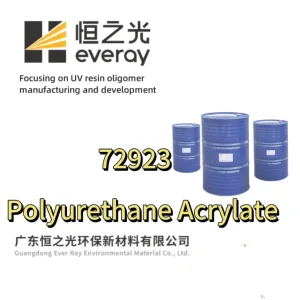
| Aliphatic PUA (e.g., 72923) | 120% – 250% | 45D – 65D | 5,000 – 25,000 | < 2.0% | Optical films, flexible peelable coatings, exterior labels |
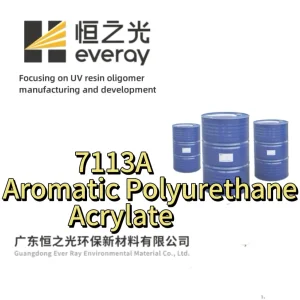
| Aromatic PUA (e.g., 7162) | 40% – 90% | 70D – 80D | 15,000 – 45,000 | < 3.5% | Flexible floor finishes, metallizing basecoats, industrial inks |
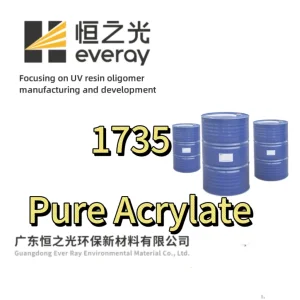
| Pure Acrylate Resins | 80% – 180% | 35D – 55D | 3,000 – 12,000 | < 1.5% | Pressure sensitive adhesives (PSA), plastic casing flex-lacquers |
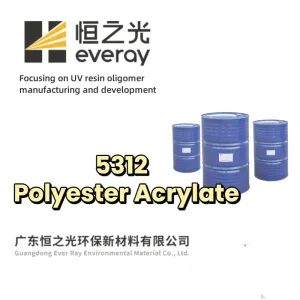
| Polyester Acrylates (e.g., 5312-A) | 15% – 45% | 60D – 75D | 800 – 4,000 | < 5.0% | High-speed flexographic inks, offset overprint varnishes (OPV) |
| Modified Epoxy Acrylates (e.g., 6100D) | 5% – 20% | 80D – 90D | 10,000 – 60,000 | < 6.5% | Rigid/semi-rigid wood sanding sealers, anti-scratch topcoats |
Precision Industrial Applications for Flexible UV Formulations
Resolving adhesion failures, stress cracking, and atmospheric yellowing across severe end-use environments.
Foldable Displays & Wearables
Next-gen flexible OLED panels, wearable health trackers, and smart surfaces undergo thousands of continuous dynamic bend cycles (R < 2mm). Aliphatic flexible polyurethane acrylates provide elastomeric recovery without hinge whiteline cracking, micro-delamination, or optical haze accumulation over time.
UV Temporary Peelable Masks
In wafer dicing, precision electroplating, and aerospace PCB fabrication, temporary protective films must peel cleanly without residue. Grade 72923 enables high cohesive strength and tunable substrate tack, ensuring the film remains stable during acid etching and peels away in one continuous sheet.
Functional 3D Printing Elastomers
Additive manufacturing systems (DLP/LCD) for midsoles, automotive gaskets, and orthopedic orthotics require resin with rapid vat recoat viscosity (< 1,200 mPa.s) and high rebound elasticity. Blending our low-viscosity flexible acrylates ensures high tear strength and isotropic dimensional durability.
High-Speed Flexible Packaging Inks
Modern flexo/gravure presses running BOPP, PET, and aluminum foils at 300+ m/min require inks that endure post-print slitting, creasing, and heat sealing. Our polyester and pure acrylates impart superior pigment wetting, rapid LED surface cure, and zero ink-flaking along deep package seams.
Technological Trajectories & Strategic Procurement Demands
Anticipating evolving material demands driven by spectral shifts and decarbonized supply chains.
The Complete Shift to Long-Wave LED (365–405nm)
Industrial coating lines are decommissioning broad-spectrum mercury lamps in favor of energy-efficient UV-LED arrays. Because LEDs lack shortwave UVC output, oxygen inhibition often produces tacky surfaces on soft, flexible resins. Ever Ray’s next-gen amino-modified acrylate oligomers act as built-in hydrogen donors, quenching dissolved oxygen and securing tack-free surface cures at low irradiance.
Waterborne Polyurethane Acrylate (WB UV-PUD)
Where extreme ultra-thin film builds (< 5 microns) or zero monomer migration is required (e.g., luxury leather, automotive interior skins), water-dilutable UV polyurethane dispersions are replacing 100% solids monomers. These aqueous systems coalesce upon mild water flash-off, curing instantly into a soft, breathable, yet scratch-resistant finish.
Bio-Based Feedstock Syntheses
Enterprise procurement mandates now routinely demand documented carbon footprint reductions (Scope 3 GHG reporting). Our developmental lab is successfully incorporating dimer fatty acid-based diols, bio-succinic acid, and itaconic acid derivatives into our flexible oligomer backbones, achieving over 40% certified renewable carbon content without performance drop-off.
Wholesale Flexible UV Resin Technical FAQ
Answers to critical formulation, curing parameter, and international procurement questions.
How does backbone structure affect aliphatic vs. aromatic flexible UV resins?
Aliphatic polyurethane acrylates (PUAs) are synthesized using aliphatic diisocyanates (such as IPDI or H12MDI), yielding polymer chains free from conjugated double bonds. This structure guarantees exceptional yellowing resistance (ΔE < 1.0 after 1,000h QUV test) and high weatherability, making them optimal for exterior films and optical topcoats. Aromatic PUAs (based on TDI or MDI) provide higher tensile strength, faster cure response, and superior cost-effectiveness, but yellow under UV sunlight exposure, making them ideal for indoor primers, wood finishes, and pigmented industrial layers.
How can formulators eliminate surface stickiness caused by oxygen inhibition in flexible resins?
Flexible UV resins exhibit lower crosslink densities, allowing atmospheric oxygen to diffuse more deeply into the wet film during radiation, terminating radical reactions and leaving a sticky monomeric layer. Solutions include: (1) incorporating copolymerizable amino acrylate synergists (such as Ever Ray amino acrylates) to scavenge peroxy radicals, (2) blending high-reactivity modified mono-functional monomers that accelerate vitrification, or (3) optimizing photoinitiator packages by pairing Type I cleavage initiators (e.g., TPO or 1173) with amine-functional Type II co-initiators.
Which reactive diluents best maintain elasticity without increasing film shrinkage?
To preserve flexibility while reducing the high viscosity of urethane oligomers, avoid high-functionality monomers like TMPTA or DPHA, which drastically increase crosslinking and induce brittleness. Instead, utilize bulky mono-functional acrylates such as Isobornyl Acrylate (IBOA) for toughness, 2-Phenoxyethyl Acrylate (PHEA) for refractive index balance, or long-chain aliphatic mono-acrylates (such as Lauryl Acrylate) for softness. Ring-containing mono-functional monomers maintain high flexibility while limiting shrinkage stress below 2%.
What export packaging, storage, and shelf-life conditions apply for wholesale orders?
Ever Ray supplies wholesale UV resins in standard 20kg black HDPE pails, 200kg lined steel drums, and 1,000kg intermediate bulk containers (IBCs) with total UV light-blocking barriers. Resins contain proprietary radical stabilizers (e.g., MEHQ inhibitors) providing an unopened shelf life of 12 months when stored below 30°C in dry, well-ventilated warehouses away from direct heat sources. Full export documentation (GHS SDS, TDS, RoHS/REACH statements, and certified maritime packing declarations) is provided with each shipment.
Specialty High-Performance Resin Systems
Select from our specialized grades designed for vacuum metallizing, weather-resistant tapes, and high-clarity overprint varnishes.