
Core Product Lineup
High-Performance Precision Resin Formulations
Engineered for coating, printing ink, vacuum metalizing, and precision potting workflows requiring uncompromising thermal, yellowing, and mechanical resistance.
High-Quality 5650F UV resin for UV varnish and printing ink
Product Details & TDS
High-Quality Durable 6271 UV resin: very suitable for UV adhesive with low yellowing risk
Product Details & TDS
Buy 6102 UV Resin: Enhanced low shrinkage epoxy acrylate, perfect for UV wood coatings
Product Details & TDS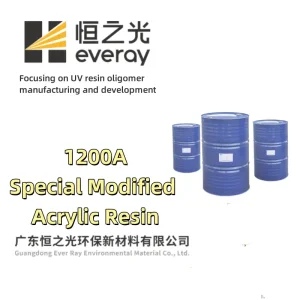
High-Quality 1200A UV resin in adhesion of density-board primer and metal-substrate
Product Details & TDS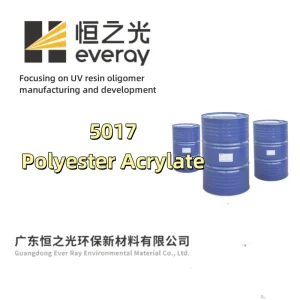
Buy UV Resin 5017 with Low Odor, Low Shrinkage for UV Inks and Varnishes
Product Details & TDS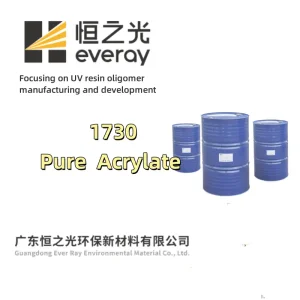
High-Quality Fast curing and strong adhesion 1730 UV resin suitable for vacuum plating
Product Details & TDS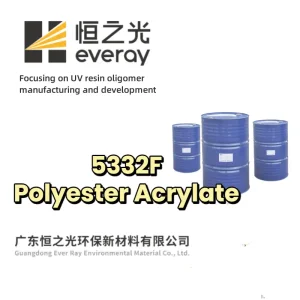
Buy Polyester Acrylate 5332F – The Premium Choice for Offset Inks
Product Details & TDSIndustrial Chemistry & Engineering
Molecular Architecture: Polyurethane Acrylates vs. Modified Epoxy Resins
Understanding backbone dynamics allows coatings formulators to break traditional performance compromises between hardness, elongation, shrinkage, and optical transparency.
Aliphatic Polyurethane (PUA)
Constructed using cycloaliphatic or linear aliphatic diisocyanates (such as IPDI or HDI), our aliphatic urethane acrylates avoid the UV-induced photo-Fries rearrangement that causes polymer discoloration. They provide exceptional QUV weathering resilience, high flexibility, and sustained scratch-recovery memory for high-end optical and automotive topcoats.
Aromatic Polyurethane Acrylates
Leveraging TDI/MDI segments, aromatic systems deliver high modulus, superior tensile strength, and exceptional mechanical abrasion resistance at a competitive raw material position. These resins are the primary choice for indoor architectural wood finishes, resilient flooring coatings, and heavy-duty industrial primer barriers.
Modified Epoxy Acrylate Oligomers
Derived from Bisphenol-A diglycidyl ether cross-linked with acrylic acid and functional caprolactone/amine modifications. They achieve extreme surface cure reactivity, 4H-6H pencil hardness, and robust chemical resistance against solvents, acids, and alkalis, while eliminating the inherent embrittlement of standard epoxy networks.
| Resin Classification | Tensile Modulus (MPa) | Elongation at Break (%) | Cure Response (mJ/cm²) | QUV-A 1000h (ΔE) | Target Substrates |
|---|---|---|---|---|---|
| Aliphatic PUA Oligomers | 450 - 1,200 | 25% - 140% | 250 - 400 | < 1.2 (Superior) | PC, PMMA, TPU, Metal Foils |
| Aromatic PUA Oligomers | 1,200 - 2,400 | 8% - 35% | 180 - 300 | > 5.0 (Yellowing-Prone) | Hardwood, Rigid PVC, Melamine |
| Modified Epoxy Acrylates | 2,000 - 3,500 | 2% - 8% | 80 - 150 (Fastest) | < 2.5 (Moderate) | Glass, Dense Fiberboard, Steel, Paper |
| Hyperbranched / Multi-functional | 2,800 - 4,200 | 1% - 4% | 60 - 120 | < 1.8 | Optical Films, 3C Electronic Shells |
Application Engineering
Localized Industrial Applications Across Global Markets
From high-speed automated consumer electronics assembly to rigorous architectural standards, our materials are fine-tuned for regional line speeds, humidity envelopes, and cure setups.
3C Consumer Electronics & Wearables
Applied extensively in smart terminal clusters across South China, Vietnam, and South Korea. Our aliphatic PUA coatings maintain adhesion after thermal shock testing (-40°C to +85°C), 240-hour artificial sweat resistance, and 1000-cycle steel wool rub tests without gloss reduction or micro-cracking.
High-Speed UV Offset & Flexo Inks
Developed for high-throughput commercial packaging in Europe and North America. Polyester and amino acrylate oligomers achieve rapid tack-free conversion at press speeds exceeding 400 m/min, offering low pigment flocculation, stable emulsification balance, and excellent migration controls.
Wood & Resilient SPC Flooring
Addressing rigorous North American and European emissions benchmarks, our low-shrinkage epoxy acrylates and abrasion-resistant aromatic urethanes create deep-adhesion sealing barriers on raw fiberboards, preventing humidity-driven delamination and edge swell.
Vacuum Metalizing & PVD Primers
Engineered specifically for cosmetic packaging and automotive trim reflectors. High-solids modified acrylic resins provide glass-like planarization over molded thermoplastics, allowing continuous aluminum vapor deposition without degassing bubbles or surface orange peel.
Engineering Adhesives & Electronic Potting
Optically clear structural UV formulations featuring controlled stress release during polymerization. Delivers bubble-free potting for micro-sensors, automotive cameras, and display module bonding with zero ion contamination and deep shadow-cure thermal triggers.
SLA / DLP / LCD Additive Resins
Formulated with precise photoreactivity thresholds to balance critical exposure energy (Ec) and depth of penetration (Dp). Enables functional mechanical parts with tensile modulus reaching 3,500 MPa and heat deflection temperatures (HDT) up to 130°C.
Scale, Agility & Reliability
China Factory Supply Chain Resilience & Global Execution
Combining an integrated chemical supply cluster with automated synthesis reactors and strict statistical process control (SPC) to guarantee batch-to-batch consistency and continuous delivery worldwide.
Raw Material Integration
Direct upstream linkages to key precursor streams—including acrylic acid, epichlorohydrin, isophorone diisocyanate (IPDI), and polyols—shield our downstream partners from raw material market shocks, volatile lead times, and unhedged spot-price fluctuations.
DCS Fully Automated Synthesis
Production runs within closed Distributed Control System (DCS) reactors equipped with precision temperature gradient control (±0.5°C) and automated monomer dosing, ensuring tight polydispersity indexes (PDI), zero unreacted residues, and strict viscosity windows.
Global Export Packaging & Logistics
Standardized export containers include 25kg steel pails, 200kg nitrogen-purged drums, and 1,000kg ISO-certified IBC totes with anti-static liners. Located near major Greater Bay Area ports, we deliver streamlined container loading and rapid ocean freight customs turnaround.
Future Strategy
Technology Roadmap & Sustainable Horizons
Aligning next-generation polymer architecture with global decarbonization policies, bio-content standards, and advanced dual-cure engineering requirements.
Waterborne UV Polyurethane (WPUA)
Developing anionic and non-ionic self-emulsifying polyurethane dispersions that achieve near-zero VOC formulations without diluent monomers. Delivering rapid water release, zero flashpoint hazards, and dry-film mechanical properties matching solvent-based systems on porous wood and leather.
Bio-Based Renewable Carbon Resins
Synthesizing aliphatic and modified epoxy oligomers using plant-derived itaconic acid, succinic acid, and natural cardanol structures. Target formulations achieve 30% to 55% verified bio-based renewable carbon content (ASTM D6866) while retaining core industrial-grade performance.
LED-UV & Dual-Cure Hybrid Chemistries
Refining absorption profiles matched to 365nm, 385nm, 395nm, and 405nm narrow-band LED curing sources. Combined UV/thermal and UV/moisture dual-cure systems address shadow zones in complex geometries, thick composite lamination, and three-dimensional electronics potting.
Quality Assurance & Governance
Global Regulatory Compliance & Analytical Testing
Ensuring full technical alignment with international safety standards, hazardous substance restrictions, and rigorous testing regimes for worldwide market entry.
REACH & RoHS Compliance
All commercial grades are formulated to comply with EU REACH SVHC candidate lists, RoHS restrictions, California Proposition 65, and heavy metal limitations, supported by complete SDS documentation in 16 languages.
Batch-Level CoA Documentation
Every commercial production batch undergoes Brookfield viscosity verification, acid value titration, color determination (Gardner scale), and solid-content testing. CoAs accompany all export shipments with guaranteed traceability.
Lab Sampling & Custom Formulation
Our application engineering center provides 1kg-5kg lab evaluation sample containers, starting formulation guides, and custom backbone tuning to assist technical teams through preliminary line trials and commercial scaling.
Technical Help Desk
Frequently Asked Technical & Commercial Questions
Clear, direct engineering answers to help purchasing and R&D formulators make informed material decisions.
What are the key structural differences between Aliphatic and Aromatic Polyurethane Acrylates?
Aliphatic polyurethane acrylates utilize aliphatic isocyanate backbones (such as IPDI or HDI), which lack conjugated aromatic rings. This eliminates susceptibility to UV photo-degradation and yellowing, making aliphatic grades the standard for exterior topcoats, clear 3C electronics housings, and cosmetic gel formulations. Aromatic polyurethane acrylates (based on TDI or MDI) provide higher initial tensile strength, faster surface curing, and exceptional scratch resistance at a more economical price point, but are intended for indoor, unexposed, or pigmented coating systems.
How does Ever Ray resolve high curing shrinkage in modified epoxy acrylate formulations?
Standard Bisphenol-A epoxy acrylates can exhibit significant volumetric shrinkage (up to 7-10%) during free-radical vinyl cross-linking, which causes curl, loss of adhesion, and internal stress on smooth substrates. Our modified series (such as 6102 and 61003A) introduces flexible polyether, polyester, or caprolactone segments into the resin backbone. This relieves internal stresses during UV exposure, reducing volumetric shrinkage to below 3-4% while preserving surface hardness and rapid line cure speed.
Which resin chemistry is recommended for vacuum metalizing and PVD topcoat systems?
Vacuum metalizing requires balanced surface tension for base leveling, zero outgassing under high vacuum, and excellent inter-coat adhesion with evaporated aluminum or chromium layers. Grade 1730 is designed specifically for vacuum plating lines, delivering rapid cure, high mirror-like reflectivity, and robust adhesion over molded plastic components without compromising intercoat bonding.
What lead times, MOQs, and export packing configurations do you provide for international orders?
Standard minimum order quantities (MOQ) start at 200kg (one standard steel drum) for commercial production grades, with sample kits available from 1kg to 20kg for initial laboratory verification. Standard production lead time is 7 to 14 days from PO confirmation. Export packaging conforms to international maritime standards, including UN-certified 200L epoxy-lined steel drums and 1,000L IBC totes, complete with heat-treated pallets and full export documentation.
Expanded Resin Selection
Targeted Oligomers for Specialty Coatings & Resilient Printing
Review our specialized portfolio of polyester acrylates, aliphatic PUA oligomers, and modified epoxy resins designed for complex industrial finishing requirements.
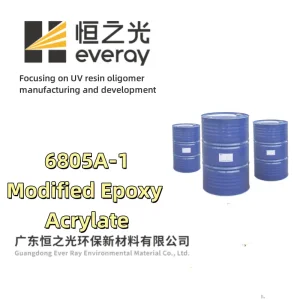
Wholesale 6805A-1 UV-resin in UV Offset Printing
Product Details & TDS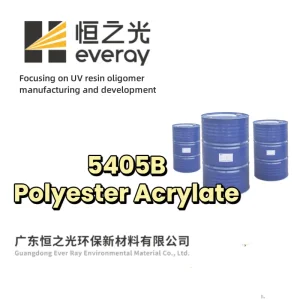
High-Quality Polyester Acrylate 5405B – A High-Efficiency Solution for Multi-Field UV Applications
Product Details & TDS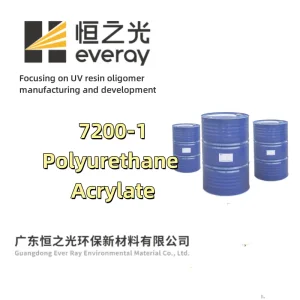
Buy Durable UV furniture coating: 7200-1 Aliphatic polyurethane acrylate UV Resin
Product Details & TDS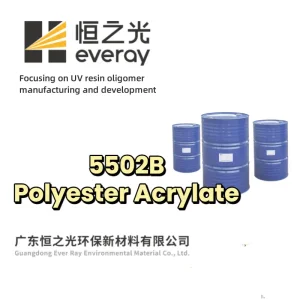
Wholesale Polyester Acrylate 5502B – Fast Reactivity, High Hardness, Low Odor
Product Details & TDS
Buy 61163 High Solid Low Viscosity Anti-Yellowing Modified Epoxy Acrylate Resin
Product Details & TDS
Wholesale High Gloss Fast Curing Modified Epoxy Acrylate Resin (UV Oligomer)
Product Details & TDS
Wholesale 7296-1: High quality polyurethane acrylate with excellent wear and impact resistance
Product Details & TDS
Buy High adhesion 6100D-85 epoxy acrylate for UV wood coating applications
Product Details & TDSCustom Synthesis & Support
Need Tailored Viscosity, Functionality, or Starting Formulations?
Our resin engineering team collaborates directly with coatings formulators, ink chemists, and production plant managers worldwide to deliver optimized UV oligomer performance.
