2006
Established Chemistry Hub
40,000m²+
Automated Plant Scale
10+ Lines
Synthetic Reactor Infra
<0.5%
Volumetric Shrinkage Matrix
Primary Synthetics
Featured Industrial Photopolymers & Oligomers
Direct-from-factory UV-curable base resins optimized for high cure kinetics, stereolithography precision, and cross-linking efficiency.
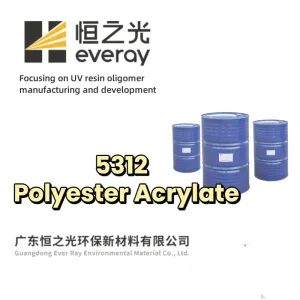
Wholesale Polyester Acrylate 5312–A High-Efficiency Multi-Purpose UV Resin Solution
Product Profile & Specs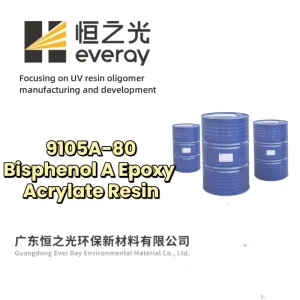
High-Quality 9105A-80: Bisphenol A Epoxy Acrylate Resin - Superior Hardness
Product Profile & Specs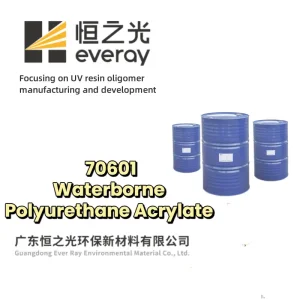
Wholesale Waterborne 70601 UV-Resin for 3D Printing, UV-Ink & Wood-Coatings
Product Profile & Specs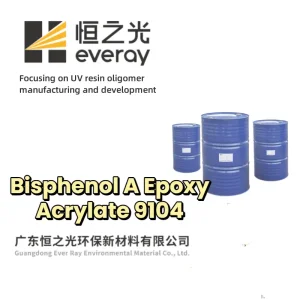
Buy Bisphenol A Epoxy Acrylate Resin 9104: A Core High-Performance UV Resin
Product Profile & Specs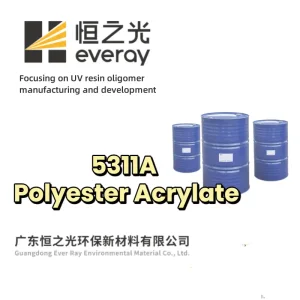
Buy Polyester Acrylate 5311A – A High-Efficiency and Durable UV Resin Choice
Product Profile & Specs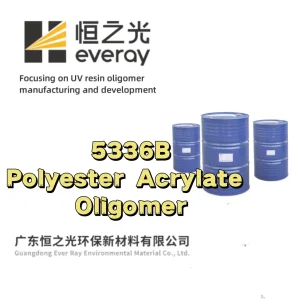
Buy 5336B High-Performance Polyester Acrylate Resin | Ultra-Fast Cure
Product Profile & Specs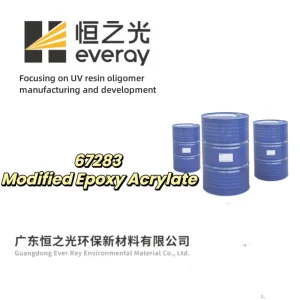
Wholesale 67283: Rapid-Setting Yellowing-Resistant Modified Epoxy Acrylate
Product Profile & Specs
Industry Macro-Dynamics
Global 3D Printing Photopolymer Landscape & Supply Chain Resilience
Analyzing the systemic transition from consumer-tier prototyping resins to high-modulus, thermally stable functional polymers across international manufacturing hubs.
Industrial Supply Chain Resilience
China's consolidated synthesis ecosystem offers raw material containment unmatched by fragmented Western suppliers. By keeping monomer distillation, isocyanate blending, and final oligomer synthesis within domestic clusters (such as Guangdong's manufacturing basin), lead-time variance drops by over 62%, eliminating offshore delivery bottlenecks.
Chemical Backbone Engineering
Commodity acrylate resins suffer from radical polymerisation shrinkage (6-10%), resulting in severe curling and residual stresses. Our dedicated R&D utilizes hyperbranched polyols and aliphatic urethane bridges to lower post-gelation shrinkage to below 1.2%, producing dimensionally stable parts that match injection molded tolerances.
Local Compliance & Safe Chemistry
Global chemical regulatory barriers demand proactive stewardship. Operating strictly under modern REACH, RoHS, EPA TSCA, and regional GHS guidelines, our manufacturing tracks trace levels of residual volatile organic compounds (VOCs) and hazardous free monomers (HDDA, TPO replacements), ensuring zero customs delays for export destinations.
Industrial Deployments
Localized Application Scenarios: Precision Performance in the Field
Photopolymer systems tuned specifically to industrial end-use criteria, bridging the gap between SLA/DLP mechanical testing and practical manufacturing.
3C Device Assemblies
Formulated for consumer electronics testing jigs and drop-impact structural prototypes. High izod impact resistance (>45 J/m) prevents breakages under rigorous automated assembly-line cycles.
Automotive Rapid Tooling
High heat deflection temperatures (HDT >110°C) engineered using bisphenol A modified epoxy acrylates provide resistance against continuous warm engine oil and air-duct aerodynamic wind tests.
Biocompatible Dental Jigs
Synthesized with ultra-purified aliphatic urethane backbones, clearing cytotoxicity, irritation, and sensitization benchmarks for short-contact surgical guides, thermoforming dental models, and castable aligners.
Microfluidic Circuitry
Exceptionally low light dispersion indices allow micron-level channel cross-linking under 385nm and 405nm DLP exposures without over-curing adjacent voids, critical for lab-on-a-chip hardware.
Engineering Performance
Comparative Polymer Matrix & Crosslinking Parameters
Empirical rheological and mechanical baseline parameters derived under controlled laboratory conditions (25°C, 405nm LED illumination, UV dose: 250 mJ/cm²).
| Resin Oligomer Family | Viscosity (mPa·s @ 25°C) | Tensile Strength (MPa) | Elongation at Break (%) | Heat Deflection (HDT @ 0.45MPa) | Core Industrial Suitability |
|---|---|---|---|---|---|
| Multifunctional Aliphatic PUA | 1,200 – 2,500 | 65 – 75 | 8 – 15% | 95°C | Consumer 3C Casings, Impact Prototypes |
| Bisphenol A Epoxy Acrylate | 4,000 – 8,000 | 75 – 88 | 2 – 4% | 115°C | Chemical Tooling, Rigid Shell Moulds |
| Low-Viscosity Polyester Acrylate | 350 – 800 | 40 – 55 | 18 – 25% | 70°C | Ultra-Fast DLP 3D Inks, Fluidics |
| Hyperbranched Polymer Acrylates | 800 – 1,800 | 80 – 95 | 1 – 3% | 140°C | Hard Coatings, Heat-Proof Insulators |
| Waterborne Polyurethane Dispersion | 100 – 400 | 25 – 40 | 80 – 160% | 55°C | Flexible Gaskets, Zero-VOC Architectural |
Future Vision
Technical Roadmap & Next-Gen Polymer Synthesis
Strategic deployment timeline outlining our research initiatives for the photopolymer industry through 2028.
2025
Bio-Mass Integration
Incorporating up to 45% bio-derived carbon backbones from plant polyols into commercial stereolithography resins without dropping reactivity thresholds below 1500 mJ/cm².
2026
Dual-Stage Thermal Hybrids
Scaling mass production of dual-cure systems: primary UV vat polymerization followed by secondary moisture- or thermal-activated cross-linking for isotropic engineering elastomers.
2027
Sub-Micron Nano-Doping
Continuous-flow synthesis incorporating in-situ surface-modified ceramic nanoparticles, boosting tensile modulus past 5.5 GPa while maintaining anti-settling stability in bulk shipping containers.
2028
Zero-Hazard Photochemistry
Complete phasing out of hazardous sensitizers and aromatic amines in favor of water-washable, completely non-hazardous Type I/II self-initiating polymer backbones.
Direct Consultation
Frequently Asked Technical & Operational Questions
Clear answers to procurement, chemical engineering, and regulatory questions for formulation teams and procurement heads.
How do factory-direct acrylate oligomers compare with off-the-shelf branded 3D resins?
Off-the-shelf consumer resins are pre-blended products loaded with high monomer concentrations and general-purpose photoinitiators that sacrifice thermal resistance and dimensional accuracy for ease of printing. Procuring primary synthetic oligomers directly from our factory enables additive manufacturing formulators to dictate specific functionalities, adjust critical working depths (Dp) and critical exposures (Ec), mitigate oxygen inhibition, and achieve targeted end-use properties at a fraction of pre-blended chemical retail costs.
How does Ever Ray guarantee batch-to-batch consistency for export clients?
Every production batch across our 40,000m² Yunfu facility runs under closed-loop PLC distributed control systems. We strictly track and document Viscosity (Brookfield CAP 2000+), Double Bond Conversion via FTIR, Acid Value, Water Content (Karl Fischer titration), and Chromaticity (Gardner scale). Every export container is delivered with complete Certificate of Analysis (CoA) records matched to identical retain samples stored for 24 months.
What engineering adjustments control viscosity without reducing cured mechanical strength?
Standard formulations dilute viscosity using high fractions of low-molecular-weight monofunctional monomers, causing brittle fractures and high shrinkage. We counter this by synthesizing hyperbranched oligomers and oligomers modified with internal flexible aliphatic segments. These generate high reactive functionality with exceptionally low intrinsic shear viscosity, keeping print vat viscosity below 1,000 mPa·s without undermining tensile yield strength.
What international chemical safety standards and export frameworks are supported?
Our products ship with verified Technical Data Sheets (TDS) and Safety Data Sheets (SDS) authored in full accordance with GHS Rev 8. Shipments comply with European REACH registration requirements, RoHS III, US TSCA chemical substance inventory, and regional port-clearance frameworks, supported by complete multimodal dangerous-goods transport certifications (UN boxes, ISO-tanks, IBC totes).
Can customized oligomer formulations be requested for proprietary printer hardware?
Yes. Our R&D team frequently designs targeted polymer backbones around specialized light-source configurations (including customized 365nm, 385nm, and 405nm engines), non-standard exposure powers, and heated vat requirements. We formulate starting recipes, select matching photoinitiator packages, and supply lab-scale validation samples for proprietary engineering applications.
Functional Formulations
Industrial Resins & Special Acrylate Solutions
Browse our portfolio of specialized polyurethane, polyester, and modified epoxy acrylates engineered for tough industrial conditions.
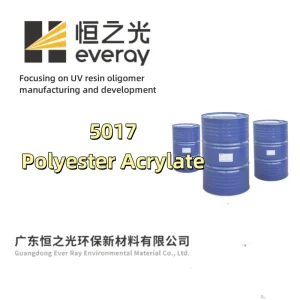
Buy UV Resin 5017 with Low Odor, Low Shrinkage for UV Inks & Varnishes
Product Profile & Specs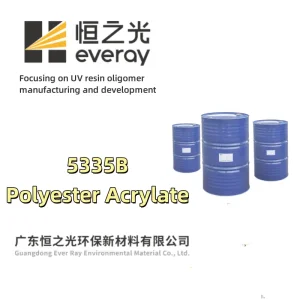
Buy 5335B UV-Resin in UV Color Inks, Varnishes, and Offset Inks
Product Profile & Specs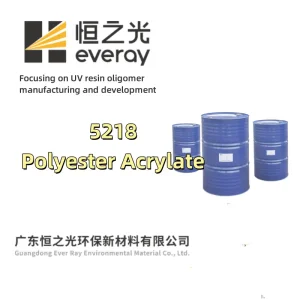
High-Quality 5218 Polyester Acrylate UV Resin: Excellent Adhesion
Product Profile & Specs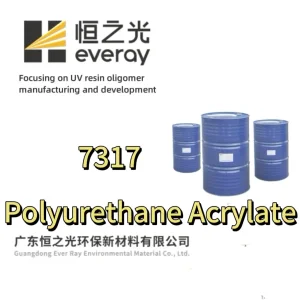
Wholesale 7317 High Reactivity Flexible Polyurethane Acrylate Oligomer
Product Profile & Specs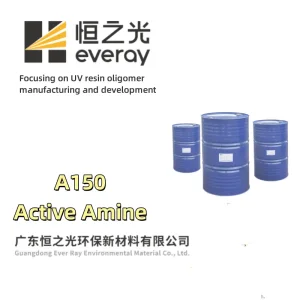
High-Quality A150 UV-Resin for UV-Ink and Protective Industrial UV-Coatings
Product Profile & Specs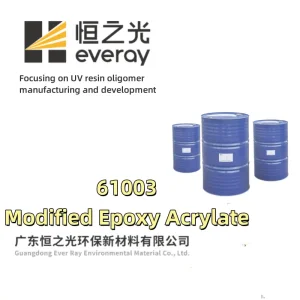
Buy 61003A UV Resin in Plastic-Film Varnish & LED-UV Packaging Formulations
Product Profile & Specs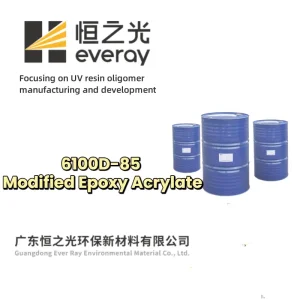
Buy High Adhesion 6100D-85 Epoxy Acrylate for UV Wood Coating Systems
Product Profile & Specs