Buy Polyurethane Epoxy Resin Manufacturer & Factory

Pioneering High-Precision Radiation Curing: Next-Generation Oligomers, Advanced Crosslinking Architectures, and Zero-VOC Sustainable Chemical Technologies Engineered for Global Manufacturing Resilience.

Direct-From-Factory Solutions

High-Performance Oligomers & UV Curable Formulations

Explore engineered aliphatic and aromatic polyurethane acrylates, high-functionality epoxy acrylates, and specialty modifiers tailored for demanding industrial cure speeds, chemical resilience, and thermal stability.
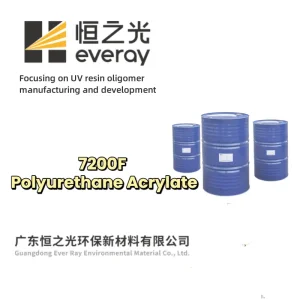
Durable 7200F Polyurethane Acrylate
7200F Polyurethane Acrylate: Heat & Cold-Resistant UV Coating
Explore Grade
Polyester Acrylate 5312A
Polyester Acrylate 5312A: Multi-Purpose High-Efficiency UV Solution
Explore Grade
7230E Polyurethane Acrylate
7230E Polyurethane Acrylate: Vacuum Plating & Exceptional Adhesion
Explore Grade
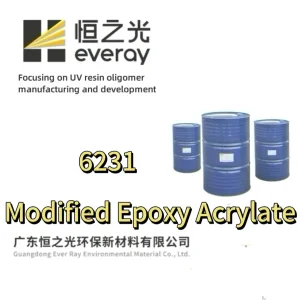
Modified Epoxy Acrylate Resin 6231
Modified Epoxy Acrylate 6231: Fast Curing for High Gloss Coatings
Explore Grade
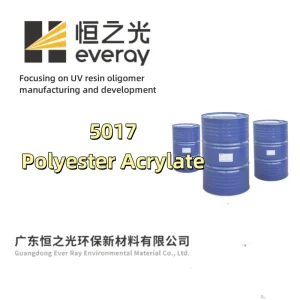
UV Resin 5017 Low Odor
UV Resin 5017: Ultra-Low Odor & Low Shrinkage for Specialty Varnishes
Explore Grade
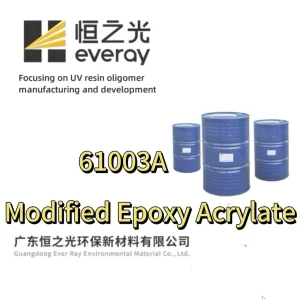
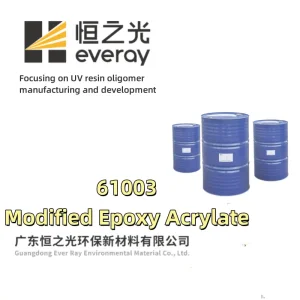
61003A Modified Epoxy Acrylate
61003A Modified Epoxy Acrylate: Tough Yellowing-Resistant Potting
Explore Grade
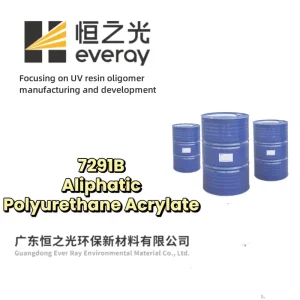
PUA 7291B
PUA 7291B: Revolutionary Backbone for High-End UV Applications
Explore Grade
Durable 6271 UV Resin
Durable 6271 UV Resin: Optically Clear Structural Adhesive Backbone
Explore Grade
2006
Pioneering Inception
40,000m²
Synthesis Plant Base
10+
Automated Reactors
100%
Lot-to-Lot Purity Assured

Industrial Paradigm Shift: Navigating Modern Polyurethane Epoxy Hybrid Resin Chemistry

In high-performance industrial coatings, microelectronics encapsulation, and functional composites, chemical formulators have historically faced an uncompromising trade-off: the rapid curing kinetics, extreme surface hardness, and unyielding chemical resistance of Bisphenol-A based epoxy acrylates versus the elastomeric elongation, non-yellowing weatherability, and dynamic impact toughness of aliphatic and aromatic polyurethane acrylates (PUA). Ever Ray's direct manufacturing platform bridges this technological divide by engineering advanced polyurethane-modified epoxy acrylate hybrid backbones that merge urethane toughness directly with high oxirane/acrylate crosslink density.

As modern regulatory bodies mandate strict compliance standards—such as EU REACH, RoHS 3.0, and stringent clean-air VOC limits—global formulators are aggressively discarding solvent-borne solutions. Buying directly from a primary synthesis manufacturer gives industrial chemists access to monomer-controlled, low-shrinkage oligomers engineered with hyperbranched architectures and customized terminal functionalities, ensuring exceptional adhesion across difficult substrates including polycarbonates, untreated polyolefins, optical glasses, and electroplated metallurgy.

Technical Insight: By fine-tuning the stoichiometric ratio of aliphatic diisocyanates (such as IPDI and H12MDI) with specialized hydroxyl-terminated epoxy precursors, Ever Ray eliminates curing shrinkage stress—reducing crosslinking micro-voids by up to 34% compared to standard bisphenol-A epoxy derivatives.

This molecular synthesis capability empowers Tier-1 coaters, packaging converters, and industrial adhesive manufacturers to compress curing cycles, eliminate post-cure thermal conditioning steps, and maintain surface brilliance under extreme mechanical stress, accelerated UV aging, and hydrolytic boiling-water testing protocols.

Primary Synthesis Direct Factory

Operated from our dedicated 40,000 m² chemical base in Yunfu, Guangdong, we control reaction temperature gradients, esterification pathways, and residual monomer levels with strict analytical chromatography.

Molecular Tailoring & OEM Formulations

Customizing oligomer functionality from mono-functional diluting acrylates to 15-functional hyperbranched urethane dendritic polymers to hit exact pencil hardness, flexibility, and refractive index targets.

International Supply Stability

Predictable bulk procurement through scalable drum and IBC packaging, backed by rigorous supply chain redundancies, consistent batch titration parameters, and reliable freight dispatch across Europe, Americas, and APAC.

System Engineering Solutions

Global Industrial Deployment: Engineering High-Stress Resilience

From high-speed automated consumer electronics assembly lines to ultra-low odor photopolymer additive manufacturing, our polyurethane and epoxy acrylate polymers deliver predictable curing kinetics under demanding industrial conditions.

3C Electronics & Vacuum Metallization

Protects smart device housings, laptop chassis, and wearable bezels against human sweat, cosmetic solvents, and abrasion. Delivers inter-layer bonding over PVD aluminum and chromium coatings without requiring primer baking.

Anti-Fingerprint 4H Pencil Hardness RCA Abrasion >300 Cycles

Additive Manufacturing & SLA/DLP Resins

Optimized low-viscosity polyurethane oligomers engineered for sub-second layer photopolymerization. Balances high tensile modulus with over 30% elongation at break, preventing part brittleness in functional engineering prototypes.

Low Shrinkage (<2.1%) High Green Strength Isotropic Dimensionality

High-Speed Offset, Flexo & Screen Inks

Formulated with hyperbranched polyester and amino-acrylate synergists to overcome surface atmospheric oxygen inhibition. Delivers superior pigment dispersion wetting indices and excellent fountain solution lithographic balance.

Fast Surface Cure Water-Ink Balance High Dot Definition

Optoelectronic & Structural UV Adhesives

Engineered for optical bonding, camera lens assembly, medical disposable joining, and smart card lamination. Exhibits minimal curing exotherm, excellent damp-heat durability, and exceptional cohesion on glass, metals, and ceramic substrates.

Double 85 Durability High Optical Clarity Thermal Cycle Resistant

Industrial Wood & Resilient Flooring

Combines sandable fast-curing epoxy acrylate sealers with ultra-tough, micro-scratch resistant polyurethane acrylate topcoats. Compatible with multi-lamp high-speed excimer matting and low-gloss LED roller lines.

Taber Abrasion Compliant Excimer Compatible Non-Cracking Flexibility

Cosmetic Gel Polish & Medical Enclosures

Biocompatible, low-heat release aliphatic polyurethane acrylates designed to protect against skin sensitization. Provides long-lasting 4-week mirror gloss, quick soak-off release profiles, and dependable yellowing immunity.

Low Exotherm Zero Yellowing HCI/Solvent Safe
Analytical Certainty

Supply Chain Integrity, REACH Compliance & Future Roadmap

Operating in compliance with stringent environmental mandates, Ever Ray provides the documented technical framework, testing validation, and chemical traceability that multinational manufacturers require.

Rigorous QA Titration Protocols and Regulatory Traceability

To eliminate batch-to-batch curing anomalies, viscosity fluctuations, and shelf-life degradation, each synthesized polymer batch undergoes extensive analytical profiling before factory dispatch. Our in-house QC laboratory utilizes Gel Permeation Chromatography (GPC) to verify precise molecular weight distributions (Mw/Mn), Fourier Transform Infrared Spectroscopy (FTIR) to ensure near-complete conversion of isocyanate (NCO) groups, and Brookfield rotational viscometry maintained under thermostatted conditions.

REACH & TSCA Compliance

Pre-registered and compliant with major chemical inventories in Europe, the Americas, Japan, and South Korea, providing friction-free border clearance.

Zero-Heavy-Metal Certifications

Tin-free catalysts and phthalate-free synthesis routes ensure conformity with medical device, toy safety, and electronic RoHS mandates.

Localized Technical Support

Our field engineering teams assist with line retrofits, lamp spectrum selection (365nm to 405nm LED-UV), and photoinitiator concentration optimization.

Next-Gen Bio-Renewable Base

Active R&D is focused on incorporating up to 45% bio-based polyols without compromising glass transition temperatures or mechanical hardness.

Engineering Knowledgebase

Frequently Asked Questions: Resin Chemistry, Formulations & Sourcing

Expert answers addressing the practical formulation hurdles faced by resin buyers, process engineers, and R&D chemists.

How does the performance of an aliphatic polyurethane acrylate differ from an aromatic grade in outdoor or optical coatings?
Aliphatic polyurethane acrylates are synthesized using aliphatic diisocyanates (such as IPDI or H12MDI) that lack conjugated aromatic rings. This molecular architecture prevents photo-oxidative degradation when exposed to sunlight and UV lamps, ensuring long-term yellowing immunity and weatherability. They are the benchmark choice for clear 3C coatings, optical adhesives, automotive plastics, and cosmetic gel applications. Conversely, aromatic polyurethane acrylates (typically derived from TDI or MDI) provide higher mechanical tensile modulus, exceptional abrasion resistance, and superior cost economy, but will yellow under direct solar exposure. As a result, aromatic grades are primarily used in indoor wood finishes, pigmented primers, industrial floor coatings, and structural potting compounds.
What formulation strategies does Ever Ray utilize to resolve oxygen inhibition in thin-film UV cure systems?
Atmospheric oxygen rapidly quenches free radicals during the initiation and propagation phases, causing a lingering, tacky, uncured surface on thin coatings, overprint varnishes, and flexographic inks. Ever Ray mitigates this through three distinct chemical avenues: First, we synthesize copolymerizable amino-acrylate oligomers and active amine synergists that donate labile hydrogens to convert non-reactive peroxy radicals back into active alkyl radicals. Second, our hyperbranched acrylate series maximizes surface crosslinking site density to outpace oxygen diffusion kinetics. Third, we assist clients in formulating balanced Type I (e.g., TPO, 1173) and Type II (benzophenone, ITX) photoinitiator systems optimized for targeted LED-UV wavelengths (385nm and 395nm) to ensure complete surface cure without high thermal spikes.
Can Ever Ray tailor oligomer viscosity and functionality for proprietary 3D printing or spray application lines?
Yes. Custom molecular synthesis is a core capability. For automated roller coaters, automated spray systems, or 3D printing equipment (SLA, DLP, LCD), formulation viscosity must remain stable and tightly controlled. We adjust molecular weights, modify backbone rigidity, and introduce specific reactive diluents (such as IBOA, TPGDA, or HDDA) directly in the reactor vessel. Our synthesis specialists can adjust functionality from flexible 2-functional oligomers up to 15-functional dendritic polymers to match client requirements for tensile elongation, pencil hardness, glass transition temperature (Tg), and substrate wetting indices.
What specific mechanisms allow Ever Ray resins to survive boiling-water immersion testing on glass and metal?
Untreated smooth surfaces like glass and anodized aluminum frequently suffer adhesive bond failure under hydrolytic stress due to moisture migration at the film-substrate interface. Ever Ray incorporates functional carboxyl, phosphate, or alcoxysilane groups directly into specialized acrylate backbones (e.g., our special functional series). These reactive functional groups form chemical coordination bonds with metal oxides and silanol groups on glass. Combined with our low-shrinkage polyurethane frameworks, internal stress during cure shrinkage is virtually eliminated, preventing micro-delamination and ensuring complete adhesion retention even after 2 to 4 hours of boiling-water immersion testing.
What documentation and quality control certifications are provided with bulk export orders?
Every shipment dispatched from our Yunfu production base is accompanied by a lot-specific Certificate of Analysis (COA) confirming verified physical parameters, including viscosity (mPa.s/25°C), color scale (Gardner), acid value (mg KOH/g), and residual NCO content. Full 16-section Safety Data Sheets (SDS) authored to GHS Rev 8 standards are supplied in English along with complete Technical Data Sheets (TDS) containing initial formulation guidance, curing energy suggestions, and compatibility profiles. We also provide REACH, RoHS 3.0, and halogen-free conformity declarations upon request.
Engineered Material Catalog

Specialized Polyurethane, Epoxy & Polyester Acrylate Series

Complete your formulation matrix with our field-proven, high-adhesion monomers, specialty functional resins, and reactive oligomers developed for performance-critical manufacturing.
5218 Polyester Acrylate
5218 Polyester Acrylate: High Pigment Wetting & Adhesion Matrix
Explore Grade
Aromatic Polyurethane Acrylate
Aromatic Polyurethane Acrylate: Vacuum Metallizing for ABS/PC
Explore Grade
5338 UV Resin
5338 Dual-Purpose UV Resin: Oligomer & Active Diluent System
Explore Grade
6100D-85 Epoxy Acrylate
6100D-85 Epoxy Acrylate: High-Adhesion Base for Wood Primers
Explore Grade
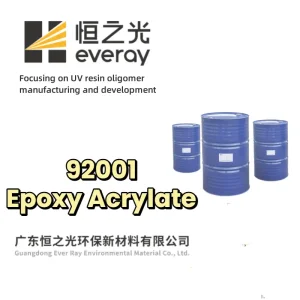
Epoxy Acrylate 92001
Epoxy Acrylate 92001: Versatile High-Speed Industrial Curing Solution
Explore Grade
61003A UV Resin
61003A UV Resin: Plastic-Film Varnish & High-Efficiency LED-UV Packaging
Explore Grade
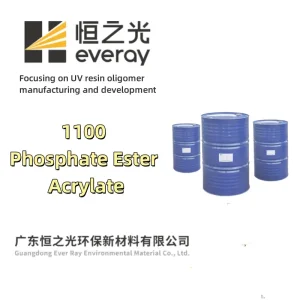
Acrylate Oligomer 1100
Strong Adhesion Oligomer 1100: Reliable UV Coating & Ink Backbone
Explore Grade

Direct Consultation with Ever Ray Chemical Engineers

Need a bespoke balance that off-the-shelf product grades cannot deliver, such as 4H pencil hardness combined with 50% flexural elongation, or boiling-water resistance on untreated metal? Our R&D synthesis team can tailor the oligomer backbone to match your exact line speeds, curing wavelengths, and substrate requirements.

Request Custom Synthesis & Evaluation Samples