High-Performance Resins & Engineering Oligomers
Explore our foundational oligomer chemistries engineered specifically for PCB photoresists, dielectric coatings, multilayer laminate bonding, and precision photopolymer prototyping.
High-Quality Polyester Acrylate 5405B – High-Efficiency Multi-Field UV Solution
Wholesale 7411B UV Resin: Low Viscosity High Solids Solution for Matte Coatings
Buy 6116 UV-Resin in Most Substrate Coating & UV Printing Inks
Buy Aromatic Polyurethane Acrylate Oligomer – High Adhesion for ABS/PC
High-Quality 6803A Modified Epoxy Acrylate Resin High Gloss Fast Curing
Buy UV Resin 5017 with Low Odor, Low Shrinkage for High Precision
Buy Polyester Acrylate 5202B – High-Performance Electronic Coatings
Buy 71209A-1 ABS-Like Engineering Resin: High Impact Structural Prototyping
Epoxy Resin Circuit Board Substrates: Polymer Architecture & Dielectric Reliability
Understanding why global hardware architects and tier-1 PCB laminators mandate tailored epoxy acrylates, cycloaliphatic systems, and modified polyphenylene oxide (PPO) blends for mission-critical electronics.
Thermodynamic Stability (High-Tg)
Modern PCB assembly relies heavily on lead-free reflow soldering profiles peak-curing at 260°C. Standard FR-4 (Tg 130°C–140°C) suffers from severe Z-axis thermal expansion under reflow shock, rupturing plated through-holes (PTH). Our modified phenolic and novolac epoxy acrylates deliver glass transition thresholds ranging from 170°C to >210°C, lowering CTE (Z-axis) below 45 ppm/°C.
High-Frequency Dielectric Performance
With millimetric 5G beamforming, satellite radar, and high-frequency cloud compute fabrics, dielectric constant (Dk) and dissipation factor (Df) govern transmission loss. Specialized brominated and non-halogenated modified epoxy systems achieve Dk < 3.6 and Df < 0.005 at 10 GHz, mitigating transmission line attenuation, parasitic cross-talk, and signal latency across high-layer backplanes.
Conductive Anodic Filament (CAF) Resistance
Electrochemical copper migration along glass-epoxy interfaces causes catastrophic short circuits in dense HDI circuits. Our patented crosslinking prepolymers enhance interfacial bonding between woven silane-treated E-glass fabrics and matrix epoxy resin, ensuring long-term CAF immunity under 85°C/85% RH bias conditions over 1,000+ testing hours.
Global Enterprise Procurement Requirements & Market Dynamics
Procurement leaders across North America, Europe, and the Asia-Pacific region are shifting away from commoditized resin brokers to direct vertically-integrated manufacturing partners who guarantee stringent quality certifications and traceable raw material security.
Rigorous Environmental Compliance
International regulatory enforcement (EU RoHS, REACH SVHC, Halogen-Free IEC 61249-2-21) penalizes non-compliant electronic components. Modern global buyers demand batch-level GC-MS testing verifying zero banned flame retardants and low outgassing characteristics under vacuum.
High Copper Peel Strength
With copper foil thicknesses shrinking to ultra-thin profiles (9µm and 12µm) for micro-trace routing, interfacial adhesion is paramount. Formulations must maintain peel strengths > 1.4 N/mm even after successive thermal cycles and thermal stress dipping at 288°C for 20 seconds.
Lot-to-Lot Rheological Consistency
In prepreg impregnation and solder mask curtain coating, viscosity variations of even ±50 mPa·s cause film thickness non-uniformity, solder voids, and pinholes. Global OEMs demand tightly controlled oligomer weight distributions (Mw/Mn) verified through Gel Permeation Chromatography.
Price-to-Performance Hegemony
Consumer electronics and electric vehicle tier-1 suppliers face fierce price compression. Direct factory procurement bypasses multi-tier trading margins, providing scale-driven bulk polymer economics without compromising baseline IPC-4101 specifications.
| Substrate / Resin Class | Tg (°C, DSC/DMA) | Dk @ 10 GHz | Df @ 10 GHz | Z-Axis CTE (α1) | Target PCB Application |
|---|---|---|---|---|---|
| Standard Difunctional Epoxy | 130 – 140 | 4.4 – 4.7 | 0.018 – 0.022 | 55 – 65 ppm/°C | Consumer IoT / Home Appliances |
| Multifunctional High-Tg Epoxy | 170 – 180 | 4.0 – 4.3 | 0.012 – 0.016 | 40 – 48 ppm/°C | Automotive ECU / Industrial Inverters |
| Low Loss Hydrocarbon/Epoxy Blend | 180 – 210 | 3.4 – 3.7 | 0.004 – 0.007 | 32 – 40 ppm/°C | 5G Base Stations / AI Compute Blades |
| Ultra-Low Df Advanced Polyphenylene/Epoxy | > 220 | 3.1 – 3.4 | 0.0018 – 0.0035 | 25 – 35 ppm/°C | Aerospace Radar / 112G SerDes Backplanes |
China Factory 4.0: Supply Chain Resilience & Process Autonomy
From raw bisphenol/novolac monomers to custom acrylated oligomers: How Guangdong Ever Ray Environmental Material Co., Ltd. deploys closed-loop automated reactors and rigorous QA labs to secure the global electronics supply web.
DCS Fully Automated Synthesis
Our dedicated Yunfu production base operates distributed control systems (DCS) monitoring exothermic esterification and acrylic functionalization down to 0.1°C temperature tolerances. Automated dosing eliminates human error in catalyst metering, guaranteeing zero residual monomers and tight epoxy equivalent weight (EEW) conformity.
Multi-Tier Laboratory Analytics
Every intermediate resin blend undergoes exhaustive testing before shipment authorization: FTIR fingerprinting, Brookfield viscosity titration, laser diffraction particle size analysis for fillers, and moisture quantification via Karl Fischer titration (< 0.1%). Complete Certificates of Analysis (COA) accompany every ISO shipping container.
Integrated Upstream Supply Resilience
Situated within Guangdong’s globally dominant chemicals and electronics industrial corridor, our facilities maintain direct bulk pipeline connections to prime petrochemical feeds (epichlorohydrin, bisphenol, acrylic acids). This insulation shields global contract manufacturers from spot-market price volatility and supply disruptions.
Localized PCB Engineering Application Scenarios
From automotive powertrain battery management systems to high-speed optical transceivers, our tailored epoxy resin formulations resolve complex thermo-mechanical stress factors.
Automotive E-Mobility & Inverter Power Boards
Electric vehicle 800V silicon carbide (SiC) traction inverters generate violent thermal swings and continuous vibrational stress. Specialized tough epoxy acrylate polymers prevent solder joint fatigue and micro-cracking across heavy-copper (3oz–6oz) boards, sustaining automotive AEC-Q200 Grade 0 durability standards.
5G Telecommunications & Massive MIMO Radars
Phased-array antenna panels demand stringent phase consistency across broad ambient temperature windows (-40°C to +85°C). By optimizing crosslink density and eliminating polar hydroxyl groups, our modified resins ensure stable Dk/Df thermal coefficients (TCDk), preserving transmission integrity across millimeter-wave frequencies.
Hyperscale AI Accelerators & Data Centers
Next-gen GPU accelerator baseboards involve complex 28+ layer stackups with high-aspect-ratio blind microvias. Our epoxy-polyester acrylates provide optimal laser ablation characteristics for smooth, smear-free CO2 and UV laser drilling, preventing inner-layer copper delamination.
Medical & Aerospace Instrumentation
Implantable biomedical monitors and flight telemetry computers must endure rigorous autoclave sterilization and high-altitude low-pressure environments. Our vacuum outgassing-certified epoxy resins comply with NASA SP-R-0022A standards (CVCM < 0.1%, TML < 1.0%), guaranteeing zero sensor contamination.
Flexible PCB (FPC) & Rigid-Flex Electronics
Wearables and foldaway mobile devices require extreme dynamic bending stamina. By incorporating aliphatic urethane acrylates into the epoxy matrix, our coverlay adhesive systems survive > 150,000 MIT bend cycles without crazing or interfacial delamination from polyimide (PI) films.
Frequently Asked Questions: Epoxy Resin Circuit Board Manufacturing
Clear, engineering-backed answers addressing substrate chemical selection, IPC testing criteria, lead-free compatibility, and direct overseas supply logistics.
Standard FR-4 uses difunctional bisphenol-A epoxy resin crosslinked with dicyandiamide (DICY), yielding a glass transition temperature (Tg) around 130°C–140°C. High-Tg circuit boards incorporate multifunctional novolac epoxy resins, phenolic novolac curing agents, and acrylated hybrid oligomers. This creates a dense, three-dimensional crosslinked polymer network raising Tg to 170°C–210°C, drastically reducing thermal expansion (CTE) and eliminating delamination during lead-free 260°C soldering.
Signal loss consists of conductor loss and dielectric loss. Dielectric loss is proportional to frequency multiplied by dielectric constant (Dk) and dissipation factor (Df). Conventional polar epoxy resins possess higher dipoles that vibrate under high gigahertz frequencies, generating heat and attenuating signals. Formulating with hydrocarbon-modified epoxy acrylates and polyphenylene ether resins drops the Df from 0.020 down to < 0.004, preserving signal amplitude across long-reach server backplanes.
While brominated flame retardants like TBBPA historically dominated the industry, current European and international standards mandate halogen-free formulations according to IEC 61249-2-21 (total chlorine < 900 ppm, total bromine < 900 ppm, total halogens < 1500 ppm). We synthesize reactive phosphorus-modified epoxy polymers (such as DOPO-derived oligomers) that chemically integrate into the polymer backbone, achieving UL 94 V-0 flame retardancy without toxic dioxin generation during disposal.
Yes. Ever Ray's chemical research team customizes molecular weight distribution, reactive monomer diluent blends (e.g., TMPTA, TPGDA, or specialized cyclic monomers), and non-yellowing acrylic backbones. We calibrate Brookfield viscosity, thixotropic index, and UV/thermal dual-cure conversion kinetics to harmonize precisely with your coating line speeds, whether you operate high-volume vertical roller coaters, electrostatic sprayers, or vacuum laminators.
Every export consignment includes a formal batch-specific Certificate of Analysis (COA) specifying viscosity, solid content, acid value, color scale (Gardner), and epoxy/hydroxyl equivalents. Furthermore, we furnish comprehensive Safety Data Sheets (SDS) conforming to GHS Revision 8, along with third-party RoHS 2.0 (10 substances), REACH 235+ SVHC screening, and UL 94 material flammability test certifications.
Standard inventory grades ship within 3–5 working days from our Yunfu chemical hub. Custom polymer synthesis batches require 10–14 days for reaction optimization, quality stabilization, and analytical sign-off. Resins are packaged in light-tight 20 kg fluorinated drums, 200 kg galvanized steel drums, or 1,000 kg IBC containers with nitrogen blanketing to ensure extended shelf stability during sea freight transit.
Specialty Acrylate Oligomers & Functional Resins
High-elasticity dual-curing resins, modified non-yellowing epoxy acrylates, and peelable masking materials designed for complex electronic packaging and surface finishes.
High-Quality PUA 7291B – Empowering High-End Precision UV Applications
Wholesale 72017A-8 Dual-Curing UV Resin: High Elasticity Low Shrinkage
High-Quality 5403-3F Polyester Acrylate for Optimal Water-Ink Balance
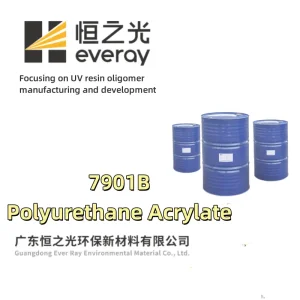
High-Quality 7901B UV-Resin Engineered for Heavy Industrial Coatings
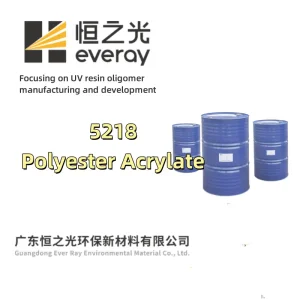
High-Quality 5218 Polyester Acrylate UV Resin: Excellent Surface Adhesion
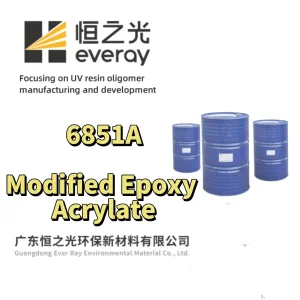
Wholesale 6851A Modified Epoxy Acrylate: High Transparency Non-Yellowing
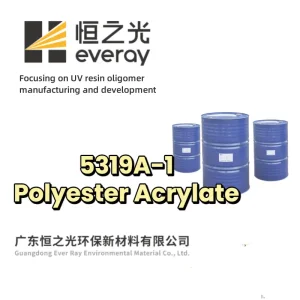
Buy Polyester Acrylate 5319A-1: Reliable Formulation Solution for Coatings