Next-Gen Waterborne Radiation Curing Technology

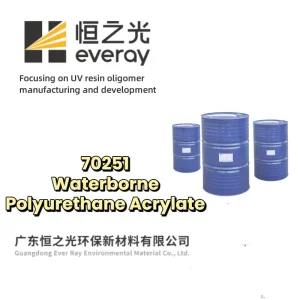
Waterborne Polyurethane Acrylate Oligomer Manufacturer & Product for the Kenya Market

Engineered for low-VOC compliance, superior mechanical durability, and optimal crosslinking efficiency across East Africa's tropical manufacturing ecosystems.

100%
Aqueous Dispersion Stability (0% Organic Solvent)
<50 mg
Taber Abrasion Loss (CS-17 / 1000 Cycles)
12 Mo+
Tropicalized Shelf Life Under Elevated Heat
KEBS
Fully Compliant with East African Standards (EAS)
Macro Market Landscape

Industrial Decarbonization & Green Chemistry Transformation in Kenya

The Kenyan industrial manufacturing sector is experiencing an unprecedented structural pivot driven by the government's Vision 2030 economic blueprint and rigorous anti-pollution enforcement led by the National Environment Management Authority (NEMA). For decades, local surface finishing facilities across Nairobi’s Industrial Area, Baba Dogo, and Mombasa's port perimeter depended heavily on solvent-borne alkyd, nitrocellulose (NC), and two-component solvent polyurethane systems. These legacy materials release immense volumes of Volatile Organic Compounds (VOCs), hazardous air pollutants (HAPs), and present acute fire safety risks.

As the East African Community (EAC) harmonizes industrial emission guidelines with international protocols, industrial formulators face intense pressure to eliminate solvent emissions. Waterborne Polyurethane Acrylate (WPUA / WUA) oligomers represent the definitive technological solution. By dispersing aliphatic or aromatic urethane acrylate prepolymers into an aqueous continuous phase, formulators eliminate the necessity for volatile reactive diluent monomers like HDDA or TPGDA, dramatically improving workplace safety while delivering optical clarity and mechanical resilience that exceeds conventional solvent-borne benchmarks.

  • Severe Climate Adaptation: Overcomes atmospheric degradation caused by high solar UV irradiation in Nairobi’s high-altitude plateau (1,795 m) and saline humidity along the Mombasa coastal belt.
  • Strict Regulatory Alignment: Empowers local paint makers to surpass Kenya Bureau of Standards (KEBS) KS EAS 384:2006 coating environmental metrics.
  • Carbon Footprint Mitigation: Cuts thermal drying energy by up to 65% when coupled with intermediate IR water flash-off and UV-LED light curing arrays.
Global Paradigm Shift

Global Prepolymer Evolution: Surfactant-Free Anionic Dispersions

Globally, the radiation curing polymer sector is transitioning rapidly away from first-generation external-emulsifier systems toward internally stabilized self-emulsifying polyurethane acrylate ionomers. Ever Ray’s chemical synthesis process incorporates hydrophilic internal building blocks, such as dimethylolpropionic acid (DMPA) or carboxylic/sulfonate polyols, directly into the polyurethane backbone. Upon neutralisation with volatile tertiary amines (TEA), self-assembling, stable micellar colloidal particles (particle size 30–80 nm) are generated in deionized water.

This synthetic precision eliminates free surfactants, which historically compromised finished film properties through water blushing, low moisture resistance, and intercoat adhesion failure. Once water flashes off, terminal and pendant acrylic double bonds (C=C) undergo free-radical photopolymerization under UV lamp radiation, establishing an ultra-dense, interpenetrating three-dimensional polymer network.

Global supply chain disruptions and stringent European REACH guidelines have accelerated African downstream manufacturers’ search for certified, direct-from-reactor chemical manufacturing partners capable of providing batch-to-batch polymer consistency, technical application transfer, and transparent supply guarantees.

Polymer Architecture

Synthesized for Tropical Mechanical Resilience

A rigorous examination of molecular backbone design, curing kinetics, and physical performance thresholds of Ever Ray Waterborne PUA Oligomers.

Aliphatic Isocyanate Core

Synthesized exclusively using IPDI and H12MDI aliphatic isocyanates. Completely resistant to yellowing, radical degradation, and photo-oxidation under equatorial sunlight and UV exposure.

Colloidal Hydration Control

Controlled anionic dispersion dynamics prevent precipitation or phase stratification during trans-oceanic shipping through high-temperature equatorial routes into the Port of Mombasa.

Tunable Crosslink Density

Functionality ranges from 2 to 6 acrylate double bonds per oligomer unit, allowing formulators to dial in exact balances of glass transition temperature (Tg), hardness, and elastic flexibility.

Performance Characteristic Traditional Solvent-Based UV PUA Waterborne Polyurethane Acrylate (WPUA) Kenyan Field Advantage
Volatile Organic Content (VOC) 250 – 450 g/L (Toxic monomer emissions) < 5 g/L (Zero monomer diluent needed) Exempt from toxic venting taxes & NEMA fines
Flash Point & Flammability Low flash point (< 35°C), High Fire Hazard Non-combustible aqueous emulsion Eliminates high marine cargo premiums to Mombasa
Adhesion on Difficult Plastics Poor without high monomer surface swelling Self-wetting micellar penetration on PVC/PET Eliminates delamination on luxury floorings & foils
Shrinkage-Induced Warping High (6% – 12% curing shrinkage) Ultra-Low (< 2% post-water flash-off) Prevents thin PVC substrate edge curl and buckling
Tactile / Aesthetic Finish Rigid, glass-like, prone to fingerprinting Warm, natural soft-feel, tunable matte finishes Premium finish for indigenous Kenyan hardwood furniture
Downstream Solutions

Targeted Industrial Applications Across Kenya

From Naivasha flower packaging flexo presses to Athi River tannery operations, explore how waterborne PUA chemistry delivers targeted performance.

Export Agri-Packaging & Horticultural Printing

Kenya is one of the world's largest exporters of fresh-cut flowers and premium tea. Packaging converters in Nairobi and Ruiru print millions of corrugated boxes and moisture-resistant folding cartons weekly. Our low-odor waterborne UV resins provide instant line drying, extreme scuff resistance, and non-migration properties required for transit across chilled international airfreight logistics.

Architectural LVT / SPC Resilient Floorings

Real estate developments across Nairobi (Westlands, Kilimani) and Mombasa have surged demand for resilient Luxury Vinyl Tile (LVT) and Stone Plastic Composite (SPC) flooring. Formulations leveraging 1290H and 1262B deliver micro-scratch resistance, stain repelling capability against red volcanic soils, and zero edge-warping under wide diurnal temperature swings.

Sustainable Leather Finishing & Tannery Value-Addition

Centered around Athi River Export Processing Zones (EPZ) and artisan hubs in Kariokor, Kenya's leather tanneries are moving up the global value chain. Waterborne UV-curable polyurethane acrylates create durable, breathable, and highly elastic top-finishes for hides, withstanding over 100,000 flex cycles (Bally Flexometer test) without micro-fissuring or embrittlement.

Logistical Sovereignty

Mombasa-to-Nairobi Cold Chain & Emulsion Stability Protocol

Importing aqueous emulsions into East Africa requires sophisticated colloidal design. While solvent monomers tolerate temperature fluctuations, waterborne dispersions can irreversibly coagulate if subjected to destabilizing freeze-thaw cycles or sustained temperatures above 45°C during prolonged dwell times at Mombasa port terminal container yards.

Ever Ray protects local Kenyan formulators through an engineered logistics framework:

  • Thermal Barrier Freight Packing: Shipped in thermally isolated 200L polyethylene drums and 1000L IBC containers with thermal shielding liners preventing thermal peaks.
  • SGR Rapid Rail Transit: Seamless transshipment from Mombasa port berths to Nairobi Inland Container Depot (ICD) via the Standard Gauge Railway, slashing port-to-factory lead times from weeks to 48 hours.
  • Anti-Settling Colloid Integrity: Inclusion of steric hinderance polymer architecture ensuring minimal syneresis and infinite re-dispersibility upon gentle agitation even after 60 days of ocean freight.
Regulatory Safeguards

KEBS Pre-Export Verification (PVoC) & Environmental Safety

Clearing raw chemical inputs through the Kenya Bureau of Standards (KEBS) demands uncompromising documentary and laboratory rigor. Shipments without valid Certificates of Conformity (CoC) face mandatory testing hold-ups, punitive demurrage tariffs, and threat of reshipment.

Ever Ray guarantees seamless clearance across all East African customs zones:

  • PVoC Pre-Clearance: Full analytical batch dossiers, non-hazardous declarations, and SGS/Bureau Veritas inspection compatibility prior to export origin departure.
  • GHS-Compliant Documentation: Fully synchronized Safety Data Sheets (SDS) and Technical Data Sheets (TDS) adhering precisely to EAC Harmonized Standards.
  • Heavy Metal & Alkylphenol Ethoxylate (APEO) Free: 100% compliant with European RoHS 3.0 and REACH Annex XVII regulations, protecting Kenyan producers from export trade barriers.
R&D Horizons

Technology Roadmap (2025–2030)

Pioneering greener, faster, and more adaptable radiation curing systems for developing industrial economies.

395nm UV-LED Energy-Saving Formulations

Given Kenya's high industrial electricity costs, our next-generation aqueous PUA polymers are tailored with surface-cure promoters responsive to narrow-spectrum UV-LED diodes (365–395nm), cutting line curing electrical power draw by up to 75% compared to medium-pressure mercury arc lamps.

Bio-Based Carbon Polyols

Incorporating bio-succinic acid and renewable polyols derived from sustainable plant sources, reducing the cradle-to-gate carbon footprint of waterborne resins by >40% without compromising tensile strength, scratch durability, or chemical resistance.

Dual-Cure Moisture / UV Hybrid Systems

Solving shadow-curing limitations on three-dimensional joinery and complex molded plastic automotive trim through secondary moisture-curing isocyanate functionality active in non-irradiated recessed shadow zones.

Formulation Support & FAQ

Frequently Addressed Chemical & Commercial Queries

Expert insight addressing common technical obstacles encountered by East African coaters and ink formulators converting to aqueous UV technology.

How does water flash-off speed in high-humidity regions like Mombasa compare to high-altitude Nairobi?
Atmospheric humidity significantly affects the water evaporation phase prior to radiation exposure. In high-humidity coastal zones (Mombasa relative humidity often exceeds 80%), convection airflow combined with low-medium wavelength infrared (IR) preheating zones (50–65°C for 60–120 seconds) is mandatory to eliminate residual moisture before UV crosslinking. In Nairobi's elevated dry climate (relative humidity typically 40–60%), natural flash-off times are reduced by nearly 40%. Irradiating the film before complete water evacuation traps micro-water droplets inside the matrix, causing optical haze, blistering, and reduced adhesion.
Can waterborne PUA oligomers be blended with conventional monomer diluents like HDDA or TMPTA?
Standard hydrophobic acrylate monomers cannot be blended directly into waterborne dispersions without causing phase separation and resin coagulation. If lower viscosity or enhanced crosslink density is desired, formulators should employ ethoxylated/propoxylated water-miscible multifunctional monomers (such as ethoxylated TMPTA or PEGDA) or specialized water-dispersible reactive diluents. Alternatively, blending different grades within the Ever Ray waterborne portfolio (e.g., combining high-flexibility grades with high-hardness hyperbranched grades) provides viscosity and modulus adjustment without destabilizing the colloidal micelle structure.
What photoinitiator systems are recommended for pigmented waterborne UV acrylate coatings?
For pigmented systems (particularly titanium dioxide white and carbon black inks common in flexo printing), standard liquid photoinitiators like Omnirad 1173 or TPO must be pre-emulsified using minimal non-ionic surfactant or dissolved into water-compatible co-solvents (such as dipropylene glycol methyl ether, DPM) at 2–3% additions. Alternatively, advanced water-dispersible photoinitiators or self-emulsifying acylphosphine oxide (BAPO-type) dispersions ensure thorough deep curing through high-opacity pigmented layers.
What storage precautions are required for aqueous PUA dispersions in Kenyan distribution facilities?
Waterborne polyurethane acrylate dispersions should be warehoused between 5°C and 35°C in light-shielded, moisture-sealed containers. Drums and IBCs must be kept away from direct sunlight, thermal boiler lines, and open roofs where radiant heat can push container temperatures above 45°C. Freezing (below 0°C) must be avoided, as ice crystal formation irreversibly fractures the micellar electrostatic double layer. Under recommended climate-controlled warehouse conditions, Ever Ray dispersions maintain verified shelf life exceeding 12 months from synthesis.
How does Ever Ray handle sample evaluation and customized formulation tuning for Kenyan customers?
We operate a dedicated global laboratory service providing targeted sample packages (1kg, 5kg, 20kg pails) expedited via DHL/FedEx directly to Kenya within 5 to 7 working days. Our senior technical application chemists provide custom starting formulations, guidance on defoamer and substrate wetting agent selection (e.g., polyether siloxanes), and UV dose calculation support calibrated to your specific lamp wattage and conveyor speeds.
Comprehensive Radiation Chemistry Range

Specialty Oligomer & Monomer Portfolio for Kenya Formulators

A broad spectrum of specialty UV/EB curable resins engineered for high hardness, glass adhesion, excimer laser matte effects, and specialized graphic arts applications.

Elevate Your Coating Formulations in Kenya

Connect with Ever Ray’s senior polymer chemists to request technical data sheets, full formulation consultations, or pilot-scale sample shipments directly to Nairobi or Mombasa.