
Engineered for German stereolithography (SLA/DLP) systems, industrial wood processing lines, and UV graphic varnishes with rapid response.
Germany Grade 70250 UV-Resin SpecsFeatured prepolymers and radiation-curable formulations engineered to meet DIN/EN environmental specifications, high-throughput automated lines, and precision tolerances.
Engineered for German stereolithography (SLA/DLP) systems, industrial wood processing lines, and UV graphic varnishes with rapid response.
Germany Grade 70250 UV-Resin Specs
Optimized for high-speed Heidelberg and Koenig & Bauer commercial press runs, ensuring optimal water-ink balance and pigment dispersion.
German UV Ink Grade 5403-2F
Ultra-low residual monomer profile meeting stringent German indoor air quality standards (AgBB) with exceptional intercoat adhesion.
Low Odor UV Resin 5017 (EU Reach)
Designed for European luxury vinyl tile (LVT) and resilient sheet manufacturing, offering superior scratch resistance and minimal curl tension.
Resilient Floor Grade 1290HAn authoritative examination of why Germany's industrial core is transitioning toward high-solids, zero-VOC radiation curing platforms.
Germany stands as the uncontested industrial heartbeat of the European Union. Across regions such as Baden-Württemberg, Bavaria, and North Rhine-Westphalia, mid-sized Mittelstand enterprises and multinational titans operate heavily specialized production ecosystems. Within sectors ranging from Tier-1 automotive exteriors and optoelectronics to architectural wood laminates and continuous flexographic packaging, energy efficiency and volatile organic compound (VOC) abatement have transformed from regulatory ideals into immediate operational mandates.
Under the European Green Deal and Germany’s stringent Bundes-Immissionsschutzgesetz (Federal Emission Control Act), industrial coaters and chemical formulators face mounting fiscal and legal pressures to eliminate thermal curing ovens. Conventional solvent-borne thermal systems demand substantial natural gas reserves, generate elevated CO2 emissions, and require costly thermal oxidizers to capture fugitive emissions. Consequently, ultraviolet (UV) and electron beam (EB) curing technologies—powered by advanced acrylate oligomers—have emerged as the preeminent technological foundation for clean industrial manufacturing.
German vehicle manufacturers in Stuttgart, Munich, and Wolfsburg mandate flawless piano-black trim, anti-scratch cockpit displays, and headlamp polycarbonates. Ever Ray's aliphatic urethane acrylate oligomers impart weathering stability and chemical resistance against cosmetic chemicals.
Additive manufacturing hubs throughout Germany rely on photopolymer resins with sub-micron dimensional stability, rapid laser line reactivity, and superior heat deflection temperatures (HDT) for tooling, dental models, and functional housings.
Germany’s premium timber and laminate manufacturers utilize multi-roller UV lines running at speeds upwards of 60 m/min. Prepolymers must balance heavy Taber abrasion resistance with non-brittle micro-flexibility to accommodate natural substrate expansion.
Strategic Market Reality: German end-users cannot compromise on process reliability. An automated automotive or packaging coating line operating at 100 meters per minute costs thousands of euros per hour of downtime; hence, batch consistency (CpK > 1.33) and instant crosslinking response are paramount criteria for resin procurement.
Anticipating the technological demands of European coatings through 2030: Excimer laser matting, bio-renewable carbon content, and low-viscosity hyperbranched polymers.
The standard method of achieving matte finishes using silica additives impairs film transparency, scratch resistance, and creates high shear viscosity in roll coaters. Ever Ray is pioneering specialized polyester acrylates and modified epoxy acrylates optimized for vacuum ultraviolet excimer lines (172 nm wavelength).
Under short-wave irradiation in an inert nitrogen chamber, the resin experiences immediate surface shrinkage and micro-folding within a 100-300 nm depth layer, creating an ultra-deep matte (gloss < 2 at 60°) surface that feels velvety and maintains zero fingerprint retention without matting agents.
As EU carbon border mechanisms (CBAM) and Scope 3 carbon auditing evolve, German formulators are requiring raw material suppliers to demonstrate lower cradle-to-gate carbon footprints. Our synthetic research pipeline emphasizes the incorporation of bio-derived polyols and circular fatty-acid modified diols into aliphatic polyurethane acrylate backbones.
These sustainable oligomers achieve up to 45% bio-based carbon content without sacrificing tensile modulus, elongation, or UV weatherability. They provide direct drop-in replacement capabilities for traditional petrochemical-derived resin lines.
Comprehensive chemistries resolving oxygen inhibition, thermal degradation, yellowing, and substrate adhesion challenges.
Thin-film overprint varnishes (OPV) and high-speed flexo inks frequently experience tacky surfaces due to atmospheric oxygen scavenging free radicals. We integrate amino acrylate oligomers and active amine co-initiators directly into the prepolymer matrix, providing hydrogen transfer mechanisms that suppress quenching and accelerate line velocities past 120 m/min.
Substrates such as untreated PET, cyclic olefin copolymer (COC), glass, and anodized aluminum present high surface energy barriers. Ever Ray functional resins incorporate specific carboxyl, phosphate, and hydroxyl terminal sites that form coordinate covalent bonds with inorganic surfaces, bypassing the need for aggressive solvent primers.
Underhood automotive electronics and industrial LED assemblies undergo severe thermal cycling (-40°C to +125°C). By tailoring aliphatic polyurethane segments with alternating soft polyether backbones and rigid isocyanate rings, our resins prevent micro-cracking and delamination under intense thermal shock.
Seamless international trade backed by complete EU REACH registrations, zero SVHC contamination, and complete technical transparency.
Deploying chemical products into Germany requires rigorous adherence to European Chemical Agency (ECHA) standards. Every chemical substance, monomer precursor, and catalyst utilized in Ever Ray formulations complies fully with EU REACH regulations. We provide extensive SDS documentation structured according to EU 2020/878, complete with 16-point GHS classifications, toxicological profiles, and DNEL / PNEC thresholds.
To support uninterrupted continuous manufacturing across German industrial parks (e.g., Frankfurt Höchst, Ludwigshafen, Dortmund), our export operations utilize standardized UN-certified 200kg steel drums and 1000kg composite IBC totes with robust vapor seals. We guarantee ocean freight safety standards, temperature-monitored intermodal transit, and reliable customs clearing via trusted European logistics partners.
Merging automated process synthesis with deep upstream supply integration to deliver unmatched stability and competitive advantages.
The global specialty chemicals sector has faced unprecedented turbulence: fluctuating feedstock prices, geopolitical realignments, and volatile shipping routes. Ever Ray’s advanced production base in Yunfu, Guangdong, leverages a state-of-the-art Industry 4.0 framework designed specifically to absorb external market friction and guarantee cost predictability for international partners.
Our facility operates distributed control systems (DCS) governing every stage of polycondensation, addition polymerization, and acrylic functionalization. Automated reactant dosing, real-time in-line Fourier-transform infrared spectroscopy (FTIR) monitoring of acrylate double-bond conversion, and precision jacket temperature control ensure that batch-to-batch variation in viscosity, color Gardner index, and acid value is kept under 0.5%.
Furthermore, located within China's key petrochemical innovation corridor, Ever Ray enjoys direct raw-material pipeline connectivity for acrylic acid, isocyanates (IPDI, HDI, TDI), and epoxies. This domestic supply chain depth shields European buyers from intermediate raw material shortages, enabling scalable production from pilot drum quantities up to multi-container shipments on predictable 14-day lead times.
How quality assurance directors and category sourcing managers qualify and integrate our oligomers into their continuous synthesis lines.
Prospective partners receive 500g - 1kg validation samples accompanied by full lot-specific Certificates of Analysis (CoA). Typical incoming inspection protocols verify non-volatile content (ISO 3251), Brookfield kinematic viscosity (ISO 2555), and residual acrylic acid levels via gas chromatography.
Application engineers collaborate via secure teleconferencing to mirror target German curing setups (Mercury arc, LED 395nm, or Excimer). Formulations undergo standardized cross-hatch adhesion testing (DIN EN ISO 2409), MEK double-rub tests (> 200 cycles), and König pendulum hardness evaluations.
Upon qualification, master service agreements (MSAs) establish safety stock allocations at bonded port facilities, fixed-price indexed quarterly windows, and direct batch-retention samples stored at our analytical center for a minimum of 24 months post-dispatch.
Explore our complete catalog of epoxy, polyester, and polyurethane oligomers engineered for demanding industrial coating, adhesive, and ink formulations across Europe.
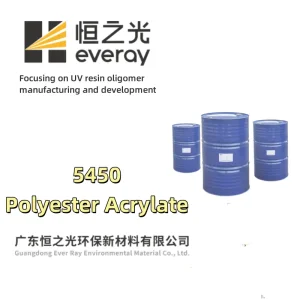
Formulated to resist screen creeping in precision screen printing and high-gloss paper overprint varnishes on European paper stocks.
Germany Grade 5450 Screen Resin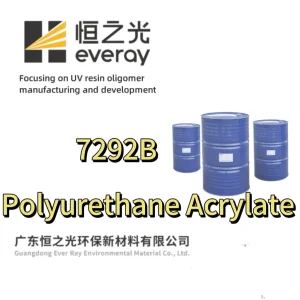
Premium aliphatic urethane backbone offering total optical clarity, zero yellowing under sunlight, and elastic flexibility for cosmetic gels and laminating adhesives.
Anti-Yellowing PUA Formulation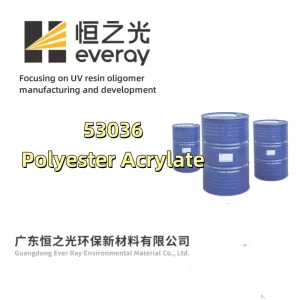
Engineered for 172nm excimer matting equipment, generating luxurious soft-touch, anti-fingerprint surface films on automotive interiors and luxury furniture.
Excimer Laser Grade 53036 Resin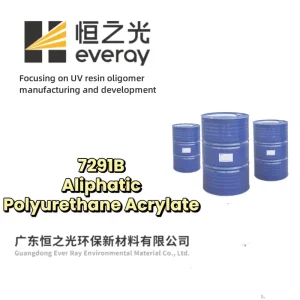
Advanced polyurethane acrylate designed for high-stress industrial applications requiring a balance of chemical barrier resistance and impact tolerance.
High-End PUA 7291B Solution
Modified epoxy acrylate counteracting volumetric curing shrinkage, securing persistent adhesion on difficult plastics and metallic coatings.
Low-Shrink Epoxy Acrylate 6203F
Fast-cure polyester backbone engineered for high-throughput coating facilities, imparting durable gloss retention and scratch resistance.
Durable Polyester Acrylate 5311A
Primer and basecoat prepolymer engineered for physical vapor deposition (PVD) and vacuum metal plating on automotive emblems and cosmetic packaging.
Vacuum Plating Resin 7230E
High-performance modified epoxy acrylate resolving the traditional yellowing defects of bisphenol structures while keeping rapid surface curing kinetics.
Transparent Epoxy Acrylate 6851AComprehensive technical answers compiled by our senior radiation curing formulation specialists for European chemical engineers and purchasing directors.
All oligomers and raw material monomers manufactured and exported by Ever Ray are in full alignment with the European Chemicals Agency (ECHA) REACH directives. Our grades are formulated without banned Substances of Very High Concern (SVHC) above the 0.1% w/w threshold, and comply fully with RoHS Directive (EU) 2015/863. For every industrial shipment dispatched to Germany, we supply complete bilingual SDS documentation adhering to Regulation (EU) 2020/878, including regional German water hazard classes (WGK) and occupational exposure guidelines (TRGS 900).
German automated lines (such as roll coaters, flatline sprays, and flexographic units) are exceptionally sensitive to viscosity drifts and cure reactivity shifts. Ever Ray enforces a Process Capability Index (Cpk) > 1.33 across all synthesis lines. We manage temperature control during acrylation via computerized PID feedback systems, ensuring consistent molecular weight distribution (MWD) verified via Gel Permeation Chromatography (GPC). Viscosity, acid value, and color are measured on every finished lot prior to transfer into sealed dry-nitrogen purged containers.
Yes. As UV curing technologies transition from mercury arc bulbs to energy-efficient monochromatic UV-LED lamps (365nm, 385nm, 395nm) and short-wave 172nm excimer systems, traditional photoinitiator/oligomer absorption spectra require re-engineering. Our synthetic chemists adjust the backbone density, introducing hyperbranched functional acrylates or amine synergists directly onto the prepolymer chains to eliminate surface oxygen inhibition and optimize radical generation under specific spectral energy outputs.
We provide 500g to 2kg evaluation samples packaged in light-shielded, fluorinated HDPE containers. Air freight dispatches to German testing facilities (Frankfurt, Munich, Düsseldorf, Hamburg) typically arrive within 4 to 6 business days. Each sample includes its comprehensive lot Certificate of Analysis (CoA), Technical Data Sheet (TDS), and starting point guideline formulation for wood, plastic, metal, or ink applications.
Partner directly with Ever Ray’s technical application engineers to optimize cure dynamics, ensure regulatory security, and reduce raw material acquisition overhead for European manufacturing.
Send Inquiry Now