
Vacuum Plating Grade
Empowering Indonesian industrial formulators with ultra-low shrinkage, superior intercoat adhesion, and hyper-durable pure acrylate oligomer formulations engineered for tropical curing stability.
Specifically optimized for Southeast Asian industrial processing conditions, balancing rapid photo-polymerization kinetics with exceptional thermal-cycling endurance.
An in-depth technical analysis of chemical processing parameters, supply bottlenecks, and UV formulation shifts within the Jabodetabek industrial belt.
The manufacturing corridors connecting Cikarang, Karawang, and Tangerang are witnessing a monumental transition from solvent-borne urethane and nitrocellulose systems toward eco-compliant radiation-cured coatings. With strict regional VOC emission curbs instituted by Indonesia's Ministry of Environment and Forestry (KLHK), automotive sub-assembly plants, 3C injection molders, and graphic arts producers are re-engineering assembly lines to integrate UV/LED-curable pure acrylate oligomers.
Formulating UV-curable finishes for Jakarta's hyper-humid equatorial microclimate requires deep macromolecular engineering. Conventional oligomers routinely experience premature polymerization during marine transit, poor surface cross-linking triggered by atmospheric oxygen inhibition at 85%+ relative humidity, and intercoat micro-cracking during rapid day-night heat cycling. Our pure acrylate backbones are synthesized with controlled stereochemistry to ensure zero phase separation under sustained equatorial exposure.
International procurement managers operating out of Tanjung Priok Port frequently struggle with fluctuating consignment lead times and hazardous chemical classification overhead. By partnering with our direct Guangdong manufacturing base, Tier-1 and Tier-2 suppliers in Jakarta secure reliable bulk shipments packed in ISO-certified steel drums and IBCs, accompanied by full GHS-compliant bilingual documentation and dedicated regional technical consultation.
Rigorous laboratory evaluations illustrating how pure acrylate polymer structures mitigate substrate distortion, enhance refractive clarity, and eliminate delamination risks.
| Evaluation Parameter | Ever Ray Pure Acrylate Oligomer | Standard Bisphenol-A Epoxy Acrylate | Conventional Aromatic Urethane Acrylate | Test Methodology |
|---|---|---|---|---|
| Volumetric Cure Shrinkage | 1.8% – 2.4% (Ultra-Low) | 7.5% – 9.2% (High Stress) | 4.5% – 6.0% (Moderate) | Pycnometry (ASTM D1475) |
| Substrate Adhesion (PC / PMMA / ABS) | Class 5B (0% Delamination) | Class 2B – 3B (Edge Flaking) | Class 4B (Moderate Tack) | Cross-Cut Flaking (ASTM D3359) |
| Accelerated Weathering (QUV 1,000h ΔE) | ΔE < 0.8 (Non-Yellowing) | ΔE > 5.2 (Severe Browning) | ΔE > 3.8 (Chalking) | UVB-313 Cycling (ASTM G154) |
| Glass Transition Temp (Tg) | 42°C – 58°C (Flexible-Dough balance) | 65°C – 85°C (Rigid / Brittle) | 35°C – 50°C (Elastomeric) | Differential Scanning (DSC) |
| Moisture Absorption Equilibrium | < 0.4% at 85% RH (Jakarta Ambient) | 1.8% – 2.4% (Hydrolytic Risk) | 1.1% – 1.6% (Plasticizing Risk) | Gravimetric Sorption (25°C) |
From line-speed calibration to local regulatory alignment under BPOM and SNI, we ensure seamless technology transfer for manufacturing plants across Jawa Barat.
Navigating chemical import thresholds in Indonesia requires stringent adherence to hazardous material management statutes (PP No. 74/2001) and specific migration compliance for packaging coatings coming under the scrutiny of BPOM. All Ever Ray pure acrylate grades exported to Jakarta are formulated in strict accordance with RoHS 3.0, REACH SVHC standards, and low residual monomer thresholds (<50 ppm free acrylic acid).
Different curing setups—from medium-pressure mercury lamps to 395nm / 365nm LED arrays—yield wildly divergent surface tackiness under equatorial atmospheric moisture. Our senior UV polymer specialists provide formula recalculations for diluent monomer ratios (HDDA, TPGDA, IBOA) and amine synergistic balances to mitigate oxygen inhibition without sacrificing film pencil hardness or tensile elongation.
Our production facilities in Yunfu, Guangdong encompass 40,000+ square meters with over 10 fully automated synthesis lines. For Indonesian buyers, this translating to guaranteed batch-to-batch consistency, minimal color differential (Gardner < 1), strict polydispersity indices (PDI), and predictable transit routes into North Jakarta terminals without mid-journey inventory shortages.
Anticipating the technological demands of smart electronics, circular packaging, and energy-conserving curing setups across the ASEAN region.
Tuning macromolecular terminal acrylate functionality to trigger rapid radical generation at long wavelengths (385–405 nm), reducing production energy costs by 45% for Jakarta processors.
Synthesizing functional pure acrylate oligomers incorporating up to 45% renewable bio-content sourced from non-food agricultural feedstocks, fulfilling international carbon footprint audits.
Incorporating reversible hydrogen-bonding domains within the acrylate backbones to allow consumer electronic coatings to regenerate micro-abrasions under warm ambient sunlight.
Pioneering cleavage-targeted functional linkages that allow UV-cured adhesives and multi-layer packaging films to cleanly de-bond during industrial enzyme wash cycles.
From wear-resistant polyurethane acrylates to high-gloss bisphenol A matrices, examine our verified product portfolio serving the Jabodetabek corridor.
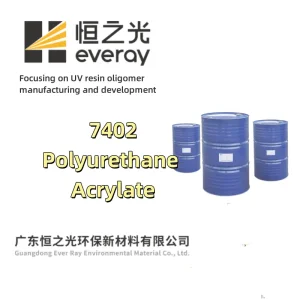
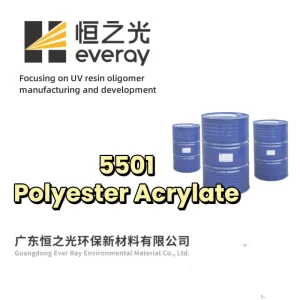
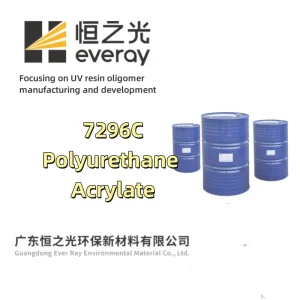
Clear, engineering-focused answers covering storage stabilities, monomer cross-linking kinetics, import duty structures, and customized OEM development.
Standard bisphenol-A epoxy acrylates exhibit volumetric cure shrinkage between 7% and 10%, generating profound interfacial shear stress that causes curling, warping, or delamination on low-surface-energy plastics like PC, ABS, and untreated PMMA. In Jakarta's humid conditions, this stress accelerates moisture penetration along the bond line. Ever Ray Pure Acrylate Oligomer features an ultra-flexible acrylic backbone delivering less than 2.5% volumetric shrinkage while maintaining high cohesive elongation, ensuring pristine 5B tape-adhesion durability under boiling-water and QUV testing.
Maritime transits passing through the Equator to Jakarta often experience cargo hold temperatures exceeding 45°C. Unstabilized acrylic resins run severe risks of thermal self-polymerization or viscosity runaway. We incorporate advanced steric-hindered phenothiazine/quinone inhibitor packages paired with controlled dissolved-oxygen saturation. This ensures our pure acrylate resins remain verified stable for a minimum of 12 months in unopened sealed containers when stored beneath 30°C in industrial warehouses across Tangerang and Bekasi.
Yes. Under the ASEAN–China Free Trade Area (ACFTA) framework, our export shipments are fully qualified for the issuance of Form E Certificate of Origin documents. This regulatory instrument permits authorized chemical importers and manufacturing formulators based in Jakarta to clear customs at preferential or zero-percent duty tariffs under corresponding HS codes (Chapter 3906), markedly enhancing overall procurement profitability.
We maintain dedicated sampling inventory protocols for ASEAN technical buyers. Standard 500g and 1kg trial containers of our pure acrylate grades, accompanied by Certificate of Analysis (COA), Technical Data Sheet (TDS), and multilingual SDS documentation, are dispatched via express courier (DHL / FedEx) within 24 hours of technical review, reaching formulation laboratories in Jakarta, Cikarang, or Surabaya within 3 to 5 business days.
Connect directly with our senior macromolecular chemists and ASEAN supply chain specialists. Receive custom grade recommendations, starting formulations, and rapid-dispatch evaluation samples tailored for your Jakarta production line.
