
Benchmarked Pure & Functional Acrylate Oligomers
Engineered for high cure conversion, negligible shrinkage stress, and strict zero-halogen compliance across Southeast Asian manufacturing ecosystems.
Vietnam’s Rapidly Expanding Need for Synthesized Pure Acrylates
Vietnam has officially emerged as Southeast Asia's premiere manufacturing epicenter. Driven by sweeping foreign direct investment (FDI) into tier-1 high-technology corridors such as Bac Ninh, Thai Nguyen, Hai Phong, and Binh Duong, precision coating chemistry is facing an unprecedented surge in technical expectations.
Historically reliant on imported solventborne varnishes, multi-national electronics brands (Samsung, Foxconn, Pegatron, Luxshare) and global furniture conglomerates operate under severe sustainability mandates. Vietnam's Decree No. 06/2022/ND-CP and international commitments to reach Net Zero emissions by 2050 have forced industrial coaters to abandon volatile organic compound (VOC) laden solvent systems in favor of 100% solids UV-curing radiation mechanisms.
Within this rigorous landscape, standard epoxy acrylates or low-cost aromatic urethanes fail due to brittle post-cure warping, high volume shrinkage, and severe yellowing under Southeast Asia's aggressive UV index. Formulators in Vietnam urgently demand synthesized Pure Acrylate Oligomers: backbone structures characterized by zero aromatic rings, flexible carbon-carbon chains, low intrinsic glass transition temperature (Tg), and unparalleled optical transparency.
The Structural Dilemma in Vietnam’s Supply Chain
Most domestic resin suppliers operating within Vietnam function strictly as re-packagers, blenders, or downstream compounders. They import precursor oligomers from overseas and perform simple physical diluent additions.
- Zero Upstream Synthesis: Inability to adjust polyol molecular weight or functionality at the reactor level.
- Severe Batch Variance: Inconsistent polydispersity indices (PDI) leading to unpredictable curing cure windows on automated spray lines.
- Inadequate Technical Support: Lack of spectral analysis (FTIR, GPC, DSC) to troubleshoot curing wrinkles or adhesion peel-off.
Pure Acrylate Chemistry vs. Competing UV Oligomers
Why polymer scientists select pure acrylic backbones over traditional epoxy, aromatic polyurethane, and standard polyesters for critical substrate adhesion and non-yellowing durability.
| Oligomer Chemical Class | Backbone Linkage Architecture | Volume Shrinkage (%) | QUV-A Weathering (ΔE After 1000h) | Direct Plastic Adhesion (PC/PET/ABS) | Ideal Industrial Footprint in Vietnam |
|---|---|---|---|---|---|
| Synthesized Pure Acrylate | All-Acrylic C-C Saturated Polymer Backbone | < 2.5% – 3.8% (Extremely Low) | ΔE < 0.8 (Superior Non-Yellowing) | Class 5B (Cross-Hatch Tested, No Primer) | 3C Electronic Housings, Optical Films, Luxury Furniture Topcoats |
| Bisphenol-A Epoxy Acrylate | Diglycidyl Ether Epoxy Resins | 6.5% – 9.0% (High Shrinkage Stress) | ΔE > 4.5 (High Yellowing Tendency) | Poor on Plastics; Excellent on Porous Substrates | Rigid Wood Sealers, Paper OPV, Paper Board Inks |
| Aromatic Polyurethane Acrylate | TDI / MDI Isocyanate Urethane Bonds | 4.0% – 6.0% (Moderate) | ΔE > 5.0 (Severe Photo-Oxidation) | Moderate (Depends on Monomer Package) | Indoor Flooring, Industrial Floor Primers, Low-Cost Wood Finishes |
| Aliphatic Polyurethane Acrylate | IPDI / HDI Aliphatic Urethane Links | 3.0% – 4.5% (Controlled) | ΔE < 1.2 (Excellent Color Stability) | High (Except on Untreated Polyolefins) | Automotive Clear Coats, Outdoor Architectural Plastics, Nail Gels |
| Polyester Acrylate | Ester Linkages (Diacids + Diols) | 5.0% – 7.5% (Moderate-High) | ΔE 2.0 – 3.5 (Acceptable Indoors) | Moderate to Weak on Low-Tension Films | UV Offset Printing Inks, Lithographic Inks, Screen Print Pastes |
Why Leading Vietnamese Formulators Partner Directly with Our Synthesis Plants
Overcoming the raw material vulnerability of localized chemical compounders through backward-integrated monomer synthesis and expedited overland border freight.
Upstream Molecular Synthesis Control
Unlike local Vietnamese distributors who buy off-the-shelf and dilute with toxic monomers, our Guangdong facility custom-synthesizes the acrylic backbone from basic monomers (acrylic acid, butyl acrylate, GMA). We control the polydispersity index (PDI) within strict ±0.05 tolerances, eliminating unexpected viscosity spikes on automated production lines.
Cross-Border Overland Super-Corridor
Located in Guangdong Province, our factory connects directly to Northern Vietnam via the Pingxiang-Lang Son border corridor. Bulk drums and IBC containers reach industrial parks in Bac Ninh, Bac Giang, and Thai Nguyen within 2 to 3 days, circumventing shipping container congestion at Cat Lai or Hai Phong maritime ports.
Full ACFTA Form E Tariff Exemption
Under the ASEAN-China Free Trade Area (ACFTA), all shipments of pure acrylate oligomers, modified epoxy resins, and urethane acrylates qualify for 0% preferential import tariffs backed by official Certificate of Origin (Form E). We provide verified bilingual SDS, technical dossiers, and REACH compliance certifications for streamlined customs clearance.
Solving Critical Substrate Hurdles Across Vietnam
How customized pure acrylate oligomers provide exact solutions for the high-humidity, high-temperature manufacturing environments of Vietnam.
3C Consumer Electronics & Vacuum Metallization (Bac Ninh / Thai Nguyen)
Precision smart devices demand sub-micron UV basecoats and topcoats that survive thermal evaporation and magnetron sputtering. Our specialized low-viscosity pure acrylate grades eliminate surface outgassing during high-vacuum cycles. They provide 5B cross-hatch adhesion onto non-polar polycarbonate (PC), ABS, and PMMA housings without surface plasma pre-treatment, fully resisting synthetic human sweat and 95% RH humidity chambers.
Export Wood Furniture & Flooring (Binh Duong / Dong Nai)
Vietnam is the world's second-largest exporter of wooden furniture, sending massive volumes to the US and European markets. Traditional coatings suffer from cracking along the wood grain due to extreme seasonal moisture swings. Incorporating our flexible pure acrylate oligomers (such as our Wholesale Low Shrinkage grade) provides elastic elongation (15% - 40%), compensating for wood substrate expansion without film embrittlement, while achieving non-yellowing white lacquers.
High-Speed Flexo & Offset Inks (Ho Chi Minh City / Long An)
Modern printing plants converting food-contact flexible packaging and luxury carton boards operate flexographic and gravure presses at speeds exceeding 300 meters per minute. High-polarity pure acrylate resins offer unmatched pigment-wetting thermodynamics, preventing flocculation of copper phthalocyanine blues and carbon blacks while maintaining low misting behavior under intense shear forces.
Key Technological Trends Transforming UV Oligomers in ASEAN
Chemical regulations and technological upgrades are shaping how Vietnamese formulators specify their acrylate building blocks:
1. The Irreversible Migration to UV-LED (365nm / 385nm / 395nm)
Traditional medium-pressure mercury arc lamps generate excessive ozone and intense heat that warps thin heat-sensitive plastics (BOPP, PE, PVC). Transitioning to UV-LED curing requires pure acrylate oligomers with ultra-high double bond reactivity to bypass severe oxygen inhibition at long wavelengths.
2. Strict De-Monomerization & Low Skin Irritation Index (PII)
Global brands mandate the reduction or elimination of hazardous low-molecular-weight reactive diluents such as TPGDA, HDDA, and TMPTA. Our pure acrylate oligomers feature low inherent resin viscosity (800 – 3,500 mPa.s at 25°C), enabling sprayable and roll-coatable 100% solids formulations with zero monomer hazards.
3. Dual-Cure (UV / Moisture or UV / Thermal) Systems
Complex three-dimensional electronic assemblies manufactured in northern Vietnam feature shadowed geometries where ultraviolet light cannot penetrate. We synthesize functionalized acrylate oligomers carrying secondary alkoxysilane or blocked isocyanate groups that cure completely in shaded cavity zones.
Complete Acrylate Oligomer Portfolio for Vietnamese Industrial Formulators
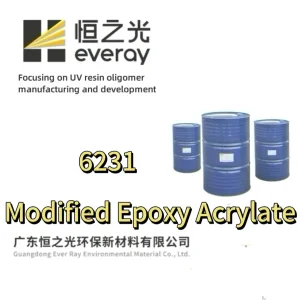
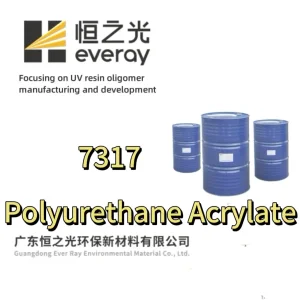
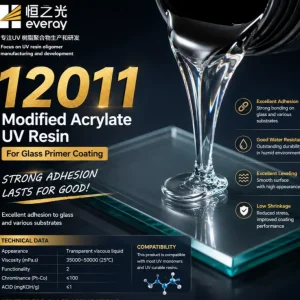
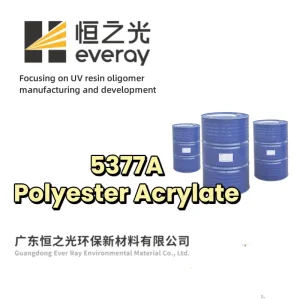
Select from our full synthesis spectrum: high-gloss modified epoxies, stress-relieving urethane acrylates, boiling-water resistant glass resins, and low-odor specialty polymers.
Frequently Asked Questions by Global & Vietnamese Buyers
Transparent guidance addressing import duties, logistical lead times, formulation optimization, and QA certification.
