
High-Performance Epoxy Acrylates for Egyptian Formulators
Pre-stabilized, high-purity oligomers selected for accelerated curing reactivity, heat-tolerant viscosity, and superior hardness across Egyptian manufacturing sectors.
Egypt High-Quality 6160M-3: Fast Curing Modified Epoxy Acrylate for Improved Performance
Buy High Adhesion 6100D-85 Epoxy Acrylate for Egypt UV Wood Coating Applications
Wholesale 6231: Curing Modified Epoxy Acrylate with Leveling Properties for Egyptian Industrial Lines
High-Quality 9105A-80: Bisphenol A Epoxy Acrylate Resin for Egyptian Polyester Applications
The Epoxy Acrylate Oligomer Landscape in Egypt: Industrial Transformation 2026–2030
Analyzing localized manufacturing challenges, energy consumption reduction under Egypt Vision 2030, and the technical necessity of radiation curing technologies.
Egypt's Industrial Pivot to Radiation Curing
The Arab Republic of Egypt stands as one of the most dynamic manufacturing powerhouses in the Middle East and North Africa (MENA). Under the directives of Egypt Vision 2030, intense focus has been placed on energy efficiency, industrial localization, and emissions abatement. Historic manufacturing hubs such as 10th of Ramadan City, 6th of October City, Sadat City, and the Borg El Arab industrial zone in Alexandria are rapidly upgrading legacy thermal curing lines—which rely heavily on subsidized natural gas and solvent evaporation—to modern ultraviolet (UV) and electron-beam (EB) curing infrastructure.
In traditional solvent-borne systems, drying ovens demand extensive footprint, elevated carbon footprints, and high operational expenditure. By transitioning to high-solids and 100% active content Epoxy Acrylate Oligomers, Egyptian coating, ink, and adhesive formulators achieve instant cure speeds measured in split seconds, reducing floor footprint by up to 70% while mitigating the emission of volatile organic compounds (VOCs).
Combating Climatic Degradation & Thermal Shifts
Formulating chemical coatings within the Egyptian geographic envelope presents unique polymer rheology challenges. Summer ambient temperatures across Lower and Upper Egypt frequently exceed 42°C, accompanied by dry, abrasive airborne particulate matter. Standard bisphenol A epoxy acrylates can suffer from premature thermal gelation if polymerization inhibitor systems (such as hydroquinone monomethyl ether - MEHQ) are poorly balanced during oceanic container transit and non-climate-controlled local warehousing.
Furthermore, extreme ultraviolet index (UVI) levels accelerate photo-oxidative degradation on exterior substrates. Formulators require modified epoxy acrylates with tailored ether-ester backbone flexibility to counteract excessive post-cure embrittlement, stress cracking, and substrate delamination triggered by daily diurnal thermal cycles along the Nile Basin and Mediterranean coastal shelves.
Polymer Architecture: Comparative Matrix of Epoxy Acrylates
Understanding the molecular balance between functionality, crosslink density, and shrinkage stress in industrial coating formulations.
| Resin Grade | Chemical Backbone | Viscosity (mPa·s @ 25°C) | Acrylate Functionality | Film Tensile / Hardness | Primary Egyptian Industrial Application |
|---|---|---|---|---|---|
| Standard Bisphenol A (6100D) | DGEBA Diacrylate | 18,000 – 28,000 (diluted) | 2.0 | 3H / Glass-hard & Rigidity | UV Screen Inks & Heavy-Duty Overprint Varnishes (Cairo) |
| Flexible Modified (6160M-3) | Polyether/Aliphatic Modified | 4,500 – 8,000 | 2.2 | F to H / High Toughness | High-Speed Flexographic Inks (10th of Ramadan City) |
| Amine-Modified Epoxy (6231) | Amine-Functional Adduct | 2,500 – 5,000 | 2.0 | 2H / Rapid Surface Tack-Free | Fast Sanding Sealers for Furniture Hubs (Damietta) |
| Low Shrinkage Grade (6102) | Alicyclic / Modified DGEBA | 8,000 – 14,000 | 2.0 | 2H / High Interfacial Adhesion | Wood Parquet & Rigid Plastic Assemblies (Sadat City) |
| Optical Grade (6200D) | Purified Modified Oligomer | 3,000 – 6,500 | 2.0 | H / Non-Yellowing Optical | Shadowless Glass Bonding & Electronic Encapsulation |
Crosslink Kinetics
Bisphenol A epoxy diacrylates exhibit instantaneous conversion rates under medium-pressure mercury arc lamps (200–400 nm) and 395nm UV-LED arrays, yielding crosslinked networks with Tg values up to 85°C.
Volume Shrinkage Mitigation
Unmodified epoxy acrylates can demonstrate 6–9% volumetric shrinkage during cure. Ever Ray modified oligomer variants introduce flexible soft-segment spacers that drop shrinkage to <3.5%, preserving substrate bond integrity.
Oxygen Inhibition Defense
In thin-film varnishes (<10 µm) applied at speeds exceeding 120 m/min, atmospheric O2 quenches free radicals. Incorporating built-in amine synergist backbones quenches peroxy radicals, ensuring zero surface tackiness.
Strategic Industrial Downstream Verticals Across Egypt
Targeted material solutions engineered to resolve manufacturing bottlenecks in Egypt’s primary production clusters.
1. Damietta Wood & Furniture Manufacturing Hub
Damietta serves as the capital of the Middle Eastern furniture industry. Exporters crafting luxury bedroom, salon, and office furnishings face stringent export standards across European and Gulf Cooperation Council (GCC) markets. Our 6100D-85 and 6102 Low Shrinkage Epoxy Acrylates act as rapid-build sanding sealers. They penetrate deep into natural and composite wood veneers (MDF, HDF), filling micro-porosities without grain-raising, curing within 0.8 seconds under roller coater lines, and offering effortless sandability without clogging high-speed abrasive belts.
2. Greater Cairo & 10th of Ramadan Packaging & Label Sector
With major FMCG, pharmaceutical, and food-processing giants located in Greater Cairo, 10th of Ramadan, and Obour, the packaging printing industry requires high-speed flexographic, offset, and gravure overprint varnishes (OPV). Formulations built with our 6160M-3 Fast-Curing Modified Oligomer deliver phenomenal scuff and rub resistance, high gloss (>92 GU at 60°), and resistance against cosmetic oils, humidity, and detergent splashing, complying with food-packaging low-odor mandates.
3. Suez Canal Economic Zone (SCZONE) Electronics & Assembly
The rise of automated electronics assembly, consumer appliance manufacturing, and smart meter fabrication in Ain Sokhna and East Port Said calls for high-reliability optical adhesives and conformal coatings. Our 6200D UV Shadowless Resin offers bubble-free clarity, rapid cure through semi-translucent substrates, and exceptional shear strength on glass-to-metal and acrylic assemblies without stress-induced microfractures.
4. Alexandria Heavy Industry & Protective Metal Primers
Egypt’s northern coastal ports experience intense saltwater corrosion and industrial atmospheric humidity. By formulating UV coil coatings, drum finishes, and pipe primers utilizing 9105A-80 Bisphenol A Epoxy Acrylates, chemical manufacturers achieve exceptional barrier resistance against acids, alkalis, aliphatic hydrocarbons, and ASTM B117 salt fog corrosion testing.
End-to-End Raw Material Stability: Direct Factory-to-Egypt Supply
Solving foreign exchange efficiency, customs clearance latency, and summer temperature-sensitive chemical delivery.
Direct Maritime Corridors
Scheduled containerized shipments directly connecting Greater Bay Area manufacturing ports to Alexandria Old Port, Dekheila, and Port Said. Flexible shipping terms under CIF, FOB, and CFR with pre-arranged EUR.1 / Certificate of Origin document processing for streamlined clearance.
Advanced Thermal Stabilization
All batches engineered for Egypt export undergo specialized multi-component polymerization inhibitor doping (MEHQ + BHT + proprietary synergists) to prevent skinning and runaway polymerization during transit across the Indian Ocean, Red Sea, or hot storage silos.
Laboratory & Formula Pilot Support
Our senior radcure formulation chemists work directly with Egyptian formulators to calibrate photoinitiator blends (TPO, Irgacure 184, DETX, Speedcure 73), adjust reactive diluents (TPGDA, TMPTA, DPGDA), and troubleshoot oxygen inhibition or substrate de-wetting.
Full Spectrum Epoxy Acrylate Monomers & Functional Resins
Specialty modified grades designed to solve demanding flexibility, low-odor, anti-yellowing, and interfacial adhesion requirements.
Egypt Wholesale 67283: Rapid-Setting Yellowing-Resistant Modified Epoxy Acrylate
High-Quality 6100D Epoxy Acrylate UV Resin for Egypt High-Brightness UV Inks
Buy 6102 UV Resin: Enhanced Low Shrinkage Epoxy Acrylate for Egyptian Wood Coatings
Wholesale Durable 6118 Epoxy Acrylate UV Resin: Ideal for Egypt Wood, Plastic & Inks
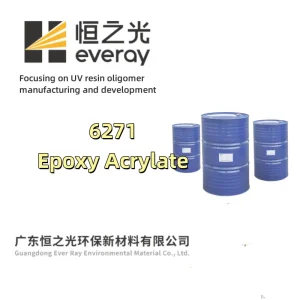
Egypt High-Quality 6271 UV Resin: Suitable for UV Adhesives with Low Yellowing Risk
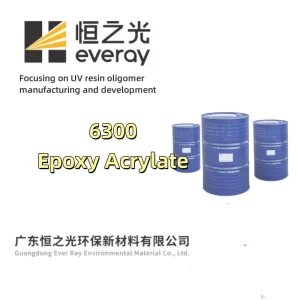
Wholesale Low Viscosity 6300 Modified Epoxy Acrylate for Egypt UV Paper Varnish Lines
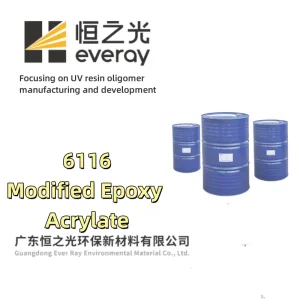
Buy 6116 UV Resin: Multi-Substrate Coating & UV Printing Inks for Egyptian Manufacturers
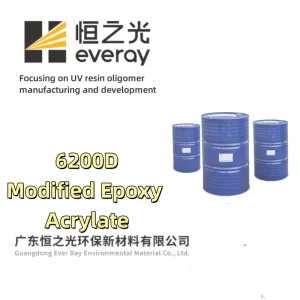
Wholesale 6200D UV Resin: High-Clarity Shadowless Glue System for Egyptian Assemblies
Frequently Asked Questions on Epoxy Acrylate Resins in Egypt
Expert answers addressing chemical stability, local process engineering, customs logistics, and formulation optimization.
How do you guarantee the shelf-life stability of epoxy acrylate oligomers under Egyptian summer temperatures? +
What is the recommended approach to reduce brittleness when using standard Bisphenol A Epoxy Acrylates? +
How can Egyptian printing and packaging converters prevent oxygen inhibition on thin-film varnish lines? +
What documentation and customs support does Ever Ray provide for import into Egypt? +
Can Ever Ray epoxy acrylates be formulated for UV-LED curing systems (365nm / 385nm / 395nm)? +
Accelerate Your UV Coating Formulations in Egypt
Request technical data sheets (TDS), safety documentation (SDS), and pilot test samples shipped directly to your R&D facility in Cairo, Alexandria, Damietta, or 10th of Ramadan City.
