
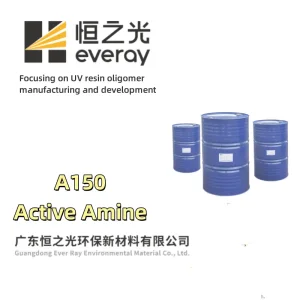
Singapore A150 Active UV Oligomer for High-Speed Printing Inks
Functionality: Multi-active | Viscosity: 4,500 mPa.s | Exceptional Type II photoinitiator synergism.
View Grade Details →
Essential reactive oligomers, co-initiators, and low-viscosity specialty acrylates optimized for rapid surface curing across electronics, precision graphics, and protective architectural coatings.
Singapore occupies a globally unique nexus in chemical synthesis, advanced materials conversion, and precision manufacturing. While Jurong Island stands among the world's top ten petrochemical hubs, the domestic manufacturing sector—stretching across Tuas, Woodlands, and Changi—focuses intensively on high-value-added downstream chemistry, microelectronics packaging, advanced graphic packaging, aerospace refurbishment, and maritime maintenance coatings.
In this demanding ecosystem, photopolymerization processes operating under ambient atmospheres face an immutable physical barrier: atmospheric oxygen inhibition. In thin-film UV curing applications, such as high-definition flexographic overprint varnishes, high-speed offset printing on non-porous substrates, and conformal coatings for printed circuit boards (PCBs), atmospheric molecular oxygen ($^3\text{O}_2$) dissolves into the liquid coating layer at speeds rivaling or exceeding initiation kinetics. This phenomenon quenches carbon-centered free radicals, resulting in sticky undercured surfaces, incomplete conversion, volatile odor, and degraded chemical resistance.
Active amines (amino acrylates and co-initiator tertiary amine synergists) serve as the chemical antidote to oxygen inhibition. Through hydrogen abstraction mechanisms, active amines generate secondary alpha-amino radicals that consume dissolved oxygen, regeneratively driving crosslinking forward even in 5–15 µm micrometer thin films. For Singaporean formulation laboratories and contract manufacturers, sourcing high-purity active amines is an operational imperative that directly impacts line speeds, VOC limits, and overall yield.
Traditional tertiary amines (such as TEA or MDEA) exhibit high volatility, severe yellowing, and persistent amine blush. Modern Singapore cleanroom and packaging standards require copolymerizable amino acrylate oligomers that chemically lock into the polymer network, completely preventing migration into food packaging or sensitive silicon wafers.
Direct integration with international raw material streams. Active amines formulated with ultra-stable polyether backbones provide chemical stability that withstands equatorial ambient temperatures and high relative humidity without hydrolytic breakdown.
Meeting high-speed offset and flexo line requirements exceeding 400 m/min. In thin ink layers, active amines boost energy efficiency, allowing full cure under low-energy LED UV lamps (385nm and 395nm) without requiring expensive nitrogen inerting chambers.
Seletar Aerospace Park and Tuas Shipyards require rapid-turnaround UV sealants and composite coatings. Active amine-modified acrylates offer accelerated gel times, superior intercoat adhesion, and resistance to aggressive hydraulic fluids (Skydrol).
To understand the performance advantages delivered by high-performance active amine factories, one must examine the molecular kinetics of free-radical photopolymerization under air. Atmospheric oxygen dissolves in typical acrylate monomers at concentrations between $10^{-3}$ and $10^{-2}\text{ mol/L}$. When UV radiation excites Type II photoinitiators (such as benzophenone, ITX, or camphorquinone), the initiator cannot effectively cleave homolytically on its own.
Active amines possess hydrogen atoms on the carbon atom adjacent to the nitrogen center ($\alpha$-hydrogens). When an excited triplet-state photoinitiator molecule $[PI]^*$ approaches the active amine, a charge-transfer complex (exciplex) forms rapidly. Electron transfer followed by proton transfer produces an initiating $\alpha$-amino alkyl radical:
[PI]* + R₂N-CH₂-R' → [Complex]* → PI-H• + R₂N-ĊH-R' (Active Initiating Amino Radical)
Unlike carbon radicals that are quenched by oxygen to form non-reactive peroxy radicals ($\text{ROO}\bullet$), the generated amino radical reacts rapidly with oxygen molecules to form amino-peroxy intermediates. These intermediates subsequently abstract another hydrogen from neighboring unreacted active amine molecules, regenerating new active amino radicals in an autocatalytic scavenging cascade:
R₂N-ĊH-R' + O₂ → R₂N-CH(OO•)-R'
R₂N-CH(OO•)-R' + R₂N-CH₂-R' → R₂N-CH(OOH)-R' + R₂N-ĊH-R' (Chain Re-propagation)
This kinetic reaction cycle ensures that the liquid coating surface achieves a high double-bond conversion percentage ($>95\%$) under ambient air within milliseconds, eliminating surface tackiness, improving scratch resistance, and lowering the total photoinitiator loading by up to 40%.
Historically, formulators incorporated low-molecular-weight tertiary amines like dimethylaminoethanol (DMAE) or ethyl 4-(dimethylamino)benzoate (EDAB). However, Singapore's modern environmental and industrial hygiene mandates have accelerated a technical transition toward Acrylated Amine Oligomers.
| Active Amine Grade Category | Amine Value (mg KOH/g) | Viscosity @ 25°C (mPa·s) | Acrylate Functionality | Primary Application Focus | Migration Risk |
|---|---|---|---|---|---|
| Ever Ray A150 Hyper-Synergist | 120 – 160 | 3,500 – 5,500 | 2 – 4 | High-speed UV Flexo & Offset Inks | Near Zero (Copolymerizable) |
| Amine-Modified Polyether Acrylate | 60 – 90 | 250 – 600 | 2 | Low-viscosity 3D Printing & Inkjet | Non-detectable (< 10 ppb) |
| Aromatic Amine Co-Initiator Resin | 200 – 250 | 1,000 – 2,000 | 1 – 2 | Industrial Wood Sanding Primers | Low (Encapsulated) |
| Aliphatic Non-Yellowing Amino Oligomer | 90 – 130 | 800 – 1,800 | 3 | 3C Electronics & Automotive Displays | Zero (Fully Copolymerized) |
Singapore acts as the engineering, quality validation, and supply headquarters for multinational manufacturing operations spread throughout Malaysia, Indonesia, Thailand, and Vietnam. Delivering formulated UV solutions that operate reliably across disparate microclimates requires robust architectural design.
In high-speed OPV applications on paperboard and flexible polymer films, line speeds exceeding 300 meters/min leave less than 0.05 seconds of dwell time under standard mercury or LED curing lamps. Incorporating 8% to 15% acrylated active amine increases cure conversion speed up to three-fold while preventing blocking during rewinding.
For semiconductor fabs in Woodlands and Tampines, photopolymer formulations require high ionic purity (Na+, Cl- < 5 ppm) and low dielectric loss tangents. Our active amine chemistries are synthesized with catalyst-free finishing processes, eliminating ionic conductivity and preventing dendrite growth.
Formulating with high-functionality aliphatic polyurethane acrylates combined with amino acrylates provides high surface pencil hardness (> 3H) without brittleness. This structure delivers superior scratch and mar resistance for capacitive touch consoles, resisting high UV index exposure and humid thermal cycling.
As modern curing systems shift away from energy-intensive medium-pressure mercury lamps toward solid-state LED emitters (365nm, 385nm, 395nm), traditional alpha-cleavage initiators suffer due to spectral mismatch. Combining phosphine oxides (TPO/819) or Norrish Type II sensitizers (thioxanthones) with our high-reactivity active amines enables rapid through-cure and surface-cure simultaneously with lower thermal impact on heat-sensitive substrates.
In a volatile global supply environment, chemical manufacturers must provide more than raw specifications—they must guarantee production continuity, batch reproducibility, and agile maritime logistics. Guangdong Ever Ray Environmental Material Co., Ltd. operates state-of-the-art production hubs in Yunfu and Jiangmen, Guangdong, embodying the principles of Industry 4.0 automation.
Our esterification, Michael addition, and acrylation reactors are monitored continuously by Distributed Control Systems (DCS). Reaction temperatures are governed within ±0.5°C tolerances, avoiding overheating, localized gelation, and oligomer molecular weight drift.
Every active amine production run is validated through Gel Permeation Chromatography (GPC), Fourier Transform Infrared Spectroscopy (FTIR), and Amine Value Titration. We ensure batch-to-batch molecular weight distribution polydispersity indexes (PDI) remain well under 1.25.
Strategically positioned near major Pearl River Delta container ports (Nansha, Yantian, and Shekou), sea freight to the Port of Singapore requires just 4 to 6 days transit. This geographic proximity supports lean, just-in-time inventory paradigms for Singapore factories.
By pairing high-volume synthesis capabilities (over 40,000 square meters of production plant and 10+ modern production lines) with localized warehousing arrangements throughout ASEAN, we empower Singapore-based formulators to compete aggressively in global markets while mitigating raw material price swings.
Singapore maintains rigorous environmental, health, and fire-safety governance. Importers and formulators handling specialty chemicals must operate under strict statutory frameworks enforced by the National Environment Agency (NEA), the Singapore Civil Defence Force (SCDF), and the Ministry of Manpower (MOM).
When enterprise purchasing directors evaluate active amine and resin manufacturers for long-term supply contracts, technical evaluations should proceed through a structured five-point validation framework:
| Evaluation Parameter | Traditional Supply Risks | Ever Ray Factory 4.0 Standard | Strategic Benefit to Formulator |
|---|---|---|---|
| Amine Value Drift | Batch deviation > ±15% leads to unpredictable surface cure and sticky lots. | Controlled within ±3% via automated online titration and closed feed synthesis. | Guaranteed uniform line speeds on client production lines without formula reformulation. |
| Residual Monomer Odor | Unreacted free amines cause worker discomfort and food taint risks. | High-vacuum thin-film devolatilization reduces residual free amines to non-detectable levels. | Compliant with food-packaging low-odor mandates (Nestle, Swiss Ordinance guidelines). |
| Color & Haziness (Gardner) | Gardner > 3.0 results in severe yellowing in clear varnishes. | Gardner Color ≤ 1.0 (water-white clarity); low initial coloration. | Pristine optical clarity for electronic displays, cosmetic gels, and high-gloss overprints. |
| Storage Stability in Tropical Climates | Premature polymerization or viscosity doubling in warm Singapore warehouses. | Proprietary multi-level aerobic stabilization package ensures 12+ months shelf life @ 35°C. | Reduced waste, eliminated warehousing spoilage, and reliable inventory management. |
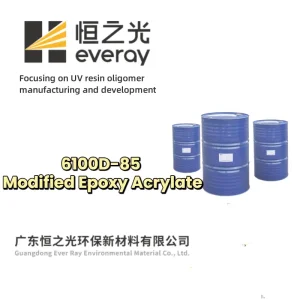
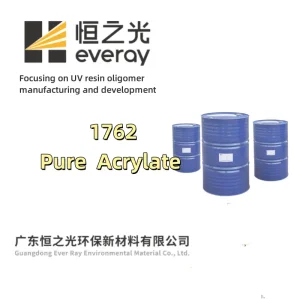
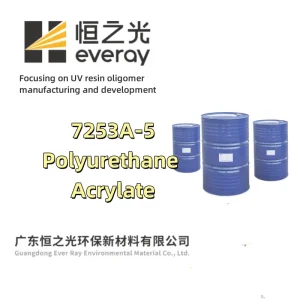
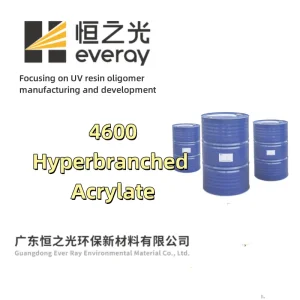
Explore the complete industrial grade spectrum: weather-resistant polyurethane acrylates, anti-yellowing epoxy acrylates, high-efficiency polyester resins, and hyperbranched hard-coat systems.
Comprehensive answers regarding active amine mechanics, formula stabilization, regulatory conformance, and international bulk logistics into Singapore and Southeast Asia.
Request customized technical data sheets (TDS), certificates of analysis (COA), or a rapid sample shipment to your Singapore laboratory or regional manufacturing hub.
