Featured Industrial Wood Coating Oligomers (Batch 01)
High-reactivity functional resins custom-tailored for roller coaters, vacuum coaters, and automated spray lines demanding superior scratch resistance and chemical barrier integrity.
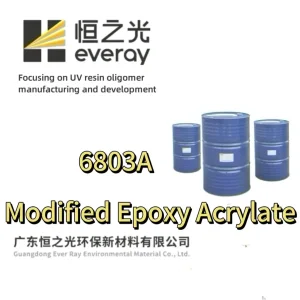
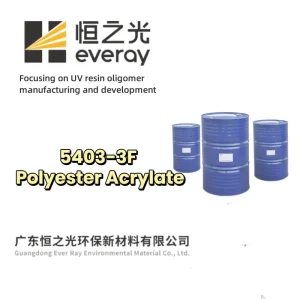
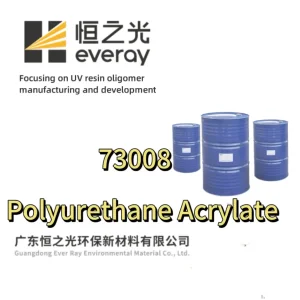
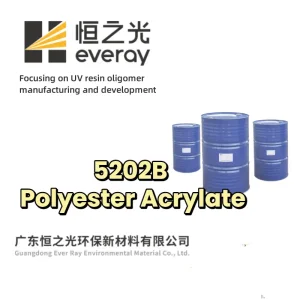
Industrial Evolution of Wholesale Wood Paint Formulations
The commercial wood coatings sector is experiencing an unprecedented structural transition driven by stringent ESG mandates, VOC emission ceilings, and automated flatline curing technologies.
Solvent-to-Radiation Curing Shift
Traditional nitrocellulose (NC) and acid-catalyzed (AC) systems are obsolete in modern industrial hubs due to high solvent evaporation risks. Photopolymerizable oligomers enable instant crosslinking via ultra-fast radical initiation, cutting curing cycles from days down to sub-second curing windows on roll-coating conveyor belts.
LED-UV 395nm Narrowband Adoption
Conventional medium-pressure mercury arc lamps produce substantial infrared heat that warps resin-rich hardwoods and veneer panels. Modern wholesale factories are re-engineering formulations around 365–395nm LED spectra, reducing energy expenditure by over 60% while eliminating toxic ozone emissions and substrate heat deformation.
Low-Odor Bio-Derived Matrices
OEM brand buyers increasingly mandate sustainable raw material sources. Modern synthesized polyester and urethane acrylates incorporate bio-renewable fatty acids and succinic derivatives, satisfying global eco-label initiatives while maintaining high Shore D hardness and solvent resistance against household chemicals.
Global Enterprise Purchasing Criteria & Technical Bottlenecks
Procurement heads at tier-one furniture and flooring manufacturers balance three interconnected variables: cure kinetics, interfacial adhesion stability, and total ownership cost.
Shrinkage & Internal Stress
High-speed radical polymerization can induce up to 10% volumetric shrinkage, generating destructive internal stresses that cause edge delamination and micro-checking on solid timber veneers. Oligomers must utilize optimized flexible backbones to absorb curing strain.
Interfacial Wetting on Resinous Woods
Hardwoods such as teak, oak, and pine possess complex extractives, terpenes, and varying moisture levels. Wholesale formulators demand low-surface-energy primers modified with specialized acrylic polar groups to penetrate deep into cellular capillaries.
Non-Yellowing Optical Clarity
Clear topcoats for bleached veneers, pale Scandinavian timber, and light-stained ash require total resistance to photo-oxidation. Aromatic rings degrade under UV radiation; therefore, buyers require fully saturated aliphatic polyurethane acrylates.
Batch Consistency & Pot Stability
High-speed industrial automated lines cannot accommodate fluctuating resin viscosity or premature gelation in intermediate bulk containers (IBCs). Strict synthesis parameters must govern monomeric purity, inhibitor levels, and shelf-life kinetics.
Macro Technical Solutions Across the Wood Finishing Continuum
A reliable industrial wood coating relies on an integrated, multi-layered chemical foundation. Here is how our engineered resins address each functional zone.
| Finishing Stage | Predominant Resin Chemistry | Critical Performance Index | Overcome Technical Bottleneck | Crosslink Density Level |
|---|---|---|---|---|
| Deep Substrate Sealer | Modified Bisphenol A Epoxy Acrylate (e.g., 6100D-85, 1200A) | Capillary Wetting & Fiber Locking | Prevents wood moisture release & fiber raise | High (Difunctional) |
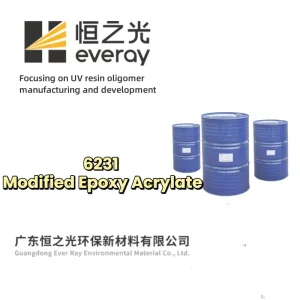
| High-Build Sanding Primer | Fast-Curing Epoxy Acrylate + Amine Synergist (6231, 6160M-3) | Immediate Dry Sandability & Powder Release | Eliminates sandpaper gumming at line speeds >30m/min | Very High |
| Intermediate Matt Sealer | Low-Shrinkage Polyester Acrylate (5202B, 5501) | Intercoat Adhesion & Extender Wetting | Eliminates micro-cracking & optimizes matting silica loading | Moderate - High |
| High-Wear Floor Topcoat | Aromatic Polyurethane Acrylate (7296-1, 7600) | Taber Abrasion Resistance & Toughness | Withstands commercial foot traffic without brittle fracturing | Ultra-High |
| Non-Yellowing Luxury Topcoat | Aliphatic Polyurethane Acrylate + Hyperbranched (4600) | Optical Clarity & Anti-Scratch (Pencil ≥3H) | Eliminates yellowing under natural solar exposure | Hyperbranched Network |
| Eco-Friendly Open-Grain Finish | Waterborne Polyurethane Acrylate Dispersions | Zero Monomer Odor & Ultra-Thin Uniform Film | Delivers natural tactile touch while complying with zero-VOC limits | UV Post-Cured Dispersions |
Global Compliance & Local Supply Chain Assurance
Supplying international manufacturers requires uncompromising adherence to environmental regulations, chemical handling standards, and transparent documentation.
REACH, TSCA & SVHC Compliance
All polymer chains and monomer diluents are synthesized to conform strictly with EU REACH registrations, US EPA TSCA inventories, and GB standards. We eliminate hazardous heavy metals, monomeric free isocyanates, and persistent aromatic hydrocarbons.
Export Logistics & Packaging Protocols
Resins are packed in standardized 200kg steel drums and 1000kg reinforced IBC totes, nitrogen-blanketed to preserve shelf life during intercontinental maritime shipping. Full SDS and Certificate of Analysis (CoA) documentation accompany every export consignment.
In-Field Line Optimization Support
Our senior polymer engineering team provides on-site formulation guidance, adjusting photoinitiator packages, diluent monomers (such as TPGDA, DPGDA, TMPTA), and defoamers to eliminate roller marks, orange peel, and micro-pinholing on industrial lines.
Technological Roadmap: The Next Era of Wood Coatings
Anticipating the downstream needs of furniture conglomerates over the next decade through targeted molecular architecture research.
Exclusively LED-Active Chemistries
Synthesizing oligomers engineered for deep cure at longer UV-A wavelengths (395nm), bypassing oxygen inhibition at low energy doses without requiring costly nitrogen inerting chambers.
Excimer 172nm Ultra-Matt Formulations
Refining oligomers designed for micro-folding excimer matting systems, creating super-matt (<2 GU at 60°), soft-touch finishes with zero matting agent migration and self-healing thermal capability.
High-Solids Bio-Circular Acrylates
Increasing renewable carbon content above 45% utilizing modified vegetable seed oils, lignin derivatives, and waste polyols without compromising glass transition temperature (Tg) or water resistance.
Smart Anti-Microbial & Barrier Hybrids
Integrating covalent organic-inorganic sol-gel silica matrices into acrylate backbones to yield transparent coatings with self-cleaning, anti-bacterial, and anti-graffiti properties for commercial sectors.
How do epoxy acrylates and polyurethane acrylates differ when used in wood finishes?
How do you prevent yellowing on light-toned and bleached wood veneers?
What formulation techniques eliminate surface oxygen inhibition on rapid roller coating lines?
Can waterborne polyurethane acrylates (WB UV) match 100% solids UV performance on wood?
What minimum order quantities (MOQ) and documentation support are available for trial formulations?
Featured Industrial Wood Coating Oligomers (Batch 02)
Engineered functional monomers, multi-substrate adhesion promoters, and high-tensile resins designed for industrial manufacturing and multi-layer wood finishing systems.