
High-Performance Resins & Prepolymers for Industrial Finishes
Engineered oligomer chemistries tailored for surface hardness, flexibility retention, deep-fill wood pores, and ultra-fast UV/LED curing lines.
Global Enterprise Procurement Dynamics for Wood Coating Polyurethanes
Analyzing the operational friction points facing tier-one industrial furniture brands, multinational flooring producers, and commercial millwork converters.
Aggressive Decarbonization & VOC Mandates
Global procurement teams across North America and the European Union face stringent regulatory thresholds such as EU REACH, South Coast Air Quality Management District (SCAQMD) Rule 1113, and GB 18581-2020 standards in Asia. Transitioning from solvent-based two-component (2K) polyurethane systems to 100% solids radiation-curable polyurethane acrylates (PUA) or waterborne polyurethane dispersions (PUD) is no longer solely an ecological initiative; it is an existential compliance checkpoint for export-driven manufacturers.
- Near-zero VOC volatile organic compound emissions
- Elimination of hazardous air pollutants (HAPs)
- Reduced carbon taxes across international borders
High-Yield Throughput & Ultra-Fast Cure Cycles
Modern flat-line production facilities operating roller coaters, vacuum coaters, and automated reciprocating spray systems demand curing speeds exceeding 40 to 80 meters per minute. Standard polyurethane varnishes requiring lengthy thermal drying or evaporative curing induce massive bottlenecking, require colossal factory footprints, and drive up energy expenditure. Advanced oligomers must balance instantaneous UV radical crosslinking with deep-cure penetration across thick, pigmented films.
- Compatibility with LED-UV (365nm, 395nm) sources
- Instant stackability without surface blocking
- Drastically decreased thermal energy overheads
Substrate Mechanical Dynamics & Anisotropic Motion
Wood is a living, hydro-dynamically responsive cellular composite that expands and contracts across moisture gradients. Traditional hard coatings often crack, peel, or exhibit micro-fissuring during rapid temperature and humidity fluctuations. Wholesale polyurethane resin procurement focuses heavily on oligomer backbones that synthesize high glass transition temperatures (Tg) for abrasion resistance alongside flexible soft segments (polyether, polyester, or polycarbonate) that absorb timber substrate movement.
- Micro-crack prevention during cyclical freeze-thaw cycles
- Deep wood vascular grain wetting and mechanical anchoring
- Superior intercoat adhesion without delamination risks
Polyurethane Chemistry Architecture for High-End Wood Coatings
Understanding the molecular mechanisms governing aliphatic vs. aromatic urethane acrylates, waterborne polyurethane dispersions, and functional hyperbranched systems.
| Oligomer Chemical Architecture | Typical Molecular Weight (Mw) | Acrylate Functionality | Film Tensile / Elasticity Ratio | Photo-Oxidative Yellowing Stability | Recommended Wood Application Layer |
|---|---|---|---|---|---|
| Aliphatic Urethane Acrylate (IPDI / H12MDI Based) | 1,200 – 4,500 Da | 2 – 6 Functional | High Flexibility & Elastic Recovery (Elongation 20% – 120%) | Outstanding (QUV-A > 1000 hrs ΔE < 1.5) | Non-yellowing clear topcoats, high-gloss piano finishes, white lacquered kitchen cabinets |
| Aromatic Urethane Acrylate (TDI / MDI Based) | 800 – 2,500 Da | 2 – 3 Functional | High Rigidity & Hardness (Pencil Hardness 2H – 4H) | Moderate (Prone to chromophore formation under UV exposure) | Economic wood sanding primers, opaque pigmented basecoats, interior engineered parquet |
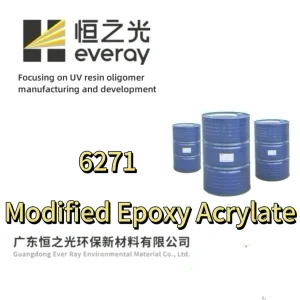
| Modified Epoxy Acrylate Hybrid | 500 – 1,500 Da | 2 Functional | Brittle, Ultra-Dense Crosslink Matrix (Elongation < 5%) | Fair (Yellowing under outdoor solar exposure) | Pore-filling base sealers, roller-applied UV putty, heavy-duty sanding primers |
| Waterborne Polyurethane Dispersion (UV-PUD) | 50,000 – 200,000 Da (Dispersed) | Dual Mechanism (Drying + Rad.) | Exceptional Balance of Toughness & Grain Definition | Superior (Aliphatic, Zero Thermal Yellowing) | Open-pore natural tactile wood finishes, architectural millwork, spray lines for curved chairs |
| Dendritic / Hyperbranched Acrylate | 1,500 – 5,000 Da | 8 – 16 Functional | Extremely High Hardness, Low Volumetric Shrinkage Stress | High (Sterically hindered internal matrix) | Anti-scratch nano-protective wear layers, commercial luxury vinyl tile (LVT), parquet top layers |
Aliphatic Isocyanate Selectivity
Aliphatic polyurethane acrylates synthesize isophorone diisocyanate (IPDI) or hexamethylene diisocyanate (HDI) biurets. By omitting aromatic rings, these prepolymers lack the photo-cleavable quinoid chromophores that trigger surface ambering under direct daylight. For premium white oak, maple veneers, and pristine white polyurethane cabinetry, our aliphatic oligomers retain spectroscopic clarity through years of solar radiation exposure.
Waterborne UV-PUD Dispersion Dynamics
Combining the microscopic film depth of waterborne coatings with the chemical resistance of UV curing, our UV-curable polyurethane dispersions rely on internal emulsification using dimethylolpropionic acid (DMPA). Upon water flash-off, the pre-coalesced polymer particles assemble into a uniform film, followed by rapid UV crosslinking to lock in chemical resistance without the surface orange-peel effect often seen in high-viscosity 100% UV resins.
Polyol Soft Segment Engineering
The flexibility and chemical resilience of a polyurethane coating are governed by its soft segment chemistry. Utilizing polycarbonate diols yields exceptional hydrolytic stability and scratch resistance for hotel tabletops; polyester polyols provide optimal pigment wetting and mechanical toughness for heavy cabinetry; polyether polyols maximize cost performance and cold-temperature impact resistance for high-volume solid wood flooring.
Macro Industrial Solutions for Modern Woodworking Lines
Turnkey formulation strategies engineered for roller, automated spray, curtain coating, and vacuum application methodologies.
Automated High-Speed Roller Coating
Engineered for high-volume solid wood parquet and multi-layer engineered flooring. Formulations tailored with our modified epoxy acrylates (e.g., 6203F) and aromatic polyurethane acrylates maintain stable rheological shear viscosity under high-speed elastomeric application rolls, guaranteeing zero ribbing, perfect leveling, and instant sandability under mercury or gallium arc lamps.
- Excellent roll release and uniform laydown
- Fast sandability within 30 seconds post-cure
- Pore-wetting prepolymers prevent pinholing
Automated Spray Lines for 3D Profiling
Complex 5-piece cabinet doors, curved dining chairs, and architectural trim necessitate multi-axis reciprocating spray or rotary robotic atomization. Our low-viscosity polyurethane acrylates and waterborne UV dispersions deliver shear-thinning pseudoplastic rheology, ensuring smooth atomization, minimal overspray rebound, and defect-free sag resistance across vertical routed edges.
- Optimized spray atomization at lower fluid pressures
- Zero vertical edge slump and uniform film thickness
- Rapid tack-free flash-off avoids airborne dust defects
Excimer Laser Super-Matte & Soft-Touch Finishing
Modern luxury furniture trends center on dead-matte finishes (gloss levels < 3 GU at 60°) combined with velvet soft-touch haptics and fingerprint resistance. Utilizing our specialized polycarbonate acrylates (e.g., 72203A) under 172nm excimer radiation causes micro-folding of the surface oligomer network before full UV through-curing, yielding unmatched scratch resistance without heavy matting powder loading.
- Elimination of gloss burnishing from dry rub
- Hydrophobic & oleophobic anti-fingerprint surface
- Deep visual clarity preserving natural grain contrast
Technological Roadmap: The Next Decade of Polyurethane Wood Chemistry
Anticipating the technological disruptions transforming coatings science through bio-renewable carbon, non-isocyanate synthesis, and intelligent curing.
Bio-Renewable Polyols & Monomers
Synthesizing polyurethane acrylates incorporating 30% to 65% bio-based carbon derived from plant triglycerides, succinic acid, and 1,3-propanediol (PDO), matching petrochemical mechanical profiles with verified ASTM D6866 carbon tracing.
Broadband LED-UV Oligomer Dynamics
Overcoming oxygen inhibition at 395nm and 365nm UV-LED wavelengths through internal amine-functionalized synergist backbones, allowing formulators to eliminate expensive nitrogen-inerting tunnels on high-speed industrial lines.
Non-Isocyanate Polyurethanes (NIPU)
Advancing radical-curable prepolymers synthesized via cyclic carbonates and diamines, entirely bypassing free monomeric isocyanate precursors to establish non-toxic, eco-safe industrial blending and handling environments.
Smart Stimuli-Responsive Matrices
Embedding dynamic reversible covalent bonds (Diels-Alder networks) within the cured polyurethane matrix, enabling micro-scratches on wood tabletops and luxury flooring to heal autonomously under mild thermal or radiant stimulation.
Global Regulatory Compliance & Analytical Testing Protocols
Ensuring cross-border chemical compliance and product reliability across international industrial supply chains.
REACH & TSCA Compliance
Every polyurethane prepolymer and acrylate oligomer is fully registered and inventoried under EU REACH (EC 1907/2006) and US EPA Toxic Substances Control Act (TSCA), ensuring border-clearance integrity for international chemical exporters.
Indoor Air Quality: LEED & GREENGUARD
Formulated to achieve ultra-low residual unreacted monomer concentrations (< 0.05%), supporting end-product certification under GREENGUARD Gold, EMICODE EC1 Plus, and LEED v4.1 architectural interior environmental benchmarks.
Mechanical & Chemical Resistance Testing
Evaluated under standardized EN 12720 (Resistance to Cold Liquids: coffee, wine, ethanol, and acetone), DIN 68861-1 wear specifications, and Taber Abrasion (ASTM D4060) utilizing CS-17 / CS-10 wheels to verify long-term industrial surface durability.
Bulk Packaging & Supply Chain Safety
Shipped in UN-certified 200 kg steel drums, 1,000 kg IBC containers, or temperature-stabilized ISO-tanks. Stabilized with non-discoloring phenolic and quinone free-radical scavengers ensuring 12+ months shelf stability in tropical logistics transit.
Frequently Asked Questions for Formulators & Procurement Directors
Comprehensive technical guidance on rheology, curing optimization, resin selection, and international wholesale procurement.
Why choose aliphatic polyurethane acrylates over aromatic grades for high-end wood coatings?
How does curing shrinkage impact wood coating adhesion, and how is it mitigated?
What is the optimal oligomer combination for multi-coat industrial parquet flooring?
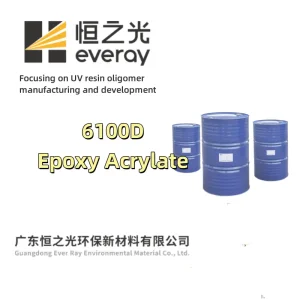
1. Base Sealer & Pore Filler: Low-viscosity modified epoxy acrylate (e.g., 6100D or 6203F) to penetrate timber pores, mechanically lock into the wood fibers, and provide rapid sandability.
2. Middle Build & Sanding Coats: High-build aromatic polyurethane acrylate or modified polyester acrylates filled with talc and zinc stearate to create a perfectly flat substrate plane and rapid sanding response.
3. High-Wear Layer: Hexa-functional aliphatic urethane acrylates or hyperbranched acrylates blended with nano-aluminum oxide (corundum) particles to achieve Taber abrasion resistance exceeding 4,000 cycles (DIN 68861-1 / EN 13329).
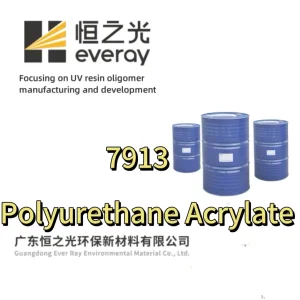
4. Topcoat Finishing: Di- or tri-functional aliphatic urethane acrylate (such as 7913 or 72203A) blended for specific gloss targets (high-gloss, semi-matte, or dead-matte via excimer) providing stain and chemical resistance against household liquids.
Can your UV-curable prepolymers be cured using modern LED-UV (395nm / 365nm) systems?
What documentation, MOQ, and sampling procedures apply to international wholesale orders?
Documentation: Each batch includes a formal Certificate of Analysis (COA) specifying Brookfield viscosity, acid value, Gardner color index, and non-volatile solid content. Technical Data Sheets (TDS), 16-section GHS Safety Data Sheets (SDS), and customs compliance statements (REACH/TSCA) are supplied in English.
Sample Policy: We offer 500g to 2kg evaluation sample kits for qualified formulation chemists, sent via express air courier along with initial formulation guides.
Minimum Order Quantities (MOQ): Standard pilot formulations begin at 200 kg (1 drum). Containerized bulk shipments (FCL) of 200 kg steel drums or 1,000 kg IBCs receive dedicated volume pricing schedules and custom monomer-dilution ratios.
Functional Acrylate Oligomers & Dual-Cure Specialized Resins
Specialty anti-fouling polyurethane acrylates, ultra-fast curing polyesters, and structural bonding systems for industrial finishing lines.
Connect with Our Resin Synthesis Chemists
Whether fine-tuning a roll-coating sanding sealer, transitioning to LED-UV line speeds, or developing an ultra-matte excimer topcoat, our R&D application laboratory provides starting formulations, viscosity adjustment, and evaluation samples tailored to your operational specifications.
