Wholesale Urethane Acrylate Oligomer Manufacturer & Factories

Pioneering High-Precision Photopolymer Syntheses, Tailored Aliphatic & Aromatic Functional Backbones, and Sustainable Supply Chain Directives for Global Industrial Applicators.

Direct-From-Factory Portfolio

High-Performance UV Oligomers & Polyurethane Resins

Explore our laboratory-tested industrial grades designed for high line-speed curing, superior substrate adhesion, scratch mitigation, and optical clarity across multi-industry manufacturing lines.
High-Quality 5218 Polyester Acrylate UV Resin
High-Quality 5218 Polyester Acrylate UV Resin: Excellent Adhesion & Pigment Compatibility
Explore Product
Modified Acrylate Oligomer High Elasticity
Wholesale High Solid Low Viscosity Modified Acrylate Oligomer - High Elasticity UV Curable Acrylic Resin
Explore Product
7402 Polyurethane Acrylate UV Resin
High-Quality Fast Curing 7402 Polyurethane Acrylate UV Resin for Superior Industrial Finishes
Explore Product
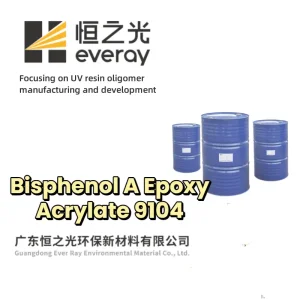
Bisphenol A Epoxy Acrylate Resin 9104
Buy Bisphenol A Epoxy Acrylate Resin 9104: A Core Resin for High-Performance UV Formulations
Explore Product
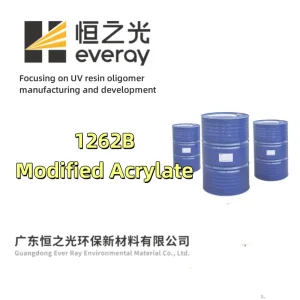
Low Viscosity 1262B for PVC Floors
Wholesale Low Viscosity 1262B: Suitable for High Wear Resistance PVC Floor Coating Applications
Explore Product
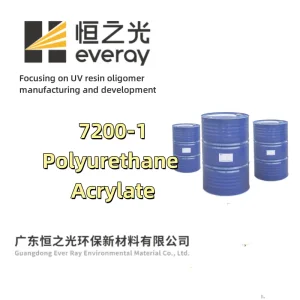
Aliphatic Polyurethane Acrylate 7200-1
Buy Durable UV Furniture Coating: 7200-1 Aliphatic Polyurethane Acrylate UV Resin
Explore Product
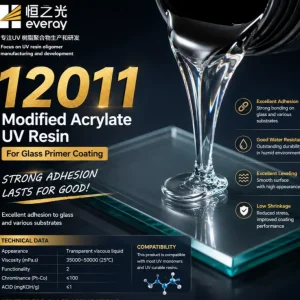
12011 Modified Acrylate for Glass
Wholesale 12011 Modified Acrylate UV Resin: Boiling Water & Hydrolytic Resistance Glass Primer
Explore Product
72017A-8 Dual-Curing Resin
Wholesale 72017A-8 Dual-Curing UV Resin for 3D Printed Footwear: Low Shrinkage Elastomer
Explore Product
Industrial Status & Macro Solutions

The Global Paradigm Shift in Radical Photopolymer Chemistry

Analyzing cross-border demand vectors, energy transition policies, and molecular engineering requirements in modern polymer syntheses.

Global Decarbonization Mandates

Regulatory frameworks across Europe (REACH, Green Deal) and North America (EPA Clean Air Act amendments) are enforcing massive reductions in Volatile Organic Compounds (VOCs). Wholesale urethane acrylate oligomers, offering 100% solid content options, eliminate the necessity of organic stripping, decreasing thermal drying emissions by up to 75% compared to solvent-borne acrylics.

UV-LED Line Conversion Efficiency

Global manufacturing lines are rapidly transitioning from legacy medium-pressure mercury arc lamps to narrow-band UV-LED systems (365nm, 385nm, 395nm, 405nm). Formulating oligomers capable of overcoming surface oxygen inhibition under low-intensity, monochromatic irradiation requires hyper-tuned urethane prepolymer synthesis, amine modification, and precise branch architectural control.

Advanced Functional Toughness

Traditional acrylic and epoxy backbones often struggle to balance scratch hardness against dynamic impact resistance. Urethane acrylates bridge this mechanical divide by leveraging thermodynamic phase separation between soft polyol segments (polyester, polyether, polycarbonate) and hard isocyanate domains (IPDI, HDI, TDI, MDI), resulting in unmatched resilience.

2006
Established R&D Footprint
40k+
Square Meter Facility
10+
Automated Reactor Trains
100%
Batch Traceability & QC
Material Science Differentiation

Aliphatic vs. Aromatic Urethane Acrylates: Engineering Comparison

Selecting the optimal molecular backbone relies on rigorous thermodynamic calculations, environmental exposure profiles, and targeted glass transition temperatures (Tg).

Aliphatic Polyurethane Acrylates (APUA)

Synthesized via isophorone diisocyanate (IPDI) or hexamethylene diisocyanate (HDI). Because these polymers lack aromatic rings prone to photo-oxidation, they display exceptional UV weathering resistance, non-yellowing characteristics, and extreme elongation capacity. Recommended for automotive clear coats, mobile device housing, optical films, and cosmetic nail gels.

Aromatic Polyurethane Acrylates (PUA)

Built upon toluene diisocyanate (TDI) or methylene diphenyl diisocyanate (MDI) scaffolds. The aromatic ring structures induce a high glass transition temperature, rapid curing speed, aggressive hardness development, and cost-effective formulations. Ideal for industrial wood sealers, heavy-traffic PVC floorings, overprint varnishes, and screen-printing inks.

Waterborne PUA Dispersions (WPUA)

Integrating hydrophilic groups (such as DMPA) into the polyurethane acrylate backbone allows complete water dispersibility. Combining the high-performance attributes of UV-curable crosslinked networks with zero-VOC or near-zero VOC profiles, these dispersions are tailored for porous substrates, luxury leather finishes, and thin-film wooden furniture architectures.

Targeted Engineering Segments

Localized Industrial Implementations & Substrate Solutions

Formulation strategies customized for regional manufacturing clusters across North America, Europe, East Asia, and emerging production hubs.

Consumer 3C Electronics & Wearables

Consumer electronics housings demand pencil hardness ≥3H, adhesion to untreated polycarbonate (PC) and ABS, and resilience to artificial sweat and cosmetics. Our aliphatic urethane acrylates provide flexible bridging that survives drop-impact testing without micro-cracking at high temperatures or sub-zero conditions.

Additive Manufacturing & 3D Photopolymers

For stereolithography (SLA), digital light processing (DLP), and LCD 3D printing, resin formulations require exceptionally low unpolymerized viscosity (<500 mPa.s at 25°C) and tight volumetric shrinkage control (<3%). Ever Ray’s tailored oligomers allow 3D printed footwear midsoles to achieve >300% tensile elongation and fatigue cycles exceeding 100,000 compressions.

Heavy Commercial Flooring & Coil Coating

High-speed roller coating lines require ultra-low viscosity oligomers that level instantaneously before passing UV curing stations. Our modified aromatic and multi-functional urethane acrylates yield exceptional Taber abrasion resistance and chemical stain resistance against iodine, ethanol, and household alkali reagents.

Global Governance & Supply Chain Resilience

Cross-Border Compliance, Quality Systems & Localized Support

Ensuring frictionless international trade, hazardous materials compliance, and guaranteed batch consistency from raw material verification to dockside delivery.

Full REACH & TSCA Compliance

Every commercial polymer grade synthesized by Guangdong Ever Ray Environmental Material Co., Ltd. is comprehensively documented with up-to-date Safety Data Sheets (GHS/CLP compliant SDS), Technical Data Sheets (TDS), and pre-registered inventories across the European Union, the United States, Japan, and Southeast Asian industrial zones.

Stringent In-House QC & Metrology

Operating under ISO 9001 and ISO 14001 certifications, each production batch undergoes analytical characterization: Brookfield viscosity calibration, Gel Permeation Chromatography (GPC) molecular weight distribution, FTIR spectra matching, free monomer residue titration (GC-MS), and moisture level determination (Karl Fischer).

Logistical Redundancy & Packaging

We provide multiple industrial packaging options tailored to your automated dosing equipment: 25kg HDPE drums, 200kg steel drums, and 1000kg IBC totes equipped with anti-static liners and nitrogen blankets to prevent premature thermal crosslinking during transatlantic or transpacific marine transits.

Forward Engineering Horizon

Technology Roadmap: 2026–2030 Polymer Innovations

Directing next-generation radical photopolymerization through bio-content synthesis, dual-cure hybrid crosslinking, and functional self-healing networks.

Bio-Based Carbon Feedstocks (30% to 70%)

Ever Ray is synthesizing high-performance aliphatic urethane acrylates utilizing polyols derived from dimer fatty acids, succinic acid, and castor oil variants. Our technical target achieves up to 70% bio-based carbon fraction without sacrificing mechanical hardness or accelerating photo-yellowing degradation.

Dual-Cure Mechanisms (UV + Moisture/Thermal)

To eliminate cure shadowing within complex 3-dimensional geometrics (automotive interior parts, thick electronics potting, structural assembly adhesives), our R&D incorporates secondary latent isocyanate (-NCO) or alkoxysilane reactive handles. Following instantaneous UV pinning, ambient atmospheric moisture or mild heat completes the secondary crosslink deep inside obscured cavities.

Dynamic Covalent Networks & Self-Healing

By engineering reversible covalent bonds (such as sterically hindered urea bonds or disulfide crosslinks) directly within the urethane acrylate polymer architecture, microscopic abrasions in automotive clear coats and touchscreen protective barriers can self-heal under moderate sunlight or thermal excitation (50°C–60°C) within minutes.

Extended Specialty Portfolio

Precision Resins for Coatings, Vacuum Plating & Lithography

Browse additional field-proven grades formulated to enhance metal adhesion, solve print ink-water balance issues, and impart high-definition visual effects.
7230E Polyurethane Acrylate UV Resin
High-Quality Excellent Adhesion: 7230E Polyurethane Acrylate UV Resin for Vacuum Plating
Explore Product
5320 Polyester Acrylate Resin
High-Quality 5320 Polyester Acrylate: Optimal Ink Wettability & High Gloss Formulations
Explore Product
Polyester Acrylate 5405B
High-Quality Polyester Acrylate 5405B – A High-Efficiency Solution for Multi-Field UV Systems
Explore Product
61163 Modified Epoxy Acrylate
Buy 61163 High Solid Low Viscosity Anti-Yellowing Modified Epoxy Acrylate Resin for UV Coatings
Explore Product
7317 UV Resin for Wrinkle Snowflake
High-Quality 7317 UV Resin: Professional in UV Ink-Wrinkle and Snowflake Visual Effects
Explore Product
6805A-1 Modified Epoxy Acrylate
Buy Fast-Cure High-Gloss Modified Epoxy Acrylate UV Resin 6805A-1 for UV Ink & Varnish
Explore Product
5403DF Polyester Acrylic Resin
Wholesale 5403DF: Ideal Polyester Acrylic UV Resin for Flexographic & Screen Applications
Explore Product
1200A UV Resin for Density Board
High-Quality 1200A UV Resin: Superior Adhesion for Density-Board Primer & Metal Substrates
Explore Product
Technical Clarifications

Frequently Addressed Formulator & Procurement Queries

Direct technical answers addressing compatibility, reactive diluent ratios, cure kinetics, and sample fulfillment for international chemical engineers.

What distinguishes aliphatic from aromatic urethane acrylate oligomers in real-world weathering?
Aliphatic polyurethane acrylates are synthesized from cycloaliphatic or linear aliphatic diisocyanates (such as IPDI or HDI), which do not form conjugated quinoid chromophores upon exposure to ultraviolet light. Consequently, they maintain high optical clarity, non-yellowing performance, and film flexibility even after thousands of hours of QUV accelerated weathering. Aromatic polyurethane acrylates (based on TDI or MDI) contain phenyl rings that cleave and oxidize under solar UV radiation, generating yellow tinting. However, aromatics provide superior tensile modulus, higher abrasion resistance, faster curing kinetics, and a cost-effective alternative for indoor timber coatings, packaging inks, and dark-pigmented substrates.
How do urethane acrylates compare against epoxy acrylates for wood and floor coatings?
Epoxy acrylates (predominantly Bisphenol-A based) yield hard, solvent-resistant films with fast crosslink response and excellent sandability, making them optimal for base sealers and intermediate sanding primers. However, pure epoxy acrylates exhibit significant cure shrinkage (often exceeding 6–8%) and relatively high brittleness, which can cause micro-fracturing under thermal expansion on wood. Polyurethane acrylates introduce flexible urethane segments (-NH-COO-) that disperse mechanical stress, providing impact resistance, flexibility over variable substrates, and superior Taber abrasion performance. Standard industrial floor coatings frequently blend epoxy acrylates for hardness with 20–40% urethane acrylates to prevent brittle failure.
Can Guangdong Ever Ray modify viscosity and functionality for specialized automated spray lines?
Yes. As a primary manufacturer operating high-capacity synthesis reactors, our chemical engineering team can tailor the molecular backbone, target molecular weight (Mw), and crosslinking functionality (di-, tri-, or hexa-functional). Furthermore, we can cut high-viscosity oligomers with reactive monomers (such as TPGDA, DPGDA, TMPTA, IBOA, or HDDA) directly in the reactor train to reach customer-specified viscosity boundaries (e.g., 200–500 mPa.s for robotic spray lines or 3D photopolymer vats) without requiring organic solvents.
What role do amino acrylates and active amines perform in overcoming oxygen inhibition?
Atmospheric oxygen rapidly quenches free radicals at the coating surface, forming unreactive peroxy radicals and leaving a tacky, partially cured surface layer. Amino acrylate oligomers and active amine synergists contain tertiary amine centers with labile alpha-hydrogen atoms. These readily donate hydrogen to active peroxy radicals, converting them into stable hydroperoxides while regenerating initiating carbon-centered amino-alkyl radicals. This hydrogen-abstraction pathway efficiently consumes localized oxygen at the liquid-air interface, achieving instantaneous, tack-free surface cures under fast conveyor speeds and lower UV doses.
What documentation and sample evaluation protocols are available for international trials?
We provide prospective wholesale formulators and procurement partners with comprehensive documentation, including lot-specific Certificates of Analysis (COA), full Technical Data Sheets (TDS), and CLP/GHS-compliant Safety Data Sheets (SDS). Standard sampling protocols include 500g to 1kg sample bottles packed with international freight-compliant dangerous goods labeling where applicable, allowing direct trial verification on customer pilot coater, offset print, or 3D printing equipment.