
Featured Industrial Photopolymer Resins
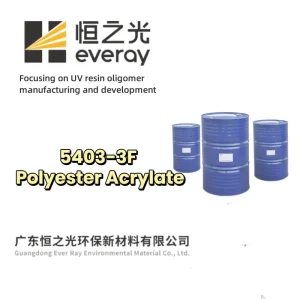
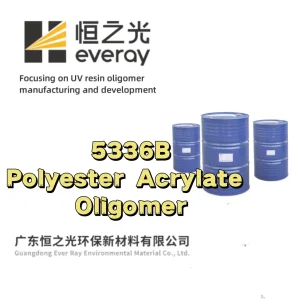
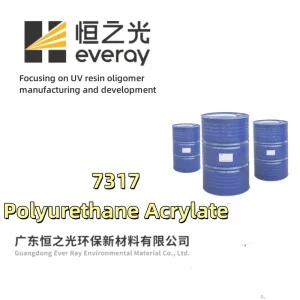
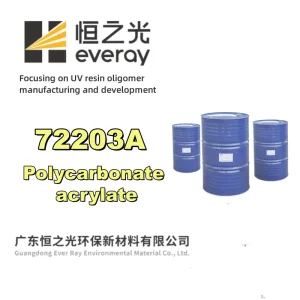
High-purity UV acrylates engineered specifically for high cure-speed conversion, nail gel system adhesion, scratch-resistant overcoats, and resilient cosmetic formulations.
Global Commercial Dynamics of Wholesale UV Nail Manufacturing
Analyzing market evolution, photopolymer supply economics, and the shift from commoditized contract bottling to integrated macromolecular chemistry factories.
Market Paradigm Shift
The international market for Ultra Violet (UV) nail polishes and structural builder gels has surpassed traditional cosmetics manufacturing paradigms. Modern cosmetic brands require wholesale UV nail factories that own full upstream synthesis, controlling molecular weight dispersion, viscosity indexes, and radical reaction speeds at reactor-level precision.
- Transitioning from nitrocellulose-based enamels to durable polymer matrices.
- Elimination of hazardous solvents with 100% reactive solids UV/LED formulations.
- Accelerated 21-day chip-free salon performance metrics as global consumer standard.
Regulatory Divergence & Standards
Cross-border procurement faces rigorous regional scrutiny. Factories must navigate European Union Cosmetic Regulation (EC) No 1223/2009, SCCS opinions on photoinitiators, and United States FDA cosmetic safety modernization (MoCRA). Leading facilities guarantee clean formulas without sacrificing cure dynamics or mechanical flexibility.
- Strict bans and phase-outs on Trimethylbenzoyl Diphenylphosphine Oxide (TPO).
- HEMA-free and Di-HEMA-free skin sensitization avoidance protocols.
- Heavy metal tracking below sub-ppm thresholds with comprehensive ICP-MS testing.
Integrated Factory Consolidation
Tier-1 brand aggregators and wholesale distributors are disintermediating secondary repacking houses. By contracting directly with certified synthesis powerhouses such as Guangdong Ever Ray Environmental Material Co., Ltd., global buyers achieve uncompromising batch consistency, lower landed costs, and proprietary oligomeric formulation barriers.
- Elimination of intermediate dilution and blending markups.
- End-to-end trace documentation from monomer reactors to certified drums.
- Custom mechanical property tailoring via R&D synthesis laboratories.
Technical Roadmap: Next-Gen UV Nail Polymer Chemistry
Deconstructing the macro-molecular formulations behind professional gel polish systems: from aliphatic isocyanate backbones to exotherm-controlled photo-crosslinking.
1. Aliphatic Polyurethane Acrylates
The structural backbone of high-tier UV nail gel depends on aliphatic urethane oligomers (such as IPDI or H12MDI synthesized chemistry). Unlike low-cost aromatic urethane or standard bisphenol-A epoxy acrylates, aliphatic polyurethanes provide unyielding UV solar yellowing resistance, non-brittle elasticity that matches natural keratin flexibility, and superior acetone soak-off capability.
2. Exotherm Heat-Spike Mitigation
Rapid free-radical acrylic polymerization triggers an exothermic enthalpy surge, resulting in user-perceived burning sensation in curing lamps. Leading wholesale factories formulate controlled hyperbranched architectures and oligomers with tuned crosslink density. This decelerates early-phase kinetic spikes while maintaining complete conversion within 30 to 60 seconds.
3. Low-Oxygen Inhibition & Synergists
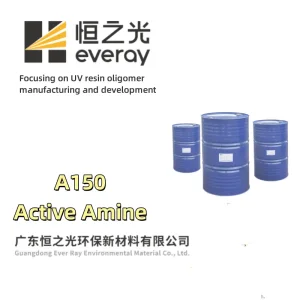
Atmospheric oxygen acts as a radical scavenger, extinguishing polymerization on nail topcoats, yielding an unreacted, tacky inhibition layer. Incorporating copolymerizable amino acrylates and active amine synergists into the factory masterbatch accelerates surface cure by consuming dissolved oxygen, producing mirror-gloss wipe-free finishes under 365+405nm hybrid LED arrays.
4. Bio-Based & Sustainable Precursors
The vanguard of UV material development focuses on sustainable circular chemistry. Ever Ray utilizes renewable soybean, castor, and succinic-acid derivatives to synthesize partially bio-based polyester and polyurethane acrylates. This transition lowers petrochemical dependence by up to 42% without degrading thermal stability or tensile adhesion performance.
| Polymer Family | Resin Backbone Type | Hardness vs Flexibility | Anti-Yellowing Score | Tensile Strength | Target UV Nail Formulation Use |
|---|---|---|---|---|---|
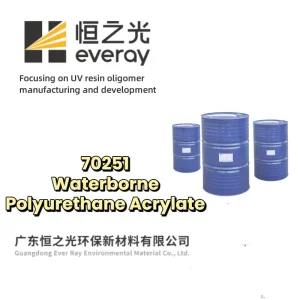
| Aliphatic PUA | IPDI / Polyether Urethane | Shore D 55 - 70 (Elastic memory) | Level 5/5 (Zero discoloration) | 22 - 35 MPa | Non-yellowing wipe-free top coats, flexible base gels, soft gels |
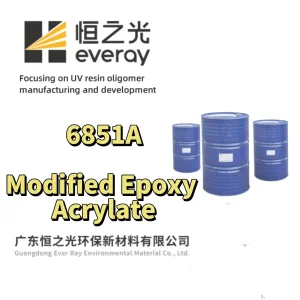
| Modified Epoxy Acrylate | Bisphenol-A Diglycidyl | Shore D 80 - 88 (Rigid glass) | Level 2.5/5 (Moderate shift) | 45 - 60 MPa | High-hardness builder extensions, scuff-resistant protective layers |
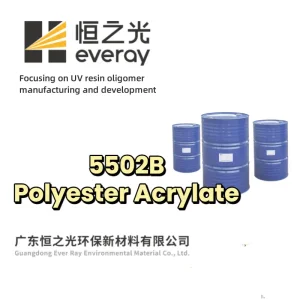
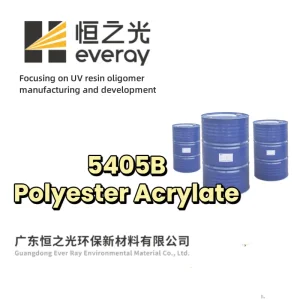
| Polyester Acrylate | Multifunctional Acid Ester | Shore D 65 - 78 (Balanced) | Level 3.5/5 (Controlled) | 30 - 45 MPa | High-pigment color gel nail bases, dense one-coat art paints |
| Hyperbranched Acrylate | Dendritic Polyol Core | Shore D 85 - 92 (Ultra hard) | Level 4.5/5 (High clarity) | 55 - 75 MPa | High-scratch diamond clear finishes, rapid curing hard toppers |
| Pure Acrylate Copolymer | Carboxylated Acrylic Oligomer | Shore A 85 - Shore D 50 (Tacky) | Level 4.8/5 (Crystal clear) | 12 - 20 MPa | Acid-free adhesion promoters, rubberized bonder coats, soak-off liners |
Localized Application Scenarios in the Global Beauty Ecosystem
Different climatic zones, salon throughput requirements, and regional application rituals require customized viscosity adjustments and mechanical parameters.
High-Humidity Tropical Salons
In regions like Southeast Asia, Florida, or Latin America, ambient humidity (RH > 80%) causes standard UV gels to suffer from moisture micro-condensation at the natural nail plate, provoking edge-lifting within days. Ever Ray synthesizes moisture-tolerant phosphate ester adhesion promoters that chemically chelate with keratin calcium ions, anchoring the polymer network regardless of atmospheric vapor pressure.
High-Turnover Express Manicure Bars
Urban European and North American express bars prioritize rapid turnover without compromising durability. Formulations customized for this scenario utilize low-viscosity, high-thixotropy polyurethane acrylates that level spontaneously in 3 seconds without running into lateral cuticle folds, reducing technician application time by up to 35%.
Industrial Semicured Gel Nail Strips
The rapid consumer emergence of direct-to-consumer (D2C) semicured nail wraps requires a factory with dual-stage cure mastery. Ever Ray produces specialized 60%-cured B-stage polyurethane film polymers with flexible elastomeric shelf-life, which consumers place on their nails before completing a final 60-second UV lamp lock-in.
Chinese Factory Supply Chain Resilience & Production Depth
How Guangdong Ever Ray's Yunfu manufacturing complex combines upstream scale, vertical monomer integration, and rigorous analytical quality control.
Chemical Raw Material Proximity
Guangdong province sits at the nucleus of global petrochemical refinement and acrylic acid synthesis. Guangdong Ever Ray Environmental Material Co., Ltd. sources fundamental feedstocks (acrylic acid, isophorone diisocyanate, polyols) with zero intercontinental transit vulnerability. This geographical proximity buffers wholesale clients from global shipping volatility and feedstock price spikes.
Reactor-Level Automation
Our dedicated Yunfu production base features multi-ton stainless steel reactors equipped with computerized DCS (Distributed Control Systems). Every synthesis phase—from radical initiator feed velocity to distillation vacuum pressure—is digitally monitored to maintain batch-to-batch acid value deviations below ±0.5 mg KOH/g and viscosity variance under ±3%.
Analytical Quality Assurance
Raw resin materials and formulated UV nail gel bases undergo comprehensive chromatography and spectroscopy before shipment authorization: Gel Permeation Chromatography (GPC) for molecular weight verification, Fourier-Transform Infrared Spectroscopy (FTIR) for double-bond conversion tracking, and Gas Chromatography (GC) for residual monomer verification below regulatory thresholds.
Global Regulatory Assurance & Toxicological Validation
Empowering overseas distributors and private label founders with unimpeachable compliance documentation and proactive toxicological vetting.
Full Dossier Support (CPSR & PIF)
Selling UV nail systems in the European Union or United Kingdom requires extensive Cosmetic Product Safety Reports (CPSR) filed by an EU-based Responsible Person (RP). Ever Ray supplies full chemical composition disclosures, CAS registration profiles, Certificate of Analysis (CoA), and localized GHS-compliant 16-section SDS data.
MoCRA & FDA Registration
Under the US Modernization of Cosmetics Regulation Act (MoCRA), factory facility listings, ingredient listings, and substantiated substantiation for adverse event tracking are compulsory. We partner with overseas brand owners to verify that every chemical constituent is listed on the TSCA chemical substance inventory and cosmetic safety portals.
Clean Beauty Certification Framework
Our technical laboratory formulates 9-Free, 12-Free, and 21-Free cosmetic resin series. We guarantee the total exclusion of toluene, dibutyl phthalate (DBP), formaldehyde, camphor, ethyl tosylamide, xylene, triphenyl phosphate (TPHP), parabens, HEMA, and hydroquinone monomethyl ether (HQME) where restricted.
Industrial Buyer's Audit Matrix for Wholesale UV Nail Factories
Essential technical benchmarks every enterprise sourcing director must evaluate before placing commercial volume contracts.
1. Synthesis vs. Secondary Blending
Determine if the factory actually polymerizes oligomer resins or merely blends pre-purchased intermediate resins with pigments. Pure synthesis factories offer drastically tighter tolerances, superior price insulation, and the chemical capacity to engineer custom oligomeric chain lengths.
2. Monomer Volatility & Odor Control
Audit factory residual monomer content via gas chromatography headspace analysis. Low-grade UV nail products contain high concentrations of unreacted volatile monomers (e.g., MMA or impure IBOMA), yielding sharp fumes and skin irritation. Demanding low-odor, high-boiling-point functional diluents is critical for salon health standards.
3. Pigment Dispersion & Wetting
Ensure that the factory's resin vehicles demonstrate low surface tension and superior pigment wetting properties. Inadequate resin wetting leads to pigment flocculation, color streaking, and rapid sedimentation in retail bottles during ocean transport and warehouse shelf storage.
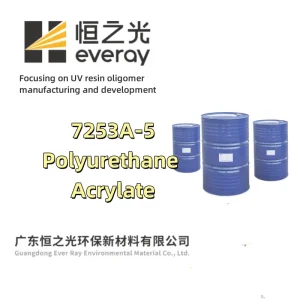
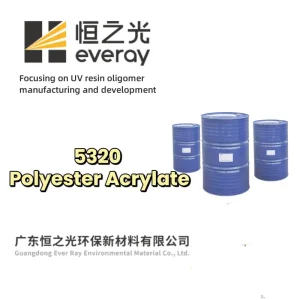
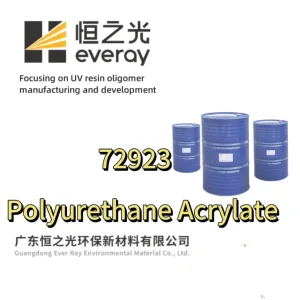
Complementary High-Performance Oligomers & Resins
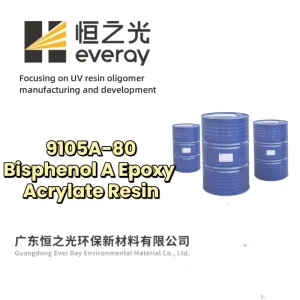
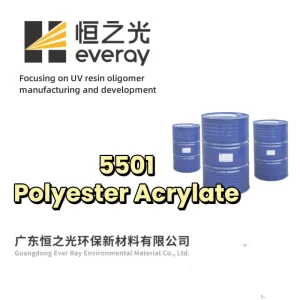
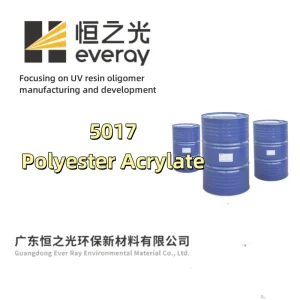
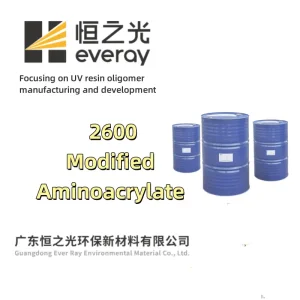
Explore our expanded resin portfolio utilized across high-durability UV wood varnishes, non-yellowing peelable adhesives, and specialized cosmetic matrix polymers.
Frequently Asked Questions by Industrial Formulators & Brand Owners
Answers to critical questions regarding photoinitiator replacements, monomer cytotoxicity, shelf-life stabilization, and OEM manufacturing minimums.
Why are wholesale UV nail factories migrating from TPO to alternative photoinitiator systems?
What chemical distinction makes Aliphatic PUA superior to Epoxy Acrylate in nail polish bases?
How does Ever Ray manage shelf-life stability and prevent premature polymer gelation during ocean transit?
What are the key requirements for HEMA-Free and Di-HEMA-Free UV nail gel manufacturing?
Can Ever Ray customize rheology and thixotropy for builder gels vs. ultra-thin color gels?
What testing documents are provided with commercial drum and wholesale container shipments?
Scale Your UV Photopolymer Sourcing with Guangdong Ever Ray
Whether you require standard 200kg steel drum shipments of high-purity polyurethane acrylate oligomers or an end-to-end engineered, HEMA-free private label nail gel formulation program, our chemical engineering team is standing by to evaluate your target performance benchmarks.
