High-Performance Adhesive Resin Portfolio: Batch I
Advanced UV/EB curable urethane acrylates, epoxy oligomers, and reactive matrices delivering unmatched crosslink density and peel strength.
Global Commercial & Industrial Status of Polyurethane Adhesives
The transition toward zero-VOC regulations, structural lightweighting, and automated curing lines has propelled polyurethane chemistry into critical supply chain relevance.
The global polyurethane adhesive and sealant market has crossed the $11.5 billion milestone, projected to expand at a compound annual growth rate (CAGR) surpassing 6.2% through 2032. This exponential trajectory is not merely a consequence of construction volume; it stems from a profound technological pivot across advanced manufacturing sectors. Traditional mechanical fasteners, rivets, and thermal welding are increasingly substituted by high-modulus polyurethane adhesives capable of dissipating dynamic stress, preventing galvanic corrosion, and joining heterogeneous materials like carbon fiber reinforced polymers (CFRP) to galvanized steel or aluminum alloys.
Simultaneously, environmental directives like EU REACH, California Proposition 65, and stringent national volatile organic compound (VOC) caps across East Asia have forced end-users to abandon solvent-borne polychloroprene or solvented urethane glues. The market demand has consolidated into three primary high-performance categories: 100% solids reactive polyurethane hot melts (PUR), two-component structural polyurethane systems (2K PU), and ultraviolet/electron beam (UV/EB) dual-curable polyurethane acrylates (PUA). Each formulation strategy addresses specific assembly kinetics, varying from instant green strength within seconds to deep-gap structural cure under ambient moisture.
Automotive Lightweighting & EV Packs
Structural PU adhesive formulations deliver elongation at break between 80% to 250% alongside shear strength above 18 MPa, dampening high-frequency road vibrations and securing lithium battery module enclosures with integrated dielectric insulation.
Consumer Electronics & Micro-Encapsulation
Demands for narrow-bezel OLED smartphones and wearable devices require PUR reactive hot melts with 0.8mm bead precision, zero-blooming characteristics, rapid open time control, and comprehensive IP68 waterproofing resistance.
Continuous Composite Panel Lamination
Architectural sandwich panels, cold-chain transport panels, and prefabricated structural insulated panels (SIPs) depend on single-component moisture-curing polyurethane resins exhibiting aggressive wet tack and expansive gap-filling chemistry.
Chinese Manufacturing Efficiency & Supply Chain Resilience
Why Tier-1 industrial buyers rely on integrated chemical manufacturing hubs in Guangdong to secure cost leadership, synthesized purity, and uninterrupted capacity.
The global procurement map has irrevocably shifted toward manufacturers that maintain complete upstream synthesis command over their polymeric precursors. Guangdong Ever Ray Environmental Material Co., Ltd. (established in 2006) operates an advanced 40,000 m² chemical production cluster in the Dawan Industrial Park (Yunfu, Guangdong), alongside international sales and engineering headquarters in Jiangmen. Unlike contract compounders who merely blend third-party polymers, our facility conducts in-house synthesis of customized polyols, functionalized isocyanate prepolymers, and reactive aliphatic/aromatic polyurethane acrylates (PUA).
This deep vertical integration generates tangible advantages for global wholesale buyers:
Raw Material Upstream Synergy
Direct pipeline access and bulk contracting for basic diisocyanates (MDI, TDI, IPDI, HDI) and macro-glycols (PTMG, PPG, PCL) shield purchasers from localized feedstock spikes and ensure year-round pricing stability.
Automated Synthesis Reactors
Equipped with 10+ multi-ton computer-monitored condensation and free-radical polymer reactors, maintaining temperature regulation within ±0.5°C to govern polydispersity indices (PDI) and eliminates batch-to-batch deviations.
International Logistics Hub
Strategically positioned near major Pearl River Delta ocean hubs (Nansha, Yantian, Shekou), our logistical infrastructure guarantees rapid standard export drum packing, IBC totes, and ISO tank shipments compliant with IMDG and DGR codes.
Every industrial production batch synthesized at Guangdong Ever Ray undergoes rigorous pre-release analytics: Gel Permeation Chromatography (GPC) for molecular weight distribution, Fourier Transform Infrared Spectroscopy (FTIR) for isocyanate conversion monitoring, and Brookfield DV-Next cone-plate viscometry across thermal gradients to guarantee formulation predictability.
Chemistry Dynamics: Polyurethane Adhesive Formulations & Crosslinking
Understanding the interplay between soft and hard segments, isocyanate index (NCO/OH), and secondary curing pathways for engineering high-toughness bonds.
The distinctive versatility of polyurethane adhesives originates from their microphase-separated block copolymer morphology. The alternating sequence of hard segments (formed by the reaction of diisocyanates like MDI, IPDI, or HDI with low-molecular-weight chain extenders) and soft segments (comprising long-chain polyether, polyester, or polycarbonate diols) enables formulators to balance contradictory mechanical attributes: exceptional tensile lap-shear strength paired with high elongation and impact resistance.
Structural Taxonomy of Industrial Polyurethane Glues
Depending on the curing regime and substrate chemistry, our engineering division formulates across three principal polyurethane adhesive architectures:
| Adhesive Mechanism | Resin Chemistry Base | Curing Kinetics | Tensile Strength (MPa) | Key Performance Metrics |
|---|---|---|---|---|
| 1K Moisture-Cure PUR | NCO-terminated aromatic prepolymers | Ambient humidity diffusion (24-72h) | 12 - 22 MPa | 100% solids, gap filling, aggressive initial green tack, hydrolytic resistance |
| 2K Structural Polyurethane | Polyol blends + polymeric MDI hardener | Polyaddition upon mixing (pot life 5-60m) | 18 - 32 MPa | No depth cure limitations, exceptional peel strength, metal/composite primerless grip |
| UV/EB Curable Urethane Acrylate | Aliphatic/Aromatic PUA oligomers + monomers | Free-radical photo-polymerization (<3s) | 15 - 45 MPa | Instant line speed, micro-shrinkage control, non-yellowing optical clarity, zero VOC |
| Dual-Cure (UV + Moisture/Heat) | Acrylate-functionalized NCO prepolymers | UV surface flash + shadow cure | 14 - 28 MPa | Eliminates shadow-masking defects in complex electronic potting and optical assemblies |
Soft Segment Selection: Polyether vs. Polyester vs. Polycarbonate
The choice of polyol backbone defines the ultimate durability of the bonded assembly when exposed to hostile environmental degradation:
1. Polyether Polyols (PPG, PTMG): Confer exceptional low-temperature flexibility, superior hydrolysis resistance, and low cost. They represent the standard choice for general construction, sandwich lamination, and moisture-cure PUR wood glues where immersion in boiling water is not sustained.
2. Polyester Polyols (Adipates, PCL): Offer dramatic mechanical strength, superior solvent and fuel resistance, and elevated thermal endurance. However, they are susceptible to ester linkage hydrolysis under hot, humid environments unless fortified with carbodiimide anti-hydrolysis stabilizers.
3. Polycarbonate Diols (PCDL): Represent the gold standard for high-end automotive, electronic, and aerospace polyurethane adhesives. PCDL-based urethane acrylates withstand continuous temperatures up to 130°C, resistance to artificial perspiration, and endure extreme accelerated weathering (85°C/85% RH for 1,000+ hours) without molecular mass drop or delamination.
Localized Engineering Applications & Case Scenarios
Real-world integration of wholesale polyurethane adhesives across demanding manufacturing environments worldwide.
Automotive Structural Hem-Flange & Windshield
Substrates: E-coated steel, high-strength aluminum, automotive laminated glass.
Formula Profile: High-modulus, crash-resistant polyurethane adhesives. Provides structural stiffness to car chassis, reduces spot welds, and delivers continuous vibration damping to passenger cabins with drive-away times under 60 minutes.
Smartphone Frame & Camera Lens Assembly
Substrates: Anodized aluminum, Gorilla glass, ceramic, polycarbonate.
Formula Profile: Fast-curing reactive PUR hot melt with precision dispensing beads (0.5mm - 1.0mm). Features rapid green strength within 3 minutes, IP68 immersion waterproof rating, and clean reworkability under moderate thermal debonding.
Photovoltaic Junction Box & Backsheet Potting
Substrates: PVF (Tedlar) film, PET composites, aluminum frame.
Formula Profile: Two-component flame-retardant (UL94 V-0) polyurethane potting adhesive. Protects delicate electronics against moisture ingress and extreme diurnal thermal cycles (-40°C to +90°C) with guaranteed 25-year outdoors longevity.
Multi-Layer Flexible Packaging Lamination
Substrates: BOPP, PET, CPP, aluminum foil, barrier EVOH.
Formula Profile: Solvent-free two-component aliphatic polyurethane laminating adhesive. Meets stringent FDA 175.105 and EU food-contact migration limits, eliminates primary aromatic amine (PAA) generation, and allows pouch boiling/retort.
Cold-Chain Insulated Truck Panels
Substrates: Glass reinforced plastic (GRP), XPS/PIR foam core, stainless steel.
Formula Profile: 1K Moisture-curing polyurethane structural thixotropic glue. Applied via automated comb-trowels, featuring high gap-filling capacity, non-sag vertical stability, and crack resistance down to -35°C under continuous road shock.
Optical Clear Adhesive (OCA) & Touch Sensor Bonding
Substrates: Indium Tin Oxide (ITO) glass, PET film, cover glass lenses.
Formula Profile: High-purity aliphatic UV polyurethane acrylate resin. Retains >99% optical transmittance, haze <0.2%, zero dielectric corrosion on silver circuits, and exceptional resistance to UV-induced bubble formation.
Emerging Industry Trends: Green Chemistry & Next-Gen Crosslinking
How our R&D laboratories address decarbonization, circular economy mandates, and ultra-fast manufacturing throughput.
The polyurethane adhesive domain is experiencing its most significant paradigm transformation since the inception of reactive hot melts. Regulatory scrutiny over volatile organic compounds, occupational diisocyanate exposure limits, and greenhouse gas metrics (Scope 1, 2, and 3 emissions) has redirected polymer engineering priorities toward three key vectors:
1. Bio-Based and Recycled Carbon Feedstocks
By substituting petroleum-derived polyether and polyester polyols with dimer fatty acid polyesters, castor-oil based polymers, and polyols synthesized from chemically recycled PET, our laboratories have engineered polyurethane adhesive resins containing up to 45% bio-renewable content. Crucially, this carbon-neutral synthesis does not compromise mechanical properties: bio-polyurethane adhesives display equivalent tensile lap shear strength and superior hydrophobicity compared to standard petrochemical analogs.
2. Ultra-Low Free Isocyanate Monomer Technologies
Occupational safety mandates across the European Union now enforce strict label restrictions for polyurethane products with free monomeric diisocyanates (such as free MDI or TDI) exceeding 0.1% by weight. Our vacuum thin-film wiped distillation columns reduce free monomer residuals to below 0.05%, classifying our high-end PUR hot melts and 1K polyurethane prepolymers as hazard-label-free, eliminating user sensitization risks without compromising crosslinking rate.
3. Dual-Cure and On-Demand Shadow Curing Mechanisms
Miniaturization in modern electronics demands that adhesives bond opaque components where ultraviolet rays cannot penetrate. Our hybrid systems pair UV-curable polyurethane acrylates with secondary moisture or thermal activators. An initial 2-second UV pulse delivers instantaneous green strength for robotic pick-and-place stability, while atmospheric moisture progressively cures the shadowed regions over subsequent hours, achieving complete interfacial bonding without requiring high-temperature oven baking.
Enterprise Procurement Criteria & Technical Verification Protocols
A comprehensive checklist for international OEM procurement teams, distributors, and formulation chemists evaluating wholesale suppliers.
Purchasing wholesale polyurethane adhesives for critical manufacturing assemblies entails rigorous verification far beyond price-per-kilogram calculations. Structural failures, line stoppages, or micro-cracking during service can yield catastrophic recall liabilities. At Guangdong Ever Ray, we assist international procurement divisions by institutionalizing standard testing protocols aligned with international ASTM, ISO, and DIN norms.
| Evaluation Parameter | Standard Test Method | Factory Acceptance Threshold | Significance for OEM Production |
|---|---|---|---|
| Lap Shear Strength | ASTM D1002 (Al-Al / Steel) | > 18.0 MPa (Cohesive failure) | Verifies structural joint integrity under pure shear load without substrate slip. |
| T-Peel Resistance | ASTM D1876 / ISO 11339 | > 7.5 N/mm (Flexible plastics) | Ensures composite laminates resist progressive edge peeling under dynamic wind/vibration. |
| Glass Transition (Tg) | DMA (ASTM E1640) | -40°C to +85°C tailored | Dictates whether the polymer acts as a tough elastomer or a rigid structural binder in service. |
| Hydrolytic Weathering | 85°C / 85% RH for 1,000h | > 85% Retention of initial strength | Guarantees resistance to bond degradation in tropical, high-humidity outdoor applications. |
| Dynamic Viscosity & Thixotropy | Brookfield / Rheometer DIN 53019 | Within ±5% of master standard | Prevents bead slump or nozzle clogging in high-speed automated dispensing heads. |
| Outgassing & Fogging | DIN 75201 / ASTM E595 | Condensate < 0.1 mg; CVCM < 0.1% | Critical for automotive interior air quality and preventing haze on camera lenses/sensors. |
Logistics, Shelf Life & Packaging Assurance
Polyurethane prepolymers and moisture-reactive hot melts are inherently susceptible to premature curing if exposed to atmospheric moisture during storage or shipping. Our wholesale packaging infrastructure employs triple-pass nitrogen purging, hermetically sealed aluminum vapor-barrier linings, and moisture-scavenged desiccant systems inside all 20kg pails, 200kg steel drums, and 1,000kg IBC totes. Each lot is issued with complete Certificate of Analysis (CoA) records reflecting rheological, NCO content, and colorimetric data.
High-Performance Adhesive Resin Portfolio: Batch II
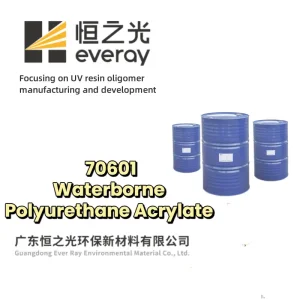
Specialized polyester acrylates, pressure-sensitive oligomers, waterborne dispersions, and glass-adhesion resins for niche technical formulations.
Frequently Asked Questions: Polyurethane Adhesive Technology & Supply
Expert answers addressing the formulation chemistry, equipment compatibility, and bulk purchasing parameters of polyurethane adhesives.