
Precision Liquid Epoxy & UV Acrylate Resins
Direct wholesale formulations featuring controlled molecular weights, hyperbranched architectures, and high-reactivity crosslinking profiles engineered for commercial converters.
The Global Commercial Dynamics of Wholesale Liquid Epoxy Resins
Unraveling the macro shifts across standard diglycidyl ethers, radiation-curable epoxy acrylates, and specialty oligomer networks driving global industrial decarbonization.
Supply Shift to High-Purity LER
Global demand for liquid epoxy resin (LER)—specifically unmodified Bisphenol-A diglycidyl ether (DGEBA) and its functionally modified radiation-curable variants—is experiencing a structural transformation. Heavy industrial coatings, wind energy composite blades, and automotive electrification (EV battery potting) require resins with tighter hydrolyzable chloride limits (≤ 1000 ppm) and consistent Epoxide Equivalent Weight (EEW 182-192 g/eq). Chemical processing operations must maintain strict reaction stoichiometry to prevent high residual volatile organic components.
Solvent-Free & Radiation Revolution
Driven by the European Green Deal, REACH Annex XVII restrictions, and EPA National Emission Standards, formulators are systematically phasing out solvent-borne polyurethanes and classic solvent epoxies. The market is shifting toward 100% solids, radiation-curing liquid epoxy acrylates and hyperbranched architectures. Photocurable liquid epoxies convert instantly beneath ultraviolet (UV) arc or LED-UV emission arrays (365 nm, 385 nm, 395 nm), eliminating thermal curing ovens, reducing energy draw by up to 75%, and cutting manufacturing footprints.
China's Core Role in Supply Security
China continues to anchor the global liquid epoxy resin and acrylate oligomer ecosystem, producing over 55% of the world's basic epichlorohydrin (ECH) and bisphenol precursors. Modern manufacturing clusters, such as Ever Ray's expansive production base in Guangdong, have transitioned beyond standard bulk production into advanced synthetic reactors, molecular modification suites, and batch-to-batch automated analytical controls, delivering resilient wholesale supply security to tier-one industrial formulators globally.
Molecular Engineering: From Oxirane Rings to Photocurable Acrylics
Understanding the synthesis kinematics, crosslinking thermodynamics, and structural backbone modifications that distinguish industrial-grade liquid epoxy derivatives.
Epoxy Ring Acrylation & Hydroxyl Functionalization
Unmodified liquid epoxy resin consists primarily of bisphenol A diglycidyl ether (DGEBA) with an average degree of polymerization (n < 0.2). In our specialty chemical facilities, these terminal oxirane rings undergo controlled catalytic ring-opening with acrylic acid at temperatures strictly regulated between 95°C and 110°C in the presence of triphenylphosphine or quaternary ammonium salts. This precision synthesis yields di-functional epoxy diacrylate oligomers featuring secondary hydroxyl groups along the aliphatic chain. These pendant hydroxyls (-OH) are pivotal: they provide superior hydrogen-bonding capability with polar substrates like glass, copper, treated aluminum, and cellulosic wood grain, while the terminal unsaturated acrylate double bonds (C=C) exhibit ultrafast free-radical reactivity under UV irradiation.
Modifying Viscosity, Flexibility, and Shrinkage
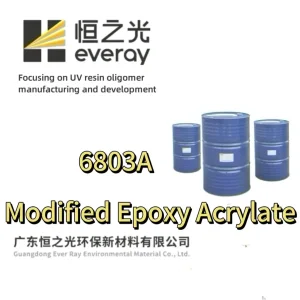
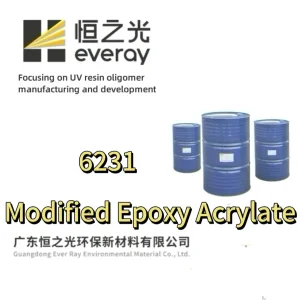
Standard epoxy acrylates present an inherent chemical challenge: high uncured room-temperature viscosity (often 50,000 to 200,000 mPa·s at 25°C) combined with post-cure volumetric shrinkage exceeding 7-9%, which can induce internal film stress, micro-cracking, and substrate curl on delicate foils. Ever Ray overcomes this through targeted backbone modification. By chemically interpolating aliphatic polyester segments, reactive polyols, or fatty acid chains into the aromatic DGEBA core, we formulate modified epoxy acrylates (e.g., Grade 6803A and 6231). This internal plasticization drastically reduces crosslink stress, improves flexibility and impact resistance from ≤ 1 mm to > 50 cm mandate heights, and enhances flow-leveling without sacrificing ultimate pencil hardness (exceeding 3H-4H on glass and metal).
Engineering Application Scenarios for Wholesale Resins
Formulated for demanding manufacturing processes worldwide. Explore how specialized liquid epoxy derivatives resolve critical failure modes across major global industries.
3C Electronics & Vacuum Plating
Consumer electronics (smartphones, earbuds, laptops) demand thin protective coatings that withstand cosmetic chemical immersion, skin oils, and violent abrasion. Our liquid modified epoxy systems, notably grade 1730, provide superior inter-coat adhesion as primers for vacuum metal deposition and magnetron sputtering. They prevent inter-layer delamination on polycarbonate (PC), ABS, and polyamide enclosures while maintaining mirror-gloss aesthetics.
Automotive Light-Weighting & Composites
In automated automotive assembly, liquid epoxies are deployed for rapid composite infusion (RTM), carbon fiber pultrusion, and structural battery housing potting. Low uncured viscosity ensures complete wet-out of dense multidirectional fiber weaves without dry spots. Simultaneously, their thermal endurance and high glass transition temperature (Tg > 120°C) deliver structural stability under intense engine bay thermal cycling.
High-Speed UV Packaging Inks & OPV
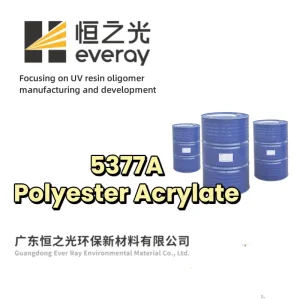
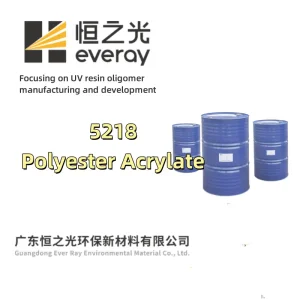
Offset, flexographic, and screen printing systems running up to 300 meters per minute rely on resins with exceptional pigment wetting and shear-thinning rheology. Our 5218 and 5377A polyester-acrylate and modified epoxy blends provide high radical conversion speeds under high-intensity UV lamps. They overcome oxygen inhibition in micro-thin films (≤ 2 μm) while ensuring no ink misting, sharp dot gain control, and zero surface tack.
Additive Manufacturing & 3D Photopolymers
SLA, DLP, and LCD/mSLA stereolithography require photocurable liquid polymers with precise curing depth (Dp) and critical exposure energy (Ec). Ever Ray manufactures engineering resins (such as 71209A-1 ABS-like engineering resin) that balance high tensile modulus (2200-2800 MPa), exceptional green strength during layer peeling, and high deflection temperatures, enabling functional mechanical prototypes and tooling jigs.
Heavy Commercial Flooring & Sanding Sealers
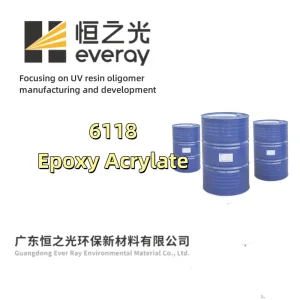
Factory floors, warehouses, and solid wood parquet encounter immense rolling loads, chemical spills, and abrasive friction. Epoxy acrylate 6118 and sandable primers fill porous wood pores instantly, providing excellent adhesion and rapid sandability without gumming sanding abrasives. The cured multi-coat finish resists hydraulic oils, alkaline cleaners, and micro-scratch deformation under rigorous ASTM wear testing.
Boil-Water Resistant Glass & Ceramic Coatings
Glass and vitrified ceramic substrates lack mechanical anchoring pores, presenting severe long-term adhesion challenges when exposed to boiling water or freeze-thaw condensation cycles. Our modified epoxy formulations incorporate silane coupling synergies and specialized carboxyl anchoring groups that establish covalent ≡Si-O-Si≡ bridges with glass silica, surviving 2-hour boiling water testing without delamination or blister formation.
China Factory Scalability: Upstream Integration & Quality Rigor
Why Tier-1 international formulators trust Guangdong Ever Ray Environmental Material Co., Ltd. for direct wholesale chemical stability, continuous synthesis, and batch repeatability.
Vertical Raw Material Control
Supply shocks can compromise formulation schedules. Located in the Dawan Industrial Park (Yunfu, Guangdong), our manufacturing facility maintains direct contractual feedstock channels for vital inputs including bisphenol-A, epichlorohydrin, acrylic acid, and specialty aliphatic diisocyanates. By controlling raw material purity criteria at intake, we eliminate hazardous impurities like residual moisture, heavy metals, and erratic inhibitor concentrations before polymerization begins.
Precision Reactor Automated Scaling
Our production base features multi-ton stainless steel reactors equipped with automated DCS (Distributed Control Systems) regulating exothermic heating profiles, nitrogen purging, and vacuum distillation. Whether procuring 200 kg standard drums, 1,000 kg IBC totes, or 20-ton isotank shipments, our synthetic processes guarantee less than 1.5% batch-to-batch variation in viscosity, color (Gardner ≤ 1), and cure response speed.
Comprehensive Quality Characterization
Every commercial wholesale lot undergoes rigorous analytical characterization in our centralized analytical lab prior to bill-of-lading issuance. Standard testing includes Gel Permeation Chromatography (GPC) for molecular weight distribution, FTIR spectrometry to verify 100% oxirane ring conversion, Brookfield rotational viscometry, and Karl Fischer coulometric titration to verify moisture levels ≤ 0.08%, ensuring prolonged storage life across international transit.
Technological Roadmap: The Next Era of Liquid Epoxy Chemistry
Anticipating next-generation manufacturing demands through dual-cure mechanics, bio-renewable carbon content, and hyperbranched architecture synthesis.
Dual-Cure Photothermal Hybrids
As intricate multi-component electronics and dense fiber-reinforced automotive parts expand, "shadow zones"—regions where UV light cannot penetrate—present a critical impediment to pure free-radical UV systems. Ever Ray is pioneering dual-cure hybrid liquid epoxy architectures. These systems initiate an instantaneous surface cure via UV radiation (securing geometric alignment within seconds) followed by secondary thermal or moisture-induced epoxy curing within shadowed cavities, ensuring uniform deep-section crosslink integrity throughout complex assemblies.
Bio-Based Renewable Carbon Matrices
Responding to strict carbon neutrality mandates and global ESG corporate scorecards, our R&D chemists are advancing bio-based epoxy acrylates synthesized from epoxidized soybean oil (ESBO), cardanol derived from cashew nut shell liquid, and bio-glycerol-derived epichlorohydrin. These renewable feedstocks deliver > 35% bio-based carbon content without compromising hardness, thermal resilience, or cure velocity compared to petroleum-derived bisphenol-A benchmarks.
Hyperbranched Dendritic Architectures
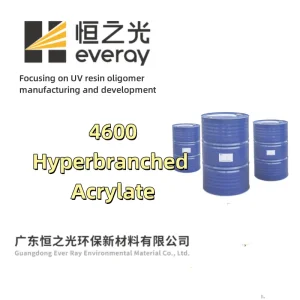
Traditional high-functionality oligomers suffer from exponential viscosity growth due to molecular entanglement. Our next-generation hyperbranched acrylic resins (exemplified by grade 4600) utilize densely functionalized spherical molecular topologies. This unique architecture yields abundant surface acrylate reactive end-groups (≥ 6 functional moieties per molecule) alongside remarkably low hydrodynamic volume, delivering ultra-fast line speed, glass-like scratch resistance, and low film shrinkage.
International Regulatory Compliance & Freight Security
Comprehensive regulatory verification, chemical safety data protocols, and temperature-stable packaging engineered for overseas container transit.
REACH, RoHS, and Halogen Auditing
Formulating for international markets demands rigorous compliance. Ever Ray liquid epoxy resins and UV acrylate oligomers comply fully with European EU REACH registration obligations, RoHS directives restricting hazardous substances (lead, cadmium, mercury, hexavalent chromium, PBBs, PBDEs), and global low-halogen guidelines (total chlorine and bromine < 900 ppm each). Full documentation including GHS-compliant Safety Data Sheets (SDS) in 15 languages and Technical Data Sheets (TDS) are supplied with commercial sample kits and mass-production lots.
Inert Packaging & Monomer Inhibitors
Liquid epoxy resins and acrylic oligomers are susceptible to premature radical polymerization if exposed to elevated temperatures or transition metal catalysts during multi-week trans-oceanic transit. Our export products are stabilized with precisely balanced food-grade phenolic inhibitors (such as MEHQ) and bottled under nitrogen blanketing in UV-opaque, UN-certified steel drums (200 kg net) or composite IBC containers (1,000 kg net). Containers are palletized, stretch-wrapped, and fitted with desiccant systems for guaranteed storage life exceeding 12 months at 25°C.
Formulation Support & Local Pilot Trials
Purchasing wholesale chemical materials requires localized technical onboarding. Ever Ray operates application validation laboratories capable of duplicating our clients' specific production line parameters—including roller coaters, offset printing presses, and custom curing spectra (Gallium, Mercury, and 395 nm LED). Our senior chemists advise on photoinitiator pairing (Type I vs. Type II), active amine synergist dosing to defeat oxygen inhibition, and reactive diluent balancing to achieve optimal fluid mechanics on your manufacturing floor.
Formulator Selection Guide: Liquid Epoxy & Acrylate Performance Matrix
A reference architecture designed for R&D chemists, production formulators, and technical procurement specialists evaluating mechanical properties and processing parameters.
| Resin Chemistry Family | Functionality (f) | Viscosity (25°C, mPa·s) | Film Hardness | Flexibility / Impact | Primary Industrial Utility |
|---|---|---|---|---|---|
| Standard Epoxy Acrylate | 2.0 | 80,000 - 180,000 | 3H - 4H | Moderate (Rigid) | Wood sanding sealers, paper varnishes, fast-cure OPV |
| Modified Epoxy Acrylate | 2.0 - 2.5 | 15,000 - 55,000 | 2H - 3H | High (> 50 cm pass) | Vacuum plating primers, 3C plastic coatings, flexible inks |
| Polyester Acrylate | 3.0 - 4.0 | 500 - 4,000 | H - 2H | High Balanced | UV offset printing, flexographic inks, pigment dispersions |
| Aliphatic Polyurethane Acrylate | 2.0 - 6.0 | 5,000 - 45,000 | HB - 3H | Exceptional (Non-yellowing) | Automotive exterior finishes, optical displays, cosmetic gels |
| Aromatic Polyurethane Acrylate | 2.0 - 3.0 | 10,000 - 60,000 | 2H - 3H | High Abrasion Resistance | Industrial parquet flooring, interior architectural topcoats |
| Hyperbranched Acrylate | 6.0 - 12.0 | 1,500 - 8,000 | 4H - 5H | Balanced / Low Stress | Scratch-resistant electronic hardcoats, rapid 3D printing |
| Waterborne Polyurethane Acrylate | Dispersion | 50 - 500 | H - 2H | Superior Elasticity | Zero-VOC spray lines, luxury leather finishes, eco wood stains |
Frequently Asked Questions: Wholesale Procurement & Formulations
Detailed technical, logistical, and commercial answers addressing common engineering challenges in wholesale liquid epoxy and radiation-curable resins.
Standard bisphenol-A epoxy diacrylate (e.g., DGEBA reacted with acrylic acid) offers rapid radical polymerization, exceptional solvent resistance, and high film hardness. However, its high crosslink density creates pronounced brittleness and volumetric shrinkage (7-9%), causing adhesion failures on non-porous plastics or metals. Modified epoxy acrylates incorporate aliphatic polyester polyols or flexible long-chain fatty acids into the backbone. This lowers internal cure stress, reduces viscosity, and elevates flexural elongation, dramatically improving inter-coat and substrate adhesion without compromising scratch resistance.
Atmospheric oxygen acts as a powerful free-radical scavenger, reacting with propagating polymer radicals to form unreactive peroxy radicals. This results in under-cured, tacky surfaces, especially in thin film (< 10 μm) ink and overprint varnish applications. Effective mitigation strategies include: (1) incorporating amino acrylate oligomers or active amine co-initiators that donate active alpha-amino alkyl radicals and consume dissolved oxygen; (2) increasing photoinitiator concentrations with high short-wavelength absorption (such as 184 or TPO); and (3) blending high-functionality hyperbranched acrylates to boost localized double-bond density.
Ever Ray's wholesale liquid epoxy and acrylate oligomers feature a guaranteed shelf stability of 12 months from production date when stored in unopened, original containers. Resins must be stored in cool, dry, well-ventilated indoor warehouses between 10°C and 30°C, away from direct sunlight, thermal heaters, moisture, and strong oxidizing agents. Acrylate double bonds require trace dissolved atmospheric oxygen to keep the MEHQ inhibitor active; therefore, never purge storage headspaces completely with pure inert gas unless explicitly directed for specialized anaerobic systems.
Yes. Our synthesis lines offer bespoke cut-back options with preferred reactive monomer diluents. Common reactive diluents include TPGDA (tripropylene glycol diacrylate) for rapid cure and balanced dilution, TMPTA (trimethylolpropane triacrylate) for hardness and crosslink density, HDDA (1,6-hexanediol diacrylate) for high dilution efficiency, or low-skin-irritation monomers like IBOA (isobornyl acrylate) and CTFA. Share your target coater viscosity, line speed, and substrate targets to receive customized laboratory formulations.
Every wholesale container lot includes a lot-specific Certificate of Analysis (COA) specifying: non-volatile content (solid %), dynamic viscosity at 25°C, acid value (mg KOH/g), Gardner color value, and specific gravity. On request, we provide comprehensive GHS Safety Data Sheets (SDS), FTIR spectral comparisons, Gel Permeation Chromatography (GPC) molecular weight profiles, and heavy metal / halogen compliance certifications verified through accredited third-party labs like SGS and Intertek.
For standard production grades, our minimum commercial order quantity (MOQ) is 1 standard drum (200 kg net) or 1 metric ton for customized synthetic variations. For formulation evaluation and trial runs, we supply 1 kg to 5 kg sample containers dispatched via air express (FedEx/DHL) within 48 to 72 hours, complete with starting point formulation guides and technical safety sheets.
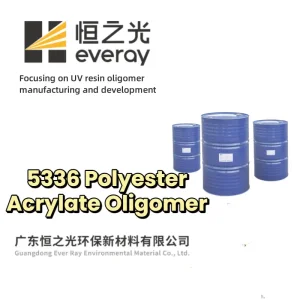
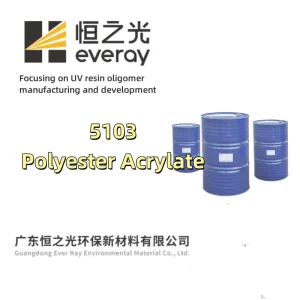
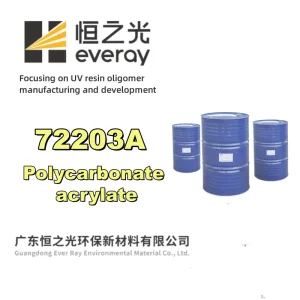
High-Performance Curable Oligomers & Acrylates
Engineered modified epoxy, polyester, and specialty oligomer grades designed for vacuum metallization, plastic films, engineering 3D printing, and soft-touch coats.
Request Direct Wholesale Pricing & Custom Resin Development
Connect directly with senior polymer application engineers at Guangdong Ever Ray Environmental Material Co., Ltd. We engineer tailored molecular structures, optimized viscosity profiles, and dependable bulk manufacturing schedules tailored to your industrial requirements.
