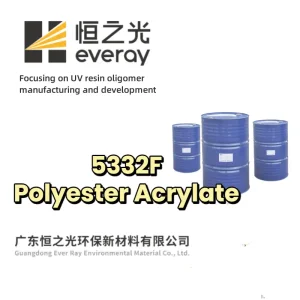
MOD: 5332F • Offset Resin
Buy Polyester Acrylate 5332F – The Premium Choice for Offset Inks Supplier, Factory
Request Specification Datasheet
Precision-synthesized oligomers and reactive intermediates optimized for high-speed photocuring, sub-second electron-beam curing, and advanced industrial application systems.
Evaluating macroeconomic catalysts, environmental mandates, and photochemical innovations reshaping cross-border polymers procurement.
Global manufacturing lines in consumer electronics, automotive assemblies, and renewable solar modules face severe production bottlenecks using traditional thermal cure systems. Fast curing epoxy acrylates reduce crosslinking times from 30+ minutes down to 1.5 to 5 seconds under medium-pressure mercury or LED UV arrays, eliminating work-in-progress inventories.
Under strict REACH (EU), EPA (US), and GB Standards (China), solvent-borne thermosets are being systematically phased out. Fast-curing epoxy acrylate chemistries operate at 100% active solids, eliminating volatile solvent evaporation entirely and slashing the factory's carbon footprint by omitting long curing thermal ovens.
Advanced high-speed processing now employs dual-cure hybrid mechanisms. Free-radical epoxy acrylates deliver instantaneous surface tack-free properties, while cationic cycloaliphatic formulations continue "dark curing" into shadowy structural recesses, ensuring depth of cure and unprecedented dimensional accuracy.
Technical Insight: Bisphenol-A based epoxy diacrylates exhibit characteristic backbone stiffness yielding Rockwell hardness levels up to M-95 while reaching conversion ratios above 92% under low-dosage ultraviolet irradiations (down to 250 mJ/cm²), making them the backbone resin for 80% of global industrial fast-curing coatings.
Inside the economies of scale, integrated petrochem upstreams, and strict DCS automation driving Guangdong's advanced resins production.
China's Guangdong chemical parks possess upstream integration extending from petroleum cracking through bisphenol-A (BPA), epichlorohydrin (ECH), and acrylic acid synthesis. Direct pipeline transfers of raw precursors protect specialized formulators from transatlantic shipping volatility and erratic spot-market pricing.
Modern production facilities run entirely automated Distributed Control Systems (DCS). Reaction temperature, ring-opening catalysts dosing, and residual acid value monitoring are controlled within micro-tolerances (±0.5°C), preventing unreacted monomer carryover and ensuring exceptional batch consistency.
Whether formulating flexographic printing inks requiring ultra-precise water-ink balance or 3C micro-electronics requiring low shrink values (<3.5%), Chinese chemical manufacturers iterate candidate pilot batches within 5–7 business days, expediting global clients' time-to-market cycles significantly.
| Resin Type | Curing Speed (UV LED 395nm) | Tensile Strength (MPa) | Elongation at Break (%) | Key Application Matrix |
|---|---|---|---|---|
| Standard BPA Epoxy Acrylate | 1.2 - 2.5 sec | 65 - 85 | 1.5 - 3.5% | Overprint varnishes, rigid wood primers, high-speed offset inks |
| Modified Flexible Epoxy Acrylate | 2.0 - 4.0 sec | 40 - 55 | 15.0 - 35.0% | Vacuum metallization coatings, metal can sealers, 3C housing |
| Polyester Acrylate Oligomer | 2.5 - 5.0 sec | 25 - 45 | 20.0 - 50.0% | Screen printing inks, high-pigment masterbatches, lithography |
| Hyperbranched Multi-Functional | 0.8 - 1.8 sec | 75 - 95 | 0.8 - 2.0% | Anti-scratch optical films, hard coats, micro-lens arrays |
From microchip encapsulation to industrial automotive varnishes, examine where high-reactivity epoxy polymers create quantifiable competitive edges.
Micro-optics, camera module bonding, and smartphone decorative chassis demand low outgassing, high pencil hardness (up to 4H), and rapid pinning without thermal deformation on temperature-sensitive polycarbonates (PC) and polymethyl methacrylate (PMMA) parts.
Modern additive manufacturing relies upon modified epoxy resins with ultra-low viscosity (200–600 mPa.s at 25°C). Fast layer exposure speeds enable 50-micron layer slicing cures within 1.2 seconds, retaining precise edge fidelity without shrinkage curl or internal delamination.
Battery pack sensors, wire terminal conformal coatings, and headlamp reflectors leverage fast-curing epoxy formulations for dielectric strength (>20 kV/mm) and environmental resistance against salt spray, engine thermal cycles (-40°C to +125°C), and glycol solvents.
High-speed luxury vinyl tile (LVT) and natural parquet processing lines run at speeds surpassing 60 meters/minute. Epoxy acrylates dry immediately on contact with roller arrays, providing sandability within seconds and impervious seal barriers against moisture.
Eliminate supply disruption risks and guarantee cross-border chemical compliance with our step-by-step chemical audit methodology.
Verify critical quality attributes prior to shipment: Acid Value (≤2.0 mg KOH/g to avoid hydrolytic instability), Residual Epichlorohydrin (<5 ppm for cosmetic and medical applications), Monomer Purity, and Brookfield Viscosity at 25°C and 50°C.
High-reactivity acrylated epoxies are sensitive to prolonged temperatures >35°C during sea freight. Global buyers must mandate double-stabilized formulations (MEHQ inhibitor level 300–600 ppm), dark UV-blocking intermediate bulk containers (IBCs 1000L) or coated steel drums (200kg).
Avoid customs clearance delays with comprehensive compliance dossiers: 16-section GHS Safety Data Sheets (SDS) localized into destination languages, RoHS 2.0 and REACH Annex XVII certification, and food contact approvals (FDA 175.300 / Swiss Ordinance) where relevant.
Direct answers from our formulation chemists and export logistics directors.
Oxygen inhibition leaves a soft, tacky surface layer. Formulators can overcome this by incorporating our amino acrylate synergists (such as reactive amine ethers) which donate active hydrogen radicals to scavenge peroxy species, or by utilizing higher-intensity UV LED curing configurations with pulsed irradiance.
Standard Bisphenol-A epoxy acrylates deliver unmatched hardness, chemical resistance, and the fastest curing speeds at low procurement costs, but exhibit yellowing under exterior sunlight. Aliphatic polyurethane acrylates provide superior weatherability, flexible elongation, and zero yellowing, optimal for clear coats and exterior automotive films.
All export grades are precision-stabilized with proprietary radical-trapping packages (controlled ratios of hydroquinone monomethyl ether and hindered phenols) and packed in light-proof UV-impervious nitrogen-blanketed containers, guaranteeing a minimum shelf-life of 12 months at temperatures under 30°C.
Yes. We formulate customized products using bifunctional or trifunctional reactive monomers (such as TPGDA, DPGDA, or TMPTA) to suppress system viscosity down to workable levels without using unreactive volatile thinners that diminish cured film adhesion and cohesive strength.
Standard grade production cycles require 7–10 days from receipt of confirmed purchase order. Tailored molecular-weight synthesis or specialized monomer blends require approximately 14 days, supported by direct proximity to Shenzhen and Guangzhou international shipping ports.
Yes. Our chemical R&D group provides starting formulation formulations, curing window optimization charts, and complimentary 1kg–5kg pilot sample canisters along with comprehensive TDS/SDS documents to validate performance on your specific production line.
Explore our complementary functional portfolio engineered for surface tension control, wear resistance, substrate adhesion, and specialized mechanical requirements.