
Featured Industrial Epoxy & UV Curable Resins
Engineered specifically for high-throughput coating pipelines, radiation curing inks, functional adhesives, and excimer laser surface treatments.
Global Epoxy Resin Ecosystem: Technical Trends & Procurement Drivers
From Bisphenol A backbone engineering to green acrylate hybrid systems, modern chemical formulators require quantifiable viscosity control, low shrink parameters, and superior chemical barrier resistance.
Global Corporate Sourcing Imperatives
Procurement directors across automotive, electronics, and graphic packaging now prioritize three critical KPIs: raw material batch-to-batch consistency (Tg variance under ±1.5°C), strict regulatory adherence (REACH, RoHS, TSCA compliance), and supply-chain risk mitigation through multi-tier manufacturer partnerships.
Ultrafast Curing Kinetics
With modern roll-to-roll and offset lines operating past 300 m/min, photopolymerization kinetics must overcome ambient oxygen inhibition. Modified epoxy acrylates incorporated with internal amine synergists eliminate tacky surfaces, optimize surface crosslink density, and slash photoinitiator dosage costs.
Hybrid Monomer & Oligomer Blends
Conventional epoxy resins exhibit inherent brittleness. Advanced synthesis combines Bisphenol A epoxy backbones with aliphatic polyurethanes or hyperbranched hyper-functional structures, balancing pencil hardness (3H–5H) with deep draw flexural elongation on challenging metal and plastic substrates.
China Factory 4.0: Supply Chain Resilience & Modern Production
Guangdong Ever Ray Environmental Material Co., Ltd. leverages DCS-controlled automated reactors and deep backward raw material integration to ensure steady wholesale container deliveries worldwide.
DCS Automation
Automated temperature ramps, precise stoichiometric dosing, and real-time infrared reaction monitoring reduce human error, guaranteeing narrow polydispersity indexes across all resin batches.
Strict Analytical QC
Every single batch is validated via Gel Permeation Chromatography (GPC), Brookfield rotational viscometry, and Fourier-Transform Infrared (FTIR) spectroscopy before receiving export clearance.
Cost Advantage
Direct upstream integration with regional feedstocks (epichlorohydrin, acrylic acid, bisphenol compounds) guarantees predictable price protection against global commodity fluctuations.
Export Logistics
Operating adjacent to major international container ports (Shenzhen, Guangzhou, Hong Kong) allows streamlined freight transitions with standard 200kg drums or 1000kg IBC totes.
| Resin Classification | Hardness (Pencil) | Tensile Strength (MPa) | Elongation (%) | Yellowing Resistance | Primary Industrial Utility |
|---|---|---|---|---|---|
| Standard Bisphenol A Epoxy Acrylate | 3H – 5H | 45 – 65 | 2.0 – 5.0% | Moderate (Indoor) | Wood sanding sealers, OPV, offset printing |
| Modified Epoxy Acrylate | 2H – 4H | 35 – 55 | 6.0 – 15.0% | High (Anti-Yellowing) | Screen printing, metal decoration, flexible plastics |
| Polyester Acrylate | H – 3H | 25 – 45 | 8.0 – 20.0% | Good | UV offset ink pigment wetting, excimer leather coatings |
| Aliphatic Polyurethane Acrylate | HB – 2H | 30 – 50 | 30.0 – 120.0% | Superior (Outdoor Grade) | 3C electronics, optical films, cosmetic packaging |
| Hyperbranched Acrylate Oligomer | 4H – 6H | 50 – 75 | 1.0 – 3.0% | High | Anti-scratch hard coats, high-velocity coating lines |
Targeted Industrial Use Cases: Matching Chemistry to Function
Detailed chemical compatibility profiles across modern automated production disciplines.
UV Offset & Flexographic Packaging Inks
Fast-cure epoxy acrylates deliver optimal wetting of carbon black and organic pigments while maintaining balanced rheology and rheological stability on high-shear offset rollers. High conversion rates safeguard against migration in food packaging exterior prints.
Automated Industrial Wood & Parquet Topcoats
Epoxy oligomer solutions impart exceptional early sandability and cold-check resistance. Formulated into dual-cure or 100% solids UV roller lines, they resist household cleaners, wine, alcohol, and aggressive abrasives in commercial flooring.
Excimer Laser Skin-Feel & Ultra-Matte Finishes
Using short-wavelength 172 nm excimer lamps under nitrogen inertization, micro-folding requires precisely tuned surface contraction. Our polyester-modified acrylates generate soft-touch, dead-matte surfaces with high scratch and fingerprint resistance.
3C Consumer Electronics & Structural Plastics
High crosslink density coupled with low volumetric curing shrinkage permits superior adhesion to untreated PC, ABS, and PMMA housings, resisting artificial perspiration, thermal cycling (-40°C to +85°C), and cyclic drop impacts.
Optical Clear Adhesives (LOCA) & Electronics
Custom modified epoxy oligomers demonstrate near-zero yellowing, refractive index matching, and low shrinkage stress, preventing glass delamination, moisture intrusion, and optical distortion on laminated sensor modules.
Photopolymer 3D Printing (SLA / DLP / LCD)
Low-viscosity modified oligomers provide green-strength dimensional stability, minimizing layer deformation during vat recoating cycles while maximizing post-cure tensile toughness for functional prototyping.
Frequently Asked Technical & Procurement Questions
Clear, definitive answers from our senior polymer scientists regarding formulation parameters, stability, and international supply logistics.
What is the primary difference between Bisphenol A epoxy acrylate and aliphatic urethane acrylates?
Bisphenol A epoxy acrylates offer significantly higher reactivity, surface hardness (up to 4H–5H), and solvent resistance at a cost-effective price point, making them ideal for wood primers, OPVs, and graphic inks. However, their aromatic core makes them prone to yellowing under exterior sunlight. Aliphatic polyurethane acrylates (PUA) utilize non-aromatic isocyanate backbones, providing premium non-yellowing performance and flexibility for clear topcoats and outdoor exposure.
How does Ever Ray control curing shrinkage and brittle cracking in epoxy resins?
Volumetric shrinkage is governed by double-bond density. We chemically modify our epoxy backbones by introducing flexible polyether or polyester segments and developing specialized reactive diluent monomer blends. This preserves surface curing reactivity while mitigating internal shrinkage stress, maintaining flawless substrate adhesion without micro-cracking.
What are the minimum order quantities (MOQ) and lead times for wholesale container exports?
Standard inventory grades require an MOQ of 1 metric ton (5 × 200kg drums or 1 × 1000kg IBC tote), typically ready for departure within 5 to 7 business days. Custom polymer synthesis or proprietary molecular weight targeting generally has an initial batch pilot MOQ of 3 to 5 tons, delivered within 15 to 20 days alongside comprehensive COA and third-party SDS documentation.
Can you provide customized viscosity adjustments for automated roller or curtain coaters?
Yes. We regularly supply neat epoxy acrylates or pre-cut solutions tailored with standard reactive monomers such as TPGDA, TMPTA, DPGDA, or HDDA. Viscosities can be dialed in anywhere from 500 mPa.s to 100,000 mPa.s at 25°C to seamlessly match your mechanical dispensing requirements.
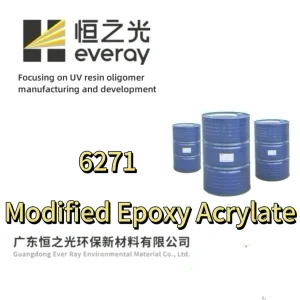
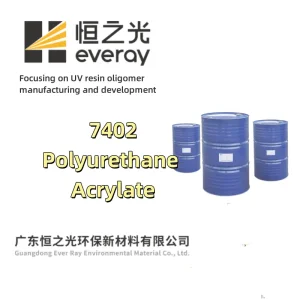
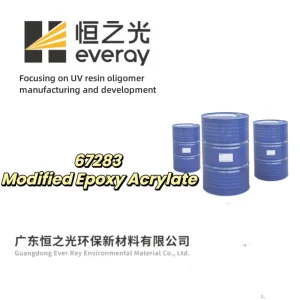
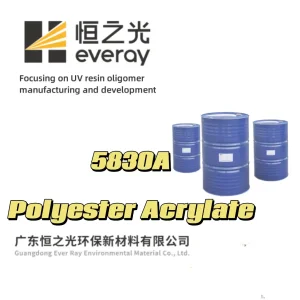
High-Adhesion, Yellowing-Resistant & Modified Formulations
Select from our specialized grades designed for intense boiling water resistance, high flexibility, and elevated gloss retention.
Accelerate Your UV Formulation Project Today
Request full technical specifications, SDS dossiers, and complimentary 1kg trial samples shipped directly to your application laboratory worldwide.
