High-Performance Epoxy Acrylates & Resins for Industrial Bond Lines
Engineered for high lap shear strength, superior chemical passivation, and rapid photopolymerization across diverse substrates.
High-Quality 6203F UV resin for UV metal coating and printing ink Factories, Products
Explore Specifications
Buy High adhesion 6100D-85 epoxy acrylate for UV wood coating applications, etc. Manufacturer, Products
Explore Specifications
Buy 72021E UV-resin for Multi-Substrate Bonding Factory, Factories
Explore Specifications
High-Quality Polyester Acrylate 5351 – The Ideal Choice for High-Performance UV Coatings and Inks Product, Products
Explore Specifications
High-Quality Low shrinkage 1290H can apply for PVC floor coating applications Supplier, Product
Explore Specifications
Buy Scratch resistant 4600 hyperbranched acrylic UV resin :suitable for varnish and ink Suppliers, Factory
Explore Specifications
Wholesale Polyester Acrylate 5502B–Fast Reactivity, High Hardness, Low Odor, and Excellent Heat Resistance Manufacturer, Supplier
Explore Specifications
Buy 6102 UV Resin:Enhanced low shrinkage epoxy acrylate, perfect for UV wood coatings Supplier, Product
Explore SpecificationsMolecular Taxonomy: Engineering Next-Gen Epoxy Resin Adhesives
Understanding the interplay between oxirane group stoichiometry, acrylic functionalization, and crosslink network density in modern structural bonding.
In high-reliability industrial assembly, structural adhesives are no longer treated as passive gap fillers. Today's mechanical design mandates that the adhesive layer function as an active structural member capable of load dissipation, thermal compliance, and environmental isolation. At Guangdong Ever Ray Environmental Material Co., Ltd. (Ever Ray), established in 2006, our polymer synthesis strategy bridges classical Bisphenol-A diglycidyl ether (DGEBA) chemistry with advanced free-radical and cationic UV-curable oligomers.
Classical epoxy adhesives derive their formidable cohesive strength, chemical inertness, and thermal stability from the ring-opening addition reaction of strained three-membered oxirane rings with aliphatic amines, polyamides, or catalytic anhydrides. However, conventional 2K epoxy adhesives suffer from extended cure schedules, requiring hours or days at elevated temperatures to achieve ultimate Glass Transition Temperatures (Tg). To solve the assembly throughput bottleneck without sacrificing tensile shear modulus, Ever Ray synthesizes specialty epoxy acrylate oligomers (such as our 6100D, 6203F, and modified 6851A series). By esterifying epoxy resins with acrylic acid in precision-controlled DCS batch reactors, we yield terminal vinyl functionality that polymerizes in milliseconds under 365–405 nm UV-LED radiation, while retaining the rigid aromatic core and secondary hydroxyl groups that grant phenomenal substrate wetting and adhesion promotion.
Oxirane & Hydroxyl Synergy
Secondary hydroxyl groups (-OH) along the epoxy backbone coordinate intensely through hydrogen bonding with metallic oxides and silanol groups on glass, providing unmatched interfacial adhesion without acidic primers.
Dual-Curing Polymer Networks
For opaque components and electronic shadow zones, Ever Ray's dual-curing resins (such as 72017) utilize a primary UV cure for instantaneous green strength fixturing, followed by thermal condensation to finish complete deep curing.
Microphase Toughening
Rigid epoxy networks inherently exhibit micro-brittleness. By incorporating core-shell rubber (CSR) polymers and elastomeric urethane soft segments, our resins deliver exceptional peel and impact fracture toughness (K1c > 2.0 MPa·m½).
Global Industrial Landscape: The Macro Shift Toward Engineered Structural Resins
Navigating raw material supply volatility, regulatory decarbonization mandates, and the rising demand for multi-material hybrid bonding.
The global epoxy resin adhesive market is undergoing a structural paradigm shift. Traditionally centered on generic commodity standard-grade liquid epoxies (DGEBA EEW 182-192), tier-one manufacturing in Europe, North America, and East Asia is rapidly abandoning non-functionalized bulk resins in favor of custom-formulated, reaction-tuned hybrid adhesives. This migration is fueled by three irreversible macro trends:
1. Automotive Lightweighting & Electric Vehicle (EV) Transition: With the proliferation of structural battery packs (cell-to-pack / CTP architectures), modern EVs require structural adhesives that serve triple duties: mechanical joining of dissimilar metals (aluminum 6061-T6 to ultra-high-strength steel), high dielectric breakdown strength (>25 kV/mm), and flame-retardant thermal dissipation to satisfy UL 94 V-0 thermal propagation standards.
2. Semiconductor & Microelectronics Downscaling: As wafer-level packaging, 3D heterogenous chip integration, and camera module (CMOS) assembly demand sub-micron dimensional tolerances, conventional solvent-based epoxies are disqualified due to VOC outgassing, high shrinkage stress (>6%), and halogen/ionic contamination. The industry now insists on 100% solids, ultra-low outgassing (NASA SP-R-0022A compliant), and photo-thermal cure responsiveness.
3. Decarbonization Pressures & Volatile Feedstock Margins: Escalating energy costs across Europe and shifting environmental compliance frameworks (EU REACH, RoHS 3.0, TSCA) have forced global converters to reassess their supply chains. Western specialty chemical houses face heavy cost penalties and extended lead times. Conversely, integrated Chinese manufacturers equipped with green synthesis pathways, solvent-free synthesis reactors, and localized upstream raw materials offer a decisive strategic advantage to international formulators and distributors.
| Adhesive Chemistry Class | Tensile Lap Shear (Al-Al, MPa) | Cure Time / Mechanism | Tg Window (°C) | Linear Shrinkage (%) | Target Industrial Application |
|---|---|---|---|---|---|
| Ever Ray Modified Epoxy Acrylate | 24 – 32 | 0.5 – 5 sec (UV LED 395nm) | 85 – 145 | < 1.2% | Optical bonding, 3C electronics, high-speed automated lines |
| Standard 2K Bisphenol-A Epoxy | 18 – 25 | 2 – 24 hours (Thermal/Ambient) | 60 – 95 | 2.5 – 4.0% | General construction, heavy marine maintenance |
| Photo-Thermal Dual-Cure PUA/Epoxy | 22 – 28 | UV Green set (2s) + 80°C 20min | 90 – 130 | < 1.5% | Automotive camera modules, motor stator potting, shadowed joints |
| Polyurethane Structural Adhesive | 12 – 18 | 30 – 120 min (Moisture/Thermal) | -40 – 65 | 1.8 – 3.2% | Automotive windshields, bus body panel assembly |
| Hyperbranched Acrylate Hard-Coat Resin | 15 – 22 | < 1 sec (High-intensity UV) | 120 – 180 | < 0.8% | Anti-scratch vacuum metallization, optical disc surface coatings |
Localized Engineering Scenarios: Tailoring Resin Formulations to Substrates
How Ever Ray's customized epoxy resins solve thermal cycling, vibrational shock, and harsh chemical degradation across critical industries.
1. Electric Vehicle Battery Modules & Powertrain
Cell-to-pack (CTP) structural bonding relies on our toughened epoxy acrylates. Formulated with spherical aluminum oxide micro-fillers, they achieve thermal conductivities up to 2.5 W/m·K while maintaining 22 MPa lap shear under continuous -40°C to 125°C thermal shock cycling.
2. Microelectronics Packaging & Optoelectronics
Camera module VCM alignment, LiDAR lens bonding, and PCB flip-chip underfill require rapid cure with ultra-low thermal drift. Ever Ray's modified resins offer an exact match for coefficient of thermal expansion (CTE < 35 ppm/°C), preventing micro-cracking and sensor focal defocus.
3. Aerospace & Carbon-Fiber Structural Joints
Bonding carbon-fiber-reinforced polymers (CFRP) to aviation-grade titanium alloy requires immense strain-to-failure resilience. Our modified epoxy-polyurethane hybrid backbones dissipate dynamic vibrational shear without delaminating under altitude-induced depressurization.
4. Industrial UV Inks, Varnishes & Wood Coatings
Engineered for high-speed automated roller coating lines. Grades like Ever Ray 6100D-85 and 6102 combine high reactivity with low cure shrinkage, creating water-resistant, sandable sealers and high-gloss overprint varnishes that never warp thin veneered panels.
5. Megawatt Wind Blade Shear Webs & Marine Assets
Blade root infusion and shear web bonding experience extreme cyclical fatigue. Our epoxy resin adhesive formulations maintain hydrolysis resistance against salt-spray corrosion, retaining over 90% of original tensile modulus after 5,000 hours of 85°C/85% RH damp-heat aging.
6. Additive Manufacturing & High-Precision 3D Printing
Our photopolymer oligomer solutions (such as 71209A-1 and 72017) provide ABS-like engineering mechanicals for SLA and DLP 3D printing. With low green-state distortion, printers produce functional snap-fit prototypes and tooling jigs that endure real functional load tests.
China Factory Advantage: Supply Chain Resilience, Scalability & Quality Integrity
Inside Ever Ray’s Yunfu Production Complex: Automated synthesis, domestic chemical feedstock clustering, and rigorous batch-to-batch consistency.
In an era of global logistics bottlenecks and raw material volatility, international formulators cannot rely on intermediaries or fragmented toll-manufacturers. Guangdong Ever Ray Environmental Material Co., Ltd. operates a centralized, state-of-the-art chemical synthesizing complex spanning over 40,000 square meters in Dawan Industrial Park, Yunan County, Yunfu City, Guangdong Province, supported by sales headquarters in Jiangmen City.
Our direct manufacturing advantage is rooted in vertical integration. Located within China's major chemical cluster along the Pearl River Delta, Ever Ray maintains direct raw material pipelines for essential building blocks, including Bisphenol A, epichlorohydrin (ECH), isocyanates (IPDI/TDI/HDI), acrylic acid, and specialty polyols. This geological advantage ensures uninterrupted production even during global upstream supply pinches, allowing us to maintain stable lead times and volume-based pricing that western tollers cannot match.
Automated DCS Process Control
Our 10+ synthesis reactors are orchestrated by Distributed Control Systems (DCS). Exothermic temperature ramps, acid-value titration intervals, and vacuum degassing are digitally locked to eradicate human operational error.
Batch-to-Batch Analytical Precision
Every single drum batch undergoes rigorous analytical characterization: Gel Permeation Chromatography (GPC) for Mw/Mn polydispersity, Brookfield rotational rheology, Karl Fischer moisture titration, and FTIR spectra indexing.
Agile OEM/ODM Formulation Support
With an in-house team of senior UV resin and polymer chemists holding over 10 invention patents, we synthesize tailor-made oligomers—customizing viscosity, monomer dilution packages, and color gardner thresholds within 14 working days.
Technology Roadmap: The Future of Epoxy Resin Adhesives (2025–2030)
Pioneering sustainable bio-based building blocks, vitrimer circular recycling, and intelligent nano-toughening systems.
Low-VOC & Waterborne Systems
Replacing traditional reactive diluents (TMPTA, TPGDA) with low-odor, low-viscosity, water-dispersible polyurethane acrylates and hyperbranched oligomers, slashing worker exposure risks without compromising cure speed.
Bio-Based Precursors
Synthesizing epoxy backbones utilizing bio-based feedstocks such as epoxidized linseed oil, isosorbide, cardanol, and vanillin derivatives to attain >40% renewable carbon content while keeping tensile modulus >2.5 GPa.
Covalent Adaptable Networks (Vitrimers)
Incorporating transesterification catalysts into crosslinked epoxy thermosets. At elevated trigger temperatures, internal bond exchange enables bonded composite parts to be debonded on command, repaired, or completely recycled.
Hybrid Nano-Reinforcement
In-situ dispersion of surface-functionalized graphene platelets and core-shell rubber nanoparticles to create lightweight adhesives boasting simultaneous high flexural modulus (>3 GPa) and hyper-crack arrest toughness.
Global Compliance, Quality Documentation & Cross-Border Logistics
Delivering complete international certification, technical safety dossiers, and containerized export safety to worldwide destinations.
Purchasing specialized chemical materials internationally requires rigorous regulatory compliance and flawless documentation. Ever Ray eliminates supply chain friction by operating dedicated in-house compliance and foreign-trade documentation departments. We guarantee that every shipment is fully documented according to international standards:
REACH, RoHS & TSCA Certified
Our entire portfolio complies with EU REACH (SVHC non-detectable), EU RoHS 3.0, and US TSCA regulations. We provide certified zero-halogen test declarations and low VOC verification reports from third-party bodies (SGS, TÜV).
Standardized Technical Dossiers
Every commercial consignment includes GHS-compliant 16-section bilingual Safety Data Sheets (SDS), technical starting formulations, batch Certificate of Analysis (COA), and viscosity-temperature conversion charts.
Direct Cross-Border Field Support
Formulation challenges like surface oxygen inhibition or intercoat delamination are resolved directly by our English-speaking chemical engineers via rapid-response formulation adjustments and sample dispatch within 48 hours.
Frequently Asked Questions: Technical Engineering & Wholesale Procurement
Authoritative answers for procurement managers, materials scientists, and adhesive formulation chemists.
What is the fundamental mechanical difference between standard DGEBA epoxy and Ever Ray epoxy acrylate oligomers?
How does Ever Ray solve the problem of surface oxygen inhibition in thin-film UV curing?
Can Ever Ray customize resin viscosity and glass transition temperature (Tg) for our specific dispensing equipment?
What packaging options are available for overseas wholesale consignments?
How do your dual-cure resins handle shaded areas in optoelectronic or camera module assembly?
What is the shelf life and recommended storage environment for your epoxy acrylate oligomers?
Partner with a Direct Chemical Synthesis Factory
Consult with our senior polymer engineers to request free laboratory sample kits, comprehensive Technical Data Sheets (TDS), and wholesale factory-direct price schedules.
Specialty Oligomers, UV Polyurethane Acrylates & Dual-Cure Systems
Comprehensive resin solutions for advanced electronic coatings, 3D printing, anti-wear coatings, and vacuum metallization.
High-Quality Durable 2600UV resin: high hardness and excellent wear resistance, suitable for UV applications Factory, Factories
Explore Specifications
Wholesale Low Shrinkage High Flexibility UV Curing Polyurethane Acrylate Resin for Nail Gel, Leather and Wood Manufacturer, Supplier
Explore Specifications
Buy 71209A-1 ABS-Like Engineering Resin: High Strength Meets High Impact Resistance Factory, Factories
Explore Specifications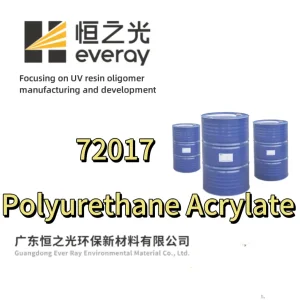
Wholesale 72017 Photo-Thermal Dual-Curing Polyurethane Acrylate Resin | Low Shrinkage & High Toughness Oligomer for 3D Printing Supplier, Products
Explore Specifications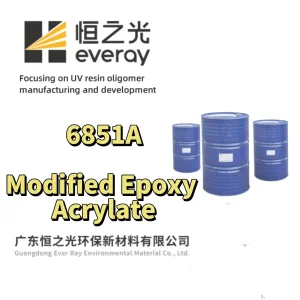
Wholesale 6851A High-Performance Modified Epoxy Acrylate Resin | For UV Coatings, Inks & Gel Polishes | High Transparency & Yellowing Resistance Manufacturers, Factories
Explore Specifications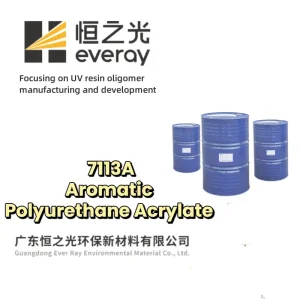
Wholesale Aromatic PA UV-resin 7113A for UV Vacuum-metallization and Plastic-coating Manufacturers, Suppliers
Explore Specifications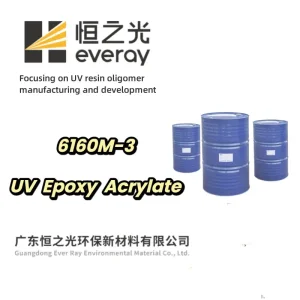
High-Quality 6160M-3: Fast curing modified epoxy acrylate for improved performance Manufacturer, Supplier
Explore Specifications