
High-Performance Oligomers & UV Curable Formulations
Verified wholesale resins tailored for precise structural bonding, fast optical clear curing, thin film coating, and additive manufacturing workflows.
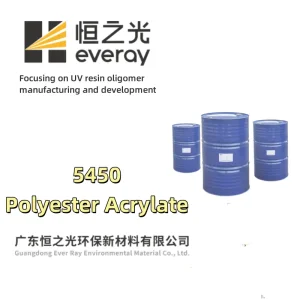
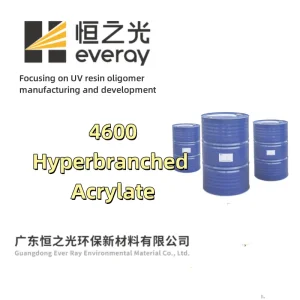
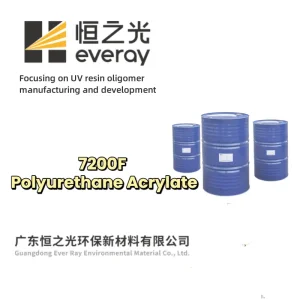
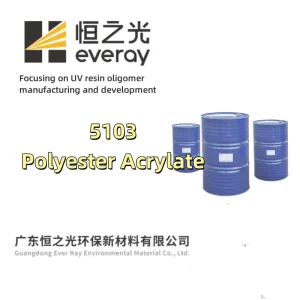
The Paradigm Shift in Bulk Adhesive & UV Curable Chemistry
In modern high-throughput manufacturing, adhesive bonding has transcended simple mechanical joining to become an essential contributor to structural integrity, thermal dissipation, and electrical insulation. As environmental regulations such as REACH, RoHS, and ultra-low VOC mandates tighten across North America, the European Union, and Asia-Pacific, procurement officers are pivoting away from solvent-borne adhesives toward 100% solids UV-curable chemistries, waterborne polyurethane acrylates (WPUA), and dual-cure epoxy systems.
Industrial formulators are challenged with balancing fast curing cycles against shrinkage-induced substrate warping and interfacial bond degradation. Understanding the rheological dynamics, oligomer backbone functionality, and surface free energy across diverse substrates (such as untreated polypropylene, anodized aluminum, and optical glass) is essential for engineering fault-tolerant assemblies.
Macro Dynamics Driving Global Procurement Strategies
Critical engineering transformations reshaping how procurement teams evaluate Tier-1 polymer suppliers.
Solvent-Free & Zero-VOC Mandates
Global environmental protocols are accelerating the phase-out of aromatic hydrocarbon-based solvent glues. Industrial procurement programs prioritize UV/EB-reactive oligomers and waterborne functional emulsions that yield zero VOC emissions, allowing automated production lines to operate without costly thermal recovery units.
LED UV (365–405 nm) Transition
Traditional medium-pressure mercury arc lamps are giving way to energy-efficient LED UV curing arrays. Wholesale suppliers must re-engineer oligomer systems with enhanced deep-section photo-reactivity and specialized active amine synergists to eliminate surface oxygen inhibition under narrow-spectrum irradiation.
Microelectronic Miniaturization
From foldable OLED smartphones to EV battery battery-pack structural adhesives, the demand for high glass transition temperature ($T_g$), low dielectric loss, and thermal cycling resilience (-40°C to 150°C) is driving significant innovation in hyperbranched and alicyclic urethane acrylate matrices.
End-to-End Adhesive Formulations by Industrial Domain
Customizing oligomer architectures to resolve critical failure points in peel resistance, environmental weathering, and mechanical stress distribution.
Optoelectronics & Display Assembly
Optical Clear Adhesives (LOCA/OCA) require near-zero cure shrinkage, a refractive index matched to substrate glass ($n \approx 1.51$), and exceptional non-yellowing durability under continuous blue light exposure. Our aliphatic PUA architectures resolve delamination and bubble formation in multi-layer touchscreens.
Automotive & EV Battery Encapsulation
EV pack structural glues demand flame retardancy (UL94 V-0 compliance), thermal conductivities up to $2.0\text{ W/m}\cdot\text{K}$, and shear strength retention across automotive thermal cycling. We deliver reactive urethane-epoxy hybrids tailored for structural bonding between aluminum trays and composite covers.
Industrial Packaging & High-Speed Printing
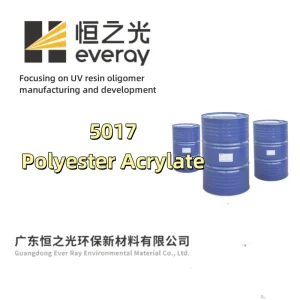
High-speed flexible packaging printing and lamination require low-migration, fast-tack adhesives. Utilizing polyester acrylate backbones blended with reactive amine synergists ensures consistent ink transfer, food packaging migration compliance, and reliable intercoat adhesion across corona-treated BOPP and PET.
| Polymer Chemistry Family | Tensile Strength (MPa) | Elongation at Break (%) | Glass Transition ($T_g$ °C) | Primary Industrial Use Case |
|---|---|---|---|---|
| Aliphatic Polyurethane Acrylate | 25 – 45 | 80 – 250% | -15 to 45 | Optoelectronics / Nail Gels / 3C Clear Coat |
| Aromatic Polyurethane Acrylate | 35 – 60 | 20 – 90% | 30 to 80 | Industrial Flooring / Structural Adhesives |
| Bisphenol A Epoxy Acrylate | 50 – 85 | 2 – 8% | 65 to 110 | Wood Primers / Rigid Electronic Potting |
| Hyperbranched Polyester Acrylate | 60 – 95 | 1 – 5% | 85 to 140 | Anti-Scratch Topcoats / Rapid 3D Resins |
| Waterborne Polyurethane Dispersion | 15 – 35 | 150 – 400% | -30 to 30 | Eco-Friendly Wood / Flexible Leather Adhesives |
Global Compliance, Quality Audits & Localized Technical Support
Minimizing supply chain risk through standardized quality controls, full export traceability, and localized engineering support.
ISO 9001 & 14001 Certified
Synthesized in a modern 40,000 m² chemical production base with DCS automated reactors, guaranteeing strict batch-to-batch consistency for critical parameters like molecular weight distribution and acid value.
REACH, RoHS & TSCA Compliance
Every commercial resin shipment is backed by verified Technical Data Sheets (TDS), 16-section Safety Data Sheets (GHS SDS), and compliance documentation aligned with EU REACH pre-registration and US TSCA requirements.
Bilingual Chemical Engineers
Our dedicated technical application center is staffed by senior polymer scientists who help customer formulation labs troubleshoot photoinitiator selection, monomer dilution, and curing line speeds.
Reliable International Freight
Export packaging options from 20kg pails to 200kg steel drums and 1000kg IBC totes, configured with temperature-controlled shipping to ensure zero premature polymerization during maritime transit.
R&D Technology Roadmap & Future Formulations
Strategic advancements driving our chemical synthesis labs over the next decade.
Phase 1: Bio-Based Carbon Content
Integrating renewable polyols derived from sustainable plant oils into our polyurethane acrylate backbones. Our goal is to achieve >40% bio-based carbon content (ASTM D6866) while maintaining the mechanical hardness and clarity of petroleum-based polymers.
Phase 2: Shadow Dual-Cure Systems
Developing hybrid UV-moisture and UV-thermal anaerobic oligomers. These systems enable instant perimeter UV pinning along with complete dark-area chemical curing in shadowed electronic assemblies and deep potting cavities.
Phase 3: High-Speed Additive Photopolymers
Engineering ultra-low-viscosity (<150 mPa·s at 25°C) hyperbranched acrylic oligomers for high-resolution stereolithography (SLA) and continuous liquid interface production (CLIP), delivering isotropic mechanical properties comparable to injection-molded engineering thermoplastics.
Precision Resins for Advanced Industrial Applications
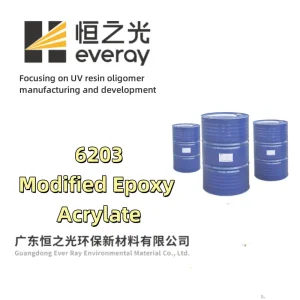
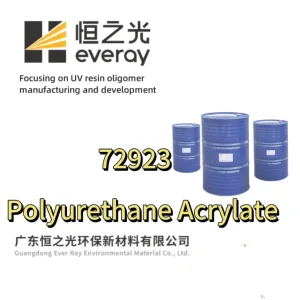
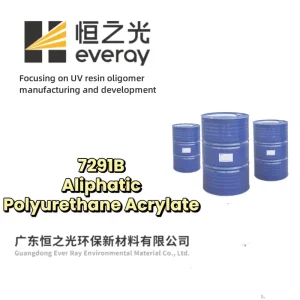
Specialized resin solutions engineered for metal adhesion, vacuum electroplating, screen printing, and peelable surface protection.
Frequently Asked Questions: Bulk Procurement & Chemical Specifications
In-depth technical and logistical clarity for global buyers, chemical distributors, and manufacturing formulators.
