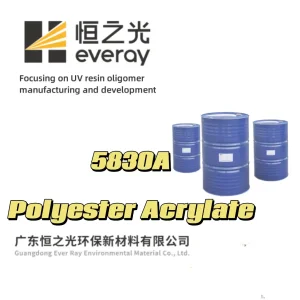
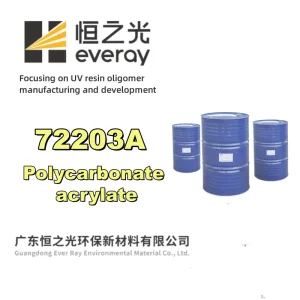
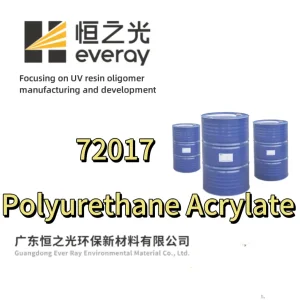
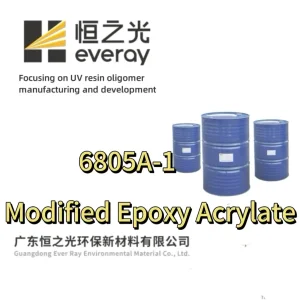
Featured UV Curable Oligomers & Specialty Formulations
Engineered for low shrinkage, instant photocuring kinetic response, high modulus conversion, and substrate adhesion under rigorous manufacturing parameters.
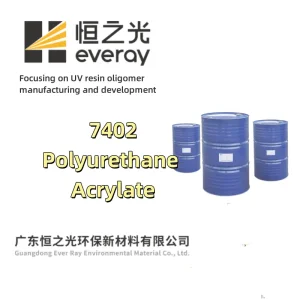
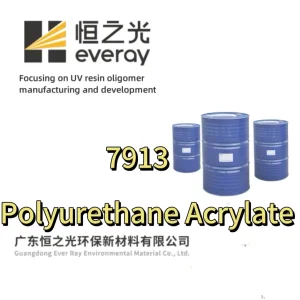
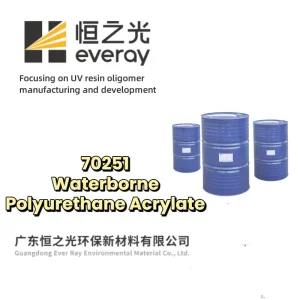
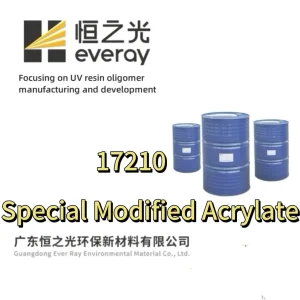
Global Sourcing Realities for Industrial UV Cured Epoxies
Strategic supply parameters, batch-to-batch consistency indicators, and procurement criteria demanded by Tier-1 industrial buyers worldwide.
In modern high-speed industrial manufacturing, the transition toward radiation-curable polymer networks is not merely an environmental trend driven by volatile organic compound (VOC) abatement—it represents an engineering imperative for yield enhancement, cycle-time compression, and micro-mechanical precision. Procurement teams across automotive electronics, semiconductor packaging, medical disposable assembly, and optoelectronics face intricate trade-offs between shelf-life stability, crosslinking kinetics, and substrate interface mechanics.
A primary friction point in global supply chain integration is batch-to-batch polymer fidelity. In cationic and free-radical UV systems, minor variations in monomer functionality distributions, residual acid values, or trace moisture contaminants can drastically alter the gelation threshold and curing profile under production UV LEDs (365nm, 385nm, 395nm, or 405nm) or excimer exposure (172nm). Industrial formulators require raw materials with strictly managed glass transition temperatures (Tg), repeatable rheological shear profiles, and consistent double-bond conversion efficiency.
Viscosity & Diluent Control
Precision tuning of oligomer molecular weight distribution ensures high solids loading without reliance on volatile thinners. Controlled viscosity index across a wide thermal spectrum (25°C to 60°C) prevents dispensing instability on automated jet-dispensing and high-throughput roller lines.
Shrinkage & Internal Stress
Traditional epoxy acrylates can suffer from polymer chain contraction (5–9% volumetric shrinkage), leading to edge warpage, optical birefringence, and adhesive delamination. Our modified epoxy formulations integrate stress-relieving aliphatic segments and hyperbranched cores to throttle shrinkage below 1.5%.
Dual-Curing & Shadow Depth
Addressing light obstruction under opaque metallic pins, high-density surface-mount packaging, and complex 3D substrates. We synthesize hybrid photo-thermal and UV-moisture dual-cure resins that lock components in place within 1.5 seconds under UV irradiation, then finish dark-zone curing via moderate thermal reaction (80°C–120°C).
Industrial Sector Solutions & Substrate Mechanics
Targeted photopolymer formulations resolving mechanical mismatch, thermal fatigue, and optical degradation across demanding industrial end markets.
Automotive Electronics & Sensors
Advanced Driver Assistance Systems (ADAS), LiDAR sensors, and camera module lenses demand optical clear adhesives (LOCA) with zero outgassing, high damp-heat resistance (85°C/85% RH for 1,000+ hours), and low yellowing indices under harsh thermal and solar cycles. Our bisphenol-A free aliphatic epoxy backbones prevent lens deformation across extreme engine-bay temperature fluctuations.
3C Consumer Electronics & Wearables
Smartphone chassis, foldable OLED display brackets, and wearable casings require rapid curing coatings with scratch resistance up to 4H–6H pencil hardness, exceptional chemical resistance against synthetic sweat and cosmetics, alongside high elasticity to withstand dynamic drop testing on polycarbonates (PC), PMMA, and anodized aluminum.
Microelectronics & Semiconductor Packaging
Precision encapsulation, die-attach, and glob-top formulations require ultra-low chloride and ionic content (<5 ppm), preventing electromigration and galvanic corrosion on micro-copper traces. Superior dielectric strength and controlled thermal expansion coefficient (CTE) match silicon and ceramic substrates seamlessly.
"Modern photopolymer design has surpassed simple acrylate functionalization. Precision engineering of high-purity oxirane rings and modified aliphatic backbones enables simultaneous control over ultimate tensile modulus, low crosslink strain, and extreme hydrolytic resistance."
In addition to electronics, the industrial coatings and printing sectors leverage modified UV cured epoxies to balance fast processing speeds with scratch durability. For industrial flooring and pre-finished wood, hyperbranched epoxy acrylates deliver high crosslink density that repels aggressive household chemicals and mechanical gouging, while waterborne polyurethane-modified acrylates offer thin-film clarity and zero fire-hazard storage profiles on high-volume continuous roller lines.
Technical Architecture: Photopolymerization Kinetics
Comparative matrix of crosslinking mechanisms, initiation wavelengths, and next-generation polymer evolution.
| Polymer Chemistry Family | Polymerization Mechanism | Initiation Spectrum | Oxygen Inhibition Susceptibility | Linear Shrinkage Rate | Primary Industrial Use Case |
|---|---|---|---|---|---|
| Standard Bisphenol-A Epoxy Acrylate | Free-Radical Chain Polymerization | 365nm – 405nm (LED / Hg) | Moderate to High | 4.5% – 7.0% | High-gloss wood overcoats, OPV, flexo & offset inks |
| Cycloaliphatic Epoxy (Cationic UV) | Cationic Ring-Opening Polymerization | 310nm – 365nm (UV / Metal Halide) | Completely Immune | 0.8% – 1.8% | Optical fiber cladding, hermetic micro-encapsulation, wafer bonding |
| Aliphatic Polyurethane Modified Epoxy | Hybrid Radical / Ring Expansion | 385nm – 395nm LED optimized | Low (Amine synergized) | 1.8% – 3.2% | Automotive electronic sensor bonding, flexible display protective coats |
| Dual-Cure (Photo-Thermal) Acrylate-Epoxy | Sequential UV Initiation + Latent Amine / Anhydride | 365nm UV + 90°C–120°C Heat | Negligible in Shadow Areas | 1.2% – 2.4% | Camera module active alignment, shadowed SMT component potting |
| Excimer-Laser Reactive Polyester-Epoxy | Micro-folding Surface Crosslinking | 172nm Excimer Vacuum-UV | N/A (Inert Nitrogen Chamber) | < 2.0% | Super-matte soft-touch coatings, fingerprint-free high-end surfaces |
Cationic vs. Free-Radical UV Epoxy Chemistry: Industrial decision-makers must weigh fundamental chemical distinctions. Standard epoxy acrylates cure via free-radical cleavage of acrylic double bonds (CH2=CH-COO-). While this mechanism delivers blazing cure times in fractions of a second, it remains vulnerable to atmospheric oxygen quenching at the outer nanometer layer. In contrast, cationic UV-curable epoxies utilize diaryliodonium or triarylsulfonium photoacid generators (PAGs) to trigger catalytic ring-opening polymerization of oxirane groups. This reaction exhibits zero oxygen inhibition and keeps curing in the dark after light exposure, ensuring deep-section conversion and exceptional chemical bond stability.
The Evolution to 395nm UV LED and 172nm Excimer Curing: Environmental regulations are rapidly retiring high-pressure mercury arc bulbs due to hazardous mercury containment and high thermal emissions. Modern resin formulators must re-engineer photoinitiator cocktails, utilizing acylphosphine oxides (BAPO, TPO-L) paired with hyperbranched tertiary amines, ensuring instant surface tack-free properties even under low-energy 395nm UV-LED line arrays.
Regional Industrial Demands & Commercial Landscape
Analysis of demand patterns across North American, European, and Asia-Pacific manufacturing hubs.
Asia-Pacific (APAC) Hub
APAC represents over 55% of global volume consumption, fueled by semiconductor assembly clusters in Greater China, consumer electronics supply chains in Vietnam and India, and high-precision display manufacturing in South Korea and Japan. Focus is heavily set on ultra-fast continuous throughput, high yield stability, and cost-effective bulk chemical containerization (200L drums, IBC totes).
Europe (EMEA) Regulations
European demand is shaped by the European Green Deal, strict REACH substance authorizations, and aggressive SVHC reduction. Formulators in Germany, Italy, and France prioritize monomer formulations completely free of 4-HBA, BPA, and photoinitiators with reprotoxic profiles (such as traditional Omnirad 369/ITX replacements), alongside bio-derived carbon content.
North America (NA) Innovation
The North American market, led by aerospace components, defense optoelectronics, medical devices, and rapid additive manufacturing (SLA/DLP/CLIP), demands high-modulus, fire-retardant (UL94 V-0), and USP Class VI biocompatible resins. Traceability under TSCA and dual-sourcing reliability are foundational prerequisites.
Global Compliance, Audit Protocols & Supply Reliability
International quality certifications, testing frameworks, and multi-tier chemical compliance verifying supply security.
ISO 9001 & IATF 16949
Fully instrumented manufacturing reactors utilizing automated continuous process control (APC), continuous gas chromatography (GC), and gel permeation chromatography (GPC) tracking batch uniformity.
RoHS & Halogen-Free
Total elimination of restricted heavy metals (lead, mercury, cadmium, hexavalent chromium) and restricted organobromines/chlorines (<900 ppm compliant with IEC 61249-2-21).
REACH SVHC & TSCA
Complete chemical registration Dossiers for seamless export into the European Economic Area, UK, USA, and East Asia, protecting buyers against sudden regulatory shutdowns.
Dedicated Application Labs
Regional technical field engineers assist formulators with on-site spectrophotometry, contact-angle goniometry, cross-hatch adhesion ASTM D3359 validation, and cure dosage calibrations.
Engineering & Sourcing FAQ
Direct answers to core inquiries posed by formulation chemists, procurement managers, and plant quality engineers.
High-Performance UV Oligomers & Functional Resins
Select industrial grades optimized for surface leveling, soft-touch coatings, boiling water resistance, and high-precision photopolymerization.