
Featured UV Acrylic Adhesives & Acrylate Resins
Explore specialized UV curable resins formulated for excimer radiation, vacuum metallization, plastic film coating, and high-tensile structural bonding.
High-Quality 53036 Polyester Acrylate UV resin: very suitable for use in excimer lasers, providing excellent skin feel Suppliers, Products
Explore Specifications
High-Quality Excellent adhesion: 7230E polyurethane acrylate UV Resin for vacuum plating Supplier, Factories
Explore Specifications
Buy 61003A UV resin in UV plastic-film varnish and LED-UV Packaging Manufacturers, Products
Explore Specifications
Buy 17701 Low Shrinkage Modified Acrylate Oligomer - Resin for Offset and Film Inks Factories, Product
Explore Specifications
Wholesale 6203F Low-Shrinkage Modified Epoxy Acrylate Resin - High Adhesion UV Prepolymer Manufacturer, Supplier
Explore Specifications
Buy Durable UV furniture coating: 7200-1 Aliphatic polyurethane acrylate UV Resin Factory, Products
Explore Specifications
Buy Polyester Acrylate 5202B – The Ideal Choice for High-Performance UV Coatings Manufacturer, Product
Explore Specifications
Buy Polyester Acrylate 5403-2F – A Reliable Choice for High-Quality UV Inks Suppliers, Product
Explore SpecificationsGlobal Landscape of UV Acrylic Adhesives: Photopolymerization Dynamics
Understanding the macromolecular shifts from solvent-borne bonding agents to ultra-fast radical UV photopolymer systems across smart hardware and optoelectronics.
Acrylate Prepolymer Mechanics
The chemical architecture of acrylic adhesives relies on high-reactivity acrylic oligomers (polyurethane acrylates, epoxy acrylates, polyester acrylates). Tailoring the backbone flexibility and acrylate ester functionality directly governs glass transition temperature (Tg), tensile shear strength, and refractive matching.
Overcoming Oxygen Inhibition
Atmospheric oxygen reacts with initiating free radicals, yielding unreactive peroxy species and leaving tacky surfaces. By incorporating copolymerizable active amine synergists or amino acrylate oligomers into the formulation, hydrogen extraction rapidly regenerates reactive alpha-amino radicals, securing dry surfaces under air.
Low Volumetric Shrinkage
Polymerization shrinkage creates severe internal mechanical stress, inducing substrate warping or delamination on delicate optical glass and PMMA interfaces. Modifying backbones with high-steric-hindrance polycarbonates or pure acrylic segments limits shrinkage to <1.8%, preserving structural integrity under thermal shocks.
The Chinese Factory Advantage: Integrated Synthesis & Bulk Agility
How Guangdong Ever Ray Environmental Material Co., Ltd. blends chemical innovation, large-scale automated reactor capacity, and stringent batch consistency for tier-1 supply chains.
Full Upstream Integration
By controlling fundamental raw materials from polyols and isocyanates to specialty functional acrylic monomers, Ever Ray minimizes upstream price volatility, ensuring reliable volume pricing and uncompromised purity profiles free of residual heavy metals.
QC Testing & Batch Traceability
Every production batch undergoes strict quality gates: Brookfield cone-plate viscosity tolerances within ±5%, Gel Permeation Chromatography (GPC) molecular weight distribution tracking, and FTIR spectrum matching before release.
Export-Ready Global Logistics
Supplying formulators and industrial manufacturers in Europe, North America, Southeast Asia, and Latin America. Fully documented with compliant GHS Safety Data Sheets (SDS), Technical Data Sheets (TDS), and ISO-certified containment drums.
UV Oligomer Chemistry Performance Comparison Matrix
Formulation engineers must select the right polymer family based on core physical parameters: elongation, glass transition temperature, cure speed, and environmental resilience.
| Oligomer Chemistry Class | Tensile Strength (MPa) | Elongation at Break (%) | Volumetric Shrinkage | Anti-Yellowing (ΔE) | Recommended Industrial Substrates |
|---|---|---|---|---|---|
| Aliphatic Polyurethane Acrylate (PUA) | 22 – 48 | 40% – 180% | < 2.2% | Outstanding (ΔE < 1.0) | Optical PC, PMMA, PET Films, Display Modules |
| Aromatic Polyurethane Acrylate (PUA) | 35 – 65 | 15% – 60% | 2.5% – 3.8% | Moderate (Prone to tint) | Wood Laminates, Rigid Plastics, Structural Joints |
| Bisphenol-A Epoxy Acrylate | 50 – 85 | 2% – 8% | 4.5% – 6.5% | Fair (Interior use) | Metal, Glass Primers, Sanding Basecoats, PCB Inks |
| Modified Low-Shrinkage Acrylate | 18 – 36 | 80% – 250% | < 1.5% Ultra-Low | High Stability | Vacuum Plating, Metallized Plastics, Peelable Adhesives |
| Polyester Acrylate Resin | 25 – 55 | 10% – 45% | 3.0% – 4.5% | Good | Lithographic Inks, Overprint Varnishes, Excimer Lasers |
| Pure Acrylate / Hyperbranched Prepolymer | 40 – 75 | 5% – 20% | 2.0% – 3.2% | Superior | Scratch-Resistant Hard Coats, Anti-Fingerprint Tops |
High-Growth Application Sectors for UV Acrylic Adhesives
From micro-optics and electric vehicles to high-speed digital fabrication, explore where high-performance UV curable resins deliver pivotal technical dividends.
3C Electronics & Display Optical Bonding
Liquid Optically Clear Adhesives (LOCA) engineered from aliphatic urethane acrylates deliver >99% light transmittance and refractive index matching (n=1.49–1.51) with zero optical distortion or yellowing under intense UV weathering.
EV Battery Packs & Sensor Assembly
Electric mobility modules require adhesives that withstand thermal cycling (-40°C to +125°C) while providing flame-retardant properties and vibration damping across dissimilar substrates (aluminum to flame-retardant PBT/PC plastics).
Additive Manufacturing & 3D Resins
DLP, SLA, and LCD stereolithography rely on fast-curing, low-viscosity acrylate prepolymers. Dual-cure formulations enable high-elasticity lattice structures, prototyping, and end-use automotive components with injection-molded ABS-like impact resistance.
Sustainable Barrier Packaging & Overprint
Converters are substituting thermal laminate adhesives with 100% solids UV-LED curable varnishes. Eliminating solvent emissions allows inline food-grade secondary packaging production without migrating residual monomers.
Medical Device Assembly
ISO 10993 and USP Class VI biocompatibility compliance enables the safe automated joining of polycarbonate luers, stainless steel hypodermic needles, and flexible PVC tubing with rapid fluorescent inspection verification.
Cosmetic Gel & Artificial Nails
High-purity aliphatic polyurethane acrylates formulated without prohibited phthalates or skin-sensitizing mono-acrylates guarantee safe, peel-resistant, non-yellowing nail base coats and top polishes cured via skin-safe 395nm LED lamps.
How Global Procurement Leaders Qualify UV Resin Suppliers
Mitigate technical risk, prevent downtime, and lock in competitive margins by auditing suppliers against verifiable polymer engineering benchmarks.
1. Kinetic Cure Speed & Spectral Matching
Ensure the oligomer's photoinitiator absorption spectrum aligns with your factory curing lamps (traditional iron/gallium mercury arc lamps vs 365nm/385nm/395nm high-irradiance LED strips). Verify peak irradiance thresholds required for deep section cure.
2. Dynamic Rheology & Dispensing Consistency
High-speed jetting, slot-die, or screen-printing setups require precise rheological flow behaviors. Suppliers must provide shear rate vs viscosity curves, ensuring thixotropic stability and preventing nozzle stringing or bubble entrapment.
3. Environmental Compliance & Purity
Confirm products satisfy stringent global regulations: EU REACH Annex XVII, RoHS 3, SVHC candidate lists, and TSCA inventory. Insist on low residual monomer content to minimize worker irritation and volatile outgassing in closed electronics chambers.
Engineered Resins for Advanced Adhesion & Fabrication
Explore additional specialized UV curable resins formulated for soft-touch tactility, dual-cure footwear printing, thermal resistance, and engineering prototypes.
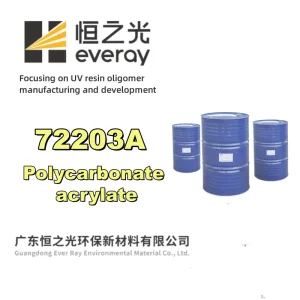
Wholesale Polycarbonate Acrylate 72203A – Fast Curing UV Resin for Soft Touch Coatings, Clear Coats & UV Inks Supplier, Factories
Explore Specifications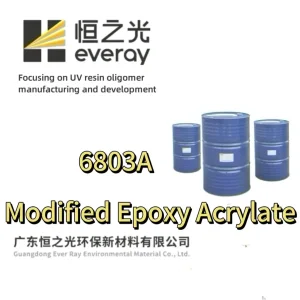
High-Quality 6803A Modified Epoxy Acrylate Resin High Gloss Fast Curing Oligomer for UV Ink Varnish & Plastic Coating Factory, Factories
Explore Specifications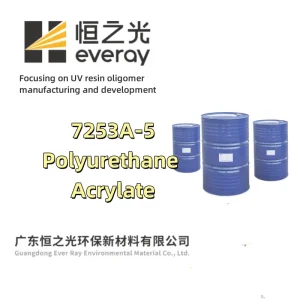
Wholesale Multifunctional 7253A-5 UV resin: heat-resistant, cold-resistant, suitable for various adhesives Supplier, Factories
Explore Specifications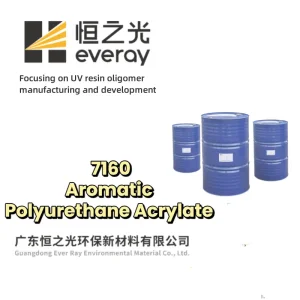
High-Quality Aromatic PA UV-resin 7160 for plastic-coatings, wood and UV-inks Supplier, Suppliers
Explore Specifications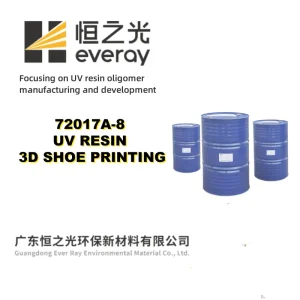
Wholesale 72017A-8 Dual-Curing UV Resin for 3D Printed Footwear | High Elasticity & Low Shrinkage Resin Manufacturer, Factories
Explore Specifications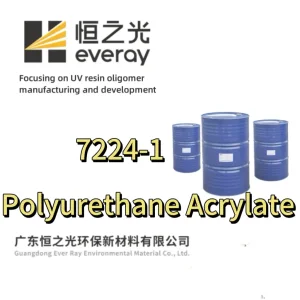
Wholesale Low Shrinkage High Flexibility UV Curing Polyurethane Acrylate Resin for Nail Gel, Leather and Wood Manufacturer, Supplier
Explore Specifications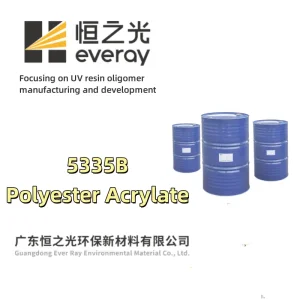
Buy 5335B UV-resin in UV color inks, varnishes, and offset inks Manufacturers, Products
Explore Specifications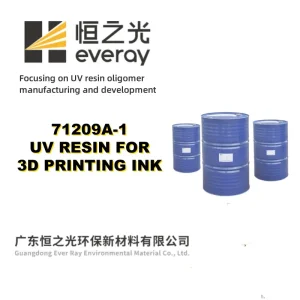
Buy 71209A-1 ABS-Like Engineering Resin: High Strength Meets High Impact Resistance Factory, Factories
Explore SpecificationsFrequently Asked Questions (FAQ)
Detailed technical answers addressing formulation challenges, shadow area cure, boil-water testing, and factory lead times.
