Core UV-Curable Resin Floor Oligomers & Coatings
Architectural and industrial formulations engineered for maximum abrasion mitigation, immediate photon conversion, and zero-VOC structural integrity.
High-Quality 6203F UV resin for UV metal coating and printing ink Factories, Products
View Product Details
Wholesale A Versatile Solution for High-Efficiency Curing Applications: Epoxy Acrylate 92001 Manufacturer, Product
View Product Details
Wholesale Low viscosity 6300 modified epoxy acrylate UV resin for UV paper varnish Supplier, Suppliers
View Product Details
Buy Polyester Acrylate 5403-2F – A Reliable Choice for High-Quality UV Inks Suppliers, Product
View Product Details
Wholesale Model 72027 Weather-Resistant Polyurethane Acrylate Resin | Low Yellowing & High Tack
View Product Details
High-Quality 6803A Modified Epoxy Acrylate Resin High Gloss Fast Curing Oligomer
View Product Details
Wholesale 72017A-8 Dual-Curing UV Resin for 3D Printed Footwear | High Elasticity
View Product Details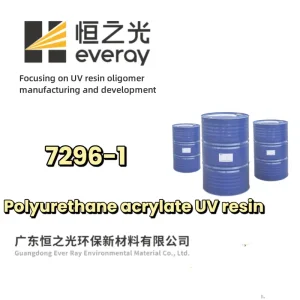
Wholesale 7296-1: High quality polyurethane acrylate with wear and impact resistance
View Product DetailsThe Global Commercial & Industrial Resin Flooring Landscape
The transition from conventional multi-day thermal cures toward hyper-functional UV-curable, polyaspartic, and aliphatic polyurethane networks represents a paradigm shift across manufacturing ecosystems.
Operational Downtime Abatement
Traditional two-component thermosetting floor coatings mandate between 48 to 72 hours of ambient cure before accepting operational loads. UV-curable and fast-crosslinking acrylate resin matrices reduce cure cycles down to seconds under mobile irradiation lamps, mitigating facility shutdown costs for automated distribution centers and cleanrooms.
Extreme Mechanical & Chemical Defense
Heavy automation, automated guided vehicles (AGVs), and severe washdown regimes in pharmaceutical facilities demand resin topographies capable of resisting sustained shear forces, compressive pressures surpassing 100 MPa, and aggressive decontamination chemistry including CIP acid sanitizers.
Dynamic Elasticity & Substrate Co-movement
Concrete substrates exhibit thermal expansion, dynamic load micro-cracking, and moisture vapor transmission. Next-generation aliphatic polyurethane acrylates provide elastomeric bridging capacity while preserving surface pencil hardness up to 4H-6H, preventing catastrophic delamination.
Resin Flooring Chemistry Selection Matrix
Comparative structural assessment of dominant polymer matrix variants used across architectural, chemical processing, and cleanroom environments.
| Resin Matrix Category | Tensile / Flexural Balance | Surface Hardness | Chemical Resistance | Cure Profile | Optimal Deployment |
|---|---|---|---|---|---|
| UV-Curable Acrylate Hybrids | Balanced / High Modulus | 4H - 7H | Exceptional (Solvents/Alkalies) | Instantaneous (<10s under UV/LED) | Commercial Logistics, Quick-Turnaround Factories |
| Aliphatic Polyurethane Acrylates | Superior Elasticity & Elongation | 2H - 4H | High (UV Stable, Anti-Yellowing) | Rapid Photopolymerization | Outdoor Surfaces, Direct Sunlight Topcoats |
| Bisphenol A Epoxy Acrylates | High Rigidity / Low Flexibility | 5H - 8H | High Acid / Caustic Resistance | Fast Free-Radical Crosslink | Heavy Mechanical Engineering, Machinery Bases |
| Waterborne PUA Dispersions | Medium / Breathable Film | HB - 2H | Moderate to High | Dual Mechanism (Evaporation + UV) | Green Building Standard Interiors, Zero-VOC Facilities |
| Hyperbranched Acrylate Oligomers | Extremely High Crosslink Density | 6H - 9H | Extreme Anti-Corrosive Barrier | Ultra-Rapid Reaction Rates | Semiconductor Cleanrooms, Battery Gigafactories |
Localized Industrial Application Scenarios
Specific field-deployable configurations addressing aggressive thermal, electrostatic, and mechanical demands across international industrial sectors.
Lithium-Ion Battery Facilities
Demands NMP solvent resistance, mechanical resilience against heavy electrode slitting equipment, and seamless ESD dissipation (surface resistivity 10^6 to 10^9 ohms) to eliminate ignition risks within dry rooms maintaining -40°C dew point climates.
Pharmaceutical & Biotechnology
Requires ISO 14644-1 certified pinhole-free monocoque resin finishes that remain unaffected by gaseous hydrogen peroxide (VHP) biocidal sterilization, continuous CIP acid cleaning cycles, and intense live-steam exposure without micro-blistering.
Automated Sorting Logistics Hubs
Exposed to round-the-clock dynamic rolling shear forces generated by autonomous robotics and high-tonnage electric reach trucks. Aliphatic polyurethane acrylate top-coats resist tire burn marks and preserve high specular gloss.
Cold Storage & Blast Freezers
Formulations engineered with glass transition temperatures (Tg) adjusted down to -45°C. Traditional epoxy flooring crystallizes and fractures under sub-zero conditions; custom urethane acrylates preserve fracture energy dissipation under extreme cold shock.
Comprehensive Structural Flooring Build-up
A multi-tier crosslinked stratigraphy ensuring continuous vapor management, structural bridging, and localized surface friction control.
Level 01: Moisture Mitigation Primer
Deep-penetrating bisphenol-based functional epoxy acrylate designed to permeate the capillary structure of cured concrete slabs. Chemically terminates residual vapor pressure up to 98% relative humidity (ASTM F2170), securing adhesive anchors exceeding concrete tensile rupture points (>2.5 MPa).
Level 02: High-Modulus Slurry Body Coat
Compounded with high-purity graded quartz, aluminum oxide aggregates, and low-viscosity modified acrylates. This build-up layer provides bulk compressive load capability, shock absorption against accidental tool drop impacts, and crack bridging across dynamic structural subfloors.
Level 03: Nano-Engineered UV Topcoat
Reinforced with functional hyperbranched acrylate networks providing microscopic contact resistance. Delivers tunable surface micro-textures (R9 to R13 slip resistance per DIN 51130), exceptional scratch resistance under heavy grit wheel testing (CS-17 Taber tests), and non-yellowing aliphatic chemistry.
Frequently Asked Technical Questions (FAQ)
In-depth responses covering resin chemistry, installation requirements, and field qualification protocols.
How does on-site UV-curing floor resin compare to conventional 2K epoxy and polyaspartic coatings?
While conventional two-component (2K) amine-cured epoxies require 24 hours for foot traffic and up to 7 days for full chemical resistance, on-site UV-curable floor resins achieve complete polymerization instantly upon exposure to high-intensity UV-A/LED light arrays (typically at 395nm or mercury vapor spectra). The resulting crosslink density provides superior Taber abrasion values (<30 mg loss per 1000 cycles with CS-17 wheels) and eliminates solvent emissions, allowing immediate occupancy without odor contamination.
Can aliphatic polyurethane acrylates withstand continuous thermal shock and washdowns?
Yes. Aliphatic polyurethane acrylates engineered with low crosslink density segments alongside rigid structural blocks demonstrate wide thermodynamic glass transition profiles. When formulated into mortar screeds (4 mm to 9 mm), these matrices flex under severe thermal shock cycles ranging from -20°C to +120°C (such as live steam cleaning in food processing suites), accommodating differential thermal contraction between the resin and concrete substrate.
How do active amine synergists mitigate oxygen inhibition during thin-film floor topcoat cures?
In free-radical UV photopolymerization, atmospheric oxygen diffuses into the liquid resin film surface, reacting with growing polymer radicals to generate unreactive peroxy radicals. This results in residual tackiness and poor chemical resistance. Amino acrylates and active tertiary amines act as hydrogen donors: they rapidly react with peroxy radicals, re-initiating alkyl radicals that consume oxygen and accelerate surface cure line speed, ensuring a fully tack-free finish even in thin topcoats under ambient atmosphere.
What surface preparation protocol is mandatory before applying high-performance resin floor primers?
Substrate preparation must follow International Concrete Repair Institute (ICRI) guidelines, achieving an open-pore concrete surface profile between CSP 3 (light shot-blasting) to CSP 5 (medium scarification). The slab moisture vapor emission rate (MVER) should be quantified via ASTM F1869 (calcium chloride) or ASTM F2170 (in-situ relative humidity probe). Laitance, curing membranes, and oily contaminants must be completely eradicated to allow the low-viscosity acrylate primer to achieve deep mechanical anchorage.
Specialty Functional Oligomers & Substrate Resins
Advanced waterborne, abrasion-proof, and dual-curing resins formulated for industrial composite adhesion and high-wear protection.
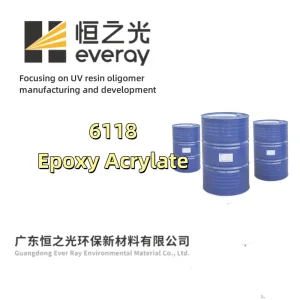
Wholesale Durable 6118 Epoxy Acrylate UV Resin: Ideal for UV wood, plastic and ink
View Product Details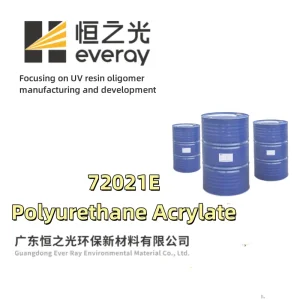
Buy 72021E UV-resin for Multi-Substrate Bonding Factory, Factories
View Product Details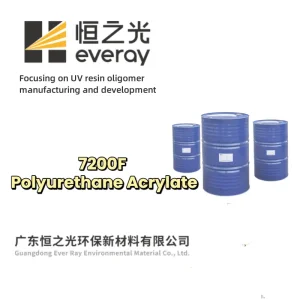
Buy Durable 7200F polyurethane acrylate: heat-resistant and cold-resistant coatings
View Product Details
High-Quality Waterborne 70251 UV-resin for 3D Printing, UV-ink and Wood-coatings
View Product Details
High-Quality Polyester Acrylate 5335F A High-Performance Solution for Offset Inks
View Product Details
High-Quality 5403-3F Polyester Acrylate for Optimal Water-Ink Balance
View Product Details
High-Quality 7913 High Reactivity Anti-fouling & Abrasion Resistant UV Resin
View Product Details