
High-Performance Liquid Resins & Acrylate Oligomer Series
Engineered for precision cure kinetics, exceptional tensile resilience, and substrate compatibility. Explore our premier batch-validated polyurethane acrylates and modified curable oligomers.
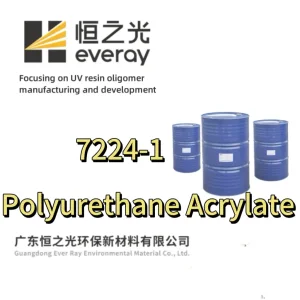
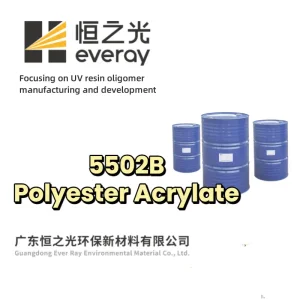
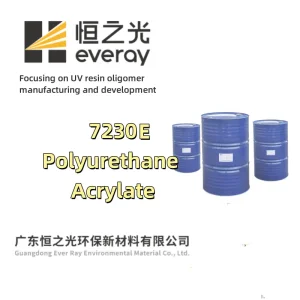
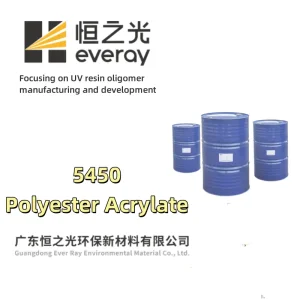
The Global Evolution of Polyurethane Liquid: From Conventional Solvents to UV-Curable & Waterborne Oligomers
An exhaustive architectural breakdown of isocyanate prepolymer dynamics, polymer chain design, micro-phase separation, and clean photopolymerization.
The global polymer manufacturing sector is undergoing an aggressive structural migration away from high-volatile organic compound (VOC) solvent-dispersed polyurethanes toward engineered Polyurethane Liquid Systems. These encompass 100% reactive radiation-curable polyurethane acrylates (PUA), moisture-curing polyurethane prepolymers, and aqueous polyurethane dispersions (PUDs). For industrial formulators across North America, the European Union, and the Asia-Pacific region, selecting the proper polyurethane liquid is no longer just an inventory transaction—it is a critical chemical balance between molecular elongation, glass transition temperature (Tg), hardness, tensile modulus, and environmental compliance.
At the core of liquid polyurethane synthesis is the addition reaction between a polyfunctional isocyanate (aromatic or aliphatic) and an oligomeric polyol (polyester, polyether, or polycarbonate diol). In UV-curable radiation chemistries, such as those pioneered by Guangdong Ever Ray Environmental Material Co., Ltd. since 2006, the terminal isocyanate (–NCO) functionalities are subsequently capped with hydroxyl-functional acrylates (such as HEA or HPA). This hybrid architecture achieves the mechanical toughness, impact absorption, and chemical resistance intrinsic to urethane segment links, while simultaneously unlocking ultra-fast free-radical crosslinking under UV and LED-curable radiation (365 nm to 405 nm wavelengths).
Phase Separation Dynamics: Balancing Soft & Hard Segments
The macroscopic mechanical profile of cured polyurethane liquid films is governed primarily by micro-phase separation between the hard urethane segments (formed by the reaction of isocyanates and chain extenders) and the soft polyol segments. When an engineer specifies an aliphatic polyurethane acrylate for electronic optical films or high-wear automotive coatings, controlling the domain size of these phase-separated domains determines whether the final film displays brittle glass-like resistance, elastomeric rubbery behavior, or an optimal combination of pencil hardness (up to 4H–6H) paired with cross-hatch adhesion flexibility (0-T bend resistance).
Aliphatic PUA Liquids
Synthesized via IPDI, HDI, or H12MDI backbones. Eliminates UV photochemical cleavage pathways, preventing photo-oxidation yellowing in optical layers, 3C electronics, and outdoor finishes.
Aromatic PUA Systems
Formulated utilizing TDI and MDI derivatives. Yields immense structural crosslinking density, tensile strength, and abrasion resistance. Ideal for industrial floorings, wood sealers, and opaque formulations.
Waterborne UV PUDs
Zero/Ultra-low VOC aqueous dispersions incorporating carboxylate or sulfonate ionic centers. Forms ultra-thin, breathable, high-adhesion coats for leather, flexible textiles, and engineered wood flooring.
Dual-Cure Prepolymers
Synergistic mechanisms combining rapid UV photopolymerization with thermal or atmospheric moisture cure. Overcomes shadow-zone curing constraints in complex geometric 3D printing and automotive structural potting.
Macro-Industry Global Sourcing: Navigating Demands Across High-Value Sectors
How top-tier international manufacturers solve adhesion failures, volume shrinkage, and cure degradation across mission-critical substrates.
Global procurement teams operating in automotive coatings, consumer electronics (3C), industrial additive manufacturing, and flexible graphic packaging face severe operational bottlenecks when sourcing raw polyurethane liquid oligomers. Unlike generic chemical commodities, liquid polyurethane acrylates must function predictably within existing automated dispensing lines, high-speed offset presses, slot-die roll coaters, and high-intensity UV-LED conveyor tracks.
A persistent vulnerability in industrial converting is the micro-shrinkage phenomenon. During radical initiation, acrylate double bonds convert to single covalent bonds, reducing intermolecular Van der Waals spaces and causing volumetric shrinkage rates between 5% and 12% in standard matrices. This internal strain causes adhesive delamination on low-surface-energy plastics (such as polycarbonate, PMMA, untreated PET, and polypropylene), micro-cracking under thermal expansion, and optical warping. Ever Ray’s specialized aliphatic polyurethane oligomers mitigate this via proprietary polyether/polycarbonate backbone elongation, lowering shrinkage to below 1.5% while retaining surface hardness and optical clarity (Haze < 0.3%).
| Target Industrial Sector | Predominant Substrates | Critical Sourcing Pain Points | Chemical Solution Strategy | Compliance Standards |
|---|---|---|---|---|
| Consumer Electronics (3C) | PC, ABS, PMMA, Anodized Aluminum | Fingerprint oil corrosion, thermal yellowing, drops & abrasion | High-functionality aliphatic PUA combined with hyperbranched acrylates | RoHS / Halogen-Free |
| Automotive OEM & Interior | Polycarbonate blends, TPU, Glass, Carbon Fiber | Fogging, extreme UV weathering (QUV 2000h), thermal cycling (-40°C to 120°C) | Polycarbonate-diol based PUA liquids with hindered amine light stabilizers | REACH / VOC VDA 278 |
| Additive Manufacturing (3D) | Photopolymer resin vats (SLA, DLP, LCD) | Excessive green-state brittleness, slow interlayer recoating, warpage | Low-viscosity aliphatic urethane prepolymers with dual-cure moisture or thermal rings | ISO 10993 Ready |
| Industrial Wood & Flooring | Oak, Walnut, PVC composites, SPC panels | Micro-scratching, roller line aeration, lack of deep crosslinking | Aromatic PUA blended with modified epoxy acrylate sealers and matting oligomers | EN 71-3 / CARB II |
| Graphic Inks & Varnishes (OPV) | BOPP, Metalized films, Paperboard | Oxygen inhibition in thin coats, misting at 400 m/min line speeds | Amine-modified polyether urethane acrylates acting as internal hydrogen donors | EuPIA / Swiss Ordinance |
Resolving Oxygen Inhibition at the Atmospheric Interface
In thin-film applications such as overprint varnishes, flexographic inks, and decorative spray coats, triplet oxygen (³O₂) rapidly quenches propagating free radicals at the coating surface, forming unreactive peroxy radicals. This results in residual tackiness, decreased chemical resistance, and severe solvent odor. Rather than relying entirely on nitrogen purging chambers (which exponentially increase capital and operating expenses), modern chemical suppliers synthesize amino-functionalized polyurethane acrylates and reactive amine synergists. The unshared electron pair on the nitrogen atom extracts hydrogen from adjacent positions, creating reactive carbon radicals that scavenge dissolved oxygen molecules and regenerate initiator centers, delivering full tack-free cure speeds even on high-throughput roll-to-roll manufacturing lines.
Precision Characterization, Batch Stability & Global Compliance Assurance
Rigorous analytical benchmarking safeguarding international formulators against batch variation, viscosity drift, and regulatory non-compliance.
Chromatographic & Molecular Profiling
Every polyurethane liquid batch undergoes Size Exclusion Chromatography (SEC/GPC) and Gas Chromatography-Mass Spectrometry (GC-MS) to verify molecular weight distribution (Mw/Mn < 1.8), polydispersity, and complete conversion of free isocyanate monomers (residual NCO < 0.05%).
Rheological Window Validation
Viscosity is characterized across varied shear rates (0.1 to 10,000 s⁻¹) using rotational cone-and-plate rheometers at multiple temperatures (25°C, 40°C, 60°C). This guarantees steady pumpability, absence of thixotropic slumping, and bubble disengagement on high-speed roller lines.
Global Regulatory Compliance
Full documentation dossiers: RoHS 2.0 (EU 2015/863), REACH SVHC candidate lists (< 0.1% w/w), TSCA (USA), IECSC (China), and California Proposition 65. Complete SDS in 30+ regional languages according to UN GHS Revision 9.
Supply Chain Security & Custom Synthesis Protocols: Operating from our multi-hectare production complex in Dawan Industrial Park, Yunfu, Guangdong, Ever Ray combines bulk raw material procurement (securing stable access to key polyols, IPDI, and acrylic acid) with computerized batch reactors ranging from 1,000 to 20,000 liters. This vertical integration buffers tier-1 coating brands against raw material volatility and shortens custom formulation pilot turnaround times from traditional months to just 10–14 business days.
Technology Roadmap: Next-Generation Polyurethane Chemistry (2025–2035)
Pioneering sustainable carbon footprints, circular polymer matrices, and advanced photonic initiation systems.
Bio-Based & Circular Polyols
Replacing petrochemical aliphatic building blocks with bio-derived succinic acid, sebacic acid, and functionalized vegetable oils (castor, soybean), targeting >45% renewable bio-carbon content (ASTM D6866) without compromising mechanical properties.
LED Low-Energy Photoinitiation
Engineering long-wavelength absorption characteristics tailored to 385nm, 395nm, and 405nm UV-LED diodes. Eliminates toxic mercury arc discharge bulbs, cuts operational power consumption by 65%, and avoids substrate thermal warping.
Non-Isocyanate Polyurethanes (NIPU)
Pioneering cyclic carbonate-amine polyaddition routes. Completely bypasses hazardous free monomeric isocyanates during factory production, delivering extreme operator safety and eliminating worker sensitization risks.
Precision Acrylate Polymers, Oligomers & Diluent Chemistries
Explore our specialized portfolio of polyester acrylates, high-adhesion monomers, and dual-curing polyurethane resins engineered for rigorous converting lines.
Frequently Asked Engineering & Sourcing Questions
In-depth technical answers addressing chemistry selection, formulation adjustments, and regulatory verification.
What is the functional difference between aliphatic and aromatic polyurethane acrylates?
Aliphatic polyurethane acrylates are synthesized with isocyanates devoid of aromatic rings (such as IPDI, HDI, or H12MDI). They do not form light-absorbing quinoid chromophores under solar UV exposure, delivering extraordinary non-yellowing stability (ΔE < 1.0 after 1000h QUV) essential for clear topcoats, electronics, and cosmetic gels. Aromatic PUAs (TDI, MDI) yield superior tensile strength and hardness at lower unit cost, making them preferred for pigmented industrial coatings, wood sealers, and indoor floorings where UV exposure is minimal.
How does Ever Ray resolve volume shrinkage issues in precision 3D printing and optical films?
We approach shrinkage by manipulating backbone architecture. By increasing the molecular weight between crosslinkable acrylates and introducing flexible polyether or polycarbonate soft segments, we lower the reactive double-bond concentration per gram. Incorporating bulky cyclic structures (such as isobornyl acrylate or cyclohexyl derivatives) and hyperbranched dendritic oligomers allows crosslinking with significantly reduced structural distortion, keeping volumetric shrinkage well below 1.5%.
Can polyurethane liquids be formulated to achieve high glass adhesion without silane coupling primers?
Yes. Ever Ray formulates specialized functional oligomers containing carboxylic, phosphoric, or blocked heterocyclic anchors directly along the polymer backbone. These pendant coordination groups form robust coordinate bonds with silicon and metallic hydroxyl species on glass and polished metal surfaces, achieving 100% cross-hatch adhesion (ASTM D3359 5B) even after 2-hour boiling water testing.
What is the standard procedure for requesting customized oligomer synthesis and pilot scale-up?
Formulators supply their target substrate, coating technique (roller, spray, slot-die, ink-jet), curing apparatus (mercury lamp or LED wavelength), and mechanical targets (Tg, elongation, hardness, solvent resistance). Our application laboratory completes candidate synthesis in 7 business days, followed by benchtop performance validation and delivery of 1kg–5kg pilot evaluation samples accompanied by complete analytical TDS and SDS documentation.
