Pioneering Resin Formulations
Explore our laboratory-certified performance systems engineered for high line-speed curing, zero-VOC profiles, and robust substrate adhesion.
High-Quality A150 UV-resin for UV-ink and UV-coatings
Explore Formulation
High-Quality Polyester Acrylate 5405B – Multi-Field Solution
Explore Formulation
Wholesale Epoxy Acrylate 92001: High-Efficiency Curing
Explore Formulation
Wholesale 67283: Rapid-Setting Yellowing-Resistant Solution
Explore Formulation
Buy UV Resin 5017 with Low Odor & Low Shrinkage
Explore Formulation
Wholesale Waterborne 70601 UV-resin for 3D Printing & Wood
Explore Formulation
Wholesale Low Shrinkage High Flexibility Pure Acrylate Resin
Explore Formulation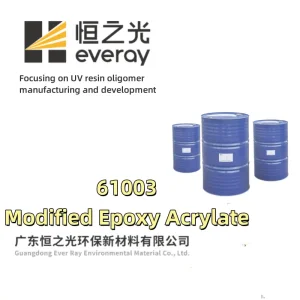
Buy 61003A UV Resin for Plastic-Film Varnish & Packaging
Explore FormulationTransforming Surface Finishing via Advanced Polyurethane Dispersion
Decarbonization, regulatory compliance, and mechanical endurance converge to make waterborne polyurethane dispersions the gold standard for global manufacturing.
Eco-Driven Decarbonization
Global industrial policies are phasing out high-solvent matrices in favor of water-dilutable, non-toxic alternatives. Polyurethane Dispersions (PUD) provide molecular flexibility and green building certification compatibility without sacrificing durability.
Crosslink Architecture
By blending UV curable urethane-acrylate hybrids with anionic or nonionic aqueous stabilization, formulators attain chemical resistance, anti-scratch resilience, and thermal stability in a single-pass processing window.
Multi-Industry Usability
From low-shrinkage 3D stereolithography resins to luxury automotive interior coatings, our tailored PUD architectures address high-shear application environments with consistent leveling, rapid outgassing, and film clarity.
Meeting Global Procurement Demands
Strategic resin sourcing requires strict batch stability, resilient logistics, and technical data continuity for original equipment manufacturers and converters worldwide.
Batch-to-Batch Homogeneity
Automated polymerization lines with precision temperature regulation and viscosity feedback systems maintain consistent polydispersity and solid content profiles, minimizing scrap rates on your production line.
Supply Chain Continuity
With an expansive production capacity based in Guangdong and diversified raw material inventory reserves, our supply programs protect downstream converters from spot shortages and volatile price fluctuations.
Custom Molecular Synthesis
Our research and development teams adjust soft-to-hard segment ratios, functional isocyanate linkages, and polymer branching to meet precise client benchmarks for elongation, pencil hardness, and lightfastness.
Engineered Solutions Across Demanding Sectors
Optimizing formulation performance under extreme conditions of mechanical wear, UV weathering, and thermal stress.
Automotive & Consumer 3C
Aliphatic urethane backbones provide non-yellowing characteristics, hydrolytic stability, and sweat resistance on polycarbonate, ABS, and aluminum alloys for consumer electronics and vehicle trim components.
Sustainable Wood & Flooring
Balancing high flexural resilience with fast-drying profiles, our waterborne and UV formulations deliver deep grain enhancement, abrasion resistance, and stain protection without harsh solvent outgassing.
Specialty Packaging & Inks
High transfer efficiency, pigment wetting properties, and balanced surface tension dynamics enable ultra-thin, low-shrinkage printing on flexible polyolefin films, paperboards, and composite foils.
Regulatory Compliance & Factory Verification
Engineered to satisfy stringent global environmental mandates with transparent technical verification.
REACH & RoHS Compliance
All resin families are cataloged to meet heavy metal bans, alkylphenol ethoxylate (APEO) restrictions, and VOC thresholds set by EU directives and regional EPA authorities.
Comprehensive Documentation
Every shipment is accompanied by verified technical data sheets (TDS), safety data sheets (SDS) formatted under GHS criteria, and certified analysis of physical parameters including solid content and viscosity.
Direct Lab Consultation
Our senior formulation scientists support scale-up trials, resolve compatibility friction with matting agents and photoinitiators, and recommend optimized curing and drying parameter curves.
Technology Roadmap & Future Outlook
Pioneering the next era of industrial polyurethane chemistry through sustainable raw materials, bio-sourced backbones, and dual-cure architectures.
Bio-Based Carbon Precursors
Transitioning from petrochemical feeds to polyols sourced from renewable castor oil, succinic acid, and biological monomers, lowering overall carbon footprints while maintaining high crosslink density.
Dual-Cure Photopolymer Systems
Integrating UV-triggered acrylic radical curing with moisture-cured or thermally-cured isocyanate mechanisms, ensuring complete crosslinking in complex geometries and shadowed regions.
Functional Self-Healing Topcoats
Engineering supramolecular hydrogen bonds into aliphatic polyurethane networks to create finishes that autonomously repair micro-abrasions under moderate ambient or thermal stimulation.
Expert Inquiries & Answers
Essential guidance on formulation, system handling, and material performance from our technical department.
What core differences separate Aliphatic from Aromatic Polyurethane Dispersions?
Aliphatic grades utilize raw materials like IPDI or H12MDI, delivering exceptional resistance to sunlight, yellowing, and weather exposure—ideal for outdoor applications and clear topcoats. Aromatic variants (based on TDI or MDI) provide higher hardness and cost efficiency, suited for indoor primers, sealers, and pigmented wood layers.
How does waterborne UV resin address flash-off and curing?
Waterborne UV oligomers require an initial heat-assisted flash-off zone to evaporate water from the film prior to radiation curing. Once dry, exposure to standard mercury or LED-UV light triggers radical polymerization of acrylic double bonds, achieving instantaneous film crosslinking and mechanical strength.
Can you provide customized viscosity and solids configurations?
Yes. Our synthesis lines can adjust molecular weight distribution, counter-ion neutralization, and particle size to fit spray, roller, curtain, or gravure coating processes, maintaining stability across varying shear rates.
What measures guarantee stability across international freight routes?
Our aqueous dispersions feature freeze-thaw stabilizers and microbial defense packages. Shipments are packed in high-density polyethylene drums or IBC containers rated for multi-modal marine and overland transport with complete safety certifications.
Specialty Oligomer & Monomer Portfolio
Engineered monomers, adhesion-promoting solutions, and specialized performance grades for converters and ink formulators.
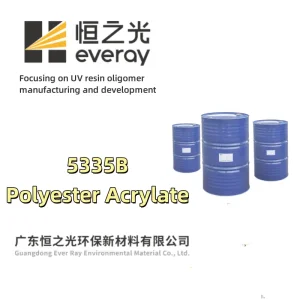
Buy 5335B UV-Resin in Color Inks, Varnishes, & Offset
Explore Formulation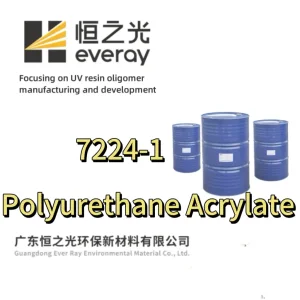
UV Curing Polyurethane Acrylate: Low Shrinkage & Flexibility
Explore Formulation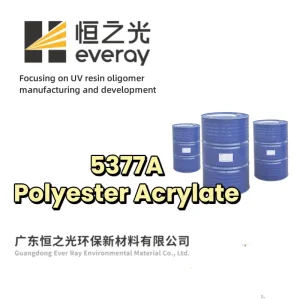
Buy Polyester Acrylate 5377A – Flexographic UV Inks
Explore Formulation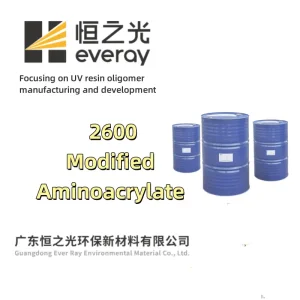
High-Quality Durable 2600UV Resin: Wear Resistance
Explore Formulation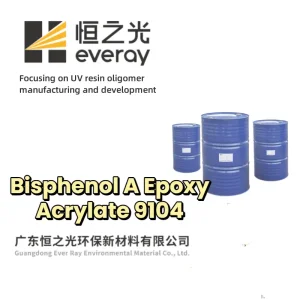
Bisphenol A Epoxy Acrylate Resin 9104: High Performance
Explore Formulation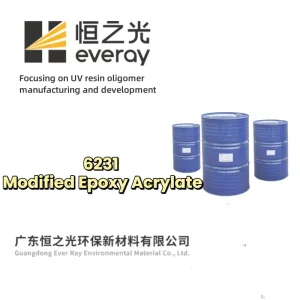
Wholesale 6231: Curing Modified Epoxy with Leveling
Explore Formulation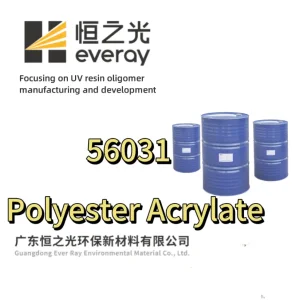
56031 Low Viscosity High Reactivity Polyester Acrylate
Explore Formulation