Featured High-Performance UV Formulations (Batch Series A)
Precision-engineered acrylate oligomers manufactured for low shrinkage, exceptional intercoat adhesion, zero yellowing under full-spectrum LED, and professional salon longevity.
Wholesale Low Shrinkage High Flexibility UV Curing Polyurethane Acrylate Resin for Nail Gel, Leather and Wood Manufacturer, Supplier
View Product Specifications
High-Quality Durable 6271 UV resin: very suitable for UV adhesive with low yellowing risk Suppliers, Products
View Product Specifications
High-Quality Fast curing 7402 Polyurethane Acrylate UV resin for high quality coatings Supplier, Products
View Product Specifications
High-Quality Excellent adhesion: 7230E polyurethane acrylate UV Resin for vacuum plating Supplier, Factories
View Product Specifications
Buy 17701 Low Shrinkage Modified Acrylate Oligomer - Resin for Offset and Film Inks Factories, Product
View Product Specifications
Buy 73008 Low-Shrinkage Polyurethane Acrylate Resin for Electronic Potting & Metal Coating | High Temp Anti-Yellowing UV Oligomer Manufacturer, Factories
View Product Specifications
Buy 71209A-1 ABS-Like Engineering Resin: High Strength Meets High Impact Resistance Factory, Factories
View Product Specifications
Buy Polyester Acrylate 5377A – The Ideal Choice for Flexographic UV Inks Suppliers, Factory
View Product SpecificationsMacro Industry Solutions & Photopolymer Kinetics in Nail Varnish UV
UV-curable nail cosmetics represent one of the most technologically demanding subsegments of photopolymer science. Unlike rigid industrial substrates such as metal or pretreated polycarbonate, human fingernails are living, flexible, lipid-bearing, and hydration-dynamic keratin matrices that flex under micro-mechanical stresses. Formulating a high-performing nail varnish UV coating requires solving a complex chemical paradox: delivering surface scratch resistance exceeding 3H pencil hardness while simultaneously preserving an elongation-at-break of 35% to 65% to prevent micro-fissuring and edge delamination.
Aliphatic Polyurethane Acrylate (PUA) Backbone
Aliphatic PUAs engineered with hexamethylene diisocyanate (HDI) or isophorone diisocyanate (IPDI) backbones deliver optical transparency and weatherability without chromophore degradation. Unlike aromatic structures that cleave under UV radiation to form quinoid yellow chromophores, our aliphatic urethane acrylates guarantee delta E < 0.8 color shift over 30 days of continuous sunlight exposure.
Thermal Spike (Exotherm) Attenuation
Polymerization heat release is a significant ergonomic pain point for salon consumers. Radical conversion of acrylic double bonds generates roughly 86 kJ/mol of enthalpy. Through oligomeric molecular weight optimization (Mn 3,500 - 8,000 g/mol) and internal plasticizing soft segments (PTMG/PCL), our resins buffer peak exotherm temperatures to below 39°C during rapid 30-second LED curing cycles.
Volumetric Shrinkage Control (< 2.5%)
Traditional multi-functional acrylates (TMPTA, DPHA) induce high shrinkage (up to 8-12%), generating shear stresses at the keratin interface that result in premature peeling and painful nail tightening. By synthesizing hyperbranched architectures and sterically hindered alicyclic monomers, we compress volumetric shrinkage to less than 2.3%, safeguarding natural nail integrity.
| Resin Chemistry Class | Tensile Strength (MPa) | Elongation at Break (%) | Volume Shrinkage (%) | Peak Exotherm Temp (°C) | Primary Formulator Application |
|---|---|---|---|---|---|
| Aliphatic Difunctional PUA | 18.5 - 24.0 | 55% - 85% | 1.8% - 2.2% | 36.5°C | Soak-Off Base Coats, High-Flex Color Gels |
| Aliphatic Hexafunctional PUA | 42.0 - 58.0 | 4% - 8% | 4.5% - 5.8% | 44.0°C | Mirror-Gloss No-Wipe Topcoats, Anti-Scratch Finish |
| Hyperbranched Acrylate Oligomer | 35.0 - 45.0 | 12% - 18% | 2.1% - 2.7% | 38.2°C | Fast-Cure LED Monomer Replacements, Low-Viscosity Top |
| Carboxyl / Phosphate Modified Acrylate | 22.0 - 30.0 | 25% - 40% | 2.4% - 3.1% | 37.0°C | Acid-Free Keratin Primers, Self-Adhering Base Resins |
Global Commercial & Industrial Realities: The LED Paradigm & Photoinitiator Upheaval
The global market for UV nail gel products is experiencing structural transformations driven by regulatory shifts and end-user demand for safe, salon-grade aesthetics. Formulators face significant challenges requiring coordinated chemical adaptation.
The TPO Ban & Modern Cleavage Photoinitiators
The European Chemicals Agency (ECHA) reclassification of diphenyl(2,4,6-trimethylbenzoyl)phosphine oxide (TPO) as a Reprotoxic Category 1B substance has required reformulation across the cosmetic chemistry industry. Ever Ray has led this transition by developing oligomers designed to work with TPO-L (Ethyl (2,4,6-trimethylbenzoyl) phenylphosphinate), BAPO (Omnirad 819), and polymeric hydroxycyclohexyl phenyl ketone (HCPK), achieving tack-free depth cure under 405nm LED diodes with no residual yellowing.
HEMA-Free & Di-HEMA-Free Clean Chemistry
Cosmetic dermatologists cite 2-hydroxyethyl methacrylate (HEMA) and isobornyl acrylate (IBOA) as notable contact sensitizers. To address professional salon skin sensitization, our synthesis facilities produce HEMA-free, HPMA-free, and Di-HEMA-free resin matrices. By leveraging ethoxylated and propoxylated polyol acrylates with high molecular weight cutoffs, we ensure the uncured varnish cannot penetrate intact cutaneous barriers, dramatically mitigating allergenicity risks.
Supply Chain Redundancy & Reactor Consistency
Global contract packagers face challenges with batch-to-batch viscosity drift and color variance. Operating an advanced synthesis base in Yunfu, Guangdong, Ever Ray enforces automated Distributed Control Systems (DCS) monitoring reactor temperature within ±0.5°C tolerances. This guarantees lot-to-lot viscosity consistency (within ±300 mPa.s at 25°C), enabling automated filling lines across North America, Europe, and Asia to operate without downtime.
Localized Regulatory Compliance & Toxicological Safety Assurance
Navigating global cosmetic compliance requires technical proficiency and thorough analytical validation. Nail varnishes are scrutinized by health authorities regarding direct skin contact, airborne volatility during curing, and trace chemical residues. Ever Ray supplies comprehensive regulatory dossiers for every product grade.
EU Regulation (EC) No 1223/2009
Full compliance with Annex III restrictions. Formulated to meet strict ban limits on carcinogenic, mutagenic, or toxic for reproduction (CMR) substances, complete with INCI declaration dossiers and Cosmetic Product Safety Report (CPSR) profiles.
US FDA & MoCRA Readiness
Audited facility compliance under Modernization of Cosmetics Regulation Act (MoCRA) guidelines, mandatory facility registration, safety substantiation, professional salon labeling, and full compliance with California Proposition 65 thresholds.
ISO 22716 & cGMP Protocols
Manufactured within climate-controlled, HEPA-filtered reactors adhering to Good Manufacturing Practices. Rigorous multi-stage filtration isolates dust, gel seeds, and unreacted micro-impurities down to 1.0 micron filtration thresholds.
Toxicological Risk Assessment
Third-party ICP-MS testing confirms absence of toxic heavy metals (Lead < 2 ppm, Arsenic < 0.5 ppm, Mercury < 0.1 ppm). GC-MS head-space analysis ensures zero detectable levels of banned benzene, toluene, or formaldehyde solvents.
Specialized Formulation Architectures Across Professional Nail Systems
A single universal resin cannot cover every layer of a professional salon manicure system. High-performance nail varnish UV systems rely on specialized layers engineered for chemical harmony, intercoat radical covalent bonding, and tailored mechanical properties.
1. Keratin-Anchor Base Gels
Formulated with carboxyl and phosphate-functionalized polyurethane acrylates. These functional groups form non-destructive hydrogen bonds and polar complexes with keratin amino acid sidechains without mechanically damaging the dorsal nail plate. Features controlled polarity for rapid acetone soak-off within 8 to 10 minutes.
2. High-Thixotropy Sculpting Gels
Builder and extension gels require structural viscosity and rapid self-leveling properties. By blending high-viscosity difunctional aliphatic urethanes with fumed silica thixotropic masterbatches, these gels hold architectural C-curves during 30-second pinch curing without uncured slump or flooding the lateral nail folds.
3. Pigmented Color Systems
Formulating highly opaque white, deep black, or pastel colors presents curing hurdles due to competitive UV photon absorption. Our low-viscosity polyester acrylates provide strong pigment-wetting capabilities, stabilizing micronized cosmetic pigments and enabling light penetration to the base interface.
4. No-Wipe Mirror Topcoats
Engineered to eliminate oxygen inhibition at the air-coating interface without requiring alcohol wiping. Hyperbranched acrylates combined with amine synergists consume quenching oxygen molecules, establishing a high-density, scratch-proof surface network resistant to household solvents, oils, and staining agents.
Technical Roadmap & Next-Generation Photopolymer Frontiers
Ever Ray is investing heavily in polymer chemistry research to meet the future demands of cosmetic formulators and consumers through four primary technological initiatives.
Bio-Based Carbon Feedstocks
Transitioning from petrochemical feedstocks toward renewable monomers derived from soybean oil, itaconic acid, and bio-succinic polyols. Our target is achieving > 55% verified bio-carbon content (ASTM D6866) while maintaining mechanical performance.
Narrow-Band 405nm LED Sensitivity
Optimizing photon absorption cross-sections explicitly aligned with single-die 405nm and 395nm cold-LED salon curing fixtures. This reduces UV hazard exposure to salon clients' hands while maintaining complete depth curing in under 20 seconds.
Peelable Dual-Cure Waterborne Gels
Developing waterborne polyurethane dispersions functionalized with acrylated end-caps. These coatings dry via water evaporation followed by rapid UV crosslinking, yielding a peelable, solvent-free film that requires zero chemical acetone soak-off.
Self-Healing Surface Networks
Synthesizing hydrogen-bonded supramolecular urethane matrices capable of intrinsic thermal-induced self-healing. Light surface scratches and micro-abrasions from daily wear heal upon brief exposure to warm water (45°C), restoring initial gloss.
Nail Varnish UV Engineering & Procurement FAQ
Answers to key formulation and procurement inquiries, provided by Ever Ray senior application chemists and compliance specialists.
How do aliphatic polyurethane acrylates prevent yellowing in clear topcoats compared to aromatic grades?
What specific chemical strategies mitigate the exotherm "heat spike" sensation for salon consumers?
How can formulators replace HEMA while maintaining acceptable base gel adhesion to the keratin plate?
How does the ban on Photoinitiator TPO affect global compliance, and what are drop-in alternatives?
What is the optimum viscosity range for bulk UV nail resin base supplies, and how is it tested?
What testing protocols confirm an acceptable balance between scratch hardness and acetone soak-off speed?
Featured Specialized Resins & Monomers (Batch Series B)
Specialized oligomers, modified monomers, and flexographic/screen UV binders engineered to enhance adhesion, thermal stability, impact resilience, and high-speed photopolymer curing.
Buy 5335B UV-resin in UV color inks, varnishes, and offset inks Manufacturers, Products
View Product Specifications
High-Quality Polyester Acrylate 5501 — A Core Resin for LED-UV Wood Coating Systems Supplier, Factories
View Product Specifications
Wholesale Low Shrinkage High Flexibility Pure Acrylate Resin for Plastic/Wood Coatings and UV Inks Manufacturer, Product
View Product Specifications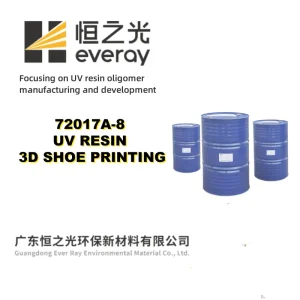
Wholesale 72017A-8 Dual-Curing UV Resin for 3D Printed Footwear | High Elasticity & Low Shrinkage Resin Manufacturer, Factories
View Product Specifications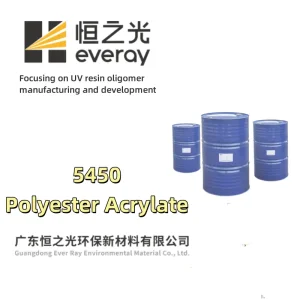
Wholesale 5450 UV resin for UV coating, paper varnish, screen creeping Manufacturer, Manufacturers
View Product Specifications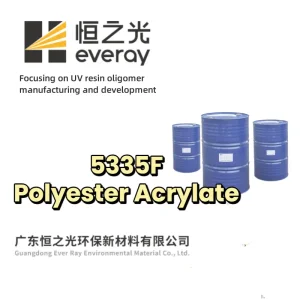
High-Quality Polyester Acrylate 5335F A High-Performance Solution for Offset Inks Factories, Products
View Product Specifications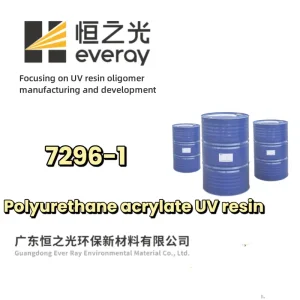
Wholesale 7296-1: High quality polyurethane acrylate with excellent wear and impact resistance Manufacturer, Product
View Product Specifications