High-Quality Epoxy Resin PCB Manufacturer & Advanced Dielectric Solutions
Pioneering high-density interconnect (HDI), high-Tg thermal stability, and low dielectric loss polymer formulations engineered for next-generation telecommunications, automotive electronics, and global industrial controls.
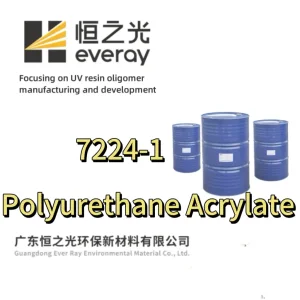
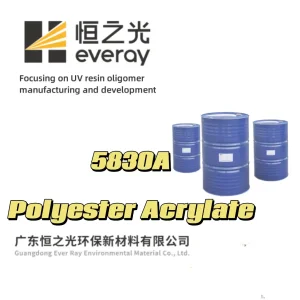
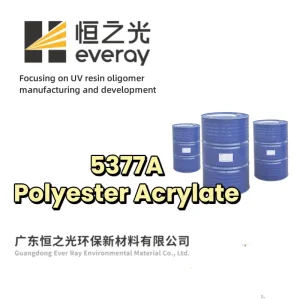
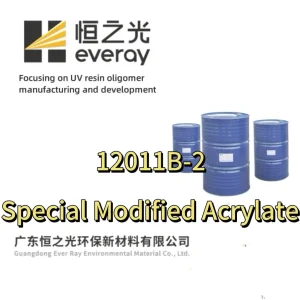
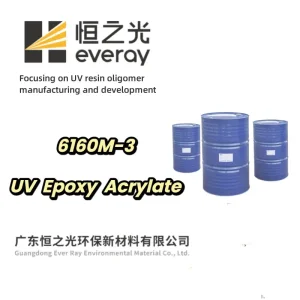
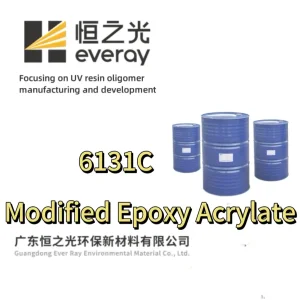
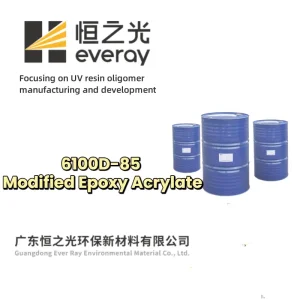
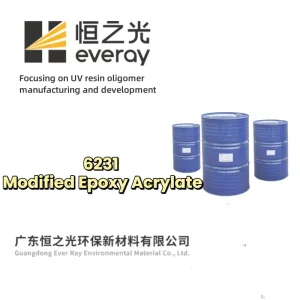
Specialty High-Performance Resins & PCB Formulations
Explore our foundational oligomers, photo-curable formulations, and modified systems designed for solder mask adhesion, microvia encapsulation, and dielectric integrity.
State of Global Epoxy Resin PCB Manufacturing
Navigating thermal limits, dimensional shrinkage, signal loss mitigation, and sustainable chemical sourcing in high-speed hardware architecture.
Thermodynamic Rigidity
Modern telecommunication switchboards, automotive power units, and cloud server backplanes demand FR-4 substrates modified with cycloaliphatic epoxies, phenolic novolacs, and functionalized fillers to raise Glass Transition Temperature (Tg ≥ 170°C to 185°C) and reduce Z-axis coefficient of thermal expansion (CTE).
Dielectric Integrity (Dk/Df)
With high-frequency 5G/6G millimeter waves, standard bisphenol-A systems experience excessive dielectric dispersion. Leading manufacturers synthesize polyphenylene oxide (PPO) and hydrocarbon-modified epoxy blends, achieving ultra-low dielectric constants (Dk ≤ 3.4) and low dissipation factors (Df ≤ 0.004 at 10 GHz).
Lead-Free Solder Endurance
RoHS and REACH compliance eliminate lead-bearing solders, raising peak reflow soldering temperatures to 260°C. High-performance epoxy resin PCB composites must withstand aggressive thermal shock protocols (T260/T288 > 30 minutes) without delamination, blistering, or inner-layer microvia stress fractures.
Epoxy Resin Formulation in Advanced Multilayer PCB Manufacturing
Bridging chemical monomer synthesis, prepreg impregnation dynamics, and high-frequency copper-clad laminates.
In high-reliability printed circuit board fabrication, epoxy resin acts as both structural binder and dielectric insulation. It binds woven E-glass or low-Dk glass fabrics into solid laminates and insulates conductive copper traces. Achieving void-free prepreg laminates requires precise control of resin rheology, gelation kinetics, crosslinking enthalpy, and curing behavior during hot-press cycles.
The crosslinked matrix must provide strong inter-layer peel adhesion (≥ 8 lb/in on 1 oz copper foils), low moisture absorption (< 0.15%), and high resistance to conductive anodic filament (CAF) migration. In dense BGA breakouts with sub-0.4mm pitch footprints, resin formulation directly prevents micro-shorts and dielectric breakdown under continuous bias voltages.
| Substrate Classification | Resin Chemistry System | Tg (°C, DSC/DMA) | Dk @ 1 GHz / 10 GHz | Df @ 1 GHz / 10 GHz | Key Performance Attribute |
|---|---|---|---|---|---|
| Standard FR-4 | Dicyandiamide-cured Difunctional Epoxy | 130°C – 140°C | 4.4 / 4.2 | 0.020 / 0.022 | Cost Optimized, Consumer Grade |
| Mid-Tg Lead-Free FR-4 | Phenolic Novolac Modified Epoxy | 150°C – 155°C | 4.3 / 4.1 | 0.016 / 0.018 | Standard Industrial & Household |
| High-Tg / CAF Resistant | Multifunctional / Cycloaliphatic Novolac | 175°C – 185°C | 4.1 / 3.9 | 0.010 / 0.012 | Automotive & Mission Critical |
| Low Loss / Ultra-High Speed | Epoxy-Polyphenylene Ether (PPE/PPO) Blend | 190°C – 210°C | 3.6 / 3.4 | 0.005 / 0.0038 | 5G MIMO, Server Blade, Radar |
The China Manufacturing Advantage: Scaling, Agility & Efficiency
Leveraging the Pearl River Delta industrial ecosystem to deliver stable quality, short lead times, and continuous chemical raw material availability.
Upstream Integration
Our Yunfu production hub operates inside the Greater Bay Area chemical cluster. This ensures immediate access to high-purity epichlorohydrin, bisphenol derivatives, silane coupling agents, and acrylic monomers, insulating overseas supply chains from single-point bottlenecks.
Automated Batch Consistency
Equipped with computerized DCS process controllers, high-shear emulsion dispersers, and multi-stage distillation columns, our production lines maintain narrow molecular weight distributions (Mw/Mn) and stable viscosity profiles across high-volume container deliveries.
Rapid Pilot-to-Scale Cycles
Formulation adjustments that take quarters elsewhere take weeks in our specialized pilot synthesis laboratories. Our teams formulate custom backbone chemistries, test small batches for Tg and copper peel adhesion, and scale quickly to 20-ton reactor capacities.
Stringent Quality Control
Every single consignment is subjected to gel permeation chromatography (GPC), differential scanning calorimetry (DSC), dynamic mechanical analysis (DMA), and moisture titration, providing full batch traceability from monomer synthesis to laminate pressing.
Mission-Critical PCB Applications Demanding High-Grade Epoxy Resins
Balancing thermal, chemical, and electrical stress across diverse deployment conditions.
Automotive Power & EV Battery Systems
Under-the-hood engine controllers, on-board chargers (OBC), and BMS units experience extreme thermal cycling (-40°C to 150°C) and heavy vibrations. High-Tg epoxy formulations prevent solder pad shear fatigue, delamination, and trace fractures under high currents.
5G Wireless & AI Cloud Datacenters
Multi-gigabit transceivers and neural processing accelerators rely on low-Df modified resins to curb signal attenuation, phase distortion, and jitter. Our PPE/novolac-modified matrices preserve eye diagram openings across long high-frequency traces.
Industrial Automation & Medical Tech
PLCs, robotics drives, and medical imaging gear operate in environments with chemical fumes, humidity, and wide temperature swings. Halogen-free, flame-retardant (UL94 V-0) resins deliver reliable dielectric barriers against tracking and corrosion.
Market Trends & What Tier-1 Procurement Requires
Key criteria for evaluating global PCB manufacturing and resin supply partners.
Halogen-Free Transition
Environmental standards restrict brominated flame retardants (TBBA). Modern procurement prioritizes phosphorus-modified resins, reactive organophosphorus esters, and inorganic fillers that achieve UL94 V-0 flame ratings without toxic emissions.
Ultra-Thin Dielectrics
As smartphones and wearable hardware integrate mSAP (modified Semi-Additive Process) architecture, prepregs and resin-coated copper (RCC) foils are thinning to sub-15 micron ranges, requiring pristine resins free from unreacted gel particles.
Rigid-Flex Adaptability
Folding consumer electronics, military avionics, and medical endoscopes merge rigid epoxy boards with polyimide flexible circuitry. Modified elastomeric epoxies maintain flexibility and prevent crazing along flex-to-rigid transition joints.
Audit-Ready Compliance
Global original design manufacturers (ODMs) mandate ISO9001, IATF 16949, ISO14001, UL certification, along with comprehensive analytical documentation including full lot-specific Certificate of Analysis (COA), RoHS, and REACH dossiers.
Frequently Asked Questions: Epoxy Resin PCB Engineering
Key technical insights for materials scientists, PCB layout engineers, and global procurement specialists.
What differentiates standard FR-4 from High-Tg Epoxy Resin PCB laminates?
How does epoxy resin choice impact signal integrity in high-frequency 5G and high-speed digital designs?
Why is Conductive Anodic Filament (CAF) resistance critical, and how is it addressed by polymer formulation?
Can customized modified epoxy acrylate formulations be developed for specialized solder masks or protective coatings?
What export compliance certifications and technical documentation accompany bulk resin shipments?
Specialty Oligomers, Monomers & Functional Resins
Engineered for UV coatings, solder mask formulators, flexographic printing, and high-performance adhesives.