High-Performance UV Oligomers & Epoxy Polymers
Engineered for high adhesion, scratch resistance, rapid curing response, and non-yellowing mechanical durability across diverse substrate profiles.
Anti-Yellowing Polyurethane Acrylate Oligomer for Adhesive and Nail Gel
View Technical Specs
Aromatic Polyurethane Acrylate for UV Vacuum Metallizing on ABS/PC
View Technical Specs
Polyester Acrylate 5377A – Superior Choice for Flexographic UV Inks
View Technical Specs
6100D Epoxy Acrylate UV Resin: High Gloss & Low Shrinkage for UV Inks
View Technical Specs
72923 Fast-Cure Non-Yellowing Polyurethane Acrylate for Peelable Adhesive
View Technical Specs
1200A UV Resin: Interfacial Adhesion for Wood Primer & Metal Substrates
View Technical Specs
6100D-85 High Adhesion Epoxy Acrylate for Industrial Wood Coatings
View Technical Specs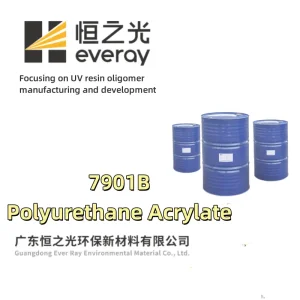
7901B Advanced UV-Resin Formulation for High-Durability Industrial Coatings
View Technical SpecsPrecision Molecular Synthesis in Modern Epoxy Resin Manufacturing
Bridging macromolecular design and commercial polymerization kinetics to deliver benchmark cross-linking density, thermal stability, and adhesion parameters.
DGEBA Prepolymer Backbone Chemistry
Standard epoxy acrylate synthesis begins with the functionalization of Diglycidyl Ether of Bisphenol-A (DGEBA). Through controlled ring-opening addition esterification with acrylic acid, our automated reactors yield prepolymers with exact stoichiometric terminal unsaturation, providing ultra-fast free-radical UV crosslinking capabilities without unreacted oxirane residuals.
Stoichiometric Catalytic Monitoring
By deploying quaternary ammonium and phosphonium salt complexes (such as triphenylphosphine catalysts) under real-time infrared (FTIR) spectral tracking, reaction endpoints are calibrated down to an acid value below 2 mg KOH/g. This minimizes skin irritation, optimizes curing speed, and eliminates post-cure yellowing hazards.
Controlled Inhibitor Balancing
Thermal stability across transoceanic shipping demands balanced radical stabilization. Advanced formulations implement low-ppm hindered phenols (MEHQ) combined with trace air sparging techniques. This prevents micro-gelation during warehouse storage while retaining sub-second UV cure reaction times under industrial mercury and UV-LED irradiation.
Strategic Advantages of Chinese Chemical Manufacturing Facilities
Combining vertically integrated raw material corridors with massive smart reactor scale to yield unmatched cost performance, quality control, and rapid export capability.
Upstream Integration
Direct access to major domestic producers of epichlorohydrin (ECH), bisphenol-A, acrylic acid, and isocyanates (IPDI/HDI) provides absolute price resilience against raw petrochemical market volatility.
DCS Automation
Our Yunfu production hub employs Distributed Control Systems (DCS) for continuous multi-stage temperature profiles (±0.5°C), ensuring zero batch-to-batch variation in viscosity and chromaticity.
Rapid Lab-to-Drum Scaling
With over 10 proprietary patents and pilot reactors spanning 100L to 20,000L, client formulation modifications transition from laboratory synthesis to full multi-ton container shipments in weeks.
Global Port Proximity
Strategically situated in South China's Pearl River Delta, our facility ensures seamless intermodal container transfers to Nansha, Yantian, and Hong Kong ports with verified maritime hazmat compliance.
Emerging Trends Reshaping UV & Epoxy Oligomer Engineering
Addressing the shifting landscape of strict VOC mandates, LED-UV conversion, and nanostructured surface requirements.
Waterborne UV Epoxy Dispersions
Global environmental legislation (EU Green Deal and China VOC policies) is pushing converters toward waterborne UV polyurethane and epoxy dispersions. By introducing hydrophilic sulfonate or carboxylic groups into the prepolymer chain, our waterborne systems achieve ultra-thin film builds, zero VOC emissions, and solvent-free wood/leather finishes.
High-Sensitivity LED-UV Adaptation
The global phase-out of medium-pressure mercury lamps requires resin formulations optimized for long-wave LED lines (365nm, 385nm, 395nm, 405nm). Our amino-modified epoxy acrylates and hyperbranched architectures eliminate surface oxygen inhibition, enabling instant surface drying even at 100+ m/min conveyor rates.
Dendritic & Hyperbranched Polymers
Hyperbranched acrylate oligomers resolve the historic tradeoff between resin viscosity and cured crosslink density. By synthesizing 3D spherical architectures packed with 12 to 16 acrylate terminal groups, our hard-coat solutions provide 5H-6H pencil hardness without requiring massive volatile monomer dilution.
Macro Formulation Solutions: Balancing Adhesion, Shrinkage & Reactivity
A reference guide to optimize physical properties, cross-linking kinetics, and substrate compatibility.
| Resin Oligomer Class | Curing Kinetics | Shrinkage Control | Adhesion Profile | Scratch & Chemical Resistance | Ideal Application Sector |
|---|---|---|---|---|---|
| Standard Bisphenol A Epoxy Acrylate | Ultra Fast (< 0.2s) | Moderate (3.5% - 5.0%) | Wood, Paper, Porous Metals | Excellent Hardness (4H), MEK > 200 | High-speed wood primers, OPVs, flexo inks |
| Modified Low-Shrinkage Epoxy Acrylate | Fast (0.3s - 0.5s) | Superior (< 1.8%) | ABS, PC, Treated PET, Aluminum | Balanced Flex, Solvent Resistant | 3C housing basecoats, vacuum metallizing |
| Aromatic Polyurethane Acrylate (PUA) | Medium (0.4s - 0.8s) | Low (< 2.2%) | PVC, Composites, Density Board | High Abrasion, Impact Resilient | Industrial parquet flooring, resilient tiles |
| Aliphatic Polyurethane Acrylate (PUA) | Controlled (0.5s - 1.0s) | Very Low (< 1.2%) | PMMA, Polycarbonate, Glass | Weatherable, 100% Non-Yellowing | Cosmetic nail gels, automotive clear coats |
| Hyperbranched Multi-Functional Acrylate | Ultra Fast (< 0.15s) | Controlled (< 2.5%) | Intercoat Adhesion, Treated Film | Maximum Hardness (5H-6H), Steel Wool | Optical films, electronic display overlays |
High-Value Industrial Application Scenarios
How customized epoxy and polyurethane acrylates solve difficult adhesion, thermal cycling, and chemical resistance problems across high-tech manufacturing.
3C Electronics & Vacuum Metallizing
Consumer electronics made of PC and ABS require flawless high-gloss primer coats prior to aluminum thermal evaporation. Our modified polyurethane and epoxy acrylates provide deep wetting on low-surface-energy plastics, withstand boiling water cycles without delamination, and act as high-gloss topcoats that resist cosmetic lotions, sweat, and fingernail abrasions.
Advanced Graphic Packaging & Flexo Inks
High-speed printing lines demand oligomers with superior pigment wetting to achieve high color yield without ink misting. Our polyester and epoxy acrylate resins provide stable rheological behavior, low tack build, and an optimal water-ink balance for UV offset processes, while maintaining compliance for non-food contact luxury packaging.
Semiconductors & Electronic Adhesives
For optoelectronic modules, PCB coatings, and micro-bonding, thermal stress can cause delamination. Our pure acrylate and functional epoxy oligomers offer low dielectric constants, high Glass Transition Temperatures (Tg > 110°C), minimal ionic impurities (chlorides < 5 ppm), and controlled linear shrinkage to protect fragile micro-circuitry.
Global Enterprise Procurement & Compliance Architecture
Rigorous regulatory verification, analytical traceability, and chemical stability guarantees for multinational corporate supply chains.
REACH & RoHS Validation
All exported resin batches undergo independent third-party laboratory verification for SVHC (Substances of Very High Concern), heavy metals, and hazardous plasticizers to ensure European and American market access.
Batch COA & GPC Tracking
Every commercial container is delivered with an authentic Certificate of Analysis (COA) specifying viscosity, color value (Gardner), density, and Gel Permeation Chromatography (GPC) molecular weight distribution curves.
Specialized Industrial Packaging
We supply standardized 200kg steel drums, 1,000kg composite IBC totes, and specialized bulk ISO-tanks with optional nitrogen blanketing and light-blocking UV liners to guarantee formulation purity during oceanic shipping.
Technical Field Support
Our bilingual senior application chemists provide formulation support, troubleshooting for substrate wetting, photoinitiator selection, and reactive diluent balancing to ensure seamless factory scale-up.
Frequently Asked Questions by Industrial Formulators
In-depth responses covering reaction kinetics, polymerization parameters, testing standards, and logistics protocols.
How does epoxy acrylate compare to polyurethane acrylate (PUA) in surface hardness and chemical resistance?
Epoxy acrylates, derived from Bisphenol-A backbones, offer a rigid aromatic structure resulting in high glass transition temperatures (Tg > 80°C), superior pencil hardness (3H to 5H), and high resistance to solvents (such as MEK). Polyurethane acrylates, by contrast, incorporate urethane (-NH-COO-) linkages that provide hydrogen bonding flexibility, impact resistance, and elongation. For maximum durability, formulators frequently combine epoxy acrylates for baseline hardness with aliphatic PUAs to eliminate brittleness.
What chemical techniques are deployed to counter volumetric shrinkage in UV-curable epoxy resins?
Polymerization shrinkage stems from the conversion of van der Waals distances into covalent carbon-carbon bonds during free-radical curing. To minimize internal film tension and edge curl on flexible substrates, we synthesize modified epoxy acrylates with flexible caprolactone or polyether chains, or recommend reactive diluents like IBOA (Isobornyl Acrylate) and cyclic trimethylolpropane formal acrylate (CTFA), which provide steric hindrance and lower volumetric shrinkage down to under 2%.
What storage protocols prevent premature gelation in tropical oceanic container shipments?
Free-radical UV resins require dissolved molecular oxygen to allow phenolic inhibitors (such as MEHQ) to function effectively. We pack resins with a controlled 10-15% gas headspace rather than completely inert nitrogen seals, maintain strict dark storage in fluorinated or lined steel drums, and advise climate-controlled below-deck ocean routing to keep ambient temperatures under 30°C throughout equatorial routes.
How does an amine-modified acrylate or amino synergist solve oxygen inhibition in thin films?
Atmospheric oxygen diffuses into thin UV films (<10 µm) and reacts with initiating free radicals to form unreactive peroxy radicals, causing greasy or uncured tacky surfaces. Amino acrylates donate active alpha-hydrogen atoms to peroxy radicals, regenerating active alkyl radicals that consume oxygen, accelerate surface cure kinetics, and lower the required dosage of expensive photoinitiators under air atmospheres.
Can Chinese epoxy resin manufacturing facilities support custom molecular weight distributions?
Yes. Our Yunfu manufacturing base features dedicated R&D pilot lines where our chemical engineers modify oligomer backbone lengths, epoxide equivalent weights (EEW), and acrylate functionality (from di-functional to octa-functional). Through precise stoichiometry and vacuum stripping, we tailor viscosity from 500 mPa.s up to 100,000 mPa.s at 25°C to meet specialized roller, spray, or screen application requirements.
What documentation is provided to support international regulatory audits?
Every commercial delivery is supported by an international regulatory dossier containing the GHS-compliant 16-section Safety Data Sheet (SDS), Technical Data Sheet (TDS), Certificate of Analysis (COA), RoHS and REACH SVHC declarations, and chemical inventory clearances for major destination markets including US TSCA, EU REACH, and Japanese ENCS.
Engineered UV Acrylate Solutions & Modified Resins
Formulated for specialized applications including soft-touch coatings, deep curing inks, high-adhesion metal primers, and temperature-resistant polymer networks.
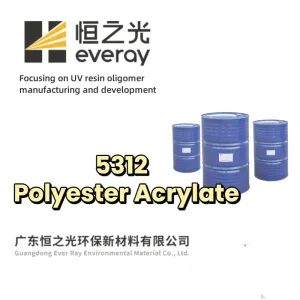
Wholesale Polyester Acrylate 5312A – Multi-Purpose UV Resin Solution
View Technical Specs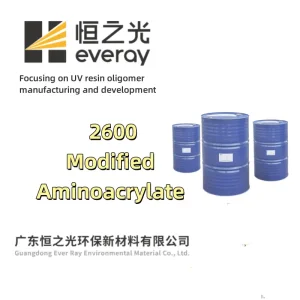
Durable 2600UV Resin: High Hardness & Superior Wear Resistance
View Technical Specs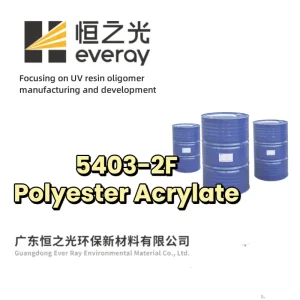
Polyester Acrylate 5403-2F – High-Performance Choice for UV Inks
View Technical Specs
Multifunctional 7253A-5 UV Resin: Heat-Resistant & Cold-Resistant
View Technical Specs
61163 High Solid Low Viscosity Anti-Yellowing Modified Epoxy Acrylate
View Technical Specs
Polycarbonate Acrylate 72203A – Soft-Touch UV Resin for Clear Coats
View Technical Specs
Multifunctional 7600 Polyurethane Acrylate Oligomer for UV Coatings
View Technical Specs