Precision Curable Resin Selection: Grade Series I
Formulated to resolve rigorous manufacturing bottlenecks—delivering ultra-low shrinkage, instant curing reactivity, and unyielding interfacial adhesion across micro-engineered substrates.
72017A-8 Dual-Curing UV Resin for 3D Footwear
View Specification
17701 Low Shrinkage Modified Acrylate Oligomer
View Specification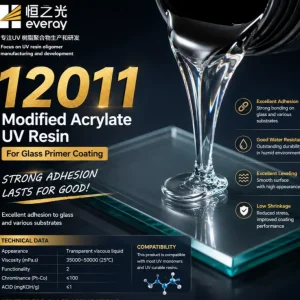
12011 Modified Acrylate UV Resin Glass Primer
View Specification
Epoxy Acrylate 92001 High-Efficiency Resin
View Specification
5335B UV-Resin for Color Inks & Varnishes
View Specification
Waterborne 70601 UV-Resin for Wood & Inks
View Specification
2406 UV Resin Low Odor Solution for Varnishes
View Specification
1290H Low Shrinkage Resin for PVC Floor Coating
View SpecificationGlobal Enterprise Procurement Trends in Curable Resins
Analyzing corporate supply chain realignments, decarbonization pressures, volatile raw materials markets, and zero-VOC mandates dictating modern photopolymer sourcing worldwide.
Stringent Decarbonization & Zero-VOC Mandates
Industrial coating conglomerates in the EU and North America are under aggressive regulatory mandates (e.g., REACH compliance, EPA Clean Air Act) to phase out thermal solvent-borne resin systems. Sourcing criteria are explicitly prioritizing energy-efficient, waterborne polyurethane acrylates and hyperbranched multi-functional oligomers that achieve instantaneous radiation curing without emitting hazardous air pollutants (HAPs).
- 100% Solids Formulations Focus
- Elimination of Solvent-Bake Cycle
Supply Chain Redundancy & Batch Traceability
Recent disruptions have forced Fortune 500 chemical procurement directors to diversify away from sole-source regional monopolies. Enterprise sourcing executives now demand synthesis operations with fully vertical monomer backbones, multi-reactor capacity resilience, lot-to-lot spectroscopic analytics (FTIR and GPC certification), and guaranteed stability in international ocean freight transit.
- GPC / FTIR Monomer Characterization
- Strict Shelf-Life Thermostability
Transition to High-Yield LED/3D Additive Resins
High-speed production floors are shifting from broad-spectrum mercury lamps to narrow-band UV-LED (365nm, 385nm, 395nm) sources to curtail power expenses by up to 70%. Buyers demand custom-engineered oligomers matched to long-wavelength photoinitiators alongside low-viscosity, high-impact SLA/DLP resins capable of sub-25 micron resolution without thermal curling.
- 385–405nm Photopolymer Reactivity
- Low Shrinkage Stress Engineering
Macro-Industry Solutions: Formulating Across Challenging Substrates
Systemic chemical design overcoming the fundamental trade-offs between surface hardness, internal flexural fatigue, interfacial peeling, and atmospheric yellowing.
3C Electronics & Optical Clear-Coats
Modern portable electronics demand micro-thin surface protections resilient against severe scratch degradation, skin-oil chemical staining, and thermal shock. Utilizing aliphatic polyurethane acrylates (PUA) paired with reactive hyperbranched oligomers, our solutions deliver 4H–6H pencil hardness without embrittlement on polycarbonate (PC), ABS, and PMMA housings.
- Steel Wool Scratch Resistance (>1000 rubs)
- Non-Yellowing Optical Transparency (ΔE < 0.5)
High-Speed Graphic Arts & Packaging Inks
In continuous gravure, flexographic, and offset press runs operating at >300 m/min, ink transfer and surface cure kinetics define uptime. Our modified polyester acrylates provide superior pigment wetting index and ideal water-ink rheological balance, whereas amino acrylate synergists actively suppress oxygen inhibition at the air-substrate interface.
- Tack-Free Instant Linear Curing
- Superior Interfacial Tape Adhesion (Cross-Hatch 5B)
Industrial Additive Lattice & Elastomers
The expansion of stereolithography into functional athletic midsoles and automotive engineering components necessitates isotropic mechanical strength. Dual-cure UV resin formulations bridge this domain by initiating rapid shape-retention photopolymerization, followed by a secondary thermal network maturation that unlocks phenomenal elasticity, rebound dynamics, and wear resistance.
- High Tensile Elongation (>250%)
- Zero Dynamic Fatigue Cracking
Ever Ray Production Ecosystem: Complete Catalog & Formulations
Continuously developed since 2006 at our dedicated Jiangmen headquarters and Yunfu production base. All foundational catalog families, technical specifications, and factory archives are permanently indexed below.

Epoxy Acrylate Oligomers
The backbone of heavy-duty industrial UV curing. Delivers peak surface hardness, rapid polymerization, and unmatched chemical solvent resistance.
Aliphatic Polyurethane Acrylates
Engineered specifically for non-yellowing clear topcoats, cosmetic UV gels, 3C device enclosures, and extended outdoor weathering.
Polyester Acrylate Oligomers
Low-viscosity resin networks configured for intense pigment wetting, flexographic fluidity, and robust lithographic water-ink stability.
Aromatic Polyurethane Acrylates
Cost-effective structural resilience formulated for continuous wood finishes, PVC architectural floors, and high-impact commercial varnishes.
Waterborne Polyurethane Acrylates
Eco-friendly water-dilutable photopolymer resins yielding thin-build, breathable wood coatings and low-odor consumer packaging finishes.
Hyperbranched Acrylate Systems
Dendritic, ultra-high-functionality architectures offering maximum crosslinking density with extraordinarily low kinematic viscosity.
Technology Roadmap: The Next Era of Radiation Curing Chemistry
Mapping our strategic chemical synthesis trajectory toward bio-renewable building blocks, high-speed electron-beam systems, and covalent adaptive network (CAN) recyclability.
Bio-Based Monomers
Synthesizing renewable acrylate oligomers derived from cardanol, soybean polyols, and itaconic derivatives without reducing Tg values.
Zero-Initiator EB Systems
Electron beam curing chemistry operating totally independent of photoinitiators, eliminating extraction risks in food-contact packaging.
High-Index Optical Gels
Ultra-pure refractive index oligomers (>1.65) developed for AR/VR micro-optics and foldable OLED encapsulation membranes.
Dynamic Covalent Networks
Introducing vitrimer ester-exchange chemistries into photopolymers, enabling thermal post-weldability and full chemical recycling of cured parts.
Ultra-Deep Penetration
Formulating tandem dual-cure latent cationic and free-radical systems achieving complete polymer conversion through opaque and deep-fill sections.
Local Technical Deployment & Strict International Compliance
Guaranteeing continuous production consistency through regional technical service centers, cross-border toxicological auditing, and dedicated application trial laboratories.
REACH, TSCA & GHS Auditing
Navigating multinational toxicological barriers requires rigorous certification. Ever Ray grades comply with EU REACH registration annexes, United States EPA TSCA inventories, RoHS III, and California Proposition 65 thresholds. Every shipment includes batch-matched SDS in 20+ languages.
- Zero Restricted SVHC Contaminants
- Full Halogen & Heavy-Metal Free Testing
Application Formulation Lab Assistance
Formulators do not just purchase an oligomer; they acquire an engineered process. Our chemists assist overseas formulators with direct UV-radiometer irradiance matching, photoinitiator package balance, shrinkage optimization, and rheology tuning for exact substrate adhesion.
- Complete Starting Formulations Provided
- Substrate Profiling (BOPP, PET, PC, Metals)
Global Bulk Logistics & Fast Sampling
Supported by temperature-controlled maritime storage and direct air freight channels, evaluation samples reach client synthesis labs across Europe, Southeast Asia, and the Americas within 72–96 hours, reinforced by guaranteed stability in standard 200kg drums or 1000kg IBCs.
- Rapid Global Trial Dispatch (1–5kg Samples)
- Stable High-Volume Ocean Supply Chain
Frequently Asked Questions (FAQ) on UV Curable Resins
Detailed engineering answers covering chemical selection, substrate bonding, cure rates, shelf life, and scale-up protocol.
How do you balance high film hardness with substrate flexibility?
Extreme hardness usually incurs high volumetric shrinkage stress, inducing delamination or micro-cracking. We address this by synthesizing hybrid urethane-acrylate architectures or blending hard epoxy acrylates with flexible aliphatic PUA and high-molecular-weight pure acrylate backbones. This retains a high glass transition temperature (Tg) at the surface while dissipative urethane domains absorb mechanical strain.
What mechanism resolves oxygen inhibition in high-speed thin-film printing?
Atmospheric oxygen rapidly quenches free radicals, generating unreactive peroxy radicals and leaving a greasy, uncured surface. By incorporating amino acrylate oligomers or active amine co-initiators into the resin matrix, hydrogen transfer instantly regenerates active alkyl radicals that consume oxygen, ensuring instant, tack-free surface curing even under ambient air on continuous press lines.
Why choose aliphatic polyurethane acrylates over aromatic equivalents?
Aromatic polyurethane acrylates provide strong impact resistance and favorable economics, but their aromatic rings decompose under solar UV radiation, resulting in substantial yellowing. Aliphatic PUAs utilize cycloaliphatic or linear aliphatic diisocyanates (such as IPDI or H12MDI), guaranteeing long-term color neutrality (Delta E < 1.0), exceptional weatherability, and prolonged gloss retention in exterior clear coats and cosmetics.
What are the recommended storage protocols to prevent premature gelation?
Acrylate oligomers and curable resins require dissolved oxygen to activate their internal free-radical inhibitors (such as MEHQ). Store resin drums in dark, climate-controlled environments between 15°C and 25°C. Never store under pure nitrogen blanks or in direct sunlight, and ensure containers are sealed with adequate head space to allow trace oxygen exchange.
Specialized Curable Resin Solutions: Grade Series II
Extending our polymer matrix into heavy-duty wear systems, boiling-water resistant glass bonding, high-speed offset inks, and elastic furniture finishes.
7402 Fast Curing Polyurethane Acrylate
View Specification
6271 Modified Epoxy Acrylate Anti-Abrasion
View Specification
7296-1 Polyurethane Acrylate Wear & Impact
View Specification
1100UV Acrylate Oligomer Strong Adhesion
View Specification
6805A-1 UV-Resin for High-Speed Offset Printing
View Specification
7200-1 Aliphatic PUA for Durable UV Furniture
View Specification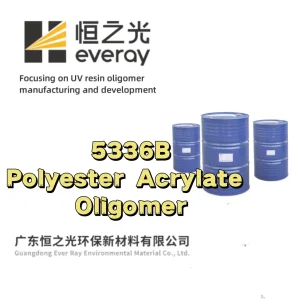
5336B Polyester Acrylate Ultra-Fast Cure Ink
View Specification