Engineered Acrylate & UV Curable Resin Portfolio
Explore our field-tested resin systems, synthesized to solve critical industrial challenges including oxygen inhibition, substrate delamination, high curing shrinkage, and thermal aging.
Wholesale Low viscosity 6300 modified epoxy acrylate UV resin for UV paper varnish Supplier, Suppliers
View Product Details
Buy 5338 UV resin as oligomer and active diluent, reasonable Manufacturers, Supplier
View Product Details
Buy 6116 UV-resin in most substrate coating and UV-printing ink Factory, Product
View Product Details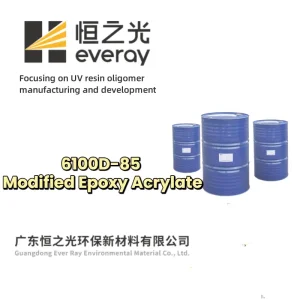
Buy High adhesion 6100D-85 epoxy acrylate for UV wood coating applications, etc. Manufacturer, Products
View Product Details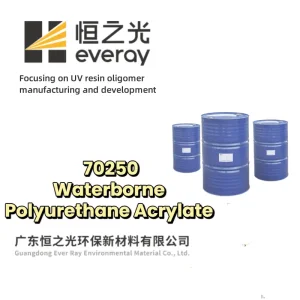
High-Quality 70250 UV-resin for 3D printing,UV-ink and UV wood-coatings Suppliers, Product
View Product Details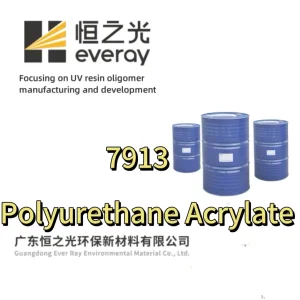
High-Quality 7913 High Reactivity Anti-fouling & Abrasion Resistant Polyurethane Acrylate UV Resin Manufacturers, Supplier
View Product Details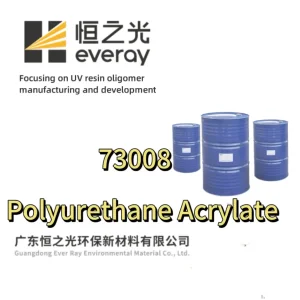
Buy 73008 Low-Shrinkage Polyurethane Acrylate Resin for Electronic Potting & Metal Coating | High Temp Anti-Yellowing UV Oligomer Manufacturer, Factories
View Product Details
Buy Anti-Yellowing Polyurethane Acrylate Oligomer-High Flexibility UV Resin for Adhesive and Nail Gel Manufacturer, Factory
View Product DetailsThe Global Industrial Shift toward High-Performance Acrylic Adhesives
In today's advanced industrial manufacturing ecosystem, the demand for high-performance acrylic resin adhesives is undergoing a structural paradigm shift. Driven by aggressive decarbonization mandates, the phasing out of hazardous volatile organic solvents (VOCs), and miniaturization across the consumer electronics, semiconductor packaging, and automotive industries, UV curable acrylic adhesives have transitioned from a specialized niche to a dominant industrial standard.
Global chemical markets report that 100% solids UV-curing acrylic formulations are expanding at a compound annual growth rate (CAGR) exceeding 7.2%. Acrylic chemistries—particularly engineered combinations of epoxy acrylates, aliphatic urethane acrylates, and hyperbranched dendritic oligomers—stand apart from legacy solvent-borne or thermal-cure adhesives by delivering rapid in-line photopolymerization within fractions of a second, zero thermal distortion on temperature-sensitive substrates, and customizable mechanical properties ranging from elastic structural dampening to optical crystal clarity.
Procurement Intelligence for Global Adhesive Formulators
Strategic adhesive raw material sourcing requires far more than comparing catalog commodity grades. Enterprise procurement directors and lead formulation chemists face three critical supply risks that demand institutional-grade supplier reliability.
Batch-to-Batch Molecular Consistency
Adhesive failure in automated dispensing lines is predominantly triggered by subtle variances in oligomer molecular weight distribution (MWD) and residual acid values. A minor ±5% shift in oligomer viscosity can induce air entrapment, nozzle clogging, or uncontrolled wet edge spreading in high-speed optical clear bonding. Ever Ray enforces rigorous GPC (Gel Permeation Chromatography) monitoring to keep PDI (Polydispersity Index) variances below ±2.5%.
Upstream Precursor Stability
Global geopolitical turbulence and raw material price volatility (e.g., acrylic acid, IPDI, HDI, Bisphenol-A epoxies) constantly threaten production continuity. Operating from our dedicated 40,000 m² chemical synthesis base in Yunfu, Guangdong, Ever Ray leverages long-term contracted monomer feedstock pipelines and large-capacity strategic storage to guarantee uncompromised order fulfillment and transparent indexing.
Regulatory & Chemical Compliance
Exporting adhesives to the EU, North America, and East Asia requires proactive compliance with EU REACH (SVHC elimination), RoHS 3, TSCA, and zero-organotin requirements. Many historical organotin catalysts used in urethane acrylate synthesis are facing severe regional bans. Ever Ray provides certified organotin-free, low-extractable, and low-outgassing grades tested by SGS and TÜV.
Cross-Industry Acrylic Resin Adhesive Engineering Solutions
Selecting or synthesizing the optimum acrylic adhesive resin requires balancing crosslink density, surface energy compatibility, glass transition temperature ($T_g$), and cohesive strength.
| Resin Chemistry Family | Core Molecular Characteristics | Tensile / Lap Shear Strength | Elasticity & Elongation | Anti-Yellowing ($ΔE$) | Target Adhesive Use Case |
|---|---|---|---|---|---|
| Aliphatic Polyurethane Acrylate | Isophorone / H12MDI backbone; saturated chains | High (18–28 MPa) | Superior (80–250%) | Zero Yellowing (<0.8) | Optical clear adhesives (LOCA/OCA), 3C electronics display bonding, protective films. |
| Aromatic Polyurethane Acrylate | TDI / MDI core; rigid benzene ring segment | Very High (25–35 MPa) | Moderate (20–60%) | Susceptible to UV light | Opaque structural adhesives, industrial metal-to-plastic joints, high-load machinery. |
| Modified Epoxy Acrylate | Bisphenol-A backbone functionalized with carboxyls | Ultra High (>35 MPa) | Low / Rigid (2–8%) | Fair (Interior stable) | Fast-cure glass assembly, shadowless adhesive, PCB component fixing, metal primers. |
| Pure Acrylate / Polyacrylic Oligomer | Saturated all-acrylic backbone, low internal stress | Moderate (10–18 MPa) | High (150–400%) | Outstanding (<0.5) | Pressure-sensitive adhesives (PSA), medical tapes, peelable low-residue electronics masks. |
| Hyperbranched Acrylate | Multi-functional globular core, low entanglement | High Modulus | Low (<5%) | Good | High-temperature curing accelerator, chemical anchor formulations, tack-free booster. |
In-Depth Application Insight: Eliminating Polymerization Shrinkage Stress
During free-radical photopolymerization of standard acrylates, van der Waals distances of 0.3–0.4 nm between individual monomers condense into covalent carbon-carbon bonds of 0.154 nm. This transition induces macroscopic volumetric shrinkage of up to 5–10% in simple monomer mixtures, which manifests as immense interfacial shear stress, micro-void formation, and substrate warpage. Ever Ray solves this fundamental defect by developing specialized multi-functional oligomers with high molecular weight per double bond (equivalent weight > 450 g/eq) and introducing steric hindrance segments. This suppresses total linear shrinkage to below 1.2%, ensuring enduring hermetic seals on fragile glass displays and dissimilar metal-plastic assemblies.
Future Horizons: Advanced Acrylic Adhesive Chemistry (2025–2030)
Ever Ray’s polymer synthesis laboratories in Jiangmen and Yunfu are engineering next-generation macromolecular platforms designed to meet the rigorous demands of emerging industries.
UV-Moisture & UV-Thermal Synergy
Eliminating shadow areas in dense semiconductor microelectronics assembly. UV light triggers immediate handling strength in <3 seconds, followed by secondary atmospheric moisture or moderate thermal curing across unexposed underfills.
Renewable Carbon Feedstocks
Synthesizing high-functionality oligomers utilizing vegetable oil, itaconic acid, and lignin derivatives to achieve >45% renewable bio-carbon content while preserving mechanical glass transition temperatures ($T_g$) above 65°C.
Low-Dk / Low-Df Microelectronics
Tailoring fluorine-modified and hydrocarbon-rich acrylate backbones with dielectric constant ($D_k$) < 2.5 and dissipation factor ($D_f$) < 0.003 at 10–60 GHz, critical for 5G/6G RF antenna modules and AI radar packaging.
Circular Electronics Disassembly
Introducing thermally labile or photo-cleavable crosslinkers that offer unyielding shear adhesion throughout device lifespans, yet undergo clean, residue-free delamination when exposed to targeted 120°C heat triggers for clean component recycling.
Localized Technical Guidance with Global Supply Assurance
Supplying acrylic adhesives globally is not merely an export transaction; it represents an active engineering collaboration. At Guangdong Ever Ray Environmental Material Co., Ltd., we combine responsive customer technical services with seamless maritime packaging, customized containerization (20kg pails, 200kg steel drums, 1,000kg IBC totes), and cold-chain stability protocols.
ISO 9001:2015 Assured
Every reactor batch is checked for refractive index, viscosity, and color clarity.
Full Regulatory Dossiers
Complete SDS, TDS, RoHS, REACH SVHC, and halogen-free certifications.
Temperature-Stable Freight
Optimized radical inhibitor packages prevent premature gelation in tropical transit.
Rapid Sample Dispatch
Worldwide sample express delivery within 48 to 72 hours for formulation screening.
Custom Molecular Tailoring (OEM / ODM)
Tailored molecular weight, functionality, viscosity, and dilution packages engineered to meet specific customer specifications.
Frequently Asked Chemical & Sourcing Questions
Authoritative answers to critical formulating, processing, and purchasing challenges faced by industrial adhesive chemists and global buyers.
1. How do aliphatic and aromatic polyurethane acrylates compare in adhesive durability? +
2. What is the fundamental mechanism to overcome oxygen inhibition in thin adhesive films? +
3. How can Ever Ray customize an acrylate oligomer for difficult plastic substrates like untreated PP or PET? +
4. What precautions are implemented to ensure safe maritime storage and shelf life? +
5. Can Ever Ray’s UV adhesive resins support dual-cure (UV + Moisture or UV + Heat) systems? +
6. What documentation and compliance verification are provided for enterprise tier audits? +
High-Durability & Specialized Oligomer Grades
Complete your formulation architecture with our specialized non-yellowing, peelable, high-elasticity, and tough substrate-specific resin systems.
Buy Durable UV furniture coating: 7200-1 Aliphatic polyurethane acrylate UV Resin Factory, Products
View Product Details
High-Quality 7901B UV-resin for industrial coatings Factory, Products
View Product Details
Wholesale 72923 Fast-Cure Non-Yellowing Polyurethane Acrylate Resin for UV Peelable adhesive Manufacturers, Factories
View Product Details
Buy Fast-Cure High-Gloss Modified Epoxy Acrylate UV Resin 6805A-1 for UV Ink and UV varnish Factory, Factories
View Product Details
High-Quality Aromatic PA UV-resin 7160 for plastic-coatings, wood and UV-inks Supplier, Suppliers
View Product Details
High-Quality 1200A UV resin in adhesion of density-board primer and metal-substrate Suppliers, Product
View Product Details
Wholesale 6200D UV-resin in shadowless glue systems Factory, Factories
View Product Details