Primary UV Acrylate Resins & Performance Formulations
Engineered for precise rheological control, sub-second radical crosslinking, and substrate adhesion across industrial coatings, precision electronic adhesives, and advanced 3D stereolithography.
6851A High-Performance Modified Epoxy Acrylate Resin
View Specifications
Multifunctional 7253A-5 UV Resin: Heat & Cold Resistant
View Specifications
High Adhesion 6100D-85 Epoxy Acrylate for Wood Coatings
View Specifications
Durable 2600UV Resin: High Hardness & Wear Resistance
View Specifications
Low Shrinkage High Flexibility Pure Acrylate Resin
View Specifications
Scratch Resistant 4600 Hyperbranched Acrylic UV Resin
View Specifications
73008 Low-Shrinkage Polyurethane Acrylate (Electronic Potting)
View Specifications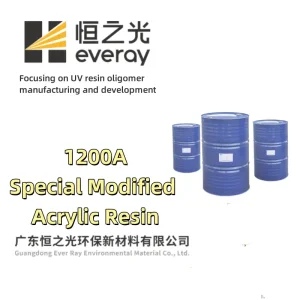
1200A UV Resin: Adhesion for Density Board Primer & Metal
View SpecificationsUV Urethane Technology Roadmap: Macromolecular Architecture
Balancing conversion rates, volumetric shrinkage, and mechanical toughness through precision isocyanate selection, polyol backbone synthesis, and hyperbranched functionality engineering.
Aliphatic vs. Aromatic Urethane Acrylates
Aliphatic polyurethane acrylates (IPDI, HDI-based) provide non-yellowing performance, weatherability (ΔE < 1.5 after 1000h QUV testing), and elongation exceeding 120%. Aromatic variants (TDI, MDI-based) deliver surface hardness (≥3H), superior chemical and solvent resistance, and rapid radical polymerization for interior high-wear substrates.
Hyperbranched & Dendritic Architectures
Dendritic oligomer design decouples resin viscosity from crosslink density. By synthesizing 6 to 15 functional terminal acrylic double bonds onto a globular multi-core structure, formulators achieve pencil hardness >4H, scratch resistance, and low shrinkage (<4.5%), without requiring excessive reactive diluents.
Low-VOC & Waterborne PUA Dispersions
Self-emulsifying waterborne polyurethane acrylates (WPUA) integrate hydrophilic ionic internal groups (DMPA/DMBA) alongside curable unsaturated chains. This eliminates petroleum solvents, minimizes film thickness down to 5μm, prevents skin irritation, and aligns with European Decopaint & REACH directives.
Macro-Industry Solutions: Formulating Across Demanding Substrates
How our oligomers and reactive monomers resolve common chemical formulation obstacles across high-volume production operations worldwide.
| Target Substrate / Sector | Common Technical Bottleneck | Polymer Formulation Strategy | Recommended Ever Ray Oligomers |
|---|---|---|---|
| 3C Consumer Electronics (PC, ABS, PMMA) | Substrate micro-cracking from solvent attack; stress cracking; yellowing under UV-A/B; surface abrasion. | Aliphatic urethane backbone coupled with hyperbranched acrylates to increase crosslink density while maintaining mechanical elasticity. | Aliphatic PUA Hyperbranched 4600 |
| Automotive & Industrial Optical Bonding | Delamination under high/low thermal shock (-40°C to 125°C); optical distortion from cure shrinkage. | Low-modulus, high-Mw polyurethane acrylates offering controlled refractive indices (≈1.48–1.52) and shrinkage below 2%. | 73008 PUA 7253A-5 Heat-Resistant |
| Industrial Wood & Parquet Flooring | Rolling shear failure; poor sandability on raw wood; brittle topcoats failing Taber abrasion tests. | Epoxy acrylates for fast-cure, ultra-hard sealers and sanding primers combined with tough aromatic PUA topcoats. | 6100D-85 Wood Epoxy 7296-1 Abrasion PUA |
| High-Speed UV Offset & Flexo Printing | Oxygen inhibition in thin film layers (≤3μm); unstable rheological water-ink balance on press rollers. | Low-viscosity polyester acrylates blended with copolymerizable amino acrylates as self-initiating amine synergists. | 5336B Polyester Amino Acrylate / Active Amine |
| Functional Photopolymer 3D Printing | High green-state brittleness; poor layer resolution due to light bleed; resin recoating slowness. | Low-viscosity custom oligomers blended with reactive diluent monomers ensuring sub-second layer cures and tough ABS-like behavior. | 70601 Waterborne Modified Monomers |
China Factory 4.0: Scaled Synthesis, Quality Control & Cost Predictability
Operating from our Yunfu chemical manufacturing cluster in Guangdong, Guangdong Ever Ray Environmental Material Co., Ltd. provides scale, raw-material control, and consistent quality.
Continuous Automated Process Control
Our 10+ synthetic production lines leverage PLC-monitored exothermic batch reactors with automated dosing of isocyanates, acrylic acids, catalysts, and free-radical inhibitors. Real-time temperature control within ±0.5°C prevents unwanted thermal prepolymer gelation and keeps batch-to-batch acid values (≤2.0 mg KOH/g) stable.
Analytical In-Process QA/QC
Every commercial production drum undergoes inspection: Gel Permeation Chromatography (GPC) for Mw and polydispersity (PDI), Fourier-Transform Infrared Spectroscopy (FTIR) verifying NCO consumption (<0.1% residual free isocyanate), cone-and-plate rheology checks, and Gardner color metrics (≤1.0 for aliphatic clears).
Raw Material Sourcing Resiliency
By anchoring production in the Greater Bay Area chemical hub, Ever Ray maintains direct pipeline and bulk storage connections for critical upstream feedstocks—including acrylic acid, polyols, BPA epoxies, and isocyanates (HDI, IPDI, TDI)—shielding international buyers from seasonal volatility.
Procurement Framework: Compliance & Worldwide Support
Turnkey chemical export compliance, documentation, and tailored logistical pipelines across North America, the European Union, Southeast Asia, and the Middle East.
REACH, TSCA & GHS Compliance
Full dossiers covering European Union REACH registrations, SVHC compliance certificates, TSCA inventory status for North America, and multi-language Globally Harmonized System (GHS) Safety Data Sheets (SDS) are provided for each shipment.
Standardized Export Packaging
Packaged in sealed 20kg UN-certified fluorinated plastic drums, 200kg heavy-duty steel drums, or 1000kg composite IBC totes protected with anti-static barriers and nitrogen headspaces to prevent moisture intrusion and premature radical polymerization during transoceanic shipping.
Application Lab Validation
Formulators receive 500g to 2kg evaluation samples matched with baseline formulation recommendations. Our application center replicates customer UV/LED lamp spectra (Mercury arc, 365nm, 385nm, 395nm, 405nm) and substrate parameters prior to full scale-up.
Frequently Asked Technical & Procurement Questions
Insights from our senior material scientists and global supply-chain directors.
Q: How do you solve cure inhibition under long-wavelength LED lamps (395nm/405nm)?
Surface oxygen inhibition under low-energy LED light often results in residual surface tack. We address this by incorporating amino acrylate co-initiators or reactive amine synergists alongside high-reactivity modified epoxy or hyperbranched acrylates. These donate alpha-hydrogen radicals to scavenge peroxy radicals, accelerating surface tack-free times.
Q: Can Ever Ray adjust viscosity without sacrificing mechanical toughness?
Yes. Simply introducing mono-functional monomers lowers viscosity but often compromises glass transition temperature (Tg) and modulus. We optimize the polyol backbone length and introduce hyperbranched acrylic architectures, lowering viscosity while maintaining crosslink density and tensile strength.
Q: What is your policy for factory audits, commercial sampling, and lead times?
We welcome physical and third-party ISO audits at our Yunfu chemical facility. Lab samples (500g–1kg) ship internationally within 3 to 5 business days via air freight. Commercial orders of standard grades ship within 10 to 14 days, supported by complete lot-specific Certificates of Analysis (COA).
Q: How do your urethane acrylates perform against boiling water on glass or metal?
Adhesion on inorganic substrates often deteriorates when water penetrates the polymer-substrate interface. Our specialized functional urethane and epoxy grades incorporate carboxyl and phosphate adhesion-promoting moieties that establish covalent and coordination bonds with silanol and metallic hydroxyl groups, passing 2-hour boiling-water immersion tests.
Specialty Industrial Oligomers & Polyester Acrylates
Explore our full range of waterborne dispersions, fast-curing polyesters, and electronic potting oligomers designed for high-throughput coating and conversion lines.
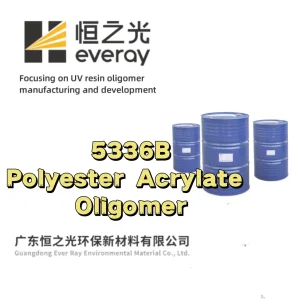
5336B Ultra-Fast Cure Polyester Acrylate for Offset & Flexo
View Specifications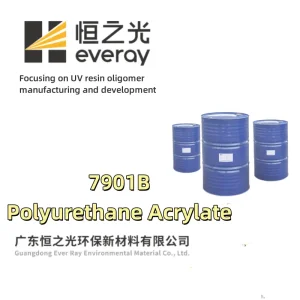
7901B High-Toughness UV-Resin for Industrial Coatings
View Specifications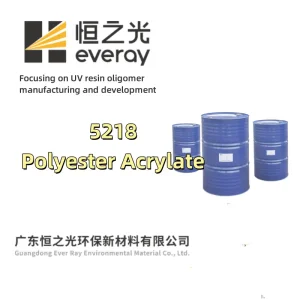
5218 Polyester Acrylate: Pigment Compatibility & Adhesion
View Specifications
Fast Curing Modified Epoxy Acrylate: High Flexibility
View Specifications
Polyester Acrylate 5501: Core Resin for LED-UV Wood Coating
View Specifications
5320 Polyester Acrylate: Optimal Ink Wettability & High Gloss
View Specifications
Waterborne 70601 UV-Resin for 3D Printing, Inks & Wood
View Specifications