Direct-From-Reactor UV Oligomers & Specialty Formulations
Engineered for high cure conversion, exceptional intercoat adhesion, and minimum volumetric shrinkage across industrial coating lines.
Buy High adhesion 6100D-85 epoxy acrylate for UV wood coating applications, etc. Manufacturer, Products
View Technical Profile
High-Quality Fast-reacting 5103 polyester acrylate UV resin, very suitable for plastic coatings Factories, Product
View Technical Profile
Wholesale Polyester Acrylate 5502B–Fast Reactivity, High Hardness, Low Odor, and Excellent Heat Resistance Manufacturer, Supplier
View Technical Profile
Wholesale 6200D UV-resin in shadowless glue systems Factory, Factories
View Technical Profile
Wholesale 7317 High Reactivity Flexible Polyurethane Acrylate Oligomer for UV Wrinkle & Snowflake Ink Product, Products
View Technical Profile
High-Quality Low shrinkage 1290H can apply for PVC floor coating applications Supplier, Product
View Technical Profile
High-Quality Fast curing 7402 Polyurethane Acrylate UV resin for high quality coatings Supplier, Products
View Technical Profile40,000 m²
Integrated Reactor Footprint
10+ Lines
Continuous Polymer Synthesis
>10 Patents
Proprietary Molecular Architecture
100% Zero-VOC
Green Compliance Focus
Global UV Resin Market & Chemical Architecture Analysis
Strategic analysis of radiation-curable polymers: navigating global supply bottlenecks, regulatory mandates, and next-generation macromolecular formulations.
The global energy-curing chemical landscape is undergoing structural transformation. Driven by stringent environmental legislation across North America and the European Union—specifically REACH amendments targeting volatile organic compounds (VOCs) and hazardous air pollutants (HAPs)—industrial formulators are systematically replacing solvent-borne thermal-cure resins with 100% solids UV-curable and electron-beam (EB) polymer matrices. In 2025 and beyond, energy-cured photopolymers are no longer confined to luxury graphic arts or specialized wood floor varnishes; they dominate automotive coatings, micro-optical adhesives, high-definition photopolymer 3D printing (SLA, DLP, LCD), flexible printed circuitry, and sustainable consumer electronics.
From a synthetic chemistry perspective, modern UV formulations require rigorous molecular control over oligomer backbones. Formulators evaluate resin suppliers not solely on reactive bulk pricing, but on their ability to regulate polydispersity index (PDI), functional acrylate conversion rates, and curing kinetic profiles under both legacy mercury discharge lamps and modern energy-efficient UV-LED setups (365nm, 385nm, 395nm, and 405nm). Overcoming the ubiquitous dilemma between high crosslink density (which provides hardness and scratch resistance) and low steric contraction (which prevents substrate delamination and brittleness) stands as the primary technical differentiator in the international marketplace.
Epoxy Acrylate Chemistries
Characterized by phenomenal cure acceleration, high tensile hardness, and exceptional chemical barrier integrity. Ideal for wood sealers, OPVs, and heavy-duty industrial anti-corrosion applications where substrate hardness is paramount.
Polyurethane Acrylates (PUA)
Offered in both aromatic architectures (maximum tensile toughness and floor wear resistance) and aliphatic backbones (zero yellowing, UV-weatherability, optical clarity, and elastomeric flexibility for 3C electronics and optical coatings).
Polyester & Hyperbranched Acrylates
Delivers supreme pigment wetting efficiency, critical for high-speed flexographic and offset inks. Hyperbranched macromolecular systems allow extreme crosslinking density while keeping system viscosity workable without VOC solvents.
Precision Engineering: The Chinese Manufacturing Advantage
How Guangdong Ever Ray's Yunfu Chemical Production Complex delivers scalable, batch-consistent photopolymers to global distributors.
In the highly competitive specialty chemicals arena, procuring UV-curable oligomers and reactive monomers demands a balance of uncompromising batch consistency, supply-chain resilience, and cost optimization. Based in Jiangmen with our core production facilities in Dawan Industrial Park, Yunfu City, Guangdong, Ever Ray embodies China's advanced chemical manufacturing advantages.
Unlike secondary compounders that merely dilute purchased intermediates, Ever Ray manages the complete polymer synthesis cycle from base chemical precursors. By integrating vertical raw material procurement—including bulk acrylic acid, polyols, aliphatic diisocyanates (IPDI/HDI), and epoxies—with computerized reactor monitoring, we insulate international buyers from upstream price fluctuations and catastrophic lead-time delays.
Automated DCS Synthesis
Distributed Control Systems oversee reactor temperature gradients, catalyst dosing, and esterification conditions to keep acid values (<2 mg KOH/g) and viscosities strictly reproducible across multi-ton campaigns.
Strict Analytical Metrology
Our dedicated QC laboratories verify each production batch via Gel Permeation Chromatography (GPC), Fourier Transform Infrared Spectroscopy (FTIR), dynamic rheology, and real-time colorimetric analysis (APHA Gardner scale).
Export-Grade Cold Supply
Export packaging options—including 200kg steel drums and 1000kg IBC totes—feature thermal-insulating barriers and custom inhibitor stabilization to guarantee shelf-life integrity across maritime transit.
Localized Application Engineering & Substrate Interfacing
Field-proven formulation strategies tailored for diverse production environments, substrates, and line speeds.
3C Electronics & Mobile Hard-Coating
Engineered for polycarbonate (PC), PMMA, and anodized aluminum enclosures. Formulations utilizing Ever Ray’s aliphatic urethane and hyperbranched acrylates achieve >4H pencil hardness and resist artificial perspiration, MEK rubs, and thermal drop shock.
Precision Additive Manufacturing
Optimized for LCD/DLP vat photopolymerization printers. By combining low-viscosity modified mono/di-acrylates with high-purity urethane oligomers, our raw materials achieve ultra-crisp micron resolution, low green-state distortion, and balanced elongation-at-break.
Optically Clear Structural Adhesives
For glass-to-metal assembly and display lamination. Low-shrinkage, flexible modified oligomers absorb internal contraction stresses, ensuring zero micro-cracking and complete bubble-free adhesion under extreme thermal cycling.
Technological Frontiers & Industry Megatrends
Anticipating the next decade of radiation curing: bio-based carbon sourcing, UV-LED wavelength matching, and waterborne systems.
Bio-Based Monomers
Synthesizing oligomers from renewable vegetable oils, cardanol, and itaconic acid derivatives to lower net Scope 3 carbon emissions without sacrificing glass transition temperature (Tg).
UV-LED Matched Curability
Reformulating oligomer backbones to mitigate oxygen inhibition under narrow 395nm/365nm LED irradiation without requiring expensive inert gas (nitrogen) blankets.
Waterborne Polyurethane
Water-dispersible UV oligomers (PUDs) offer the low viscosity and natural grain wet-out of waterborne finishes, followed by immediate UV cure speed for ultra-low VOC lines.
Excimer 172nm Matting
Formulating specialized polyester acrylates engineered for excimer laser line wrinkling, delivering super-matte, anti-fingerprint, and soft-feel tactile coatings without physical matting powders.
Enterprise Procurement Protocol: Risk Mitigation for Formulators
A systematic framework for technical buyers procuring bulk UV resins from Chinese chemical manufacturing hubs.
Procuring raw photopolymers across international borders requires stringent verification protocols. Seasoned enterprise chemical procurement directors monitor the following operational parameters to maintain continuity across regional blending facilities:
1. Monomer Residual Limits
Ensuring residual acrylic acid and toxic reactive monomers (e.g., free HDDA, TPGDA) remain strictly below threshold parts-per-million (PPM) to avoid skin irritation, odor issues, and regulatory rejection.
2. Free-Radical Stability
Confirming that phenolic/nitroxide inhibitor systems (such as MEHQ) are balanced for cross-continental ocean freight through tropical equatorial zones without premature gelation.
3. Complete TDS / SDS / REACH
Demanding full Globally Harmonized System (GHS) documentation, valid CAS number registries, and pre-allocated tonnage registrations under EU/UK REACH compliance frameworks.
Technical & Procurement FAQ
Direct answers from Ever Ray’s application and formulation engineers.
How do you balance high hardness with low curing shrinkage in clear topcoats?
By blending hyperbranched or high-functionality aliphatic polyurethane acrylates (which create dense crosslink networks) with flexible modified monomers or pure acrylates. This maintains surface scratch resistance while relieving internal shrinkage stresses through flexible backbone relaxation.
What mechanisms prevent yellowing in outdoor and high-clarity 3C applications?
Yellowing is primarily triggered by aromatic ring degradation under ultraviolet radiation. Ever Ray utilizes strictly aliphatic isocyanate backbones (such as IPDI or hydrogenated precursors) devoid of aromatic conjugated double bonds, delivering sustained non-yellowing performance under QUV accelerated weathering tests.
Can Ever Ray produce customized resin variations tailored to specific customer substrates?
Yes. Our R&D chemists modify oligomer functionality, molecular weight distribution, and diluent packages to overcome specific adhesion obstacles on difficult substrates like untreated polypropylene, glass, galvanized alloys, or engineering polyamides.
What is the standard procedure for sample validation and international pilot trials?
We provide 500g to 5kg trial sample containers alongside full Certificates of Analysis (COA) and Starting Point Formulations (SPF). Pilot scale validation barrels (25kg - 200kg) can be dispatched via air freight or expedited ocean LCL.
Enterprise Portfolio: Advanced UV Acrylates & Functional Resins
Explore additional high-reactivity modified acrylates, waterborne systems, and specialized oligomers engineered for demanding industrial requirements.
High-Quality Waterborne 70251 UV-resin for 3D Printing,UV-ink and UV Wood-coatings Manufacturers, Suppliers
View Technical Profile
Wholesale High Gloss Fast Curing Modified Epoxy Acrylate Resin (UV Oligomer) Manufacturers, Product
View Technical Profile
Buy Fast Curing Modified Epoxy Acrylate Oligomer - High Flexibility Acrylic Resin for UV Plastic Coating & Furniture Supplier, Product
View Technical Profile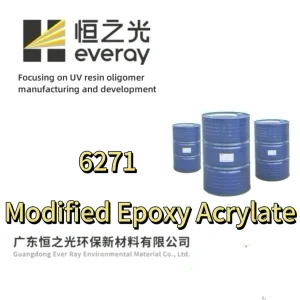
High-Quality High Abrasion & Yellowing Resistance Modified Epoxy Acrylate Resin 6271 for UV Coatings & Adhesives Supplier, Product
View Technical Profile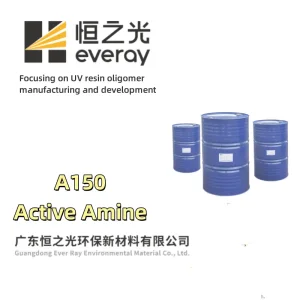
High-Quality A150 UV-resin for UV-ink and UV-coatings Manufacturer, Factories
View Technical Profile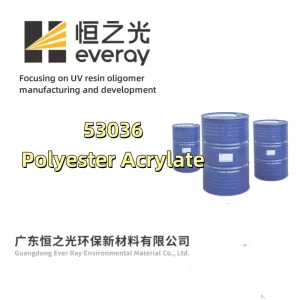
High-Quality 53036 Polyester Acrylate UV resin: very suitable for use in excimer lasers, providing excellent skin feel Suppliers, Products
View Technical Profile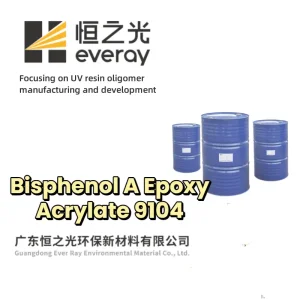
Buy Bisphenol A Epoxy Acrylate Resin 9104: A Core Resin for High-Performance UV Coatings Factory, Products
View Technical Profile