Enterprise UV Oligomer Chemistry & Direct Manufacturing

Buy Uv Professional Supplier & Products

Guangdong Ever Ray Environmental Material Co., Ltd. (Est. 2006) — Engineering high-performance UV curable resins, acrylate oligomers, and customized crosslinking architectures with full industrial supply chain stability and ISO-certified regulatory compliance.

Precision Engineering · Production Series 01

High-Efficiency Reactive UV Acrylate Oligomers

Direct manufacturer batch supply with controlled monomer functionality, targeted molecular weight distribution, and verified cure response across thin and heavy film matrices.
High-Quality Polyester Acrylate 5405B – A High-Efficiency Solution for Multi-Field UV Applications Suppliers, Product
Polyester Acrylate

High-Quality Polyester Acrylate 5405B – A High-Efficiency Solution for Multi-Field UV Applications Suppliers, Product

View Technical Data

Buy High adhesion 6100D-85 epoxy acrylate for UV wood coating applications, etc. Manufacturer, Products
Epoxy Acrylate

Buy High adhesion 6100D-85 epoxy acrylate for UV wood coating applications, etc. Manufacturer, Products

View Technical Data

Buy 73008 Low-Shrinkage Polyurethane Acrylate Resin for Electronic Potting & Metal Coating | High Temp Anti-Yellowing UV Oligomer Manufacturer, Factories
Polyurethane Acrylate

Buy 73008 Low-Shrinkage Polyurethane Acrylate Resin for Electronic Potting & Metal Coating | High Temp Anti-Yellowing UV Oligomer Manufacturer, Factories

View Technical Data

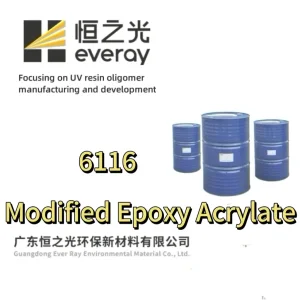
High-Quality 6116 Low Viscosity UV Curing Epoxy Oligomer, High Flexibility Acrylic Resin for Matte Wood & Ink Coatings Manufacturers, Products
Low Viscosity Oligomer

High-Quality 6116 Low Viscosity UV Curing Epoxy Oligomer, High Flexibility Acrylic Resin for Matte Wood & Ink Coatings Manufacturers, Products

View Technical Data

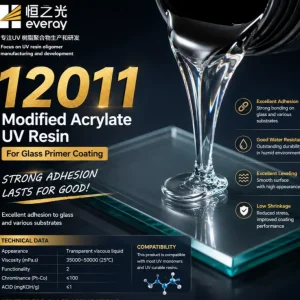
Wholesale 12011 Modified Acrylate UV Resin for Glass Primer Coatings | Excellent Adhesion & Boiling Water Resistance Manufacturer, Product
Glass Primer Resin

Wholesale 12011 Modified Acrylate UV Resin for Glass Primer Coatings | Excellent Adhesion & Boiling Water Resistance Manufacturer, Product

View Technical Data

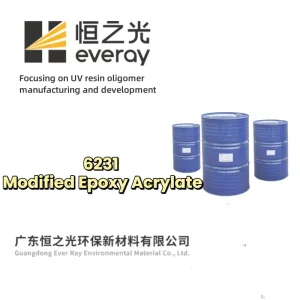
Wholesale 6231: Curing modified epoxy acrylate with excellent leveling properties Manufacturer, Suppliers
Surface Leveling

Wholesale 6231: Curing modified epoxy acrylate with excellent leveling properties Manufacturer, Suppliers

View Technical Data

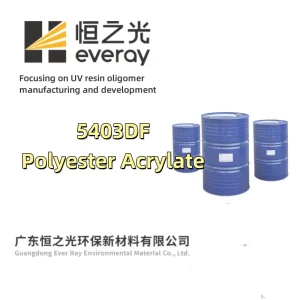
Wholesale 5403DF: Ideal polyester acrylic UV resin for UV and flexographic printing applications Manufacturers, Product
Flexo & Inks

Wholesale 5403DF: Ideal polyester acrylic UV resin for UV and flexographic printing applications Manufacturers, Product

View Technical Data

Wholesale 6200D UV-resin in shadowless glue systems Factory, Factories
Optical Shadowless Glue

Wholesale 6200D UV-resin in shadowless glue systems Factory, Factories

View Technical Data

Technical Whitepaper & Strategic Procurement Analysis

The State of Industrial Photopolymerization: Acrylate Chemistries & Engineering

Understanding the interplay between reactive diluents, photoinitiator dynamics, and backbone oligomer functionality is essential for high-throughput global converting lines.

Backbone Molecular Architecture

Oligomer selection dictates over 80% of the cured film's mechanical properties. The structural backbone—whether derived from Bisphenol A epoxy diacrylates, aliphatic polyols, or branched polyesters—controls fundamental glass transition temperature (Tg), elongation, and volumetric shrinkage during radical chain reaction.

  • Epoxy Acrylates: Characterized by exceptional crosslinking speed, high Shore D hardness, and superior acid/alkali resistance, making them prime candidates for wood sealers and OPVs.
  • Urethane Acrylates: Synthesized via isocyanate polyaddition to introduce resilient urethane bonds (-NH-COO-), delivering superior impact damping, mechanical toughness, and weatherability.

Overcoming Oxygen Inhibition

Atmospheric oxygen acts as a powerful free-radical scavenger, reacting with propagating polymer radicals to create unreactive peroxy radicals. This results in under-cured, tacky surfaces, particularly problematic on high-speed flexo and screen-printing applications running thin layers (under 5 microns).

  • Amine Synergist Integration: Copolymerizable amino acrylates donate labile alpha-hydrogens, consuming dissolved oxygen and regenerating active aminoalkyl initiating radicals.
  • Dual-Cure Chemistry: Combining photolytic activation with secondary moisture or thermal curing steps eliminates shadowing defects on complex three-dimensional automotive electronics.

Interfacial Wetting & Substrate Adhesion

Adhesion across non-porous and low-surface-energy substrates such as polyethylene terephthalate (PET), polypropylene (PP), float glass, and anodized aluminum hinges on thermodynamic surface energy compatibility and mechanical interlocking.

  • Silane/Phosphate Modification: Introduction of functionalized adhesion promoters binds chemically with inorganic hydroxyl sites on glass and metals.
  • Volumetric Shrinkage Mitigation: Hyperbranched and high-molecular-weight aliphatic matrices suppress polymerization contraction stress, preventing delamination after thermal cycling.
Oligomer Chemical Family Cure Velocity (Line Speed) Tensile / Hardness Yellowing Resistance Elongation & Flexibility Primary Industrial Sector
Bisphenol A Epoxy Acrylates Fastest (>60m/min) Shore D 85-90 Moderate (Interior) Low (2% - 8%) Overprint Varnishes, Wood Sanding Sealers
Aliphatic Polyurethane Acrylates Moderate Shore D 50-75 Exceptional (Delta E < 1.0) High (40% - 250%) 3C Electronics, Automotive Finishes, Nail Gel
Aromatic Polyurethane Acrylates Fast Shore D 75-85 Standard (Indoor) Medium (15% - 40%) Industrial Parquet Flooring, Heavy Machinery Inks
Hyperbranched Acrylates Ultra-Fast Pencil Hardness 4H-6H High Extremely Low (<2%) Anti-Scratch Optical Display Coats, Wear Layers
Waterborne Polyurethane Dispersions Two-Stage (Flash + UV) Shore A 80 - Shore D 60 High Tunable (50% - 300%) Automotive Interior Leather, Sustainable Woodcraft
Direct Scale & Reliability

Integrated Chinese Chemical Manufacturing: The Ever Ray Scale Advantage

Operating a dedicated chemical production base in Yunfu, Guangdong, Ever Ray combines bulk upstream precursor synthesis with advanced analytics to ensure batch-to-batch repeatability and predictable global shipping cycles.

Upstream Integration

Direct proximity to China's leading petrochemical refining corridors ensures uninhibited raw material access (acrylic acid, HDDA, TPGDA, IPDI, and Bisphenol A derivatives), insulating formulators from raw material shortages.

Automated DCS Process

State-of-the-art Distributed Control Systems (DCS) monitor exothermic esterification, neutralization, and stripping cycles in real time, locking acid values to precise technical ranges (typically <2.0 mg KOH/g).

High Annual Volume

Spanning over 40,000 square meters of specialized production footprint with 10 continuous synthesis lines, Ever Ray maintains large-scale throughput to support both multi-ton container shipments and spot orders.

Analytical QA Laboratory

Every industrial production batch undergoes stringent chromatography (GPC/SEC), FTIR functional group fingerprinting, and viscometric checks before containerization and issuance of Certificates of Analysis.

2006
Founded & Focused on UV
40,000+
Square Meter Facility
10+
Invention & Utility Patents
100+
Dedicated R&D & Engineers
Cross-Border Trade Reliability

Global Enterprise Procurement Needs & Localized Compliance Assurance

Enterprise chemical procurement requires more than physical performance; it demands strict adherence to global safety mandates, multi-tier regulatory registrations, and end-to-end logistics assurance.

Global Regulatory Filings

Navigating chemical substance control requires proactive dossier maintenance. Ever Ray works closely with international compliance partners to guarantee conformity:

  • EU REACH & UK REACH: Full registration and Only Representative (OR) support for high-volume export oligomers and reactive monomers.
  • TSCA & IECSC: Active inventory listing under US EPA toxic substance mandates and Chinese inventory standards.
  • RoHS & Halogen-Free: Third-party SGS certified zero-heavy-metal formulation integrity for electronic enclosures.

Hazard-Controlled Export Packaging

Photopolymers are sensitive to thermal excursions and unintended daylight exposure. Safe sea, rail, and air transit relies on specialized chemical containment:

  • UN-Certified Drums: High-density polyethylene (HDPE) black light-blocking 200L drums and 1000L IBC totes prevent premature dark polymerisation.
  • Inhibitor Optimization: Precise addition of MEHQ/BHT radical scavengers ensures 12 months minimum shelf life even through tropical shipping lanes.
  • GHS-Standardized Labeling: Multi-lingual HazCom 2012 / CLP compliant safety labels including dynamic emergency contact routing.

On-Site Formulation Engineering

Global formulators frequently encounter regional curing disparities caused by local power grid fluctuations, mercury lamp spectrum aging, or seasonal air humidity variances:

  • Direct Senior Engineer Access: Consult directly with synthetic chemists via English-fluent technical teams.
  • Benchmarking & Reverse Engineering: Full characterization of competitor resin profiles with custom matching.
  • Trial Sample Acceleration: Expedited 1kg–5kg lab trial parcels dispatched via air freight with comprehensive Starting Point Formulations (SPFs).
Target Market Implementations

Specialized Industrial Application Scenarios & Future Development Trends

Radical curing is shifting from high-energy mercury systems to low-temperature UV LED (365nm, 385nm, 395nm) sources, zero-VOC waterborne dispersions, and sustainable bio-based building blocks.

3C Electronics & Mobile Finishes

Modern mobile phones, tablets, and wearables feature intricate composite alloy and polycarbonate frames requiring scratch resistance, sweat resistance, and flawless optical clarity. Our aliphatic polyurethane acrylates provide flexibility that resists thermal cycling from internal battery dissipation.

Additive Manufacturing & 3D Photopolymers

Stereolithography (SLA), Digital Light Processing (DLP), and LCD 3D printers depend on low-viscosity, low-shrinkage oligomers to avoid print warping. Ever Ray’s dual-cure and hyperbranched materials deliver functional ABS-like parts and elastomer lattices with high elongation.

High-Speed Commercial Printing Inks

Modern flexographic and offset presses operate in excess of 300 meters per minute. Our engineered polyester acrylates exhibit controlled rheology and excellent wetting for inorganic and organic pigments, guaranteeing sharp dot resolution and long-term fountain balance.

Engineered Wood & Luxury Flooring

Continuous roller-coating operations require primers that offer deep penetration and sandability without gumming up abrasive papers. Ever Ray bisphenol A and modified epoxy acrylates deliver high hardness with strong intercoat adhesion.

Optical Glass Primers & Metal Bonding

Glass and metal are demanding substrates due to their smooth, non-porous surfaces. Our specialized acrylate resins feature boiling water resistance and thermal shock stability, ensuring long-lasting bonds for consumer electronics and building glass.

Cosmetics & Long-Wear Nail Gels

Cosmetics applications require non-irritating, low-odor, skin-compatible chemistries. Ever Ray's aliphatic urethane acrylates provide flexibility that mirrors the natural nail plate while resisting acetone, solvents, and yellowing from household cleaners.

Precision Engineering · Production Series 02

Advanced Performance Acrylates & Specialty Oligomers

Engineered to resolve real formulation challenges: extreme boiling-water adhesion, high-temperature resistance, anti-fouling surfaces, and rapid UV curing.
High-Quality 6160M-3: Fast curing modified epoxy acrylate for improved performance Manufacturer, Supplier
Modified Epoxy Acrylate

High-Quality 6160M-3: Fast curing modified epoxy acrylate for improved performance Manufacturer, Supplier

View Technical Data

Buy Fast-Cure High-Gloss Modified Epoxy Acrylate UV Resin 6805A-1 for UV Ink and UV varnish Factory, Factories
UV Ink & Varnish

Buy Fast-Cure High-Gloss Modified Epoxy Acrylate UV Resin 6805A-1 for UV Ink and UV varnish Factory, Factories

View Technical Data

Wholesale 72923 Fast-Cure Non-Yellowing Polyurethane Acrylate Resin for UV Peelable adhesive Manufacturers, Factories
Peelable Adhesive

Wholesale 72923 Fast-Cure Non-Yellowing Polyurethane Acrylate Resin for UV Peelable adhesive Manufacturers, Factories

View Technical Data

Buy Special Modified Acrylate Resin | Low Shrinkage & Excellent Glass Adhesion | For Water Transfer Printing & UV Coating Factories, Products
Water Transfer Printing

Buy Special Modified Acrylate Resin | Low Shrinkage & Excellent Glass Adhesion | For Water Transfer Printing & UV Coating Factories, Products

View Technical Data

Wholesale 6805A-1 UV-resin in UV Offset Printing Suppliers, Product
UV Offset Printing

Wholesale 6805A-1 UV-resin in UV Offset Printing Suppliers, Product

View Technical Data

Wholesale 72017 Photo-Thermal Dual-Curing Polyurethane Acrylate Resin | Low Shrinkage & High Toughness Oligomer for 3D Printing Supplier, Products
Dual-Curing 3D Resin

Wholesale 72017 Photo-Thermal Dual-Curing Polyurethane Acrylate Resin | Low Shrinkage & High Toughness Oligomer for 3D Printing Supplier, Products

View Technical Data

Wholesale Multifunctional 7253A-5 UV resin: heat-resistant, cold-resistant, suitable for various adhesives Supplier, Factories
Thermal Cycling Resin

Wholesale Multifunctional 7253A-5 UV resin: heat-resistant, cold-resistant, suitable for various adhesives Supplier, Factories

View Technical Data

High-Quality Enhance UV coating using the antifouling function of 1291B-1 Suppliers, Product
Anti-Fouling Modifier

High-Quality Enhance UV coating using the antifouling function of 1291B-1 Suppliers, Product

View Technical Data

Technical & Commercial FAQ

Frequently Asked Questions: UV Resin Procurement & Chemistry

Direct answers from our senior formulation engineers and export compliance specialists on material selection, trial validation, and international shipping.

What are the core technical differences between aliphatic and aromatic polyurethane acrylates?
Aliphatic polyurethane acrylates (such as Ever Ray IPDI or H12MDI-based grades) contain saturated hydrocarbon backbones without benzene ring conjugation. This molecular structure gives them high resistance to photodegradation, maintaining clear transparency without yellowing (Delta E < 1.0) under prolonged solar and UV-A/B radiation. They are the benchmark choice for exterior automotive clear coats, mobile device casings, optical lenses, and salon-grade cosmetic nail gels. Conversely, aromatic polyurethane acrylates utilize aromatic diisocyanates (TDI or MDI). While exhibiting rapid cure kinetics, high mechanical hardness, and lower unit cost, the aromatic rings readily form chromophore quinoid structures under UV exposure, resulting in noticeable yellowing over time. Aromatic grades are best suited for dark pigmented systems, interior parquet wood finishes, and industrial structural adhesives where outdoor light stability is not a requirement.
How does Ever Ray guarantee batch-to-batch consistency for multi-ton international shipments?
Consistency is maintained through strict end-to-end process control at our Yunfu, Guangdong manufacturing site. First, raw material precursors are checked via incoming gas chromatography and refractometry before entering our bulk tank farm. Second, all polyaddition, esterification, and stripping reactions are run using computerized Distributed Control Systems (DCS) that monitor reactor temperature profiles to within ±0.5°C, ensuring uniform molecular weight and branching. Third, every commercial batch is evaluated for viscosity (Brookfield cone and plate), non-volatile content, acid value, Gardner color rating, and FTIR functional group purity. Full QA inspection records and lot-tracked sample retains are preserved for two years to ensure complete traceability.
Can Ever Ray synthesize custom oligomers to meet specific adhesion and flexibility requirements?
Yes, custom synthesis is a core capability of our R&D department. If standard catalogue grades do not provide the exact balance of properties your project requires—such as achieving high tensile elongation on untreated PET while maintaining 4H pencil hardness—our polymer chemists can adjust oligomer backbone architecture, polymer chain length, acrylate functionality (from difunctional to hyperbranched hexafunctional systems), and internal diluent balances. We typically review customer application parameters (target substrate, available curing irradiance in mJ/cm², web line speed, and solvent resistance standards), provide bench-scale trial samples (1kg–5kg) with starting point formulations, and support customer trials through to full industrial production.
What regulatory and safety documentation accompanies export shipments?
Every export consignment from Ever Ray includes an order-specific Certificate of Analysis (CoA) matching your quality control specifications. We provide complete 16-section Safety Data Sheets (SDS) prepared in accordance with the UN Globally Harmonized System (GHS Rev.8 / CLP Regulation EC 1272/2008 / OSHA HazCom 2012) in your required destination language. Additionally, we provide official statements covering EU REACH compliance, RoHS 3 (Directive 2015/863/EU), Halogen-Free certifications (IEC 61249-2-21), and animal testing declarations for cosmetic applications. Our logistics team handles Dangerous Goods (DG) packing declarations, ensuring smooth customs processing at all major international seaports.
What are the best practices for storing and handling UV curable acrylate resins?
Acrylate oligomers and monomers contain reactive double bonds that undergo free-radical polymerization when exposed to ultraviolet radiation, stray actinic daylight, or elevated temperatures. Materials should be stored in their original light-opaque, sealed containers (black HDPE drums or lined steel barrels) in a cool, dry, and well-ventilated location maintained between 15°C and 28°C. Do not store materials under pure nitrogen or inert blankets, because phenolic radical inhibitors (such as MEHQ) require a small amount of dissolved oxygen (approx. 5-8 ppm) to effectively prevent spontaneous gelation. When handled correctly according to Ever Ray Technical Data Sheets, shelf life is guaranteed for 12 months from the date of synthesis.