
High-Reactivity Radiation Curable Acrylate Grades
Engineered for high cure conversion, exceptional mechanical resilience, and tight viscosity profiles across demanding industrial coating and ink formulations.
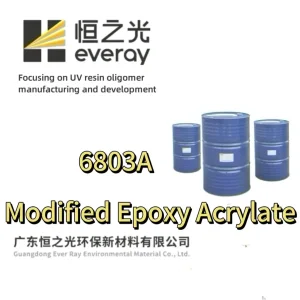
High-Quality 6803A Modified Epoxy Acrylate Resin High Gloss Fast Curing Oligomer for UV Ink Varnish & Plastic Coating Factory, Factories
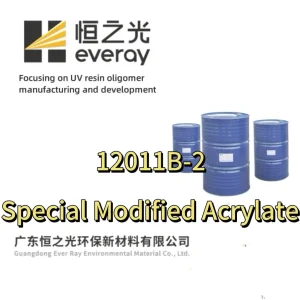
Buy Special Modified Acrylate Resin | Low Shrinkage & Excellent Glass Adhesion | For Water Transfer Printing & UV Coating Factories, Products
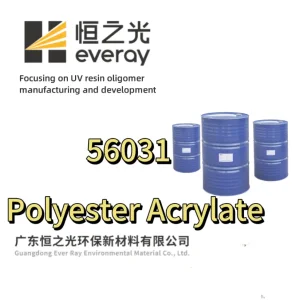
Buy 56031 Low Viscosity High Reactivity Polyester Acrylate Resin for UV Gravure Varnish, Flexo Ink & Snow Effect Coatings Manufacturer, Manufacturers
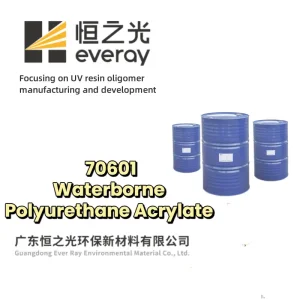
Wholesale Waterborne 70601 UV-resin for 3D Printing, UV-ink and UV Wood-coatings Manufacturers, Products
Buy 6102 UV Resin: Enhanced low shrinkage epoxy acrylate, perfect for UV wood coatings Supplier, Product
Wholesale 1762 UV resin as adhesive: durable and anti-yellowing, high bonding strength Manufacturers, Factory
High-Quality Polyester Acrylate 5335F A High-Performance Solution for Offset Inks Factories, Products
High-Quality 70250 UV-resin for 3D printing, UV-ink and UV wood-coatings Suppliers, Product
Polyurethane Acrylate Oligomer: Molecular Engineering & Macromolecular Design
An authoritative breakdown of hard-segment domains, soft-segment backbones, and acrylic functionalization controlling the mechanical and photochemical profile of UV curable systems.
Aliphatic vs. Aromatic Isocyanate Backbones
Polyurethane acrylates (PUA) derive their high impact resistance and elastomeric recovery from urethane (-NH-COO-) hydrogen bonding networks. Our aliphatic systems utilize IPDI (isophorone diisocyanate) and H12MDI to eliminate photo-oxidation pathways, achieving Delta E < 0.5 under extreme QUV weathering for exterior automotive coatings and optical displays. Conversely, our aromatic TDI/MDI oligomers maximize pi-electron cloud density, providing extreme scratch resistance, high modulus, and superior cost-efficiency for industrial interior parquet, luxury vinyl tile (LVT), and heavy machinery primers.
Soft-Segment Matrix Synthesis
Formulation flexibility and dynamic fatigue life depend strictly on macro-polyol selection. Polycarbonate diol-based PUAs synthesized in our factory offer outstanding hydrolytic stability, boiling water barrier efficiency, and continuous heat resistance up to 140°C. Polyether polyols (PTMG, PPG) contribute superior low-temperature elongation (>250%) and low glass transition temperatures (Tg down to -45°C) tailored for shatter-resistant screen protectors, TPU bonding, and nail gels. Caprolactone-modified polyester backbones bridge the gap, maximizing tensile strength up to 45 MPa while preventing curing stress micro-cracks.
Acrylate Functionality Architecture
By controlling end-capping stoichiometry with hydroxyalkyl acrylates (HEA, HPA, PETIA), we synthesize oligomers ranging from difunctional urethane acrylates (providing ultra-low volume shrinkage < 3.5% and high substrate wetting) to hexafunctional and dendritic hyperbranched urethane acrylates. High-functionality matrices achieve cure speeds beyond 45 m/min on UV-LED lines (395nm/385nm), yielding pencil hardness values up to 4H-5H with pencil-scratch recovery for consumer 3C electronics and optical lens replication.
Reactor-Level QA/QC Analytical Controls
Every production campaign in our Yunfu Chemical Industrial Park site undergoes automated titration and in-line Fourier-Transform Infrared Spectroscopy (FTIR). We monitor the 2270 cm⁻¹ isocyanate band until residual NCO is strictly < 0.05%, eliminating post-cure toxicity and shelf-life drift.
Global Commercial Status of Polyurethane Acrylate Formulations
Analyzing shifting supply chains, environmental decarbonization pressures, and the migration from thermal cure to 100% solid radiation-curing technology across major manufacturing blocs.
| Continental Market | Predominant Industry Drivers | Key Regulatory & Environmental Hurdles | Favored Resin Architecture |
|---|---|---|---|
| North America (US & Canada) | Automotive EV battery potting, graphic packaging conversion, high-speed 3D stereolithography | TSCA Section 5 SNUR compliance, EPA Zero-VOC standards, PFAS/BPA elimination mandates | High-elongation aliphatic PUA, low-monomer dual-cure urethane methacrylates |
| European Union (EU27 + UK) | Decarbonized wood finishing, eco-sustainable flexible packaging, nail cosmetics | EU REACH Annex XVII restrictions, CLP classification, stringent worker exposure limits | Waterborne PUA dispersions, bio-based polyol acrylates (carbon renewability > 40%) |
| Asia-Pacific (APAC) | 3C electronics assembly, optical display stack lamination, high-volume furniture production | National VOC reduction plans (China GB 30981-2020), volatile odor control on roll coaters | Hyperbranched hard-coat PUAs, low-shrinkage optical urethane acrylates |
| Latin America & Middle East | Industrial pipe coatings, architectural stone topcoats, metal can packaging | Supply chain volatility, high-ambient temperature stability during transit | Fast-curing aromatic PUAs, chemical-resistant polyester-urethane acrylates |
Thermal-to-UV Line Retrofitting
Global manufacturers are rapidly phasing out thermal drying ovens due to escalating natural gas costs and carbon taxation. Converting an industrial wood coating line from solvent-borne 2K polyurethane to solventless 100% solids UV-cured PUA reduces shop-floor footprint by up to 75% and slashes operational energy consumption by 60-80% per square meter coated.
UV-LED Transition Dynamics
The phaseout of mercury arc lamps under the Minamata Convention has made monochromatic UV-LED emitters (365nm, 385nm, 395nm, 405nm) the new standard. Because LED sources lack shortwave UVC (200-280nm) radiation, surface oxygen inhibition is more severe. Our newly engineered polyurethane acrylates integrate amine synergist backbones and self-initiating polyfunctional structures, ensuring tack-free curing in open atmosphere.
Global Resin Capacity Resilience
Recent upstream raw material disruptions (such as fluctuations in IPDI, HDI, and acrylic acid monomers) highlight the necessity of partnering with vertically integrated producers. Ever Ray maintains multi-ton stockpiles of high-purity polyols and diisocyanates, providing multi-country formulators with steady supply agreements, consistent batch reproducibility, and hedging against petrochemical spot-market volatility.
Global Regulatory Assurance & Localized Formulator Support
Ensuring cross-border chemical clearance, strict product stewardship, and comprehensive testing documentation to support regional manufacturing audits.
Chemical Inventory Clearance
Our oligomers and reactive monomers comply with major regional chemical inventories including EU REACH (with complete Only Representative coverage), US TSCA, Korea K-REACH, China IECSC, and Taiwan TCSI. Export shipments come with GHS-compliant Safety Data Sheets (SDS) in 16 languages.
Eco-Toxicity & Restriction Testing
Every polyurethane acrylate batch undergoes certified third-party testing (SGS, TÜV Rheinland) ensuring non-detectable levels of heavy metals (RoHS 2.0), organotins, phthalates, and bisphenol compounds. Complies with consumer electronics supplier codes (Apple 069-0135, Sony SS-00259).
Field Application Engineering (FAE)
Resin chemistry works only when matched to curing conditions. Ever Ray's dedicated FAE teams provide on-site line audits, lamp radiometer profiling (EIT Power Puck II mapping), dynamic mechanical analysis (DMA), and cross-hatch adhesion troubleshooting directly on your substrates.
Specialized Industrial Packaging
PUA oligomers require careful protection against unwanted thermal radical initiation. We provide nitrogen-padded, light-blocking steel drums (200 kg net) and heavy-duty IBC totes (1000 kg net) with temperature monitoring for trans-oceanic container shipping.
Localized High-Performance Industrial Application Scenarios
Explore how custom-tailored polyurethane acrylate backbones solve substrate-specific formulation challenges across advanced manufacturing sectors.
3C Electronics & Automotive Displays
Smartphone casings, laptop enclosures, and curved cockpit display screens (PC, ABS, PMMA, COP) require thin-film coatings with optical clarity, high hardness, and thermoforming flexibility. Our aliphatic PUA grades deliver pencil hardness up to 4H without micro-cracking during CNC routing or drop impact testing. Excellent chemical resistance against cosmetic creams, artificial sweat, and isopropyl alcohol cleaning cycles.
Additive Manufacturing & Photopolymers
Stereolithography (SLA), Digital Light Processing (DLP), and LCD photopolymer formulations require high reactive speed, low resin bath viscosity, and high green strength. Our low-viscosity urethane acrylates provide functional prototype parts that mirror injection-molded ABS and polypropylene, delivering elongation at break up to 180%, tensile modulus above 2000 MPa, and isotropic layer-to-layer cohesion for footwear lattice midsoles.
Optical Clear & Pressure Sensitive Adhesives
Optically Clear Adhesives (OCA) and Liquid OCA (LOCA) for consumer electronics, touch panels, and wearable glass-to-plastic assemblies. Formulated with saturated aliphatic polyether PUAs to achieve refractive indexes between 1.48 and 1.52, optical haze < 0.2%, zero bubbling under high-temperature/high-humidity chambers (85°C / 85% RH for 1000 hrs), and ultra-low shrinkage to eliminate display mura defects.
Resilient Flooring & Engineered Wood
High-traffic PVC commercial tiles, SPC core flooring, and luxury wood finishes require high Taber abrasion resistance and stain resistance against iodine, coffee, and shoe rubber scuffs. Our aromatic and modified aliphatic urethane acrylates can be blended with nano-silica or functional corundum fillers to provide deep-matte finishes (60° gloss < 5) without sacrificing clarity, flexibility, or intercoat adhesion.
Cosmetics & Professional UV Nail Gels
Nail coating systems demand balanced properties: low exothermic heat during LED lamp curing to prevent nail bed sensation, non-yellowing clarity, flexibility to prevent chipping over 3 to 4 weeks of wear, and quick removal via acetone soaking. Our specialized aliphatic cosmetic-grade polyurethane acrylates are free of HEMA, HPMA, and heavy isocyanate monomers, meeting EU Cosmetic Regulation (EC) No 1223/2009 standards.
Specialty Inks & Flexible Packaging
In high-speed UV flexo and screen printing on treated BOPP, PET, and aluminum foil, cured inks must endure tight roll rewinding, die-cutting, and thermo-retraction without cracking or delamination. Ever Ray's polyurethane acrylates provide deep pigment wetting, steady rheological stability without misting at press speeds > 250 m/min, and balanced crosslink density to protect flexible food-contact barriers.
Technological Roadmap & Future Formulation Frontiers
Advancing UV curing performance through sustainable raw materials, dual-cure reaction mechanisms, and high-efficiency polymer synthesis.
Next-Generation Bio-Based Carbon Content PUAs
Synthesized with renewable succinic acid, dimer fatty acids, and bio-1,3-propanediol, these oligomers achieve 35% to 55% verified bio-based carbon content according to ASTM D6866. They match the performance of traditional petroleum-based resins in cure speed, weatherability, and hardness, helping global formulators reduce Scope 3 carbon emissions without line modifications.
Moisture & Thermal Dual-Curing Polyurethane Architectures
Designed for 3D electronics encapsulation, automotive headlamps, and opaque composite potting where complex geometries create shadowed areas unreached by direct UV light. These oligomers incorporate acrylic double bonds for instant UV surface tack-free setting, followed by a secondary moisture-curable isocyanate or thermal epoxy/silane reaction that fully cures shadowed cavities over 24 hours.
Self-Initiating / Low-Migration Polymeric PUAs
Addressing strict European food contact material regulations (EuPIA, Swiss Ordinance, Nestle guidance notes). By chemically incorporating Norrish Type I/II photoinitiator structures directly into the polyurethane acrylate oligomer backbone, migration of small-molecule free radicals into packaging contents is prevented, while significantly reducing formulation odor and post-cure yellowing.
Frequently Asked Questions: Industrial Procurement & Formulation Chemistry
Technical answers prepared by our senior polymer chemists and application support specialists.
What chemical mechanisms make aliphatic polyurethane acrylates more resistant to yellowing than aromatic types?
How do formulators counter oxygen inhibition when curing thin PUA coatings on UV-LED lines?
How can I reduce high PUA viscosity without sacrificing mechanical properties or using solvents?
What are the key differences between waterborne PUA dispersions and 100% solid PUAs?
What documentation and sample support does Ever Ray provide for industrial trials?
Specialty Functional Oligomers, Pure Acrylates & Dual-Cure Resins
Advanced chemical solutions covering wear-resistant coatings, footwear 3D print lattices, graphic arts, and specialized industrial composite bonding.
Wholesale Polyester Acrylate 5312–A High-Efficiency, Multi-Purpose UV Resin Solution Factory, Product
Wholesale 7296-1: High quality polyurethane acrylate with excellent wear and impact resistance Manufacturer, Product
High-Quality 7901B UV-resin for industrial coatings Factory, Products
Wholesale 72017A-8 Dual-Curing UV Resin for 3D Printed Footwear | High Elasticity & Low Shrinkage Resin Manufacturer, Factories
Wholesale Low Shrinkage High Flexibility Pure Acrylate Resin for Plastic/Wood Coatings and UV Inks Manufacturer, Product
Wholesale 5403DF: Ideal polyester acrylic UV resin for UV and flexographic printing applications Manufacturers, Product
Wholesale 6805A-1 UV-resin in UV Offset Printing Suppliers, Product
High-Quality 9105A-80: Bisphenol A Epoxy Acrylate Resin - Superior Hardness and Chemical Resistance Ideal for Resin Polyester Applications Manufacturers, Suppliers
Request Custom Formulation & Factory Price Quotes
Direct access to our R&D chemists, production specialists, and technical service representatives. Inquire about customized polymer backbone synthesis, trial sample kits, and multi-ton supply agreements.
