Direct Sourcing Catalog
Engineered Acrylate Resins: High-Performance Products Batch A
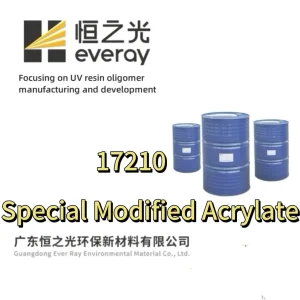
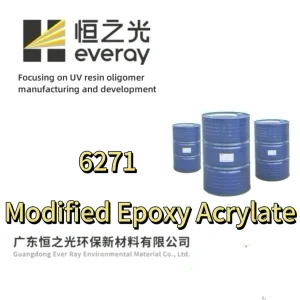
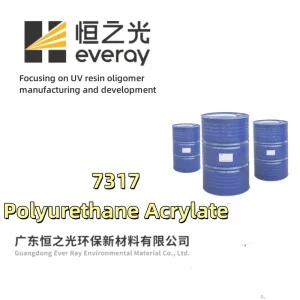
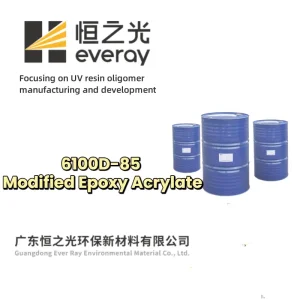
Precision-synthesized polyurethane acrylates, epoxy acrylates, and dual-curing photopolymers formulated for high-build reliability and rigorous mechanical tolerance.
Industry Evolution
Market Transformation: The Shift Toward High Viscosity Functional Oligomers
Why next-generation manufacturing processes are shifting beyond traditional low-viscosity monomers to specialized, high-build oligomer systems.
2006
Pioneering High-Viscosity Synthesis
40k+ m²
Automated Polymer Synthesis Facility
<1.5%
Ultra-Low Volumetric Curing Shrinkage
10+
Proprietary Chemical Invention Patents
Structural Integrity & Shrinkage Elimination
As microelectronics and optical assemblies scale in complexity, volumetric shrinkage in UV resins triggers stress cracking, delamination, and substrate warpage. High viscosity oligomers feature pre-polymerized, high-molecular-weight backbones that substantially drop double-bond density per unit volume, driving cure shrinkage below 1.5% while optimizing inter-layer adhesion.
Elimination of Toxic Monomer Migration
Global regulatory protocols such as EU REACH, RoHS, and food-contact packaging standards place strict restrictions on volatile, low-molecular-weight reactive diluents (e.g., HDDA, TPGDA). Formulating with higher viscosity hyperbranched and polyurethane oligomers enables solventless, low-odor operations with minimal skin irritation profiles and complete photopolymer conversion.
Thermal Endurance & Dual-Cure Crosslinking
Advanced industrial applications increasingly face shadow areas where standard 365nm-405nm LED illumination cannot penetrate. High viscosity dual-curing polyurethane systems combine primary photo-crosslinking with secondary thermal cure mechanisms, guaranteeing complete depth-of-cure and thermal resilience up to 260°C for reflow soldering.
B2B Procurement Analysis
Global Procurement Criteria: How Leading Enterprises Select UV Resin Manufacturers
Formulators, coating manufacturers, and industrial tier-one suppliers apply comprehensive technical audits prior to selecting an oligomer partner.
Batch-to-Batch Viscosity Stability
Viscosity drift wreaks havoc on automated coating and printing lines. Tier-one procurement requires a verified viscosity tolerance within ±5% across 200kg drums and 1000kg IBC totes, verified by cone-plate rheometry under stable shear conditions.
Purity & Residual Acid Value Control
Residual monomers and high acid numbers trigger corrosion on sensitive electronic leads, degrade shelf stability, and cause nozzle clogging in high-resolution multi-jet printing. Premium procurement demands acid values controlled below 1.0 mg KOH/g.
Chemical Backbone Customizability
Standard off-the-shelf resins rarely deliver the exact hardness-flexibility balance required for next-gen consumer electronics and optical films. Suppliers must provide dedicated organic synthesis labs capable of custom backbone tailoring.
Multi-Tier Supply Chain Redundancy
Global formulators cannot risk supply bottlenecks. Sourcing protocols mandate integrated supply chains with certified domestic and imported feedstocks (IPDI, HDI, TMPTA) backed by automated multi-ton reactor reserves.
Technical Formulations
Substrate-Specific Formulations: Solving Difficult Bonding & Wear Dilemmas
Real-world chemical formulation strategies engineered by Ever Ray application chemists to conquer surface energy and stress thresholds.
Refractory Inorganic Substrates: Glass & Metals
Inorganic glass, treated aluminum, and stainless steel offer ultra-high surface energies combined with microscopic smoothness, making long-term adhesion difficult under moisture and thermal shock. Our modified epoxy acrylate series incorporates specialized organosilane and phosphate functional groups directly onto the polymer backbone, achieving a 5B cross-hatch adhesion score even after a continuous 4-hour boiling water immersion test.
Low-Surface-Energy Engineering Plastics (PET, PMMA, PC)
Coating 3C electronic housings fabricated from PC/ABS or untreated PET films commonly leads to cracking due to solvent swelling or peeling from interfacial tension. Ever Ray pure acrylate and aliphatic polyurethane oligomers exhibit low surface tension, moderate elastic modulus, and controlled shrinkage, maintaining optical clarity (>92% transmittance) without substrate embrittlement.
Thick-Film 3D Additive Photopolymers & Lattices
Additive manufacturing resins require deep light penetration combined with rapid curing speeds. Using high-viscosity dual-curing polyurethane acrylates (such as grade 72017), print formulators balance green-state strength on SLA/DLP beds with high tensile elongation (>180%) after thermal post-curing, matching the performance profiles of engineering TPU elastomers.
Regulatory & Logistics
Global Regulatory Compliance & Localized Technical Support
Delivering certified chemical safety, transparent regulatory documentation, and dependable export packaging to over 50 global manufacturing hubs.
Full REACH & GHS SDS Dossiers
Every commercial batch is accompanied by comprehensive multi-lingual Technical Data Sheets (TDS) and 16-section Safety Data Sheets (SDS) fully compliant with EU REACH, US OSHA, and TSCA classifications.
Formulation Consultation Support
Our senior chemical engineers provide direct formulation troubleshooting: from matching photoinitiator absorption curves (365nm, 395nm, 405nm) to eradicating oxygen inhibition in thin-film printing lines.
Climate-Controlled Export Logistics
Resins sensitive to thermal self-polymerization are dispatched in UV-opaque, nitrogen-blanketed HDPE drums or UN-certified steel containers, equipped with temperature data loggers for guaranteed trans-oceanic shelf life.
Rapid Sample Trials & Pilot Validation
Accelerate your formulation R&D cycles with ready-to-dispatch 1kg lab sample kits, shipped via air courier along with baseline formulation guidelines and spectral curing parameters.
Next-Gen Technology
Technical Roadmap: The Future of UV Curing Oligomer Synthesis
Driving sustainable innovation, bio-circular chemistry, and extreme-performance materials through 2026 and beyond.
PHASE 01 // 2025 Q1-Q2
Bio-Based High-Viscosity Monomers
Synthesizing acrylated oligomers derived from renewable vegetable oils and cardanol feedstocks, achieving >45% renewable bio-carbon content while retaining high abrasion and chemical resistance in heavy wood coatings.
PHASE 02 // 2025 Q3-Q4
Waterborne UV-PUA Dispersions
Advancing zero-VOC, emulsifier-free polyurethane aqueous dispersions that cure reliably under low-energy LED 395nm lamps, providing warm wood aesthetics without volatile organic solvents.
PHASE 03 // 2026 Q1
Photonic & Optical Waveguide Resins
Refining hyperbranched oligomers with refractive indices exceeding 1.62, engineered for optical display films, anti-reflective prisms, and micro-lens array imprinting.
PHASE 04 // 2026 Q2+
Smart Self-Healing Photopolymers
Embedding dynamic covalent bonds (Diels-Alder networks) into UV-curable polyurethane matrices, allowing light-cured clear coats to self-repair micro-scratches under ambient sunlight exposure.
Direct Sourcing Catalog
Engineered Acrylate Resins: High-Performance Products Batch B
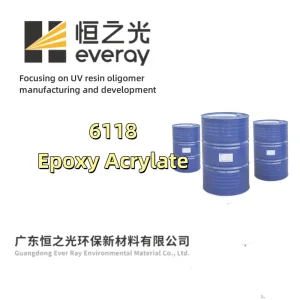
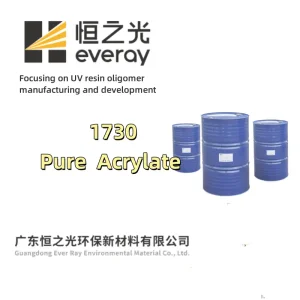
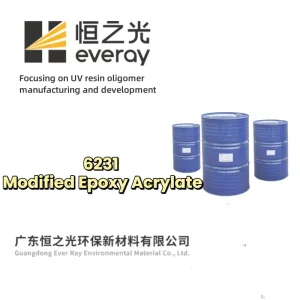
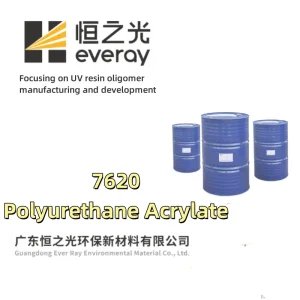
Specialty vacuum metallization resins, durable epoxy acrylates, and high-elasticity polyurethane adhesives designed for demanding factory environments.
Formulation FAQ
Frequently Asked Questions: Technical Engineering & Sourcing
Direct guidance from our polymer chemists addressing rheology, curing mechanics, and international commercial supply.
What defines a "high viscosity" UV resin, and when is it technically necessary?
In industrial photopolymer synthesis, resins exhibiting viscosities above 15,000 mPa.s at 25°C are classed as high-viscosity oligomers (reaching upwards of 150,000 mPa.s for specialty dual-cure or hyperbranched structures). They are required when formulations mandate heavy film thickness (high build) in a single pass, low shrinkage stress (<2%), high flexibility without cracking, and structural mechanical toughness that low-viscosity, low-molecular-weight reactive monomers cannot supply.
How does Ever Ray control viscosity consistency across multi-ton manufacturing campaigns?
We operate fully automated, PLC-controlled stainless steel chemical synthesis reactors at our Yunfu, Guangdong manufacturing base. Monomer addition rates, reaction exotherm profiles, and end-point polymerizations are governed by real-time in-line infrared spectroscopy (FTIR) and high-precision rheological sampling. Every finished batch is filtered through 1-micron multi-stage filters and held within a narrow ±5% viscosity variance threshold.
What is the practical difference between Aliphatic and Aromatic Polyurethane Acrylates?
Aliphatic polyurethane acrylates (e.g., Ever Ray 7911 series) utilize aliphatic diisocyanates (such as IPDI or HDI), providing superior non-yellowing characteristics, exceptional QUV weathering resilience, and high elongation. They are the benchmark choice for 3C electronics coatings, automotive exterior films, optical varnishes, and cosmetic nail gels. Aromatic polyurethane acrylates utilize aromatic isocyanates (such as TDI or MDI), providing intense surface toughness, rapid cure rates, and superior cost-effectiveness for indoor wood flooring, furniture sealers, and pigmented industrial inks.
How do Amino Acrylates solve surface stickiness and oxygen inhibition?
Atmospheric oxygen reacts with free radicals during photopolymerization to generate unreactive peroxy radicals, resulting in incomplete surface cure, tackiness, and slow line throughput. Amino acrylates (and active amine co-initiators) act as hydrogen donors that efficiently reduce peroxy radicals back into active alkyl radicals while consuming dissolved oxygen. Because Ever Ray amino acrylates have reactive double bonds, they co-polymerize into the polymer network, eliminating amine blooming, odor, and migration.
Can you formulate high viscosity resins for LED-UV (395nm / 405nm) systems?
Yes. Conventional mercury lamps emit broad-spectrum short-wave UVC, whereas modern LED curing systems output narrow-band UVA (365nm, 385nm, 395nm, or 405nm), which frequently struggles with surface curing. Our LED-optimized polyester and epoxy acrylates (such as 5501) are formulated with tailored functionality and synergists engineered to cure rapidly under low-energy LED radiation without heat-induced substrate deformation.
What are the minimum order quantities (MOQ) and packaging options for international export?
Standard export packaging is available in 20kg sealed HDPE pails, 200kg steel drums, and 1000kg composite IBC totes. Standard production grade MOQ starts at 200kg (one drum), while customized lab-to-pilot synthesis grades require a 500kg qualification volume. Evaluation sample kits (1kg to 5kg) are dispatched globally via express air freight within 48 to 72 hours of technical brief review.