
Engineered Photopolymer & Polyurethane Formulations
Discover high-reactivity oligomers, dual-cure resins, and performance polymers synthesized to deliver exceptional surface mirror optics, non-yellowing durability, and micro-mechanical toughness across demanding industrial substrates.
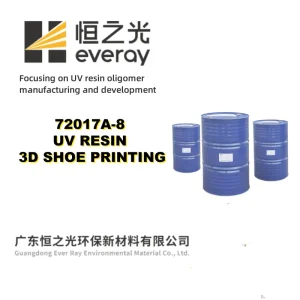
Wholesale 72017A-8 Dual-Curing UV Resin for 3D Printed Footwear
Next-generation dual-curing photopolymer system engineered for additive elastomeric midsoles, lattice structures, and dynamic rebound performance with minimal curing shrinkage.
View Product Specs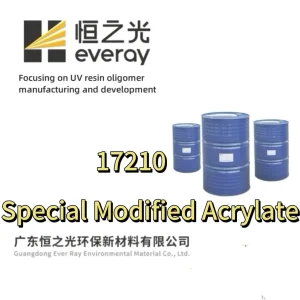
Wholesale High Solid Low Viscosity Modified Acrylate Oligomer
High-elasticity UV curable acrylic resin engineered for eco-compliant high-solid spray and roll operations requiring rapid crosslinking, superior elongation, and high DOI reflection.
View Product Specs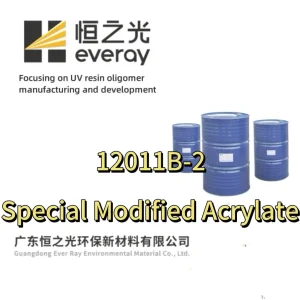
Buy Special Modified Acrylate Resin | Low Shrinkage Glass Adhesion
Specialty functionalized resin designed for water transfer printing, inorganic glass interfaces, and optical metallized surfaces demanding ultra-low shrinkage stress and chemical resistance.
View Product Specs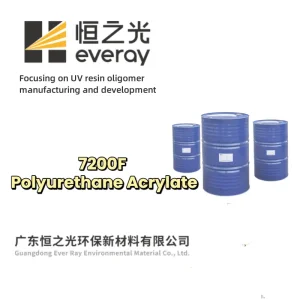
Buy Durable 7200F Polyurethane Acrylate: Thermal Shock Resistant
High-performance urethane acrylate formulated to maintain structural flexibility, surface hardness, and crack resistance during extreme hot/cold cycle environments (-40°C to +120°C).
View Product Specs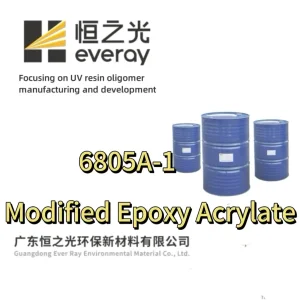
Buy Fast-Cure High-Gloss Modified Epoxy Acrylate UV Resin 6805A-1
Advanced high-gloss modified oligomer tailored for high-speed UV ink systems, paper varnishes, and industrial overprint varnishes (OPV) seeking mirror brilliance (>95 GU).
View Product Specs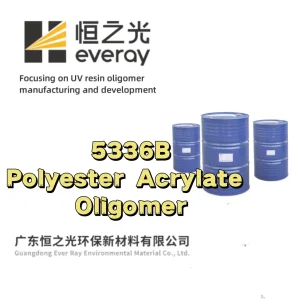
Buy 5336B High-Performance Polyester Acrylate Resin Ultra-Fast Cure
Ultra-fast curing polyester backbone oligomer providing superior pigment wetting dynamics, stable rheology, and sharp image definition in high-line flexo and offset systems.
View Product Specs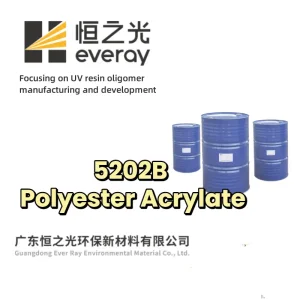
Buy Polyester Acrylate 5202B – The Choice for High-Performance Coatings
Workhorse resin architecture providing the optimal balance of intercoat adhesion, film flexibility, hardness, and chemical resistance for industrial plastic and metal finishes.
View Product Specs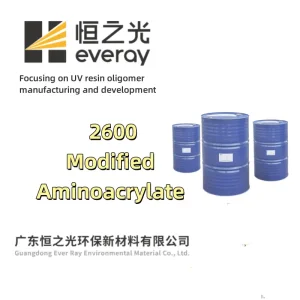
High-Quality Durable 2600UV Resin: High Hardness & Wear Resistance
Extreme-density crosslinking photopolymer resin engineered for scratch-resistant industrial protective layers, commercial floor sealers, and mechanical touch panels.
View Product SpecsHigh Gloss Polyurethane: Macro Trends & Next-Gen Polymer Architecture
High gloss polyurethane (PU) formulations represent the apex of protective coatings and aesthetic surface finishing. Globally valued at over $26 billion in industrial markets, the transition toward aliphatic backbones, zero-VOC photopolymerisation, and automated continuous synthesis is transforming procurement requirements.
Aliphatic Isocyanate Innovations
Traditional aromatic isocyanates (such as TDI and MDI) suffer from photochemical degradation under solar UV radiation, generating chromophore groups that cause yellowing and loss of gloss. Contemporary procurement focuses on aliphatic diisocyanates (IPDI and HDI trimer) which ensure extreme outdoor weatherability, gloss retention exceeding 10 years, and non-yellowing stability (ΔE < 1.0) under QUV accelerated testing.
Decarbonization & 100% Solids UV Systems
Global environmental mandates—including the EU Green Deal, REACH restrictions, and US EPA Rule 1113—have made solvent-borne polyurethanes cost-prohibitive. 100% solids UV-curable urethane acrylates (PUA) eliminate volatile organic solvents entirely. They achieve instantaneous millisecond cross-linking under LED-UV curing arrays, slashing factory thermal footprint and operational energy costs by up to 65%.
Surface Optical Mirror Clarity & DOI
Industrial demand has advanced past simple gloss readings. Modern automotive clear coats, piano-finish architectural panels, and optical displays demand Distinctness of Image (DOI > 90). Achieving this requires oligomers engineered with low surface tension gradient, controlled leveling kinetics, and hyperbranched structures that prevent micro-wrinkling or orange-peel texture during rapid polymerization.
Global Enterprise Purchasing Intent: Chemistry Selection Guide
B2B procurement directors and formulation chemists must balance trade-offs among curing kinetics, structural flex modulus, substrate wetting, and cost economics. Use this industrial selection benchmark to evaluate factory resin grades.
| Polyurethane Resin Classification | Hardness (Pencil / Koenig) | Gloss @ 60° (GU) | Yellowing Resistance (ΔE) | Flexibility & Elongation | Key Industrial Applications |
|---|---|---|---|---|---|
| Aliphatic Urethane Acrylate (6-Functional) | 4H - 5H / 180s | 96 - 98 | < 0.5 (Non-Yellowing) | 5% - 12% (High Modulus) | Consumer 3C housings, automotive optical films, optical display hard-coats |
| Aliphatic Urethane Acrylate (2-Functional) | HB - H / 90s | 90 - 94 | < 0.8 (Extreme Lightfast) | 120% - 250% (High Elasticity) | 3D printed footwear lattices, flexible membrane switches, vacuum metallizing |
| Aromatic Urethane Acrylate (Multifunctional) | 3H - 4H / 150s | 92 - 95 | > 2.5 (Moderate/Yellows) | 15% - 35% (Tough impact) | Industrial parquet flooring, interior luxury furniture, commercial heavy primers |
| Waterborne Polyurethane Dispersion (PUD-UV) | 2H - 3H / 120s | 88 - 93 | < 1.0 (Low Yellowing) | 40% - 80% (Natural grain) | Automotive leather topcoats, eco-friendly luxury architectural millwork |
| Dual-Curing (UV + Thermal/Moisture) PU | 3H - 4H / 160s | 94 - 97 | < 0.7 (Weatherable) | 25% - 60% (Thermal Recovery) | Complex 3D shadowed geometry, functional additive manufacturing, automotive repair |
Viscosity & Dilution Linearity
Formulation scalability requires predictable viscosity curves when blending with reactive diluents (IBOA, TPGDA, TMPTA). Our synthetic batches maintain tight polydispersity indexes (PDI < 1.8), enabling precise Newtonian fluid behavior in automated spray lines.
Intercoat Adhesion & Surface Energy
Applying high-gloss clearcoats over pigments, plastic substrates (ABS/PC), or chemically resistant primers often triggers delamination. We introduce polar carboxyl and acrylate functionalities that raise surface energy, achieving 100/100 cross-hatch adhesion (ASTM D3359).
Volumetric Shrinkage Control
Polymerization shrinkage during free-radical UV crosslinking produces internal film stresses, causing substrate warpage and edge peel. Our hyperbranched and flexible oligomers reduce volumetric cure shrinkage to < 4.5%, preserving dimensional integrity in precision molding.
China Factory 4.0: Modern Chemistry Infrastructure
Guangdong Ever Ray Environmental Material Co., Ltd. operates a specialized 40,000 m² chemical production complex in Yunfu, Guangdong. By coupling German DCS automation with digital IoT reactor management, we bridge the gap between lab-scale precision and industrial bulk supply.
Automated DCS Synthesis
Over 10 continuous multi-ton stainless steel reactors governed by Distributed Control Systems (DCS). Exothermic isocyanate addition is modulated within ±0.5°C tolerances to prevent thermal side reactions.
Raw Material Upstream Control
Strategic backward integration into core acrylate esters and polyols shields international partners from sudden raw material price shocks while ensuring reliable purity (>99.5%) across batches.
Rigorous Batch QC & GPC
Each container is analyzed via Gel Permeation Chromatography (GPC), Fourier Transform Infrared (FTIR), and Brookfield cone-plate viscometry to guarantee that molecular weight distribution remains within 2% variance.
Global Export Logistics
Certified hazardous and non-hazardous UN packaging (200L steel drums and 1000L IBC totes) backed by complete REACH, RoHS, TSCA compliance dossiers for frictionless customs transit worldwide.
Localized Commercial & Industrial Application Scenarios
High gloss polyurethane resins perform fundamentally different roles across varied vertical industries. Here is how formulation engineers deploy our product grades across production lines.
Automotive OEM & Refinish Clearcoats
Demands deep reflection (DOI > 92), extreme stone-chip absorption, and resistance against acid rain and car wash micro-scratching. Formulators blend aliphatic polyurethane acrylates (grades 7200F / 7600) to establish high-elastic recovery networks that mechanically self-heal superficial scratches under ambient sunlight exposure.
High-End Consumer Electronics (3C)
Smartphone perimeter frames, wearable housings, and laptop enclosures require coatings with high pencil hardness (≥3H) while withstanding synthetic perspiration, cosmetic sunscreen oleic acids, and thermal drop cycles. Our 6-functional aliphatic urethane acrylates deliver optical transparency without yellowing on polycarbonate and PMMA substrates.
Additive Manufacturing & Lattice Footwear
Standard SLA/DLP resins produce fragile parts vulnerable to fatigue failure. Utilizing dual-cure urethane photopolymers like 72017A-8 enables 3D-printed running shoe midsoles that tolerate over 1,000,000 compression cycles with less than 2% permanent deformation, combining UV curing velocity with thermal urethane elasticity.
Specialty Resins, Adhesives & Industrial Overprint Varnishes
Expand your operational capability with our industrial portfolio of fast-curing epoxy acrylates, high-flexibility oligomers, and moisture-stable polymer solutions engineered for mass production.
Wholesale 1762 UV Resin Adhesive: Durable & Anti-Yellowing
High bonding strength optical-grade UV adhesive resin designed for glass-to-metal bonding, lens assemblies, and display lamination with permanent non-yellowing clarity.
View Product Specs
Wholesale Durable 6118 Epoxy Acrylate UV Resin for Wood & Inks
Versatile epoxy acrylate oligomer optimized for rapid roller lines, packaging inks, and wood sealers requiring fast curing hardness and chemical solvent resistance.
View Product Specs
High-Quality 6116 Low Viscosity UV Curing Epoxy Oligomer
Flexible modified acrylic epoxy resin formulated for sprayable matte and gloss wood coatings, printing inks, and applications sensitive to shrinkage stress.
View Product Specs
Wholesale 6231: Modified Epoxy Acrylate with Leveling Dynamics
Engineered for superior surface tension reduction, eliminating pinholes, air entrainment, and surface haze to generate mirror-smooth industrial finishes.
View Product Specs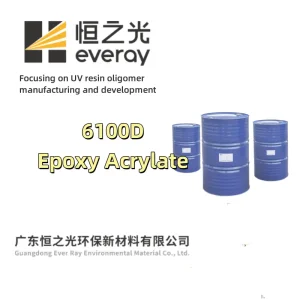
High-Quality 6100D Epoxy Acrylate UV Resin: Brightness & Adhesion
Superior brightness and shrinkage resistance resin architecture optimized for high-impact UV inks, decorative laminates, and wood primers.
View Product Specs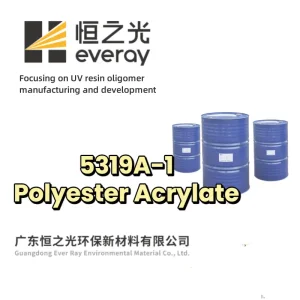
Buy Polyester Acrylate 5319A-1: Reliable Coating Solution
A specialized polyester acrylate providing outstanding flexibility, chemical resistance, and high adhesion on metal foils, coils, and rigid plastics.
View Product Specs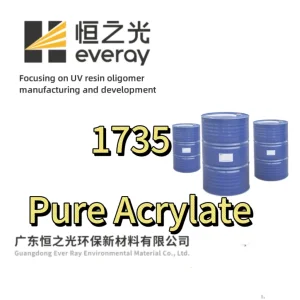
Wholesale Low Shrinkage High Flexibility Pure Acrylate Resin
Pure acrylic backbone oligomer engineered for extreme weatherability, light stability, and elastic bonding on soft plastics, vinyl, and wood coatings.
View Product Specs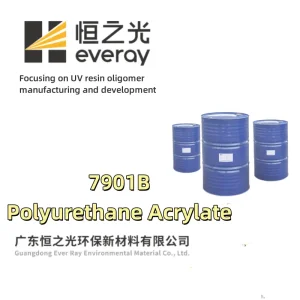
High-Quality 7901B UV-Resin for Heavy Industrial Coatings
Robust industrial crosslinking resin formulated for corrosion resistance, chemical pipeline coatings, and heavy-wear protective equipment finishes.
View Product SpecsFrequently Asked Technical Questions: Formulations & Procurement
Detailed formulation guidance, QA benchmarks, and international sourcing answers direct from Ever Ray application chemists.
How do you guarantee a persistent gloss rating above 95 GU without haze?
High gloss (>95 GU @ 60°) without haze or micro-wrinkling requires balancing the reaction rate gradient between the surface and deep film layers. We control this by combining aliphatic urethane oligomers with low-viscosity acrylate monomers (e.g., HDDA or TPGDA) and employing Type I/Type II photoinitiator blends with amine synergists. This setup prevents oxygen inhibition at the air interface, allowing rapid surface leveling and uniform crosslink density.
What is the structural difference between aliphatic and aromatic polyurethane acrylates?
Aliphatic polyurethane acrylates utilize non-aromatic isocyanate cores (such as IPDI, HDI, or H12MDI). Because they lack benzene rings, they are photochemically inert to UV solar degradation, preventing yellowing and preserving gloss outdoors. Aromatic urethane acrylates (built with TDI or MDI) contain conjugated aromatic rings that oxidize under sunlight into quinoid chromophores. While aromatic resins provide cost-effective toughness for indoor parquet flooring and pigmented primers, aliphatic grades are required for exterior clearcoats, automotive surfaces, and cosmetic nail gels.
Can you customize oligomer viscosity and glass transition temperature (Tg)?
Yes. We regularly synthesize custom oligomer grades for high-speed roller lines, vacuum spray operations, or additive 3D printing equipment. By tailoring polyol molecular weight (polycarbonate diols, polyether, or polyester), isocyanate functionality, and end-capping acrylate ratios, our chemists adjust the Tg from -30°C (for ultra-flexible elastomeric membranes) to +85°C (for high-hardness 4H scratch-resistant topcoats) and regulate bulk viscosity from 2,000 mPa·s to 80,000 mPa·s at 25°C.
What export testing documentation accompanies bulk chemical shipments?
Every international commercial shipment includes batch-specific Certificates of Analysis (COA) containing verified GPC molecular weight distribution data, Brookfield viscosity, color Hazen rating, acid value, water content (Karl Fischer < 0.1%), and residual monomer concentration. All grades are accompanied by globally compliant GHS 16-section Safety Data Sheets (SDS), technical application guidelines, and formal regulatory declarations for REACH (EU), RoHS, and TSCA (USA).
