
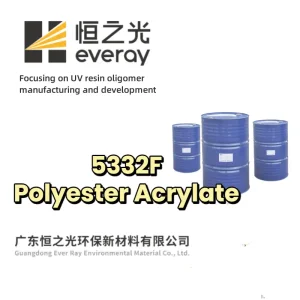
Buy Polyester Acrylate 5332F – The Premium Choice for Offset Inks Supplier, Factory
Technical Specs & Order
Engineered oligomers and dual-cure resins synthesized under stringent ISO conditions to eliminate yellowing, enhance interfacial peel resistance, and maintain rheological equilibrium.
A macroscopic assessment of capacity shifts, environmental compliance (REACH/RoHS), and structural bonding demands across global manufacturing sectors.
The global epoxy adhesive supply paradigm is transitioning toward high-density synthesis bases in Southeast Asia and Greater China, where direct precursor accessibility (epichlorohydrin, BPA, acrylate esters) delivers critical economies of scale and batch integrity for high-volume purchasing.
Industrial formulators are systematically replacing solvent-based two-component systems with 100% solids UV-curing and radiation-induced epoxy acrylates. This shift cuts line-drying energy by up to 78% while guaranteeing absolute conformity to European VOC mandates.
Modern micro-assemblies require cross-bonding between incompatible matrices: low-surface-energy polyolefins, chemically treated anodized aluminum, and optical display glass. Only hybrid acrylate-epoxy networks solve both initial green strength and post-cure creep.
Deconstructing the chemical mechanics behind modified epoxy acrylates, free-radical cure kinematics, and failure-mode mitigation.
Thin-film epoxy glues commonly suffer from tacky surfaces due to atmospheric oxygen scavenging free radicals. By incorporating our proprietary amino acrylate oligomers and active amine synergists into the epoxy matrix, hydrogen-donor transfer occurs instantly, accelerating surface skin formation even at speeds above 60 m/min.
Bisphenol A epoxy acrylate produces exceptional hardness and heat defense but can exhibit significant volumetric contraction upon instantaneous UV polymerization. Ever Ray synthesizes hyperbranched and flexible polyether-modified chains directly into the epoxy backbone, cushioning shrinkage stresses down to <1.5%.
Standard aromatic epoxy systems darken under elevated operating temperatures or prolonged UV index exposure. Ever Ray's modified aliphatic urethane-epoxy hybrid networks deliver delta E color shifts under 1.5 following 1,000 hours of continuous QUV aging in precision optical bonds.
How global adhesive compounders utilize our epoxy oligomers across strict tier-one electronics, automotive, and industrial lines.
Direct bonding of optical filters, touch sensors, and camera module barrels. High optical transmission (>99%), high dielectric resistance, and zero off-gassing protect sensitive sensor arrays during thermal reflow cycles.
Optical Clear Transmission > 99%Dual-curing epoxy acrylate solutions facilitate instant UV fixing followed by shadow-zone thermal curing. Essential for EV pouch cell isolation, busbar anchoring, and motor winding structural potting.
Dual-Cure UV + Thermal TriggerReinforcing fiber-to-metal bonding in lightweight structural frames, aerospace interiors, and high-frequency acoustic diaphragms. Resists continuous vibration, shear stress, and boiling fluid immersion.
Resists Thermal Shock (-40°C to +135°C)Charting next-generation synthetic pathways for sustainable bio-monomers, nanosilica hybridization, and reversible debonding architectures.
Developing epoxidized vegetable oil and vanillin-derived acrylate monomers to replace petro-derived BPA, achieving sustainable scope-3 reductions while preserving Tg above 110°C.
Grafting surface-modified 20nm silica sol particles evenly inside the epoxy acrylate matrix to lower thermal expansion (CTE) and double scratch resistance without increasing formulation turbidity.
Integrating thermo-reversible Diels-Alder adducts or acid-triggered disassemblable linkages to allow 100% disassembly and component reclamation in high-value electronic and battery assemblies.
Expanded portfolio grades targeting specialized viscosity windows, high wetting indices, extreme abrasion resistances, and specialty substrate affinity.
Critical data verification directly addressed by our senior chemical formulation team.
