Featured Acrylic Epoxy & High-Performance Resins
Discover our laboratory-certified epoxy acrylates, aliphatic polyurethanes, and modified structural oligomers calibrated for radical polymer density, scratch deflection, and substrate interfacial adhesion.
Wholesale Strong adhesion acrylate oligomer 1100UV resin, suitable for UV coatings and inks Supplier, Suppliers
Inquire / Buy Product
Wholesale 6851A High-Performance Modified Epoxy Acrylate Resin | For UV Coatings, Inks & Gel Polishes | High Transparency & Yellowing Resistance Manufacturers, Factories
Inquire / Buy Product
Buy Polyester Acrylate 5311A – A High-Efficiency and Durable UV Resin Choice Manufacturers, Suppliers
Inquire / Buy Product
High-Quality Fast curing and strong adhesion 1730 UV resin suitable for vacuum plating Manufacturer, Suppliers
Inquire / Buy Product
High-Quality Waterborne 70251 UV-resin for 3D Printing,UV-ink and UV Wood-coatings Manufacturers, Suppliers
Inquire / Buy Product
Wholesale Durable 6118 Epoxy Acrylate UV Resin: Ideal for UV wood, plastic and ink applications Manufacturers, Products
Inquire / Buy Product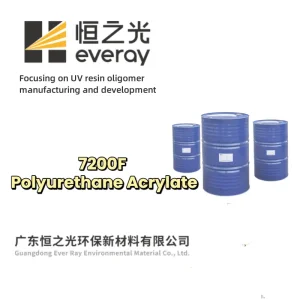
Buy Durable 7200F polyurethane acrylate: suitable for heat-resistant and cold-resistant UV coatings Manufacturers, Products
Inquire / Buy ProductEvolutionary Trends in Acrylic Epoxy Polymerization
The international acrylic epoxy sector is undergoing a profound paradigm shift driven by green chemistry, LED-UV conversion, and hybrid polymer networks capable of answering stringent regulatory and functional demands.
Long-Wavelength LED-UV Adaptation
Global formulators are transitioning from high-power mercury arc lamps toward narrow-band 365nm to 395nm UV-LED diodes. Advanced bisphenol A and aliphatic epoxy acrylates require engineered unsaturation levels to mitigate superficial oxygen inhibition and secure thorough through-cure.
Zero-VOC Waterborne Hybridization
Strict EPA, REACH, and ESG mandates necessitate the elimination of free monomer diluents. Emerging waterborne epoxy acrylate dispersions balance ionic stabilization with photocurable cross-links, achieving pristine film clarity, low internal shrinkage, and zero solvent emissions.
Dendritic & Dual-Cure Architectures
Hyperbranched structural design delivers an abundance of functional vinyl groups in a compact spherical geometry. When united with thermal, cationic, or moisture dual-cure mechanisms, these polymers unlock deep-section curing for composite fabrication and shadow-zone electronics bonding.
Global Enterprise Procurement Imperatives
Corporate supply officers and chemical engineers prioritize raw material consistency, supply chain continuity, and batch auditability to safeguard automated manufacturing lines across diverse regulatory spheres.
Batch-to-Batch Rheology Control
Uncontrolled variations in molecular weight distribution skew resin viscosity and wetting dynamics, triggering downtime on high-speed gravure or flexographic lines. Procurement requires precision polydispersity indexing.
Full Regulatory Passport
From RoHS 3 and REACH Annex XVII to TSCA registrations and halogen-free certifications, multinational contract coaters require comprehensive SDS and compliance documentation pre-cleared for cross-border logistics.
Direct R&D Formulation Matching
Off-the-shelf resins rarely deliver target flexibility without sacrificing Tg. Tier-1 buyers demand direct collaboration with chemical synthesis teams capable of altering backbone backbone length, esterification rates, and monomer packages.
Total Cost of Ownership (TCO)
Evaluating chemical yield, shelf stability, and initiation speed under minimal photoinitiator loading enables procurement leaders to optimize cost-per-square-meter of finished coatings rather than focusing merely on spot freight price.
China Smart Factory 4.0: Supply Chain Resilience & Precision
From our advanced manufacturing ecosystem in Yunfu and Jiangmen, Guangdong, Ever Ray leverages closed-loop digital orchestration to redefine batch-to-batch repeatability and global export efficiency.
DCS Automated Synthesis
Every reactor vessel is governed by continuous Distributed Control Systems (DCS), standardizing temperature ramps, catalytic dosing, and acid value suppression during the esterification process, completely removing human error.
Integrated Upstream Monomer Sourcing
Operating within the Greater Bay Area chemical hub provides frictionless access to key precursors including Bisphenol A diglycidyl ether, acrylic acid, and IPDI/TDI isocyanates, protecting overseas contracts from commodity bottlenecks.
Traceable Digital Analytical Hub
Equipped with Gel Permeation Chromatography (GPC), Fourier Transform Infrared (FTIR), and UV-Vis spectrophotometers, each export lot receives comprehensive validation against customer specs before nitrogen-blanketed barreling.
Targeted Substrate & Local Application Engineering
Acrylic epoxy and acrylate oligomers are engineered to balance cross-link density, chemical resistance, and substrate adhesion under punishing operational stress.
3C Electronics & Vacuum Metallization
In mobile phone shells, wearable devices, and metallic-look finishes, resins like Grade 1730 offer phenomenal adhesion to PVD layers, PC, and ABS without inducing substrate micro-crazing or yellowing.
Heavy-Duty Wood & Flooring Primers
Epoxy acrylates (such as 6100D-85 and 6118) penetrate open porous wood and high-density fiberboard (MDF), delivering quick-cure sandability, deep chemical resistance, and high hardness for parquet and commercial furniture.
Functional Photopolymer 3D Printing
Modern SLA and DLP stereolithography requires ultra-low viscosity and controlled volumetric shrinkage. Modified epoxy acrylates deliver the high tensile modulus, dimensional accuracy, and heat deflection required for industrial prototyping.
High-Gloss Offset & Flexo Packaging Inks
Printing grades such as 5403-3F and 5377A guarantee exceptional pigment wetting, stable lithographic water-ink balance, and rapid drying on non-absorbent foils, BOPP films, and folding cartons.
Frequently Asked Questions: Technical & Procurement FAQ
Direct answers to the most critical technical, commercial, and processing queries encountered by formulation chemists and enterprise procurement teams.
What chemically differentiates Epoxy Acrylates from Polyurethane Acrylates (PUA)?
Epoxy acrylates are synthesized via the ring-opening esterification of epoxy resin backbones (predominantly Bisphenol A diglycidyl ether) with acrylic acid. This yields an aromatic-dense network characterized by extreme hardness, rapid radical curing, high chemical resistance, and cost effectiveness, though with limited outdoor flexibility. Conversely, polyurethane acrylates (PUA) integrate isocyanate chemistries (aliphatic or aromatic) with polyols, offering superior elasticity, weatherability, non-yellowing characteristics, and abrasion endurance at a slightly higher cost index.
How do modified epoxy acrylates prevent yellowing and excessive shrinkage?
Standard Bisphenol A epoxy acrylates possess aromatic ether linkages prone to photochemical oxidative degradation under solar UV exposure. Modified grades (such as Ever Ray 6851A and 67283) introduce aliphatic chain extensions, semi-synthetic soft segments, or phosphate/silane functionalities that reduce internal crosslink stress, increase optical transmittance, and drastically mitigate thermo-oxidative yellowing.
Can Ever Ray customize resin properties for specialized factory curing equipment?
Yes. Our specialized R&D application laboratory adapts oligomer structures based on client curing parameters (mercury lamps vs. 365/385/395nm UV-LEDs), line conveyor velocities, target viscosity windows (at 25°C), and specific diluent packages (such as TMPTA, TPGDA, DPGDA, or IBOA). We formulate customized samples accompanied by complete analytical certificates.
What role do amino acrylates and active amines play in overcoming oxygen inhibition?
Atmospheric oxygen reacts with active free radicals at the coating boundary to generate non-reactive peroxy radicals, arresting surface cure and resulting in a greasy or tacky surface. Amino acrylates act as copolymerizable synergists: the alpha-hydrogen atoms on the amine undergo hydrogen-transfer to the peroxy radicals, regenerating initiating alkyl radicals and consuming local oxygen, ensuring high line-speed curing even in thin-film inks and overprint varnishes (OPVs).
What packaging configurations and export compliance certifications are supported?
Standard shipments are containerized in 20kg HDPE pails, 200kg steel drums, or 1000kg IBC totes purged with nitrogen to preserve radical inhibitor balance. Every shipment includes batch-matched Certificates of Analysis (COA), 16-point GHS-compliant Safety Data Sheets (SDS), and verification for RoHS, REACH, and maritime dangerous goods compliance where required.
Specialty Acrylic Resins & Performance Monomer Line
Select from our specialized grades designed for exceptional weather resistance, metal/primer adhesion, pressure-sensitive adhesion (PSA), and low-viscosity flexographic ink performance.
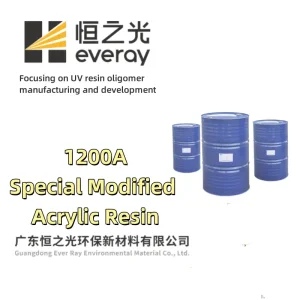
High-Quality 1200A UV resin in adhesion of density-board primer and metal-substrate Suppliers, Product
Inquire / Buy Product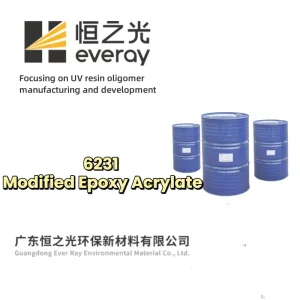
Wholesale 6231:Curing modified epoxy acrylate with excellent leveling properties Manufacturer, Suppliers
Inquire / Buy Product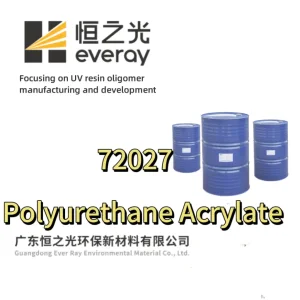
Wholesale Model 72027 Weather-Resistant Polyurethane Acrylate Resin | Low Yellowing & High Tack PSA Adhesive Oligomer for Outdoor Tapes & Labels Supplier, Factory
Inquire / Buy Product
Buy Polyester Acrylate 5377A – The Ideal Choice for Flexographic UV Inks Suppliers, Factory
Inquire / Buy Product
Buy UV Resin 5017 with Low Odor, Low Shrinkage for UV Inks and Varnishes Manufacturers, Suppliers
Inquire / Buy Product
Buy 56031 Low Viscosity High Reactivity Polyester Acrylate Resin for UV Gravure Varnish, Flexo Ink & Snow Effect Coatings Manufacturer, Manufacturers
Inquire / Buy Product
Wholesale Multifunctional 7600 polyurethane acrylate oligomer for UV coatings and inks Product, Products
Inquire / Buy Product