
Core Modified Monomer & Specialized Formulations
Featured grades engineered for glass substrate adhesion, low volumetric cure shrinkage, and fast photo-thermal curing under harsh industrial parameters.
Market Landscape & Regional Industrial Context
Evaluating chemical supply chains, environmental mandates, and technical demands across Kazakhstan and the wider Eurasian Economic Union (EAEU).
Industrial Evolution in Kazakhstan
Kazakhstan’s chemical processing and coating manufacturing sectors are transitioning toward high-solids and 100% reactive UV curable chemistries. Centered around industrial parks in Almaty, Karaganda, Pavlodar, and Shymkent, manufacturers face stringent ecological pressures coupled with harsh operating realities. Traditional solvent-borne systems create severe VOC emissions and experience drying latency during sub-zero operational windows.
Modified acrylate monomers (including monofunctional to hexafunctional custom formulations) serve as essential reactive diluents and crosslinking engines. They provide simultaneous viscosity depression without VOC emissions, solving critical viscosity-climbing problems induced by low ambient temperatures inside unheated logistics hubs and plants.
Global Photopolymer Dynamics
Worldwide consumption of radiation-curable materials continues to expand at a 7.2% CAGR, driven by electronics miniaturization, rapid prototyping, and non-polluting coil coatings. While historical supply routes depended on Western European synthesis, structural shifting has moved monomer synthesis downstream to mega-scale Chinese chemical refining corridors.
For Central Asian converters, sourcing from high-capacity Chinese facilities ensures cost-performance ratios unattainable through multi-tier European brokerage, alongside uninterrupted batch uniformity governed by continuous automated esterification columns.
Localized Application Vectors in Central Asia
Specific formulation adjustments engineered to match Kazakhstan's major downstream industrial manufacturing sectors.
Heavy Industrial Machinery & Pipe Coatings
Protective primers for equipment in the Karaganda and Kostanay metallurgical basins. Modified acrylate monomers provide phosphate-free adhesion directly to sandblasted cold-rolled steel, countering rapid oxidation under condensation cycles.
Architectural Glass & Facade Inks
Almaty's architectural construction sector requires direct-to-glass digital UV inks capable of passing accelerated 100°C boiling tests and 1,000-hour QUV exposure without debonding, flaking, or yellowing across extreme seasonal thermal deltas.
High-Speed Food & Beverage Packaging Inks
Converters supplying Kazakhstan’s growing food export trade require low-migration, low-odor monomers. Acrylate diluents with high photo-conversion efficiency eliminate residual monomer leaching on flexible BOPP, aluminum foil, and PE substrates.
| Performance Characteristic | Standard Acrylate Monomers (HDDA / TPGDA) | Ever Ray Modified Acrylate Monomers | Practical Advantage for Kazakhstan Converters |
|---|---|---|---|
| Volumetric Shrinkage | 8.0% - 14.5% | < 1.2% - 3.5% | Prevents micro-cracking and delamination on rigid glass & metal |
| Sub-Zero Flexibility (-35°C) | Brittle, high fracture frequency | Retained elongation > 15% | Survives harsh Eurasian winter freight and outdoor exposure |
| Oxygen Inhibition Resistance | Moderate; requires high inert gas blanket | Integrated amine/ether modification | Tack-free surface finish under low-energy LED-UV lines |
| Viscosity Profile @ 20°C | High temperature sensitivity | Stabilized Newtonian rheology | Smooth jetting and roller coating during cold season cold-starts |
Direct Supply Chain Resilience: China to Central Asia
Strategic logistics mapping from Yunfu & Jiangmen manufacturing hubs straight to Khorgos, Almaty, and beyond.
Rail & Multimodal Freight Corridors
By leveraging the direct China-Europe / Central Asia Rail Express via the Khorgos-Altynkol gateway, bulk shipments of acrylate monomers and resins reach warehouses in Almaty within 10 to 14 days of factory dispatch. This completely bypasses unstable maritime bottlenecks and maritime demurrage costs.
All drums, IBCs, and ISO tanks are shipped with temperature-controlled heating wraps or thermal blankets, preventing freeze crystallization and self-polymerization during harsh winter transits across Xinjiang and the Kazakh steppes.
Raw Material Vertical Integration
Ever Ray's production base operates backward-integrated esterification and ethoxylation units. By maintaining captive supplies of acrylic acid, glycols, and functional modifiers, our pricing avoids global spot market volatility.
Kazakh formulators receive constant batch consistency backed by dual-column gas chromatography (GC) and gel permeation chromatography (GPC) molecular weight distribution tracking on every production lot.
Technical Roadmap & Forward Perspectives (2025–2030)
High Adhesion & Low Shrinkage
Monofunctional and difunctional modification tailored for glass, aluminum foil, and treated polypropylene packaging.
Bio-Based Monomers
Integrating 30-50% plant-derived renewable carbon backbones without sacrificing radical curing velocity or film clarity.
Dual-Curing Cationic/Radical
Hybrid systems delivering shadow curing for complex 3D automotive structures and thick industrial electronics encapsulation.
Waterborne Self-Emulsifying UV
Zero-co-solvent systems for ultra-low film thicknesses matching extreme European and Eurasian chemical restrictions.
EAEU Compliance & Engineering Consultation
Ensuring frictionless import processing, legal clearance, and customized formula integration for CIS formulators.
EAC Certification & SDS
All batches are supplied with complete Russian and English Safety Data Sheets (GOST 30333-2007 compliant) and Technical Data Sheets detailing flashpoints, vapor pressures, and UN hazardous packaging specifications.
Custom Synthesis Support
Our application laboratory adjusts viscosity, functional group density, refractive index, and cure speed to accommodate client-specific mercury vapor, LED 365/385/395nm, or electron beam (EB) curing line limitations.
On-Site Trial Formulation
Senior chemical application engineers assist formulators directly via virtual bench consultations or on-site testing in industrial manufacturing corridors across Almaty and Karaganda, expediting testing-to-plant lead times.
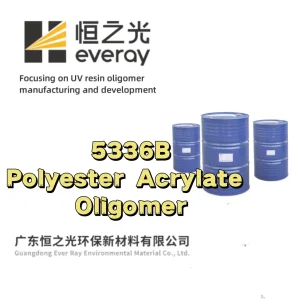
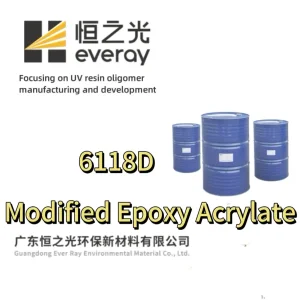
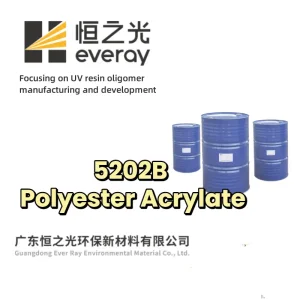
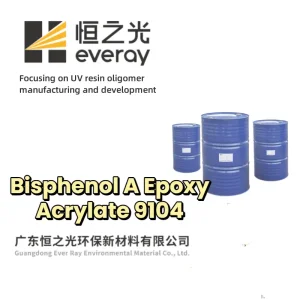
Wholesale Resins & Acrylate Oligomer Portfolio
Direct wholesale catalog for coatings, graphic arts, industrial adhesives, and additive manufacturing plants in Kazakhstan.
Frequently Asked Technical Questions
In-depth responses clarifying shipping, performance tuning, and operational standards across Kazakhstan.
Why are modified acrylate monomers superior to conventional standard acrylates in Kazakhstan's climate?
What logistics arrangements are in place to supply Almaty and Karaganda factories directly?
How do your monomers manage oxygen inhibition in open-air roll coating lines without nitrogen blanketing?
Can we request customized viscosity and refractive index ranges for optical adhesives and 3D printing?
What is the shelf life and cold-storage protocol for shipments delivered in winter?
Initiate Technical Verification for Kazakhstan Market
Request full analytical certificates (COA), sample kits (500g–5kg), or schedule an initial chemistry review with our lead photopolymer synthesis specialists.
