High-Performance UV Oligomers Engineered for Romanian Manufacturing Lines
Validated on high-throughput flexographic, offset, and dual-cure roll-coating lines across Central and Eastern Europe to eliminate oxygen inhibition and optimize LED-UV curing kinetics.
Buy 2406 UV Resin: Low Odor Solution for Rapid Paper and Plastic Varnishes Manufacturer, Factories (Romania Export Grade)
High-Quality Durable 2600UV Resin: High Hardness & Excellent Wear Resistance, Suitable for Romanian Industrial UV Applications
Wholesale Aromatic PA UV-Resin 7113A for UV Vacuum-Metallization & Automotive Plastic Trim Coatings in Romania
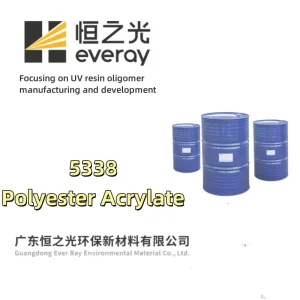
Buy 5338 UV Resin as Amino-Synergistic Oligomer & Active Diluent for Romanian Printing Ink Formulators
Industrial Dynamics & UV Curing Transformation in Romania
An in-depth chemical engineering perspective on how Romania’s expanding automotive, flexographic packaging, and industrial furniture clusters are upgrading to high-efficiency amino acrylate chemistry.
Automotive Hubs (Argeș & Dolj)
Romania’s automotive manufacturing corridors around Pitești (Mioveni) and Craiova host extensive Tier-1 and Tier-2 injection molding and interior component coating lines. Suppliers migrating away from high-bake thermal systems require ultra-low cure cycles (<2 seconds) and non-yellowing acrylic matrices capable of passing rigorous cyclomicro-scratch and chemical resistance tests on PC/ABS parts.
Packaging Clusters (Bucharest & Cluj)
The high concentration of commercial flexographic, screen, and offset packaging plants across Ilfov, Cluj-Napoca, and Timișoara demand thin-film coatings with zero surface tack. Operating on narrow and wide-web high-speed presses (>150 m/min), converters rely on amino acrylate synergists to counter severe atmospheric oxygen inhibition without triggering amine blushing or migration.
Wood Processing (Transylvania)
From Brașov to Maramureș, Romania's timber and furniture export infrastructure is subject to stringent EU volatile organic compounds (VOC) restrictions. Manufacturers utilizing flat-line UV roll coaters require high-solids, low-viscosity amino acrylates that accelerate sanding primer cure and impart exceptional mar resistance onto solid oak, beech, and engineered MDF boards.
Mechanistic Superiority of Amino Acrylate Oligomers in UV/EB Formulations
Why incorporating tertiary amine functionality directly into the oligomer backbone outperforms physical amine additive blends in thin-film industrial applications.
1. Hydrogen Abstraction & Peroxy Radical Quenching
In standard free-radical UV curing under ambient air, ground-state molecular oxygen diffuse into the top 1–5 microns of the liquid film, reacting instantly with propagating carbon radicals to produce unreactive peroxy radicals (ROO•). This terminates polymerization prematurely, causing under-cured, tacky surfaces, loss of solvent rub resistance, and gloss inconsistency.
Amino acrylate oligomers overcome this barrier through active tertiary amine groups incorporated via Michael addition into polyether, polyester, or epoxy acrylate backbones. The carbon atom alpha to the nitrogen easily donates an alpha-hydrogen to peroxy radicals, converting them into stable hydroperoxides (ROOH) while regenerating a highly reactive aminomethyl carbon radical that re-initiates chain propagation in the presence of monomeric acrylates.
Chemical Reaction Schematic:
R• + O₂ ---> ROO• (Unreactive Peroxy Radical)
ROO• + R₂N-CH₂-R' ---> ROOH + R₂N-C•H-R'
// Radical Regeneration & Propagation
R₂N-C•H-R' + CH₂=CH-COOR ---> Chain Growth Continued!
The regenerated alpha-aminoalkyl radical exhibits exceptional reactivity towards electron-deficient acrylate double bonds, restoring full crosslinking density even at line speeds exceeding 180 m/min.
Performance Matrix Comparison: Oligomer vs. Physical Amine
- Network Integration: Amino acrylate molecules crosslink covalently into the 3D polymer matrix, preventing post-cure leaching.
- Odor Minimization: Far lower volatility than monomeric tertiary amines (e.g., MDEA, DMAEMA, EDB), eliminating harsh workshop odor.
- Reduced Migration: Suitable for indirect food-contact secondary packaging per Swiss Ordinance and Nestlé guidance.
2. Synergy with Type II Photoinitiators & LED UV Shift
Unlike Type I photoinitiators that undergo unimolecular bond cleavage, Type II photoinitiators (Benzophenone, ITX, DETX) require an active electron/hydrogen donor to transition from the excited triplet state into free radicals. Amino acrylates act as macromolecular hydrogen donors with unmatched kinetic efficiency.
As Romanian industrial operations increasingly adopt energy-efficient 365nm, 385nm, and 395nm LED-UV curing lamps, short-wavelength UVC light (200–280nm, traditionally responsible for surface cure) is entirely absent. Amino acrylate oligomers allow formulators to match long-wavelength LED emitters with Type II sensitizers, achieving instantaneous tack-free curing without high nitrogen inerting costs.
Amino Acrylate Oligomer Technical Portfolio
Engineered grades ready for bulk supply to Romanian ink, coating, and adhesive formulators.
| Grade Designation | Resin Backbone | Amine Value (mg KOH/g) | Viscosity (mPa.s @ 25°C) | Acrylate Functionality | Primary Industrial Application in Romania |
|---|---|---|---|---|---|
| EverRay® AA-2100 | Polyether Amino Acrylate | 45 – 55 | 150 – 350 | 2.0 | High-speed UV flexo & overprint varnishes (OPV); rapid surface curing |
| EverRay® AA-2406 | Modified Epoxy Amino | 65 – 80 | 1,200 – 2,500 | 3.5 | Low-odor paper board packaging, offset inks, plastic cosmetic containers |
| EverRay® AA-3200 | Aliphatic Urethane Amino | 30 – 40 | 4,000 – 7,500 | 2.0 | Non-yellowing automotive interior plastics, thermoformable labels |
| EverRay® AA-5338 | Polyester Amino Acrylate | 80 – 100 | 400 – 800 | 4.0 | Reactive diluent substitute; high pigment wetting for screen and digital UV inks |
| EverRay® AA-6231 | Bisphenol A Modified Epoxy | 50 – 65 | 8,000 – 14,000 | 2.2 | Industrial wood parquet topcoats; chemical & abrasion resistance (Brașov/Cluj) |
Full REACH Compliance, Quality Control & Direct Romania Delivery
How our direct manufacturing and supply chain architecture guarantees total regulatory safety and operational reliability for Romanian chemical buyers.
REACH Annex XVII & SVHC Compliance
Every shipment delivered to Constanța Port, Bucharest dry ports, or regional bonded hubs comes complete with full EU REACH registration or OR (Only Representative) documentation. Our amino acrylate formulations contain zero Substances of Very High Concern (SVHC), comply strictly with RoHS Directive 2011/65/EU, and meet rigorous VOC emissions caps required across the European Single Market.
Rigorous Batch-to-Batch Quality Control
Operated under strict ISO 9001:2015 and ISO 14001:2015 management systems, each batch undergoes automated multi-step testing: gel permeation chromatography (GPC) for molecular weight distribution, titration for residual amine value, cone-and-plate viscometry at 25°C, and GC-MS for volatile organic fractions. Certificates of Analysis (COA) match every drum.
Intermodal Freight & Flexible Packaging
We provide stable ocean container logistics via the Black Sea Port of Constanța and rapid rail corridors to inland logistics centers in Ploiești, Timișoara, and Oradea. Products are packaged in nitrogen-blanketed 200 kg steel drums or 1,000 kg intermediate bulk containers (IBC), shielded against UV radiation and thermal degradation during transit.
Technological Roadmap: The Evolution of UV Oligomers (2025–2030)
Preparing Romanian chemical and industrial coaters for the next phase of energy transition, bio-based sustainability, and ultra-high-definition digital manufacturing.
1. High Bio-Based Carbon Content Amino Acrylates
In line with the European Green Deal and customer-driven Scope 3 emission targets across Europe, our synthesis laboratory is actively replacing petrochemical polyols and amines with plant-derived succinic acids, dimer fatty acid polyols, and cardanol derivatives.
The resulting bio-based amino acrylates deliver up to 45% renewable bio-carbon content (ASTM D6866) while maintaining identical double-bond reactivity and yellowing resistance as conventional resins, giving Romanian coaters an immediate competitive edge in green exports.
2. Next-Gen Dual-Cure & High-Frequency Inkjet Viscosity Tuning
Digital printing and additive manufacturing in Romania are expanding into high-speed industrial single-pass corrugated packaging and automotive functional 3D prototypes.
Our engineering roadmap focuses on hyperbranched amino acrylate architectures with ultra-low Newtonian viscosities (<50 mPa.s at jetting temperatures of 45°C), enabling instant surface tack elimination without clogging piezoelectric printheads (Kyocera, Ricoh Gen6, Konica Minolta).
Frequently Asked Questions for Romanian Chemical Formulators
Direct engineering insights into chemistry, line optimization, sample trials, and bulk fulfillment.
Why choose an amino acrylate oligomer instead of simple amine synergists like DMAEMA or EDB in Romanian plants?
How do amino acrylates support transition to LED-UV curing systems (385–395nm)?
Can Ever Ray customize amino acrylate viscosity and reactivity for specific Romanian factory equipment?
What are the minimum order quantities (MOQ), sample lead times, and shipping terms for Romania?
Full Series of Modified Acrylates & Performance Oligomers
Engineered resins available for immediate dispatch to Romanian industrial formulators, converters, and coating plants.
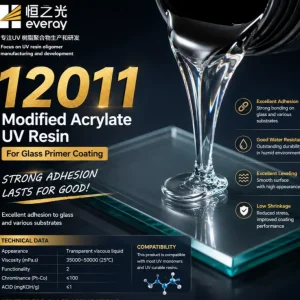
Wholesale 12011 Modified Acrylate UV Resin for Glass Primer Coatings: Boiling Water Resistance (Romania Supply)
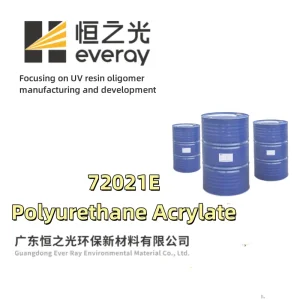
Buy 72021E UV-Resin for Multi-Substrate Bonding & Electronics Assembly Lines in Romania
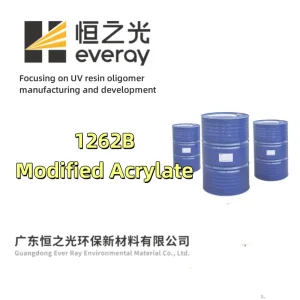
Wholesale Low Viscosity 1262B: Suitable for High-Durability PVC Floor Coatings in Romania
Wholesale 6231: Curing Modified Epoxy Acrylate with Leveling Properties for Romanian Industrial Coaters
Wholesale 72923 Fast-Cure Non-Yellowing Polyurethane Acrylate Resin for Peelable UV Adhesives
Wholesale 6106 Fast-Curing Modified Epoxy Acrylate Oligomer: High Adhesion for Romania Converting
Buy 6102 UV Resin: Enhanced Low-Shrinkage Epoxy Acrylate for Romanian Furniture & Wood Lines