
High-Performance UV Oligomers Engineered for Colombo & Western Province Industrial Formulators
Selected core acrylic and modified oligomers deployed in Sri Lankan high-speed flexographic presses, specialized vacuum metallization lines, and resilient optical bonding.
Fast-Curing 1730 UV Resin for Vacuum Plating & Metallized Substrates in Sri Lanka
Wholesale 1762 Anti-Yellowing UV Adhesive Resin for Sri Lanka Electronics & Assembly
Low-Shrinkage Pure Acrylate Resin for Sri Lanka Wood Coatings, Inks & Polymers
6851A Modified Epoxy Acrylate Resin for Sri Lanka High-Gloss Overprint Varnishes
Sri Lanka's Industrial Transformation: The Strategic Shift to UV-Curable Pure Acrylates
As Sri Lankan manufacturing climbs the global value chain from Colombo to Gampaha, Kandy, and Galle, photopolymer chemistry is replacing solvent-borne lacquers to meet stringent global export criteria.
Garment Embellishment & Textile Screen Printing
Sri Lanka stands as a world-class manufacturing hub for premium global apparel brands (Victoria's Secret, Lululemon, Nike). Tier-1 garment decorators in Katunayake and Biyagama Free Trade Zones demand high-elongation, wash-durable pure acrylate oligomers for UV/LED screen inks that cure instantly on synthetic microfibers, elastics, and performance cotton without cracking or releasing hazardous aromatic solvents.
Ceylon Tea Packaging & FMCG Folding Cartons
Ceylon tea exports command global prestige, necessitating luxury, high-barrier folding cartons, embossed tinplate can varnishes, and holographic tamper-evident seals. Pure acrylate oligomers provide low-odor, zero-residual-monomer overprint varnishes (OPV) that strictly comply with international food-contact non-migration thresholds while enduring intercontinental sea freight.
Rubberwood, Teak & Export Architectural Millwork
Sri Lanka's sustainable timber processing (treated rubberwood, high-density teak, and mahogany) produces bespoke furniture for European and North American markets. Pure acrylate formulations offer optimal penetration into dense grain structures, combining fast UV roller-coating line speeds with exceptional mar resistance and non-yellowing clarity under tropical sunlight.
Overcoming Sri Lanka's Equatorial Climatic Hurdles: Temperature, Salinity & Humidity
Formulating UV coatings and inks in Sri Lanka presents acute physical chemistry challenges. The country features relative humidity consistently fluctuating between 75% and 92% alongside ambient temperatures exceeding 32°C across coastal industrial corridors. Conventional epoxy acrylate systems suffer from moisture-induced film blushes, cure retardation due to dissolved moisture interacting with free radicals, and micro-cracking caused by post-cure volume contraction.
Ever Ray Pure Acrylate Oligomers feature custom synthesized acrylic backbones that exhibit minimal volumetric shrinkage (<1.5%), inherent hydrophobicity, and high thermal stability. The steric hindrance embedded in our oligomeric chains suppresses radical quenching by atmospheric oxygen and ambient humidity, assuring Sri Lankan formulators of tack-free curing at lower photoinitiator dosages and lower UV lamp wattage.
Formulation Matrix: Pure Acrylate Oligomers vs. Conventional Chemistries
A rigorous empirical benchmark demonstrating why pure acrylate architectures outperform legacy bisphenol-A epoxy acrylates and standard aromatic urethanes under equatorial exposure.
| Performance Dimension | Pure Acrylate Oligomer (Ever Ray Series) | Standard Bisphenol-A Epoxy Acrylate | Aromatic Polyurethane Acrylate (PUA) | Polyester Acrylate Oligomer |
|---|---|---|---|---|
| Cure Shrinkage (%) | 1.2% - 2.8% (Ultra-Low Shrinkage) | 6.5% - 9.8% (High Internal Stress) | 3.5% - 5.2% (Moderate) | 4.5% - 7.0% (Moderate to High) |
| QUV Yellowing Resistance (ΔE > 1000h) | < 0.8 (Extreme Lightfastness) | > 4.5 (Pronounced Ambering) | > 5.2 (Rapid Photo-oxidation) | 1.5 - 2.8 (Moderate Stability) |
| Adhesion to Low Surface Energy (BOPP, PET, ABS) | Grade 5B / 0% Peeling (Optimal Polar Wetting) | Grade 1B - 2B (Poor Interfacial Bond) | Grade 3B - 4B (Moderate Adhesion) | Grade 3B (Substrate-Dependent) |
| Tensile Elongation at Break (%) | 35% - 120% (Tailored Elastic Recovery) | 3% - 8% (Brittle Network) | 40% - 95% (High Toughness) | 10% - 25% (Semi-Flexible) |
| High-Humidity Cure Response (85% RH) | Complete surface cure, zero haze | Micro-tacky surface, amine bloom | Slightly retarded surface cure | Acceptable, slight gloss reduction |
| Primary Sri Lankan Application Fit | Flexible garment transfers, tea OPV, plastics | Rigid wood primers, heavy floor sealers | Industrial indoor timber floor lacquers | Offset printing inks, screen flexo |
Technological Roadmap: From Mercury Arc Lamps to 395nm LED-UV & Bio-Based Feedstocks
The manufacturing landscape in Sri Lanka is under tremendous pressure to decarbonize, reduce electrical consumption, and adhere to global zero-carbon mandates. Ever Ray's R&D facility in Guangdong has pioneered three fundamental technological shifts directly benefiting Sri Lankan coaters:
- LED-UV Long-Wave Optimization (365nm - 395nm): Engineered macromolecular architectures responding vigorously to energy-efficient LED curing stations, bypassing the high heat generation of mercury vapor lamps that distort delicate heat-sensitive plastic packaging and thin garment films.
- Zero-VOC Waterborne Pure Acrylate Dispersions: Combining the ecological benefits of zero-solvent formulation with the hardness and chemical resistance of UV curing, enabling local wood and textile factories to meet strict LEED and OEKO-TEX Eco-Passport requirements.
- Dual-Curing (UV / Moisture) Hybrids: Addressing complex geometric 3D-printed industrial prototypes and electronic components where shadow areas cannot receive direct UV irradiation.
40,000+ m²
Yunfu Synthesis Base Area
10+ Patents
Specialized Photopolymer Inventions
10-14 Days
Direct Ocean Freight to Colombo Port
ISO9001/14001
Total Traceability Batch Quality
Localized Application Scenarios: Solving Practical Formulation Failures
Real-world chemical challenges encountered across Sri Lankan manufacturing plants and the specific pure acrylate formulation solutions deployed by Ever Ray technical field engineers.
Textile Heat-Transfer Elastic Overprint in Katunayake FTZ
The Formulation Problem: Export sportswear screen printers faced continuous film cracking during stretch-testing on Spandex blends when using standard urethane/epoxy acrylate formulations. Additionally, high curing temperatures caused yellow discoloration on white polyester garments.
Ever Ray Chemical Solution: Formulated an ultra-flexible pure acrylate oligomer system featuring 85% elongation at break coupled with a customized amine synergist. The result is instant 395nm LED cure at sub-40°C substrate temperatures, maintaining 100% adhesion through 50+ commercial washing cycles at 60°C.
High-Speed Flexographic Varnish for Ceylon Pure Tea Boxes
The Formulation Problem: A major packaging converter in Colombo experienced inter-coat peeling and odor migration into premium silver-tip tea leaves when printing metallized PET board at line speeds exceeding 160 meters/minute.
Ever Ray Chemical Solution: Integrated our pure acrylate resin with ultra-low residual odor chemistry and branched functional groups. The formulation reduced curing shrinkage to 1.4%, achieving 100% cross-hatch tape adhesion (ASTM D3359) on untreated corona PET with zero sensory odor contamination.
Salt-Mist & High-Humidity Resistant Marine Timber Finishes
The Formulation Problem: Luxury resort woodwork and marine cabinetry along the Galle and Bentota coastlines suffered rapid micro-cracking and milky hazing within 3 months under saline maritime humidity and harsh UV irradiation.
Ever Ray Chemical Solution: Formulated an aliphatic pure acrylate hybrid oligomer possessing steric hindrance against UV-induced ester cleavage. The cured coating sustained 2,500 hours of continuous ASTM B117 salt spray testing with zero blistering, gloss retention above 92%, and no wood grain lift.
Optoelectronic Adhesives & Automotive Component Assembly
The Formulation Problem: Sri Lankan electronic manufacturing units producing wiring assemblies and sensor housings faced adhesive delamination under thermal cycling (-20°C to +85°C) caused by internal expansion mismatches between polycarbonate and aluminum alloy.
Ever Ray Chemical Solution: Delivered a pure acrylate resin characterized by a balanced glass transition temperature (Tg = 18°C) and stress-relaxing side ester chains. The cured adhesive layer dissipates thermal-mechanical shear stress, providing permanent bonding durability.
Chinese Manufacturing Resilience: Guaranteed Raw Material Security for Sri Lanka
In an era of volatile logistics and geopolitical shifts, Guangdong Ever Ray Environmental Material Co., Ltd. provides direct manufacturing integration from crude upstream acrylic acid to the Port of Colombo.
Integrated Upstream Monomer Sourcing
Direct feedstocks of glacial acrylic acid, ethyl hexyl acrylate, and hydroxyethyl acrylates from PetroChina & Sinopec complexes insulate our Sri Lankan clients from sudden international raw material surcharges.
Automated Synthesis in Yunfu Base
Over 10 multi-ton stainless steel reactors equipped with PLC continuous thermal monitoring and reflux condensers ensure batch-to-batch polymer molecular weight dispersion (PDI) stays below 1.15.
Streamlined Export Documentation
Full provision of ISO-compliant Certificates of Analysis (COA), 16-section GHS Safety Data Sheets, full REACH clearance, and preferential China-Sri Lanka trade certificates for rapid customs release.
Rapid Direct Shipping to Colombo
Direct feeder vessels from Shenzhen (Yantian/Shekou) and Guangzhou (Nansha) arrive at Colombo Port in just 10 to 14 days, minimizing warehouse buffer requirements for local blenders.
Need Custom Polymerization or Starting Formulations for Sri Lanka?
Our senior formulation chemists will adjust backbone viscosity, double-bond functionality, and diluent packages to match your specific lamp spectra and substrate requirements.
Regulatory Compliance & Sustainability Guarantees for Sri Lankan Importers
Ensuring compliance with international trade protocols, Central Environmental Authority (CEA) guidelines, and global retailer substance restricted lists (RSL).
Zero Nonylphenol & Alkylphenol Ethoxylates
Sri Lanka's textile processing industry strictly enforces the Zero Discharge of Hazardous Chemicals (ZDHC) Roadmap. Ever Ray pure acrylates are synthesized without APEO, nonylphenol isomers, or organotin catalysts, ensuring unhindered clearance under ZDHC Level 3 verification.
Nestlé Guidance & Swiss Ordinance Compliance
For tea packaging, confectionery cartons, and beverage labels exported from Sri Lanka to the European Union and Switzerland, our low-migration pure acrylate resins strictly adhere to Swiss Ordinance SR 817.023.21 and Nestlé Standard on Packaging Materials.
Safe Handling & Sea Transport Packaging
Shipped in UN-certified 200kg heavy-gauge steel drums or 1,000kg IBC totes equipped with anti-static liners, moisture-impermeable seals, and UV-blocking stabilization inhibitors to ensure zero dark-polymerization during equatorial ocean voyages.
Frequently Asked Questions: Sourcing Pure Acrylate Resins for Sri Lanka
Essential guidance for purchasing directors, factory managers, and senior formulation chemists operating within the Sri Lankan territory.
Why choose pure acrylate oligomers over epoxy acrylates for tropical export coatings?
Epoxy acrylates offer rapid curing and high hardness at low raw material costs, but they suffer from high volumetric shrinkage (up to 10%) and aromatic ether degradation that causes rapid yellowing under tropical UV exposure. Pure acrylate oligomers utilize fully aliphatic acrylic backbones that resist photodegradation (ΔE < 1.0 after 1000h QUV) and exhibit flexible adhesion to non-porous plastics, metals, and textiles without cracking in hot, humid weather.
What is the typical shipping lead time and customs procedure from China to Colombo?
Transit time from our production base in Guangdong (loading at Shekou, Yantian, or Nansha) to the Port of Colombo is 10 to 14 days on direct ocean freight rotations. Ever Ray issues complete pre-shipment documentation—including commercial invoices, packing lists with Harmonized Tariff Schedule (HS) classification, certified Certificates of Analysis (COA), and GHS-compliant SDS—to ensure frictionless clearance through Sri Lanka Customs.
How do Ever Ray pure acrylates combat oxygen inhibition on fast flexo and screen lines?
Oxygen inhibition is aggravated by thin ink films and high ambient humidity in Sri Lanka. Our pure acrylate oligomers can be paired with integrated amine co-initiators or hyperbranched dendritic polymers that accelerate free radical generation at the surface boundary layer. This ensures a non-tacky, hard surface cure without requiring nitrogen inerting chambers or excessive, costly photoinitiator loadings.
Can you provide customized viscosity adjustments for roller coater lines?
Yes. We customize pure acrylate oligomer viscosity ranges (from 1,000 mPa.s up to 150,000 mPa.s at 25°C) to fit roll coaters, screen print meshes, or flexographic anilox cells. We tailor the formulation using mono-functional or multi-functional reactive diluents such as IBOA, TMPTA, TPGDA, or low-skin-irritation alkoxylated monomers based on your rheological window.
What sample testing protocols are offered for Sri Lankan formulation trials?
We provide 500g to 2kg evaluation samples packaged in light-shielded, air-freighted containers accompanied by baseline starting point formulations and test data sheets (TDS). Our technical lab works directly with your R&D chemists via video conference to troubleshoot cure speed, viscosity, and substrate wetting throughout the qualification cycle.
Are Ever Ray UV resins compatible with LED lamps (365nm, 385nm, 395nm)?
Absolutely. With Sri Lankan factories converting from mercury vapor systems to UV-LED stations to reduce energy costs by up to 60%, our pure acrylates are engineered with high (meth)acrylate double-bond conversion kinetics that crosslink under narrow-wavelength 385nm and 395nm emission spectra without leaving unreacted monomers.
Complete UV Resin Portfolio for Industrial Formulations in Sri Lanka
Explore Ever Ray's full spectrum of waterborne dispersions, adhesion promoters, polyester acrylates, and specialty engineering oligomers formulated for tropical performance.
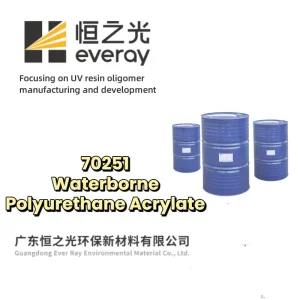
Waterborne 70251 UV Resin for Eco Wood Coatings & Inks in Sri Lanka
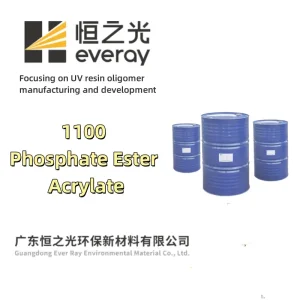
1100UV Strong Adhesion Acrylate Oligomer for Difficult Substrates in Sri Lanka
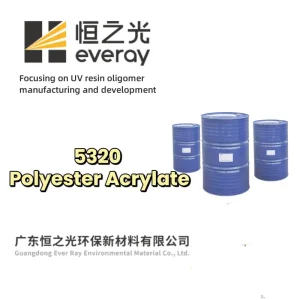
5320 Polyester Acrylate with High Gloss for Sri Lanka UV Offset & Screen Inks
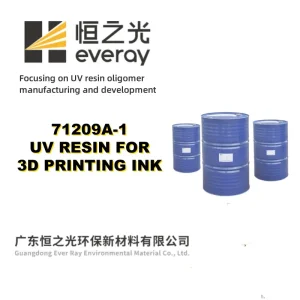
71209A-1 High-Impact ABS-Like Resin for 3D Prototyping in Sri Lanka
6271 Modified Anti-Yellowing Epoxy Acrylate for Sri Lanka Hardcoat Lacquers
5338 UV Resin Reactive Oligomer & Viscosity Reducer for Sri Lanka Blenders
5403-2F Polyester Acrylate for Stable Water-Ink Balance in Sri Lanka Inks
9104 Bisphenol-A Epoxy Acrylate Core Resin for Sri Lanka Wood Sealers
Accelerate Your Formulation Development for the Sri Lankan Market
Partner directly with Guangdong Ever Ray Environmental Material Co., Ltd. Get evaluation samples, comprehensive Technical Data Sheets (TDS), SDS documentation, and technical support directly from experienced photopolymer chemical engineers.
