
High-Performance Acrylate & UV Solutions for Philippines Manufacturing
Selected core resins formulated for rapid line speeds, substrate adaptability across unprimed plastics and alloys, and elevated humidity resistance.
Macro Dynamics & Technical Imperatives in the Philippine UV Radiation Curable Sector
A rigorous industrial perspective on how radiation curing technologies are superseding traditional solvent-based finishes across the archipelago.
The manufacturing ecosystem within the Republic of the Philippines is undergoing a high-velocity structural transition. Geographically positioned as a vibrant gateway within ASEAN, the industrial hubs encompassing the CALABARZON corridor (Cavite, Laguna, Batangas, Rizal, and Quezon), Clark Freeport Zone, Metro Manila, and Metro Cebu are realigning their chemical coating and assembly procedures. The catalyst driving this operational paradigm shift is twofold: stringent enforcement of the Philippine Clean Air Act (Republic Act No. 8749) alongside the Department of Environment and Natural Resources (DENR) guidelines concerning volatile organic compound (VOC) emissions, and intense global procurement pressures demanding higher energy throughput per square meter of factory floor.
Within radiation curing platforms (comprising ultraviolet UV-mercury, UV-LED, and electron beam EB systems), Pure Acrylate Oligomers occupy a strategically decisive role. Unlike conventional aromatic polyurethane acrylates or standard bisphenol-A epoxy acrylates, pure acrylic-backbone functional oligomers are chemically synthesized via the free-radical solution or bulk polymerization of selected acrylic esters followed by the introduction of pendant (meth)acryloyl reactive functional groups. The absence of aromatic rings along the macromolecular spine provides complete photochemical immunity against UV photo-oxidation and solar yellowing. For Philippine manufacturing enterprises exporting consumer electronics, exterior architectural composites, luxury nautical fittings, and handcrafted acacia and rattan furniture to North America and Western Europe, pure acrylate resins eliminate film embrittlement, delamination, and severe chromophore generation under sustained equatorial UV exposure and high relative humidity (frequently exceeding 85% RH).
Severe Tropical Hydrolytic Stability
Standard polyester acrylates can suffer ester linkage hydrolysis under high-humidity, high-heat marine atmospheric exposure. Pure acrylate backbones resist chemical breakdown, preventing hazing and loss of cohesive strength.
Sub-3% Volumetric Shrinkage
By engineering high molecular weight polymeric structures between functional acryloyl nodes, polymerization volume contraction is reduced from standard monomer levels (>12%) to under 3%, eliminating interfacial peel.
Non-Yellowing Optical Purity
100% aliphatic saturated carbon skeletons provide Delta E color stability under extreme solar weathering, making it critical for electronic lens bonding, smart displays, and architectural clear finishes.
Localized Downstream Scenarios Across Key Philippine Industrial Corridors
Addressing the exact performance barriers faced by chemical formulators, coaters, and assembly lines across the archipelago.
1. Laguna & Cavite Semiconductor Assembly
The Calamba and General Trias high-tech clusters produce high-density interconnects, CMOS sensor packaging, and consumer handheld enclosures. Pure acrylate oligomers provide low-dielectric dissipation factors, ultra-pure trace metal limits, and zero outgassing during secondary reflow or vacuum metallization processes.
2. Cebu Furniture & Luxury Woodenware Export
Cebu's furniture artisans utilize indigenous woods, bamboo, and rattan bound for luxury markets. High ambient moisture in the Visayas frequently causes conventional finishes to blister. Our pure acrylic oligomers exhibit micro-porous elastic elongation, accommodating wood dimensional expansion without micro-cracking.
3. Metro Manila FMCG & Flexible Packaging Inks
Industrial converters across Bulacan and Valenzuela running high-speed flexographic and screen-printing presses require low-migration inks with rapid UV-LED response. Pure acrylates provide superior pigment wetting, consistent rheological yield stress, and exceptional scuff resistance on corona-treated BOPP and PET films.
Technical Benchmark: Oligomer Chemistry Performance in Tropical Environments
Comparative laboratory assessment after 1,000 hours of accelerated weathering (QUV-A 340 nm) and 85°C / 85% RH damp-heat exposure.
| Chemical Class | Volumetric Shrinkage | QUV-A Yellowing (ΔE) | Adhesion to Untreated PET/PC | Hydrolytic Resistance | Recommended Application |
|---|---|---|---|---|---|
| Ever Ray Pure Acrylate Oligomer | 1.8% – 2.9% | < 0.8 (Crystal Clear) | 5B (Cross-Hatch Pass) | Grade 5 (Zero Micro-Blistering) | Automotive, 3C Electronics, High-End Wood Topcoats |
| Standard Bisphenol-A Epoxy Acrylate | 6.5% – 9.0% | > 5.2 (Noticeable Yellowing) | 2B – 3B (Delamination Risk) | Grade 3 (Slight Clouding) | Indoor Sanding Primers, Paper OPV, Offset Inks |
| Aromatic Polyurethane Acrylate | 4.0% – 6.2% | > 8.0 (Severe Browning) | 4B | Grade 4 (Fair) | Heavy-Duty Industrial Flooring, Dark Pigmented Inks |
| Aliphatic Polyurethane Acrylate | 3.5% – 5.5% | < 1.5 (Non-Yellowing) | 4B – 5B | Grade 4 (Good) | Cosmetic Nail Gels, Optical Films, Exterior Topcoats |
Guangdong Industrial Synthesis: Supply Chain Resilience for Philippine Importers
Direct manufacturer capabilities linking high-volume chemical synthesis in South China directly to the ports of Manila, Batangas, and Cebu.
Procurement teams within the Association of Southeast Asian Nations (ASEAN) increasingly prioritize structural supply resilience over fragmented tier-3 distribution. Guangdong Ever Ray Environmental Material Co., Ltd., established in 2006, operates a world-class manufacturing facility sprawling over 40,000 square meters within the Dawan Industrial Park, Yunfu, Guangdong. Governed by sophisticated Distributed Control Systems (DCS) and integrated PLC automation, our synthetic reactors maintain exact exotherm control within ±0.5°C during high-reactivity acrylic ester addition. This process guarantees narrow polydispersity indices (PDI) and eliminates batch-to-batch viscosity variance—a chronic failure point for UV ink formulation and precision slot-die roll coating lines.
Strategically located within the Greater Bay Area, Ever Ray leverages direct maritime shipping routes from Nansha and Shekou ports. Bulk chemical deliveries reach the Port of Manila (South/North Harbor) within 3 to 5 operational days, drastically minimizing pipeline capital exposure for Philippine manufacturers. Supported by Form E tariff preferential certificates under the ASEAN-China Free Trade Area (ACFTA), local formulators eliminate unnecessary customs duties while benefiting from direct factory-level chemical customization, lot trace documentation, and comprehensive GHS/SDS compliance.
Short Transit Windows
Consolidated direct vessels provide 3–5 day harbor-to-harbor shipping to Manila and Batangas, avoiding long 4-6 week European or American lead times.
Zero-Tariff Form E
Full tariff exemptions under ACFTA allow Philippine formulators to significantly lower direct raw material costs compared to non-treaty imports.
Custom Viscosity Tuning
In-house polymer chemists adjust acrylic backbone functionality, acid values, and reactive diluent cuts to match your line's lamp type and roll speed.
Stringent QA Validation
Every single drum undergoes GPC molecular weight tracking, Brookfield rotational viscosity profiling, and moisture titration before shipping authorization.
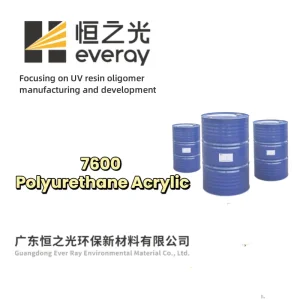
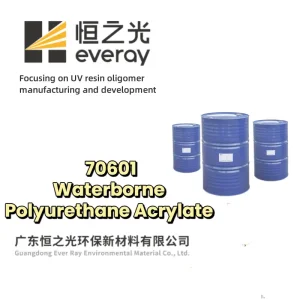
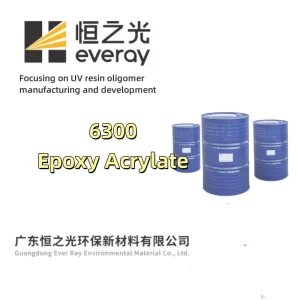
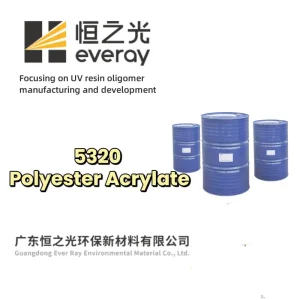
High-Purity UV Resins & Oligomers Serving Philippine Industrial Lines
Explore the full spectrum of our radiation-curable systems engineered for high adhesion, toughness, and superior optical clarity.
Frequently Asked Questions: Radiation Curing Formulation & Procurement
Authoritative technical clarification on oligomer chemistry selection, cure dynamics, and international shipping logistics.
What chemical distinction separates a "Pure Acrylate Oligomer" from Epoxy and Polyurethane Acrylates?
How do Ever Ray oligomers counter high humidity in Philippine workshops without cure blushing?
Can Ever Ray customize reactive monomer blends to adapt to UV-LED 395nm or 365nm line speeds?
What documentation and hazardous material compliance is supplied for Philippine port clearance?
What is the minimum evaluation sample quantity and lead time for initial Philippine factory trials?
Accelerate Your UV Formulation Performance Today
Connect with senior radiation-curing polymer chemists to request technical data sheets, free pilot test samples, or tailor-made oligomer viscosity cuts designed for your specific line requirements.
Send Inquiry Now