
High-Efficiency UV Resins & Reactive Monomers
Engineered for instant cure kinetics, extreme mechanical durability, and strict VOC compliance across automated roll-coating, vacuum metallizing, and offset ink lines in Greater Ho Chi Minh City.
Radiation Curing Transformation in Greater Ho Chi Minh City
How southern Vietnam's industrial powerhouse is pivoting from traditional solvent-based polyurethanes to next-generation photopolymer chemistries driven by international sustainability mandates.
The Greater Ho Chi Minh City (HCMC) economic area—encompassing the municipal manufacturing corridors of Thu Duc, Binh Chanh, and Cu Chi, alongside adjoining heavy industrial zones across Binh Duong (VSIP, My Phuoc, Ben Cat) and Dong Nai (Bien Hoa, Nhon Trach, Long Duc)—represents one of Southeast Asia's fastest-growing consumers of radiation-curable coatings, high-performance screen printing inks, and structural photopolymer resins. Historically reliant on thermal-curing solvent lacquers, nitrocellulose sealers, and two-pack solvent-borne polyurethanes, the region's production facilities now operate under strict regulatory scrutiny and tight international supply-chain requirements. Major export export destinations—including the European Union (under EU Green Deal and CBAM parameters) and North America (TSCA Title VI and EPA VOC limits)—have made the phase-out of volatile organic solvents a commercial necessity.
In response, chemical formulators across HCMC are turning to advanced Modified Acrylate Monomers and Hyperbranched Acrylate Oligomers (HBAOs). These specialized chemical building blocks provide the ultra-high reactivity, low shrinkage, and molecular flexibility demanded by high-throughput automated lines. Whether formulating UV-curable sealers for Vietnam's multibillion-dollar furniture export sector or high-adhesion optical primers for consumer electronics assembled in the Saigon Hi-Tech Park (SHTP), formulators require reactive diluents and oligomers that overcome the historic limitations of radiation curing: high volumetric shrinkage, substrate curling, oxygen inhibition, and brittleness.
Furniture & Architectural Wood
Overcoming fiber swelling and edge-chipping on rubberwood, acacia, and MDF boards through rapid-curing, sandable epoxy acrylates and hyperbranched hard coats with pencil hardness >3H.
3C Electronics & Vacuum Plating
Enabling mirror-like gloss and intercoat adhesion on injection-molded PC/ABS parts without thermal deformation, achieving 100% cross-hatch adhesion following cross-hatch tape and sweat tests.
High-Speed Graphic Arts
Delivering low-migration, low-viscosity reactive diluents for flexographic and offset print lines running at 300+ m/min, optimized for 395nm LED-UV systems without surface tack or residual odor.
Hyperbranched Architecture: Breaking the Viscosity-Functionality Paradox
Resolving formulation bottlenecks through globular molecular topologies that maximize radical curing speed while keeping working viscosities low.
In traditional UV/EB formulation chemistry, balancing surface scratch hardness and resin flow presents a stubborn trade-off. Linear oligomers—such as standard difunctional or hexafunctional aliphatic polyurethane acrylates—develop significant chain entanglement as molecular weight climbs. This results in steep, exponential viscosity spikes that force formulators to add large quantities of low-molecular-weight reactive diluents (such as HDDA or TPGDA). However, excessive monomer loading causes high cure shrinkage (often exceeding 8-12%), substantial internal film stress, embrittlement, and reduced substrate adhesion.
Hyperbranched Acrylate Oligomers (HBAOs) bypass this limitation through their spherical, dendritic molecular structures. Synthesized via controlled polycondensation of polyfunctional cores with branching extender units, hyperbranched polymers feature a densely packed periphery of terminal acrylate groups (typically 12 to 24 functional groups per molecule) surrounding a compact core. Because their globular architecture prevents intermolecular chain entanglement, hyperbranched acrylates exhibit remarkably low intrinsic viscosities—frequently 60% to 80% lower than linear polyurethane acrylates of comparable molecular weight.
When integrated into coating and ink formulations across Ho Chi Minh City's industrial lines, HBAO systems offer four distinct chemical advantages:
- Rapid Radical Crosslink Kinetics: The high localized concentration of terminal double bonds lowers activation barriers, enabling lightning-fast cures even under lower-energy 395nm or 365nm UV-LED lamps.
- Reduced Volumetric Shrinkage: The pre-assembled, rigid core structure minimizes steric movement during free-radical polymerization, dropping volumetric shrinkage below 3.5%.
- Oxygen Inhibition Resistance: High functional group density accelerates gelation at the film surface, rapidly building viscosity to lock out atmospheric oxygen before free radicals are quenched.
- Exceptional Hardness-to-Flexibility Balance: The dendritic structure forms a nanostructured three-dimensional network that resists surface scratching while preserving elastic recovery under mechanical shock.
| Resin / Monomer Class | Typical Functionality | Viscosity @ 25°C (mPa.s) | Volumetric Shrinkage (%) | Tg (°C) | Primary Industrial Role in HCMC |
|---|---|---|---|---|---|
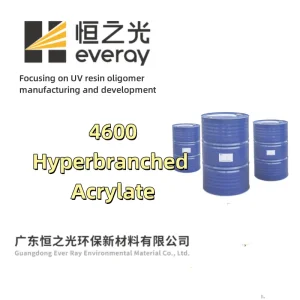
| Hyperbranched Acrylate (e.g., Grade 4600) | 12 - 16 | 1,200 - 3,500 | 2.8% - 4.2% | +65 to +85 | High-hardness topcoats, UV wood finishes, scratch-resistant plastic varnishes |
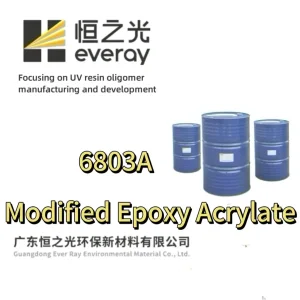
| Modified Epoxy Acrylate (e.g., Grade 6803A) | 2 - 4 | 8,000 - 25,000 | 5.5% - 7.5% | +55 to +70 | Fast-cure sanding sealers, paper overprint varnishes, high-gloss offset inks |
| Aliphatic Polyurethane Acrylate | 2 - 6 | 15,000 - 65,000 | 4.0% - 6.0% | +20 to +50 | Outdoor-grade non-yellowing finishes, flexible 3C housings, cosmetic gel polishes |
| Alkoxylated Diacrylate Monomers | 2 | 15 - 50 | 7.0% - 9.5% | +15 to +35 | Viscosity reduction, flexographic ink thinning, low skin-irritation diluents |
| Cyclic Monomers (IBOA / ACMO-Type) | 1 | 8 - 25 | 3.5% - 5.0% | +85 to +145 | Adhesion promotion on untreated PP/PET, high Tg without embrittlement |
Guangdong-to-HCMC Supply Chain Resilience
How our advanced synthesis facilities in Guangdong provide Vietnamese formulators with superior batch reliability, rapid transit, and favorable tariff structures.
3 to 5-Day Sea Transit
Direct maritime container shipping from Greater Bay Area ports (Nansha, Shenzhen) directly to Cat Lai Port and VICT in Ho Chi Minh City, avoiding long transshipments.
48-Hour Overland Corridor
Time-critical shipments clear via the Youyiguan/Huu Nghi border crossing directly into Vietnam's northern highway trunk, reaching southern warehouses within two to three days.
Form E Duty Free (0% Tariff)
Full support for ASEAN-China Free Trade Area (ACFTA) Certificate of Origin Form E, granting eligible Vietnamese industrial importers 0% preferential customs duties.
Vietnam’s chemical formulation sector depends heavily on steady, high-quality supplies of specialty monomers and oligomers. Supply chain disruptions, raw material volatility, or batch-to-batch variations can halt high-speed coating and printing lines. Guangdong Ever Ray Environmental Material Co., Ltd., based in Jiangmen and Yunfu, Guangdong, operates a scalable synthesis hub equipped with automated 10,000L stainless steel reactor vessels, continuous distillation setups, and real-time gas chromatography-mass spectrometry (GC-MS) monitoring systems.
This integrated production infrastructure protects our partners in Binh Duong, Dong Nai, and HCMC from upstream raw-material shocks. By producing core acrylic prepolymers, esterifying functional polyols, and tailoring modified monomer fractions in-house, we maintain complete control over purity, color index (Gardner <1), acid value (<1.0 mg KOH/g), and shelf-life stability. With warehouses situated near key maritime routes, Vietnamese chemical distributors and end-users benefit from flexible drum and IBC deliveries that keep factory inventories lean and reliable.
Tailored Formulations for Southern Vietnam Substrates
Practical formulation guidelines designed for tropical ambient temperatures, elevated relative humidity, and common regional production substrates.
Automated UV Wood Roller Coating
Substrate: Rubberwood finger-joint boards, acacia veneers, and moisture-resistant MDF.
Challenge: Micro-bubble retention and surface haze caused by high humidity in Binh Duong factories.
Solution: Blending 6803A Modified Epoxy Acrylate with alkoxylated reactive diluents to adjust surface tension to 31 dyn/cm, accelerating deaeration and yielding glass-clear sanding sealers.
Electronics Vacuum Metallizing
Substrate: Injection-molded PC, ABS, and PC/ABS blend enclosures.
Challenge: Delamination between basecoat and vapor-deposited aluminum layers under thermal shock.
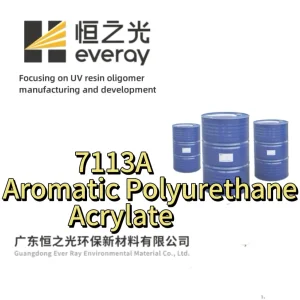
Solution: Applying our Aromatic Polyurethane Acrylate basecoat system with low-shrinkage functional monomers, maintaining adhesion over 1,000 thermal cycles (-40°C to +85°C).
LED-UV Carton Flexographic Inks
Substrate: Metallized paperboards, clay-coated kraft, untreated BOPP laminates.
Challenge: Incomplete surface cure under 395nm LED arrays at press speeds above 250 m/min.
Solution: Integrating 4600 Hyperbranched Resin paired with active amino acrylate synergists, cutting required curing energy down to 45 mJ/cm².
Technological Roadmap: 2025–2030 Horizons
Strategic research initiatives guiding our photopolymer synthesis toward bio-based carbon streams, dual-cure hybridization, and low-energy LED matching.
Full UV-LED Spectrum Optimization
Redesigning hyperbranched terminal end-caps to couple with long-wavelength Type I/II photoinitiators (385nm, 395nm, 405nm), eliminating reliance on energy-intensive mercury arc lamps.
Bio-Carbon Backbone Integration
Replacing petroleum-derived polyols with cardanol, itaconic, and modified succinic building blocks, achieving bio-based carbon contents exceeding 35% without compromising mechanical hardness.
Photo-Moisture Dual-Cure Hybridization
Developing silane-grafted urethane acrylates that cure instantly under UV light while slowly moisture-curing in shadowed undercuts, engineered for complex electronic components.
Ultra-Low Migration Packaging Resins
Synthesizing polymerizable, high-molecular-weight hyperbranched photoinitiators and self-initiating oligomers that eliminate volatile migratables in food packaging.
Local Regulatory Compliance & Chemical Safety
Complete regulatory dossiers ensuring seamless customs clearance and full compliance with Vietnamese national chemical safety laws.
Operating within Vietnam's statutory framework requires strict adherence to Decree No. 113/2017/ND-CP (and amending Decree 82/2022/ND-CP) under the landmark Law on Chemicals (No. 07/2007/QH12). Manufacturers and distributors importing raw acrylate monomers and synthetic oligomers into Cat Lai or inland logistics depots must ensure that chemical entities are properly inventoried in Vietnam’s National Chemical Inventory (NCI) and clearly classified under the Globally Harmonized System (GHS).
Guangdong Ever Ray supports chemical importers, multinational coating companies, and local formulators throughout Ho Chi Minh City with complete regulatory documentation:
16-Section Bilingual SDS
Every shipment includes comprehensive Safety Data Sheets in English and Vietnamese, prepared strictly to GHS standards with accurate CAS identification, tox/ecotox profiles, and spill response guidelines.
Global Environmental Compliance
Certified zero-SVHC compliance under EU REACH, RoHS 3 directive fulfillment (Directive 2015/863), halogen-free testing to IEC 61249-2-21, and zero-VOC classification where tested.
Direct Technical Support
Our experienced application engineers provide direct formulation guidance across the Greater HCMC area, assisting with radiometer calibration, diluent package balancing, and rheology adjustments.
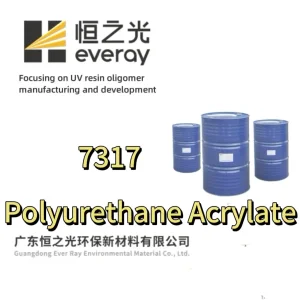
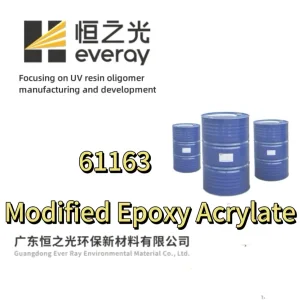
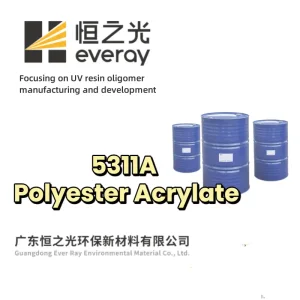
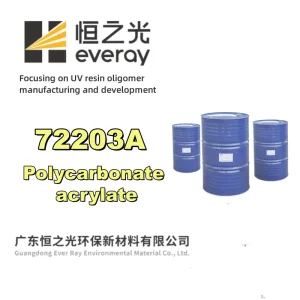
Specialty Acrylate Oligomers & Waterborne Resins
Formulation-proven resins for special effects, 3D photopolymer printing, eco-friendly waterborne finishes, and fast-curing coatings across Vietnam.
Frequently Answered Formulation Questions
Direct engineering answers addressing dilution efficiency, tropical shelf life, LED matching, and customs clearance for Vietnamese chemical manufacturers.
How do hyperbranched acrylates reduce monomer loading without raising viscosity?
Hyperbranched acrylates feature a spherical, dendritic molecular architecture that eliminates chain entanglement. This compact structural geometry yields low intrinsic viscosity even at molecular weights between 3,000 and 8,000 g/mol, allowing formulators to cut mono- and difunctional reactive diluents by 30% to 50% while maintaining target application viscosity.
What is the typical shipping lead time from your Guangdong plant to Cat Lai Port?
Direct container shipping from Nansha or Shekou to Cat Lai or VICT in Ho Chi Minh City takes between 3 and 5 days. For time-sensitive prototype trials or urgent batch runs, our overland bonded express route through the Lang Son border crossing delivers within 48 to 72 hours directly to factory docks in Binh Duong and Dong Nai.
How do Ever Ray oligomers maintain stability in southern Vietnam's hot, humid climate?
With ambient warehouse temperatures in HCMC often exceeding 35°C alongside relative humidity above 85%, precure stability is essential. Our acrylates are stabilized with high-performance phenolic/hindered amine dual-inhibitor packages, maintaining viscosity drift within ±5% and preventing gelation over a guaranteed 12-month shelf life.
Can you provide Form E certificates for 0% customs import duty in Vietnam?
Yes. Under the ASEAN-China Free Trade Area (ACFTA) preferential tariff schedule, our goods qualify for official Form E Certificates of Origin. This enables Vietnamese chemical importers to clear customs with 0% import duty, substantially reducing overall raw-material costs compared to European or North American alternatives.
How do modified acrylate monomers improve adhesion on untreated plastics like PC and ABS?
Our modified mono- and difunctional monomers incorporate alicyclic and ethoxylated/propoxylated carbon backbones. These balance solvency and surface tension, allowing the wet formulation to slightly swell the plastic boundary layer. This promotes molecular interpenetration during UV exposure without causing solvent crazing or environmental stress cracking.
Are custom-tailored oligomer synthesis projects supported for special requirements?
Yes. Ever Ray operates dedicated synthesis reactors specifically for custom development. Our R&D chemists adjust backbone structures, hydroxyl/carboxyl values, double-bond density, and diluent packages to meet exact physical targets, providing pilot sample volumes (1kg to 20kg) with full TDS and FTIR analytical reports.
Connect with Our Application Specialists
Request material technical dossiers, comprehensive starting formulations, or complimentary sample drums shipped directly to your R&D facility in Ho Chi Minh City, Binh Duong, or Dong Nai.
